
Local Keyword Rank Tracking: Why It Matters and How to Set It Up
Most businesses tracking their local search rankings are doing it wrong. They fire up a rank tracker, punch in their target keywords, set the location to their city, and call it a day.
Local Keyword Rank Tracking: Why It Matters and How to Set It Up Right
Most businesses tracking their local search rankings are doing it wrong. They fire up a rank tracker, punch in their target keywords, set the location to their city, and call it a day. Then they wonder why the data doesn't match what they see on their phone when they search from the shop across the street. The problem isn't the tool. It's that local SEO doesn't work like national SEO, and the way you track it shouldn't either.
I spent two years helping a multi-location dental practice figure out why their rankings looked great in reports but their phone wasn't ringing. The answer was painfully simple: they were tracking city-level rankings when their actual customers were searching from neighborhoods three miles away, where their visibility was nearly zero. That's the gap local keyword tracking closes, and it's the gap most businesses don't even know exists.
Why Local Rank Tracking Is a Different Animal
When someone searches "emergency dentist" from a specific street corner, Google returns results based on that exact location. Move two miles east and the results shuffle completely. This is fundamentally different from tracking a keyword like "best project management software," where results are relatively stable across a region.
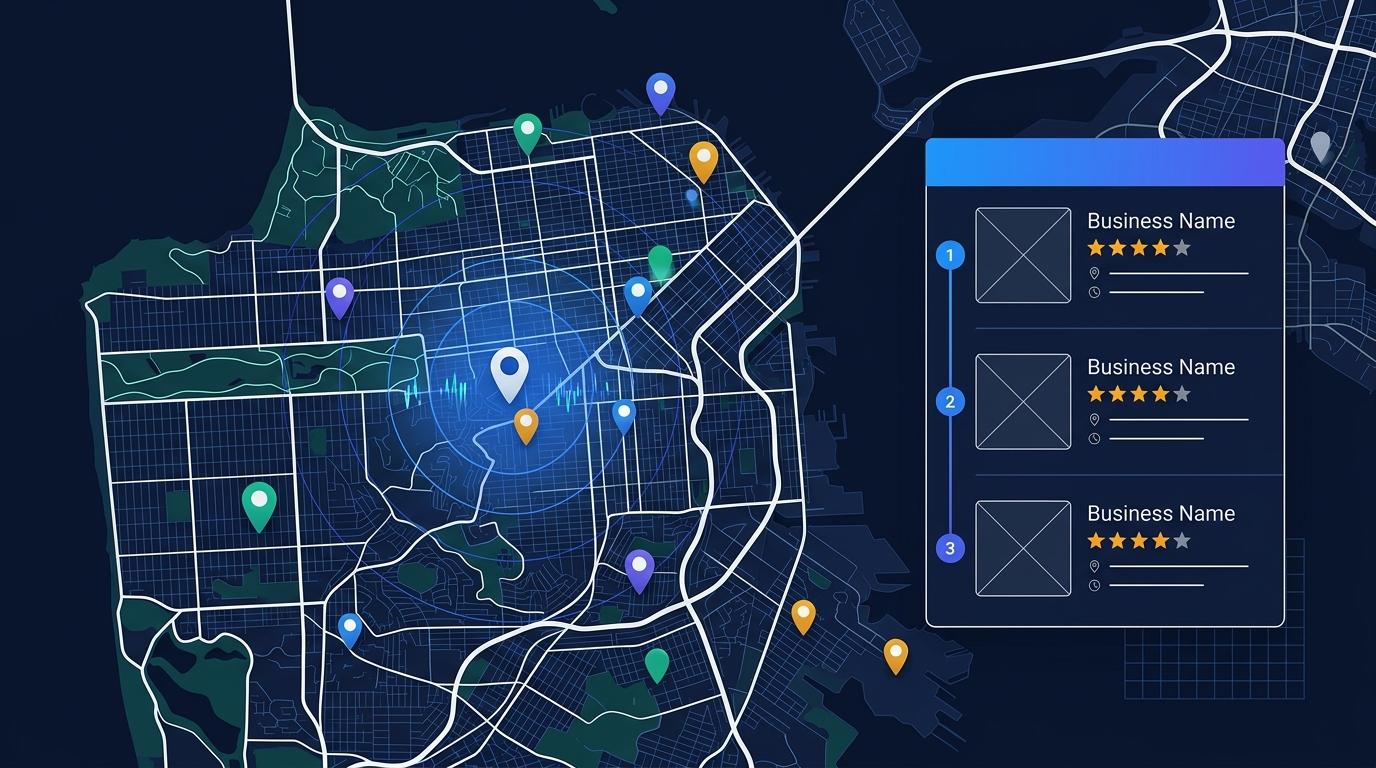
The local pack, that three-result map box at the top of search results, is the real battleground. As Wincher's research points out, making it into the Local Pack gives you a massive boost in both visibility and clicks. But here's what catches people off guard: you might rank in the local pack for someone searching from your block but completely disappear for someone searching from the next zip code over.
Traditional rank tracking tools give you a single data point for a single location. That's like checking the weather in one corner of a city and assuming it's the same everywhere. Local search rankings shift block by block, and you need tracking that reflects that reality.
What You're Actually Measuring (And Why It Matters)
Before you set anything up, get clear on the metrics that matter for local search optimization. There are two worth understanding deeply.
The first is Share of Local Voice, a metric popularized by Local Falcon that measures how frequently your listing appears in the local pack across a defined search radius. Think of it as your market share of visibility for a given keyword in a geographic area. The higher the score, the more consistently you're showing up regardless of where the searcher is standing.
The second is Visibility Score, which Whitespark's rank tracker calculates based on estimated click-through rates across all your tracked keyword positions. This is more nuanced than raw position data because it weights the rankings that actually drive clicks more heavily than those that don't.
Both metrics tell you something a simple "you're ranked #3" never could. They reveal the full picture of your local visibility, which is exactly what you need to make smart decisions.
If you've ever experienced a sudden drop in your search rankings and couldn't figure out why, poor local tracking granularity is often the culprit. Your city-level position might look stable while your neighborhood-level visibility crumbles.
How to Set Up Local Keyword Tracking That Actually Works
Here's the process I follow for every local SEO engagement. It's not complicated, but each step matters.
Step 1: Build Your Keyword List With Local Intent
Your keyword research for local tracking needs to be more specific than general SEO research. According to BrightLocal's keyword research framework, you start with your core term, which is the "what" of your business, and then layer on location modifiers.
For a single business, you'll typically end up with three categories:
Service plus location keywords like "emergency dentist Boston" or "cosmetic dentistry Minneapolis"
Near me variations that trigger proximity-based results
Neighborhood and landmark terms like "yoga studio Capitol Hill" or "coffee shop near Central Park"
A useful finding from SEOProfy's keyword research guide is that related service terms can often be grouped on a single page. "Divorce lawyer Chicago," "family law attorney Chicago," and "custody lawyer in Chicago" can all target the same page if it covers general family law services in that area. This prevents you from spreading your local authority too thin across dozens of pages that cannibalize each other.
I typically track 15-30 keywords per location. More than that and you're drowning in data. Fewer and you're flying blind.
Step 2: Configure Grid-Based Tracking
This is where most setups fail. Don't just set your tracking location to "Denver, CO." Set up a geographic grid around your actual business location.
Grid-based tracking scans your rankings from multiple points across a defined radius, usually a 5x5 or 7x7 grid covering your service area. Each grid point simulates a search from that exact location and records where you rank.
The result looks like a heat map of your local visibility. Green squares where you're dominating, red squares where you're invisible. It's immediately actionable because you can see exactly which directions and distances from your location need work.
Step 3: Track the Right Surfaces
Your Google Business Profile performance and your organic web rankings are two different things, and you need to monitor both.
For GBP specifically, track:
Your position in the local pack for each target keyword
Engagement metrics like calls, direction requests, and website clicks coming from your profile
Photo views and post engagement
Review velocity and average rating
Reddit's SEO community consistently emphasizes that GBP optimization is foundational. Markup schemas like LocalBusiness, FAQ, and Review structured data all feed into how Google evaluates your local relevance. But you won't know if any of those optimizations are working without proper tracking in place.
For organic local results, track your standard web page rankings but make sure you're checking from the specific locations that matter. Your service pages, location pages, and locally-focused blog content should all be monitored.
Step 4: Add Your Competitors
Tracking your own rankings in isolation is only half the picture. Add your top three to five local competitors to every campaign.
When you see a competitor suddenly jump into the local pack for a keyword you're targeting, you want to know immediately. Was it a new batch of reviews? A citation push? Fresh content? This kind of competitive intelligence guides your next move.
If you're working with data across multiple marketing tools, consolidating competitor tracking with your own performance data prevents the fragmented view that leads to bad decisions.
Step 5: Set Your Tracking Cadence
Not everything needs daily monitoring. Here's the schedule that balances thoroughness with sanity:
Weekly: Check core money keywords and GBP metrics. Look for sudden drops that signal a problem.
Monthly: Analyze trends, review competitor movements, and evaluate which content or optimization efforts are moving the needle.
Quarterly: Step back and review overall progress. Update your keyword list based on new services, seasonal shifts, or market changes. Adjust your grid radius if your service area has expanded.
Automate what you can. Set up alerts for any ranking drop of three or more positions on your priority keywords. The faster you catch a drop, the faster you can respond.
The Foundation Work That Makes Tracking Meaningful
Tracking is useless if the fundamentals aren't in place. Before obsessing over your rank tracking dashboards, make sure these basics are solid.
NAP consistency is non-negotiable. Your business Name, Address, and Phone number must be identical across every directory, citation site, and social profile. One character off, one suite number missing, and you're diluting Google's confidence in your business data. As Loganix's local SEO checklist puts it, claiming and optimizing your Google Business listing with specific categories is the foundation everything else builds on.
Local content signals relevance. Producing content focused on your actual service area tells search engines you're genuinely part of a community, not just targeting a location from afar. MagicLogix's research on local SEO confirms that local-focused content builds authentic connections and directly signals local relevance to search engines. When someone searches for a location-specific problem, your content should provide the answer.
This ties into your broader content approach. If you're building a content marketing strategy from scratch, baking local content into the plan from day one saves you from retrofitting later.
Reviews drive rankings. GBP reviews are a ranking factor, and the businesses that actively manage their review pipeline consistently outrank those that don't. Respond to every review, positive or negative. Encourage happy customers to leave feedback. This isn't just reputation management; it's ranking fuel.
Connecting Tracking to Revenue
Here's where this gets real. The whole point of local keyword tracking isn't to watch numbers go up. It's to connect those numbers to business outcomes.
When you see your local pack visibility increase by 20% in a specific neighborhood, you should be able to correlate that with an increase in phone calls or direction requests from that area. When you publish a new location page and your grid tracking shows improved visibility in the surrounding zones, that validates the effort.
The businesses I've seen succeed at local SEO don't just track rankings for vanity. They build a feedback loop: track, optimize, measure business impact, refine, repeat. Pair your tracking data with conversion data from your website to understand which rankings actually generate revenue. We've covered strategies for converting that traffic into actual leads before, and the principles apply doubly when your traffic has strong local intent.
Understanding how search strategy is evolving also matters here. As AI-powered search features change what local results look like, your tracking setup needs to evolve with them.
The Practical Takeaway
Stop tracking local rankings like they're national keywords. Set up grid-based tracking around your actual business location. Monitor both your local pack position and your organic rankings from multiple geographic points. Track GBP engagement metrics alongside traditional rankings. Add competitors. Tag your URLs. And connect everything back to the calls, visits, and revenue that actually keep the lights on.
The businesses that win local search aren't necessarily the ones with the biggest budgets. They're the ones with the clearest picture of where they're visible, where they're not, and what to do about it. Proper local keyword tracking gives you that picture. Everything else is guessing.

Sarah Chen
SEO strategist and web analytics expert with over 10 years of experience helping businesses improve their organic search visibility. Sarah covers keyword tracking, site audits, and data-driven growth strategies.
Frequently Asked Questions
- What is grid-based tracking in local SEO?
- Grid-based tracking sets up a geographic grid around your business location (typically a 5x5 or 7x7 grid) that scans rankings from multiple points across a defined radius. Each grid point simulates a search from that exact location and records where you rank, creating a heat map that shows which directions and distances from your location need improvement.
- Why does local keyword ranking differ from city to city?
- When someone searches from a specific street corner, Google returns results based on that exact location, and moving just two miles can shuffle the results completely. Local pack rankings shift block by block, unlike national keywords where results remain relatively stable across a region.
- What is Share of Local Voice?
- Share of Local Voice is a metric popularized by Local Falcon that measures how frequently your listing appears in the local pack across a defined search radius. It represents your market share of visibility for a given keyword in a geographic area.
- How many keywords should you track per location for local SEO?
- You should typically track 15-30 keywords per location. Tracking more leaves you drowning in data, while tracking fewer means you're flying blind.
- What are the three types of local keywords to track?
- The three categories are: service plus location keywords like 'emergency dentist Boston,' near me variations that trigger proximity-based results, and neighborhood/landmark terms like 'yoga studio Capitol Hill.'
- What should you monitor on Google Business Profile?
- Track your position in the local pack for each target keyword, engagement metrics like calls and direction requests, photo views, post engagement, review velocity, and average rating.
- How often should you track local keyword rankings?
- Check core money keywords and GBP metrics weekly, analyze trends and competitor movements monthly, and review overall progress and update keywords quarterly. Set up alerts for ranking drops of three or more positions on priority keywords.
- Why is NAP consistency important for local SEO?
- Your business Name, Address, and Phone number must be identical across every directory, citation site, and social profile. Even one character off can dilute Google's confidence in your business data and harm your local rankings.
Explore more topics