
SEO Teams Can Automate Eight High-Volume Tasks Using AI Workflows, New Framework Shows
Search Engine Land published an automation framework on April 24 identifying eight repetitive SEO tasks that marketing teams can delegate to AI workflows, according to a detailed implementation guide by consultant Roslyn Ayers. The framework targets manual processes that consume hours of specialist
SEO Teams Can Automate Eight High-Volume Tasks Using AI Workflows, New Framework Shows
Search Engine Land published an automation framework on April 24 identifying eight repetitive SEO tasks that marketing teams can delegate to AI workflows, according to a detailed implementation guide by consultant Roslyn Ayers. The framework targets manual processes that consume hours of specialist time while producing standardized outputs—content calendars, keyword research, alt text generation, and meta descriptions among them.
Why Manual SEO Work Persists Despite Tool Availability
The guide addresses a resource allocation problem that persists across digital marketing departments: SEO specialists spend significant time on tasks that follow predictable patterns yet require minimal strategic judgment. Ayers frames the automation decision around a simple test—whether the work would typically be assigned to an intern. Tasks meeting that threshold become candidates for AI-assisted workflows where the technology handles initial research and drafting while human oversight completes quality assurance and final edits.
The framework acknowledges three scenarios where automation fails to solve underlying problems: broken tracking systems that prevent accurate data collection, incomplete performance data that limits AI output quality, and organizational approval bottlenecks that delay implementation regardless of how quickly audits identify issues.
Eight Tasks That Follow Repeatable Patterns
The published framework covers content calendar generation, where formula-based spreadsheets using VLOOKUP and MAXIFS functions can pull from multiple reports to identify pages due for updates based on refresh schedules. Most content should be updated every one to two years, the guide notes, particularly as large language models prioritize freshness signals in search results.
Keyword and prompt research appears as the second automation opportunity. While tools like Ahrefs and Semrush provide content gap analysis, the reports often include irrelevant branded terms. The guide recommends starting with long-tail keywords from Google Search Console exports and using AI to refine lists, though it warns that language models struggle with user intent classification and the distinction between short-tail and long-tail query targeting.
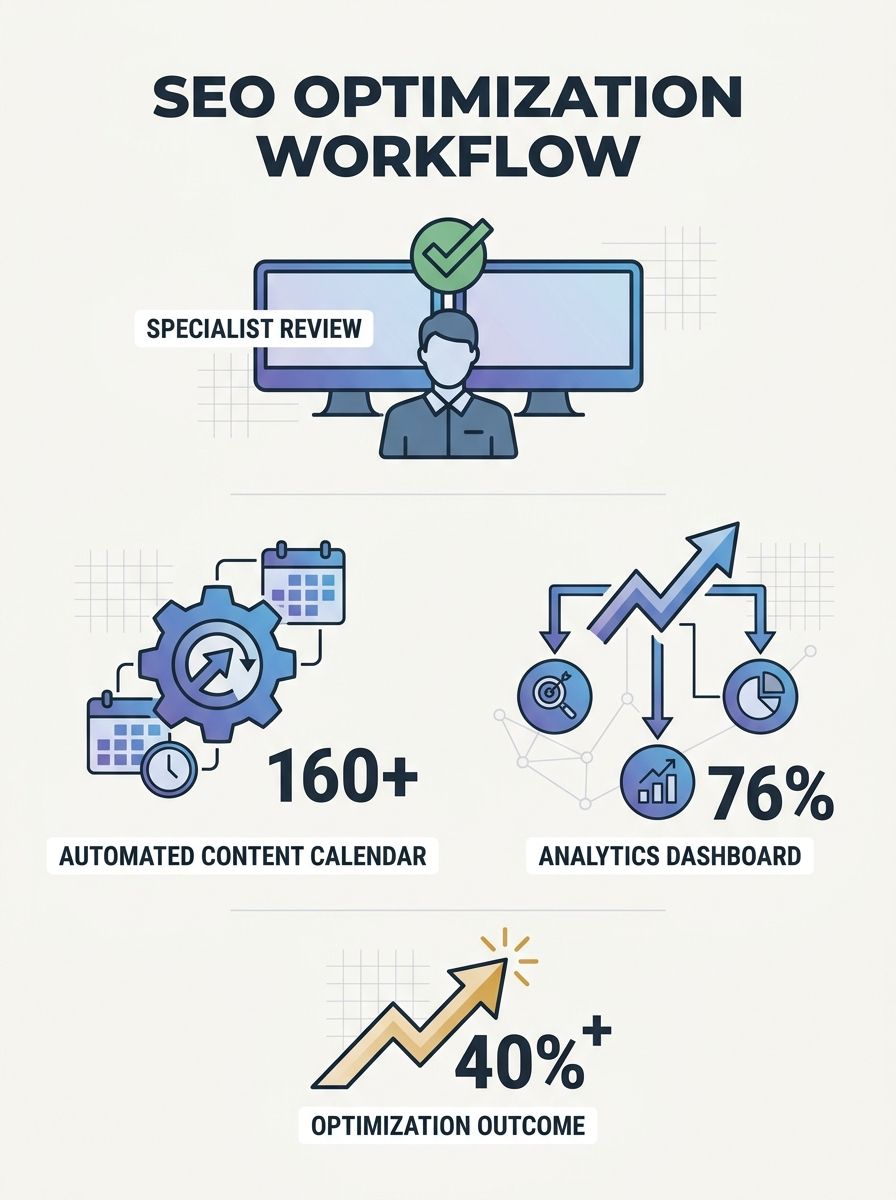
Image alt text generation, internal linking audits, broken link detection, page outline creation, data export formatting, and meta description writing round out the eight-task list. Each follows a similar pattern: AI handles the bulk research or first draft, consuming roughly 70 percent of the total effort, while human specialists complete the final 30 percent through prompt refinement and output verification.
Implementation Carries Quality Control Requirements
The framework explicitly advises against trusting 100 percent of SEO work to language models, which the guide states "rarely get things exactly right." The approach positions automation as a time-saving tool for initial research and drafting rather than a replacement for specialist judgment on strategic decisions or final quality checks.
Ayers provides specific prompt examples for each task category. For content calendars, the sample prompt instructs AI to generate a table of pages due for updates based on sitemap data, performance reports, and previous content plans, then layer in performance decline data for pages showing 30 percent or greater session drops over the past 90 days.
For keyword research, the example prompt asks AI to identify the 20 most important keywords from competitor analysis reports, ranked by search volume and relevance, while explicitly excluding branded terms. The prompt then requests 10 specific page improvements with exact quotes from existing copy.
The guide suggests teams audit existing workflows, review onboarding documentation, and survey team members about most-hated tasks to identify additional automation opportunities beyond the core eight.
What Happens Next
SEO specialists implementing the framework will need to build prompt libraries and quality assurance standards for each automated task type, particularly as language models continue to struggle with nuanced decisions around search intent and keyword targeting strategy. The 70-30 split between AI output and human refinement creates a practical boundary for which decisions can be delegated and which require specialist oversight.
Marketing managers face a resource reallocation question: whether time saved on repetitive tasks translates to more strategic work or simply faster completion of existing workflows. The framework's effectiveness depends partly on whether organizations have the technical infrastructure to support automation—complete tracking systems, performance data access, and approval processes that don't create bottlenecks after audits identify optimization opportunities.
Digital agencies may find the prompt templates particularly useful for standardizing junior-level work across client accounts, though they'll need to customize prompts for different industry contexts and client-specific quality thresholds where generic AI output falls short of deliverable standards.

Alex Chen
Alex Chen is a digital marketing strategist with over 8 years of experience helping enterprise brands and agencies scale their online presence through data-driven campaigns. He has led marketing teams at two successful SaaS startups and specializes in conversion optimization and multi-channel attribution modeling. Alex combines technical expertise with strategic thinking to deliver actionable insights for marketing professionals looking to improve their ROI.
Explore more topics