
Marketing Automation Speed Race Masks Emerging Battle Over Proprietary Intelligence Layer
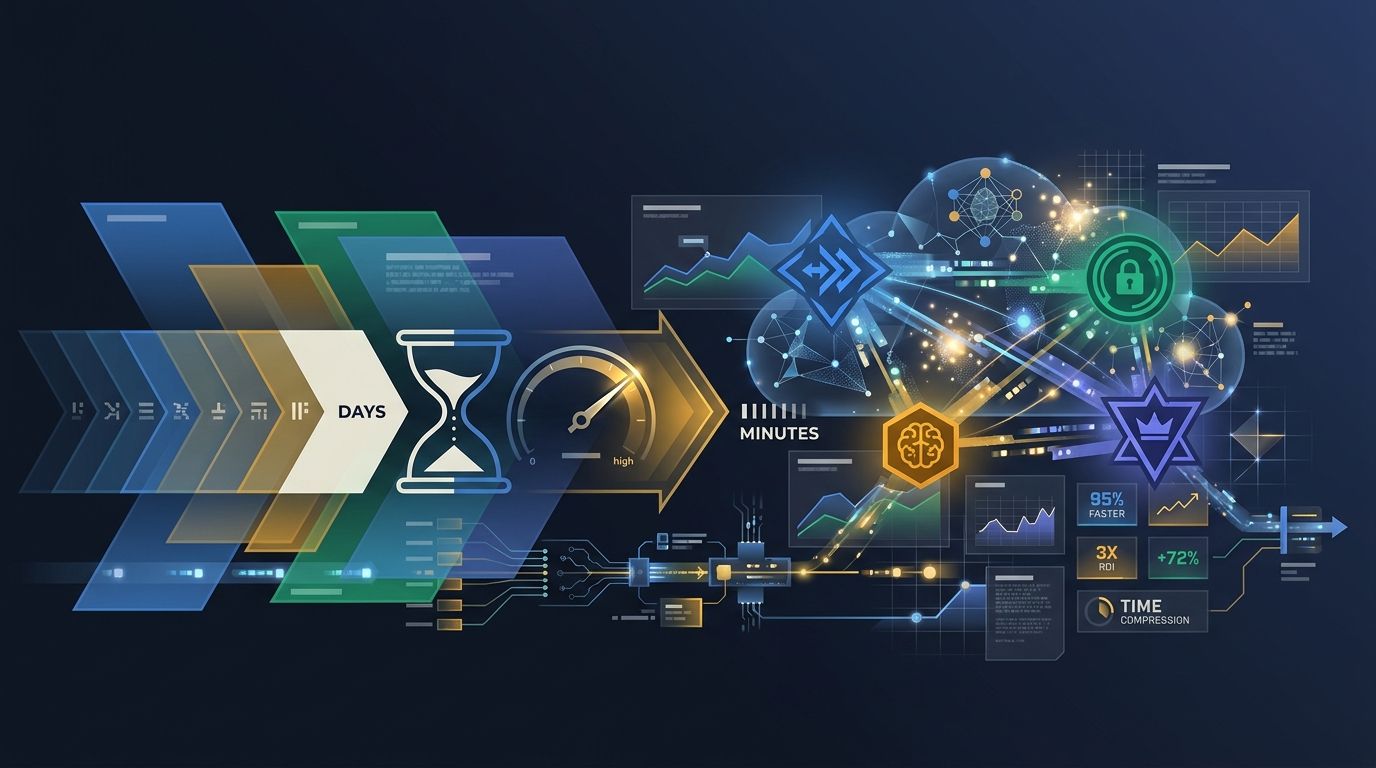
Ninety percent of marketing organizations now use AI agents operationally in their tech stack, not as pilot programs, according to Scott Brinker's Martech for 2026 research cited by EMARKETER, marking the first half of 2026 as the period when marketing automation platforms compressed campaign launch
Marketing Automation Speed Race Masks Emerging Battle Over Proprietary Intelligence Layer
Ninety percent of marketing organizations now use AI agents operationally in their tech stack, not as pilot programs, according to Scott Brinker's Martech for 2026 research cited by EMARKETER, marking the first half of 2026 as the period when marketing automation platforms compressed campaign launch cycles from days to minutes across vendor portfolios.
The acceleration is measurable. Salesforce Agentforce 360, Adobe Experience Cloud agentic features, HubSpot, Braze, and AI-native challengers like Tofu all delivered execution speed gains ranging from several times faster to nearly an order of magnitude improvement, according to vendor reports compiled by EMARKETER. Gartner forecast 40% of enterprise applications will embed AI agents by year-end 2026, up from under 5% in 2025.
Yet "our AI agent launches campaigns fast" stopped functioning as a differentiator in the first quarter of 2026, the research shows. Speed became baseline expectation once every vendor promised it.
The Foundation Model Commoditization Problem
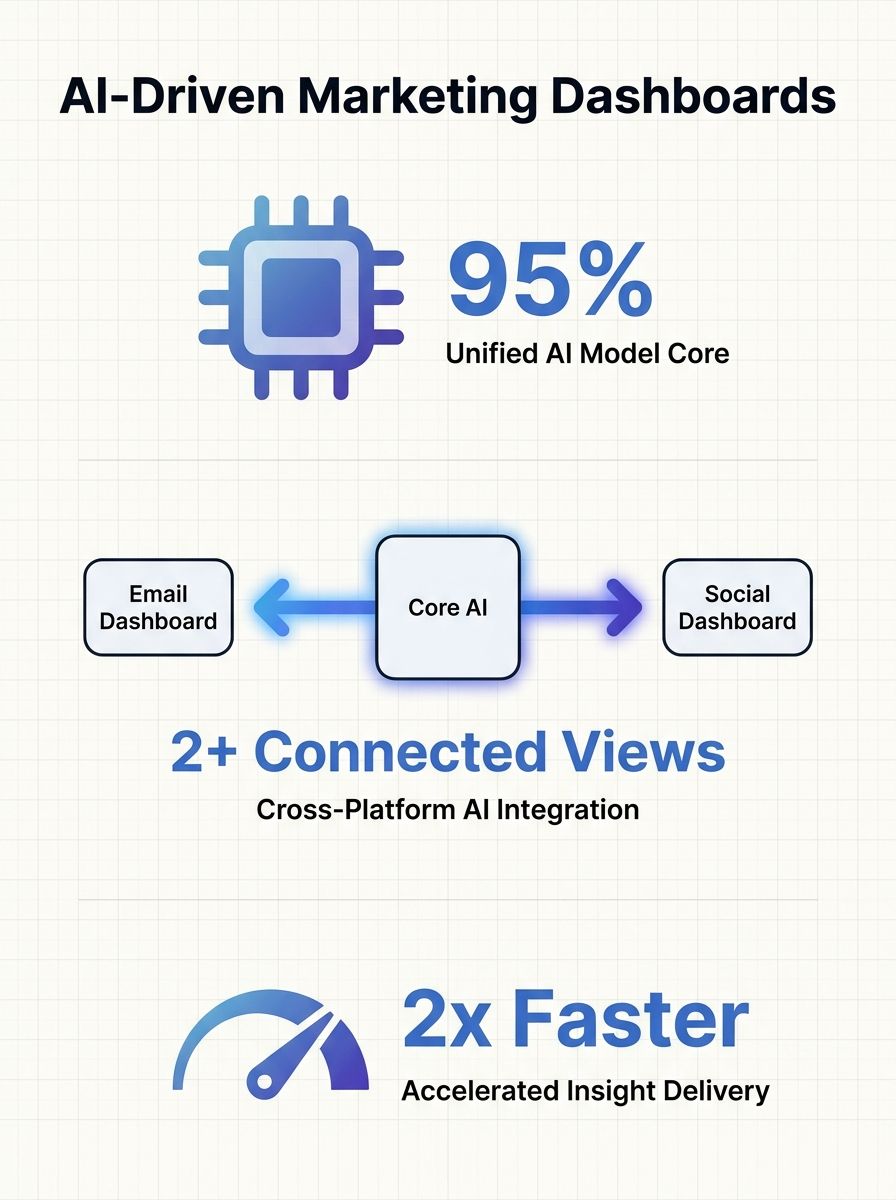
Most competing marketing automation platforms draw on the same small set of underlying models, EMARKETER's analysis found. Many providers now rely on OpenAI or Anthropic models, making their agentic offerings "almost indistinguishable" at the model layer. The interface differs across vendors, and workflow branding varies, but the reasoning engine underneath frequently represents the same rented utility competitors also access.
This reframes vendor competition away from "who has the best AI" toward what sits around the model: the data it's trained and grounded on, the workflow embedding it, and the institutional memory of what a specific brand's audience has actually responded to, according to the EMARKETER report. Seven AI platforms now handle end-to-end ad campaign management as autonomous marketing systems, but execution speed alone no longer creates competitive moats.
What Actually Differentiates Platform Capability
Content production agents represent the most widely adopted category at 68.9% organizational penetration, Brinker's research shows, followed by audience discovery agents at 40.8%. Those visible, demo-friendly capabilities mask a deeper layer determining whether agent output is actually good rather than merely fast: the quality and structure of accessible data.
Customer data platforms shrank as the martech stack center, dropping from 26.9% to 17.4% of B2C marketing technology architecture, according to chiefmartec's 2025 marketing technology landscape research. The underlying capability migrated either to cloud data warehouses or directly into engagement platforms. That migration represents a use shift, EMARKETER noted. Whoever sits closest to clean, governed, first-party data, rather than whoever sits closest to the campaign-builder interface, increasingly controls what the AI layer can actually produce.
"Composable martech architecture" discussions now center on data proximity rather than software integration patterns, the research indicates.
The Buyer-Side AI Agent Disruption
Vendor-side speed improvements occurred while a second shift received less attention: buyer-side AI agents. ChatGPT, Perplexity, Claude, and Gemini increasingly function as prospect research and brand evaluation channels before marketing campaigns reach them, bypassing search, social, and owned-website discovery entirely. McKinsey estimated 20% to 50% of traffic from traditional search channels now faces risk from this shift.
Sixty-three percent of B2B marketing leaders say they recognize this change in buyer behavior, Brinker's preview of chiefmartec's Martech for 2026 research found. Only 14% say they've actually adapted content and discovery strategy to account for it. HubSpot data shows 80% of marketers now use AI for content creation, yet most organizations haven't optimized for visibility in the AI agents their buyers actually use for pre-purchase research.
That gap between recognizing a structural shift and operationalizing a response represents a wider vulnerability than any campaign-launch speed metric captures, according to EMARKETER. A brand can compress its insight-to-launch cycle to single-digit minutes and still remain functionally invisible to the AI agent a buyer queries before any campaign touchpoint occurs.
The Takeaway
The marketing automation platform battle moved beyond software feature lists in the first half of 2026. Vendors achieved execution speed parity by renting the same foundation models, making interface polish and workflow design the only software-layer differentiators. The actual competitive advantage migrated to proprietary data infrastructure—which organizations control their own customer context, decision history, and performance memory that grounds AI agent recommendations.
Marketing teams evaluating platforms should audit what data access and governance capabilities each vendor provides rather than which model powers the agent, the research suggests. The intelligence layer deciding what to launch matters more than the speed of launching it. Organizations that built composable data architectures positioned closest to first-party customer data now control the scarcest resource in an AI-agent-saturated market: context that can't be rented from the same API competitors use.
The buyer-side AI disruption compounds this shift. Marketing leaders who compressed campaign cycles without simultaneously optimizing for visibility in ChatGPT, Perplexity, and Claude answered only half the challenge. The 49-percentage-point gap between B2B leaders who recognize changing buyer behavior and those who adapted strategy represents the operational lag that will separate market leaders from laggards through 2026 and beyond.

Sarah Chen
SEO strategist and web analytics expert with over 10 years of experience helping businesses improve their organic search visibility. Sarah covers keyword tracking, site audits, and data-driven growth strategies.
Related Articles
Marketing Campaign Launch Timelines Extend Despite AI Content Tools, Survey of 200 Leaders Shows
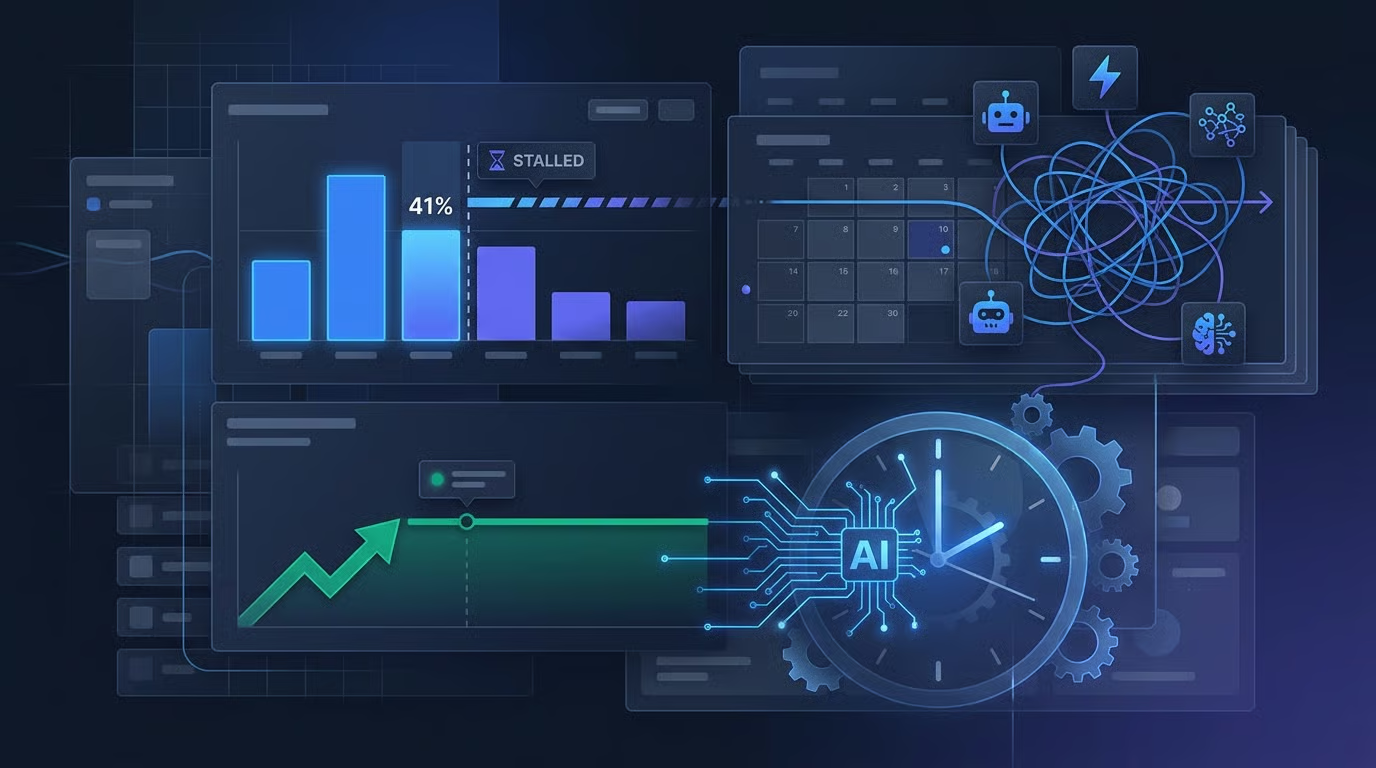
Typeface published its 2026 Signal Report on September 2 showing marketing campaign timelines have lengthened significantly in the twelve months since AI content-generation tools entered widespread use, with 34 percent of marketing leaders now requiring one to two months to launch a single campaign
HubSpot Data Shows 80% of Marketers Now Use AI for Content Creation as Automation Platforms Replace Manual Workflows
HubSpot's 2026 State of Marketing Report reveals that 80% of marketers now deploy AI tools for content and media creation, marking a fundamental shift from manual production to automated operational systems, according to a guide published June 29 by the marketing software company. The data underscor

Seven AI Platforms Now Handle End-to-End Ad Campaign Management as Market Shifts from Chatbots to Autonomous Marketing Systems
Analytics Insight identified seven AI agent platforms managing complete advertising workflows—from campaign planning and creative generation through audience targeting and performance reporting—in a market analysis published July 2, marking the transition from interactive chatbots to autonomous mark
Explore more topics