
Website Speedy Publishes Ten-Tool Comparison Guide Categorizing CRO Platforms by Conversion Challenge Type
Website Speedy published a comparative analysis of ten conversion rate optimization platforms on July 17, categorizing tools by the specific conversion barriers they address rather than ranking them by popularity, according to the guide posted on the company's blog.
Website Speedy Publishes Ten-Tool Comparison Guide Categorizing CRO Platforms by Conversion Challenge Type
Website Speedy published a comparative analysis of ten conversion rate optimization platforms on July 17, categorizing tools by the specific conversion barriers they address rather than ranking them by popularity, according to the guide posted on the company's blog. The framework segments platforms into five functional categories: website performance optimization, visitor behavior analytics, A/B testing and experimentation, image optimization, and lead generation.
Framework Segments Tools by Conversion Problem Type
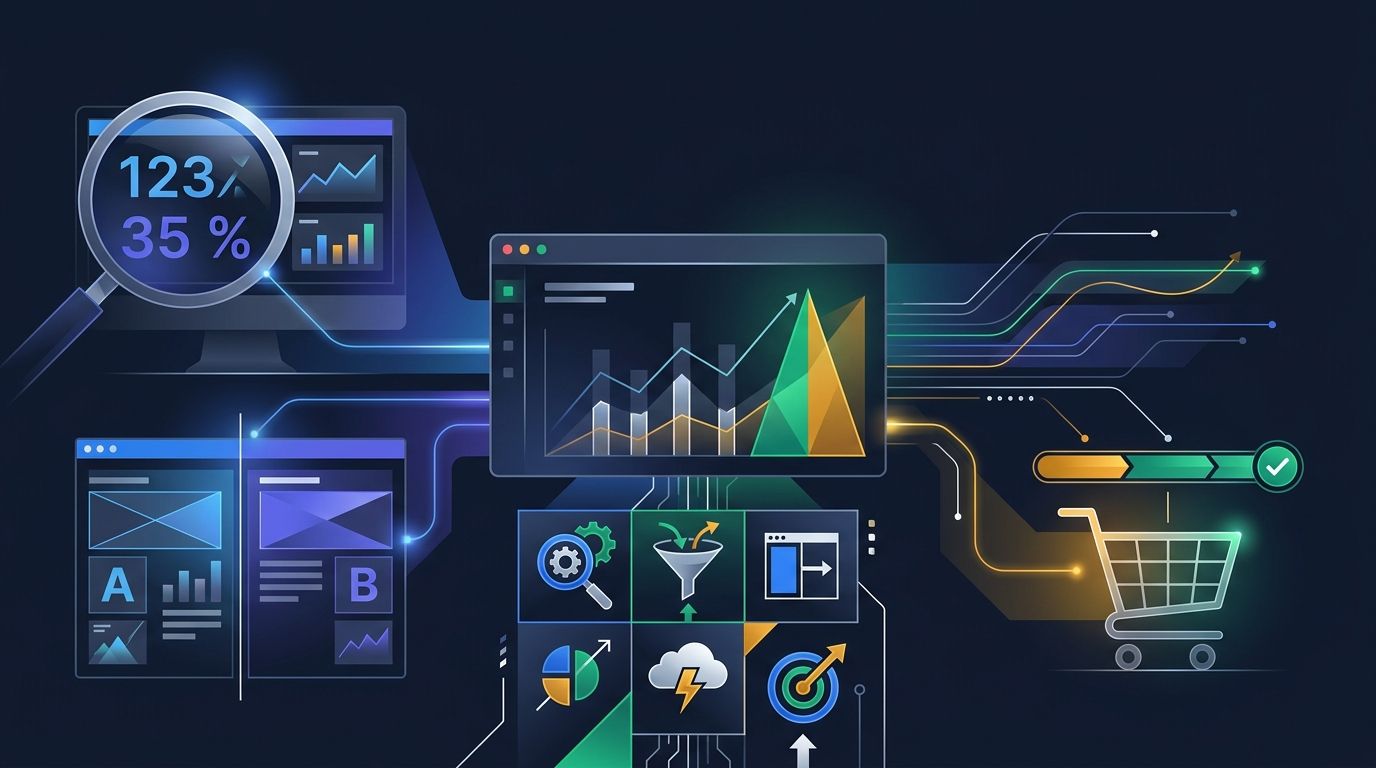
The comparison framework breaks conversion optimization into distinct challenge categories, each addressed by different platform types. Website performance tools tackle slow loading speeds and Core Web Vitals compliance, analytics platforms measure conversion paths and user journeys, behavior tracking software records visitor interactions through heatmaps and session recordings, experimentation tools enable A/B testing and feature rollouts, and lead generation platforms focus on capturing visitor information through forms and pop-ups.
The guide notes that "the most successful businesses combine multiple conversion optimization software solutions to optimize every stage of the customer journey," positioning CRO as a multi-tool discipline rather than a single-platform solution. This approach reflects a shift from monolithic optimization suites toward specialized tools that address specific friction points in the conversion funnel.
The categorization addresses a practical selection problem for marketing managers: choosing between analytics-focused platforms like Google Analytics 4, behavior recording tools like Microsoft Clarity and Hotjar, experimentation platforms like VWO and Optimizely, and performance optimization services like Website Speedy itself.
Guide Covers Performance, Analytics, and Experimentation Platforms
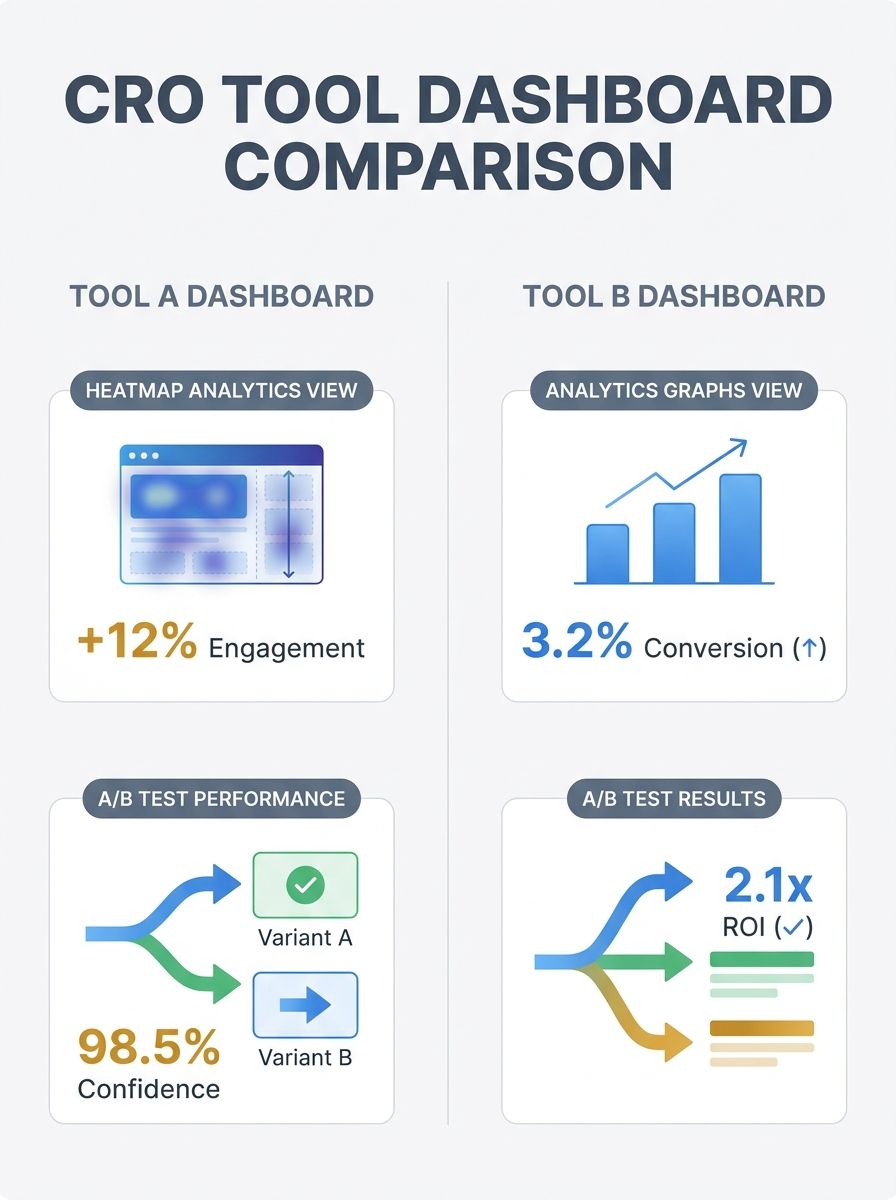
Website Speedy's comparison includes Google Analytics 4 for conversion tracking and event-based measurement, Microsoft Clarity for heatmaps and session recordings, JSON Schema App for structured data implementation, Image Optimizer Pro for image compression and loading optimization, Hotjar for user behavior insights, Crazy Egg for landing page heatmaps and testing, VWO for mid-market experimentation, Optimizely for enterprise feature testing, and OptinMonster for lead capture forms.
The guide cites Google research indicating that "as page load time increases from one to three seconds, the probability of a visitor bouncing increases significantly," positioning website speed as a foundational conversion factor. This data point supports the inclusion of performance-focused tools alongside analytics and testing platforms in the comparison framework.
Each tool listing includes pricing structure details, key features, advantages, disadvantages, and ideal business size recommendations. Microsoft Clarity is highlighted for offering free heatmaps and session recordings across all business sizes, while Optimizely is positioned for enterprise organizations requiring feature experimentation capabilities.
Evaluation Criteria Emphasize Implementation and Direct Impact
Website Speedy evaluated platforms using seven criteria: ease of implementation, features that directly impact conversions, user experience improvements, analytics and reporting capabilities, scalability for growing businesses, industry reputation, and real-world use case applicability. The methodology explicitly prioritizes "practical value for businesses of different sizes" over popularity metrics or market share rankings.
The guide acknowledges its own positioning within the comparison, describing Website Speedy as "designed to improve loading performance, optimize Core Web Vitals, and deliver a smoother browsing experience across desktop and mobile devices." This self-inclusion alongside third-party platforms like Google Analytics 4 and Microsoft Clarity represents a vendor-published resource that includes competitive alternatives rather than a purely promotional piece.
The evaluation framework separates tools by primary function rather than attempting direct feature-for-feature comparisons across categories. A website speed optimization platform addresses different conversion barriers than an A/B testing tool, making side-by-side ranking less meaningful than category-specific selection guidance.
What Happens Next
Marketing managers selecting CRO platforms now have a functional taxonomy that maps tools to specific conversion problems—speed issues, visibility into user behavior, testing capacity, or lead capture mechanics. The guide's value centers on helping teams identify which conversion barrier to address first, then selecting the appropriate tool category.
The framework's multi-tool approach aligns with existing coverage on this site about optimizing for both Google search and AI answer engines, where different platforms serve distinct visibility channels. Website performance improvements benefit both traditional search rankings and AI chatbot citation rates, making speed optimization tools dual-purpose in the current search landscape.
Website Speedy's self-inclusion in the comparison positions the guide as a lead generation asset rather than independent research, a common pattern in vendor-published tool roundups. Readers evaluating options should cross-reference recommendations with third-party reviews and trial multiple platforms within their priority category before committing to annual contracts.

Alex Chen
Alex Chen is a digital marketing strategist with over 8 years of experience helping enterprise brands and agencies scale their online presence through data-driven campaigns. He has led marketing teams at two successful SaaS startups and specializes in conversion optimization and multi-channel attribution modeling. Alex combines technical expertise with strategic thinking to deliver actionable insights for marketing professionals looking to improve their ROI.
Related Articles

Conversion Optimization Guide Documents Five Tests Showing 8% to 31% Lift from Landing Page, Form, and UX Changes
Five documented conversion rate optimization tests produced lifts between 8 percent and 31 percent by addressing landing page focus, form length, and checkout friction, according to a guide published on enstinemuki.com on September 13.

Website Performance Analysis Shows 7x Conversion Gap Between One-Second and Five-Second Page Loads
A statistical compilation published August 24, 2026 quantifies the revenue cost of slow-loading websites, showing pages that load in one second convert at 3.05% while five-second pages convert at just 0.41%, according to data published by Mean CEO.

SaaS SEO Consultancy Publishes Product Page Framework Targeting Demo Request Conversion Gap
SaaS product pages frequently rank well for category searches while failing to generate qualified demo requests, according to a framework published by ClickyOwl on September 6 that restructures page optimization around buyer job mapping rather than keyword density.
Explore more topics