
Marketing Campaign Launch Timelines Extend Despite AI Content Tools, Survey of 200 Leaders Shows
Typeface published its 2026 Signal Report on September 2 showing marketing campaign timelines have lengthened significantly in the twelve months since AI content-generation tools entered widespread use, with 34 percent of marketing leaders now requiring one to two months to launch a single campaign

Marketing Campaign Launch Timelines Extend Despite AI Content Tools, Survey of 200 Leaders Shows
Typeface published its 2026 Signal Report on September 2 showing marketing campaign timelines have lengthened significantly in the twelve months since AI content-generation tools entered widespread use, with 34 percent of marketing leaders now requiring one to two months to launch a single campaign compared to 5 percent in 2025, according to Agency Reporter. The survey of more than 200 VP-level marketing leaders across seven industries found 93 percent report increased pressure to move faster while actual execution speed has declined.
The disconnect between AI adoption and campaign velocity centers on approval workflows rather than content production capacity. Typeface's "AI Speed Paradox" report compared 2026 survey responses against a baseline fielded eight months earlier, revealing the share of leaders who consider one to two weeks an acceptable campaign timeline dropped from 85 percent to 50 percent year-over-year. The data shows AI tools compressed draft creation time while leaving downstream approval processes unchanged.
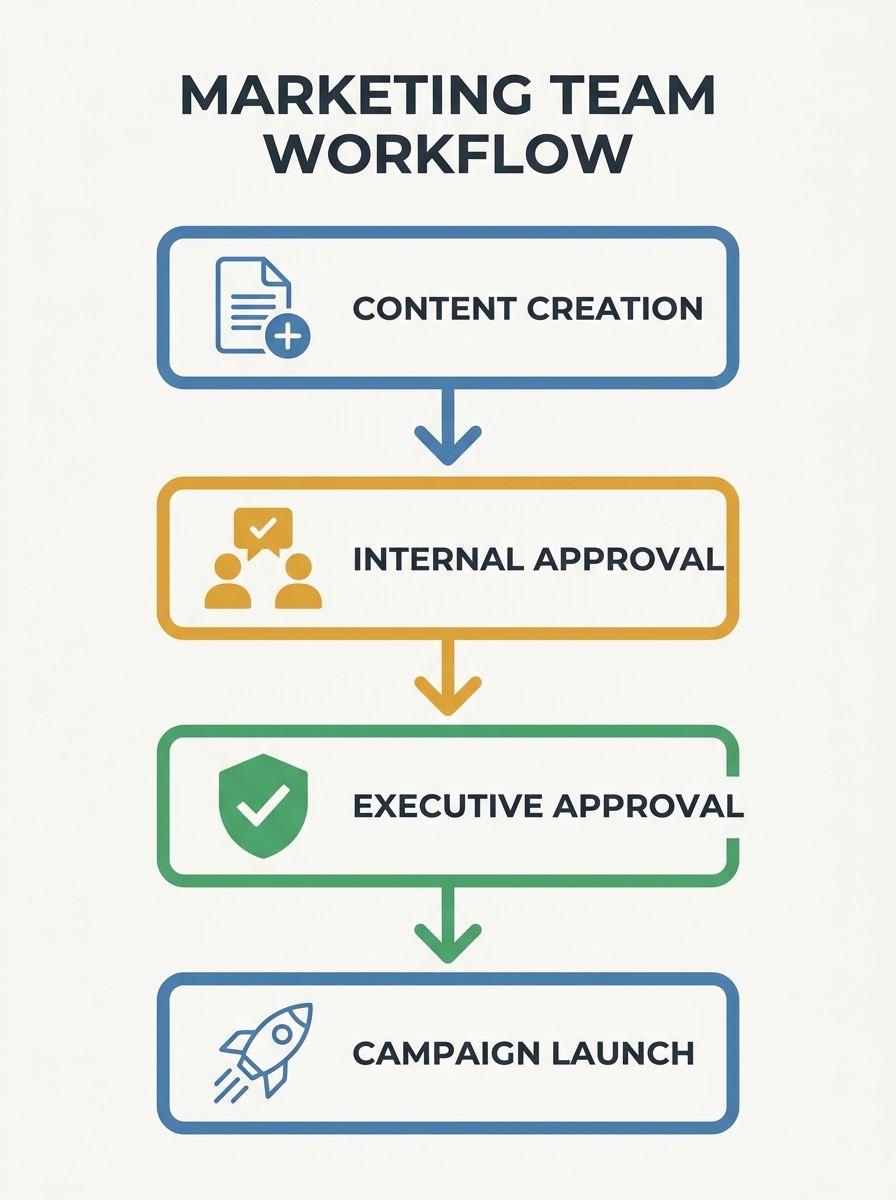
The Approval Bottleneck Replaced the Production Bottleneck
Marketing teams can generate content faster but cannot move it through organizational review processes at comparable speed. Eighty-eight percent of marketing leaders surveyed said their teams now generate content quickly, but approval sign-off remains the primary delay in campaign execution. The workflow analysis found approval processes, not content creation capacity, now determine campaign timelines across retail, financial services, professional services, manufacturing, healthcare, education, and hospitality sectors.
The shift inverts the expected outcome from AI content production tools that marketing technology vendors positioned as timeline compression solutions. Legal review, brand governance checks, compliance passes, and cross-functional handoffs—processes designed for lower content volumes—absorbed the additional output AI tools enabled without corresponding speed improvements.
Stakeholder Counts Multiplied Rather Than Consolidated
Campaign execution now requires significantly larger coordination groups than pre-AI workflows. Ninety-two percent of marketing leaders report a single campaign requires ten or more stakeholders to execute in 2026, with 44 percent requiring twenty or more stakeholders—up from 10 percent in 2025. More than half of respondents said campaigns now involve at least nine separate vendors or tools, compared to 93 percent who managed with eight or fewer tools the previous year.
The stakeholder expansion pattern contradicts efficiency assumptions underlying AI marketing tool adoption. Each AI capability introduced into marketing stacks added review roles rather than eliminating coordination layers—legal reviewers for AI-generated copy, brand governance leads checking tone consistency across larger asset volumes, IT partners managing integrations and data access. Sixty-seven percent of marketing leaders now spend more time coordinating with IT departments than before AI tool deployment, with financial services marketers reporting the highest IT involvement at 50 percent directly participating in workflow design.
Separate research from Knak found 85 percent of marketing teams missed at least one planned campaign launch date in the past year, with one in ten teams missing more than five launches. The Knak survey identified approval coordination, design production, and cross-team scheduling as the top three causes of missed deadlines, in that order. The research found email campaign launches typically involve four or more people, three to five tools, and two to three revision rounds—approximately $300 in internal labor per send. Half of surveyed teams still route approvals through email threads and Slack messages rather than dedicated workflow management systems.
The Readiness Gap Behind High Adoption Numbers
AI agent adoption reached 86 percent of marketing organizations surveyed, with 36 percent deploying at least one AI agent at scale—nearly double the 18 percent deployment rate from the previous year. Retail leads sector adoption at 53 percent scale deployment, likely reflecting high content volumes, mature e-commerce data infrastructure, and lighter regulatory requirements compared to financial services.
Operational readiness lagged substantially behind adoption metrics. Only 16 percent of surveyed marketing leaders said their organizations are fully prepared to operate at AI speed, while 67 percent reported having tools deployed but people and processes not yet adapted. Twenty percent of organizations have meaningfully standardized and documented workflows, with the remaining respondents describing scattered capability pockets across teams without coherent integration.
The readiness gap explains the timeline paradox—organizations added AI production capacity into approval-constrained systems without redesigning the downstream workflow automation infrastructure that determines actual campaign velocity. Production speed increased while system throughput declined.
What Happens Next
Marketing leaders face workflow redesign requirements that extend beyond tool selection into organizational structure and approval governance. The Typeface data suggests the next adoption wave will center on approval automation and stakeholder coordination systems rather than additional content generation capacity. Organizations that standardize workflows, reduce approval layers, and integrate AI tools into end-to-end campaign management systems should see the timeline compression AI vendors originally projected.
The research indicates retail marketers are positioned to lead the next phase given their higher scale deployment rates and lighter regulatory constraints. Financial services and healthcare organizations face longer transformation timelines due to compliance requirements and IT governance processes. Marketing technology vendors will likely shift product positioning from production speed to workflow integration and approval automation as the bottleneck becomes more widely recognized across the industry.

Sarah Chen
SEO strategist and web analytics expert with over 10 years of experience helping businesses improve their organic search visibility. Sarah covers keyword tracking, site audits, and data-driven growth strategies.
Related Articles

Marketing Automation Speed Race Masks Emerging Battle Over Proprietary Intelligence Layer
Ninety percent of marketing organizations now use AI agents operationally in their tech stack, not as pilot programs, according to Scott Brinker's Martech for 2026 research cited by EMARKETER, marking the first half of 2026 as the period when marketing automation platforms compressed campaign launch

The Content Production Bottleneck: Why Your Marketing Team Can't Keep Up With AI Content Demand
Paid media campaigns running across Google, Meta, TikTok, and LinkedIn collectively demand somewhere between 50 and 200 unique creative assets per month from a typical mid-market marketing team.

HubSpot Data Shows 80% of Marketers Now Use AI for Content Creation as Automation Platforms Replace Manual Workflows
HubSpot's 2026 State of Marketing Report reveals that 80% of marketers now deploy AI tools for content and media creation, marking a fundamental shift from manual production to automated operational systems, according to a guide published June 29 by the marketing software company. The data underscor
Explore more topics