
HubSpot Data Shows 80% of Marketers Now Use AI for Content Creation as Automation Platforms Replace Manual Workflows
HubSpot's 2026 State of Marketing Report reveals that 80% of marketers now deploy AI tools for content and media creation, marking a fundamental shift from manual production to automated operational systems, according to a guide published June 29 by the marketing software company. The data underscor

HubSpot Data Shows 80% of Marketers Now Use AI for Content Creation as Automation Platforms Replace Manual Workflows
HubSpot's 2026 State of Marketing Report reveals that 80% of marketers now deploy AI tools for content and media creation, marking a fundamental shift from manual production to automated operational systems, according to a guide published June 29 by the marketing software company. The data underscores a broader industry transition away from standalone chatbots toward integrated automation engines that connect directly to customer relationship management (CRM) databases and content management systems (CMS).
The report frames the adoption surge as a response to what HubSpot content strategist Kenny Lee describes as "the blank page problem"—the operational challenge of scaling content volume without proportional headcount increases. Organizations are consolidating fragmented point solutions into unified platforms that handle the complete lifecycle from keyword research through performance tracking, Lee wrote in the published guide.
Platform Evaluation Criteria Prioritize CMS Integration Over Standalone Features
HubSpot's evaluation framework identifies six technical capabilities that determine whether AI automation scales or stalls in production environments. Native CMS integration ranks first, eliminating the "copy-paste friction" that introduces human error when AI-generated drafts require manual transfer into publishing systems. The framework assigns equal priority to unified CRM data access, enabling AI to personalize content based on real-time buyer intent signals rather than generic demographic segments.
The guide distinguishes between basic text generators and what it terms "automation engines"—platforms capable of multi-format orchestration that transform a single asset into video scripts, podcast outlines, and social media variants without separate tool chains. HubSpot's analysis emphasizes AEO-readiness (answer engine optimization) as a minimum requirement for 2026 deployment, citing its own AEO grader tool that identifies content gaps across AI platforms including ChatGPT and Perplexity.
Brand governance controls and agentic AI capabilities round out the six-criteria framework. The former prevents "AI drift" through built-in voice profiles and verified knowledge bases; the latter refers to autonomous agents that execute multi-step workflows based on high-level business objectives without continuous human supervision.
Market Consolidation Favors Integrated Suites Over Single-Purpose Tools
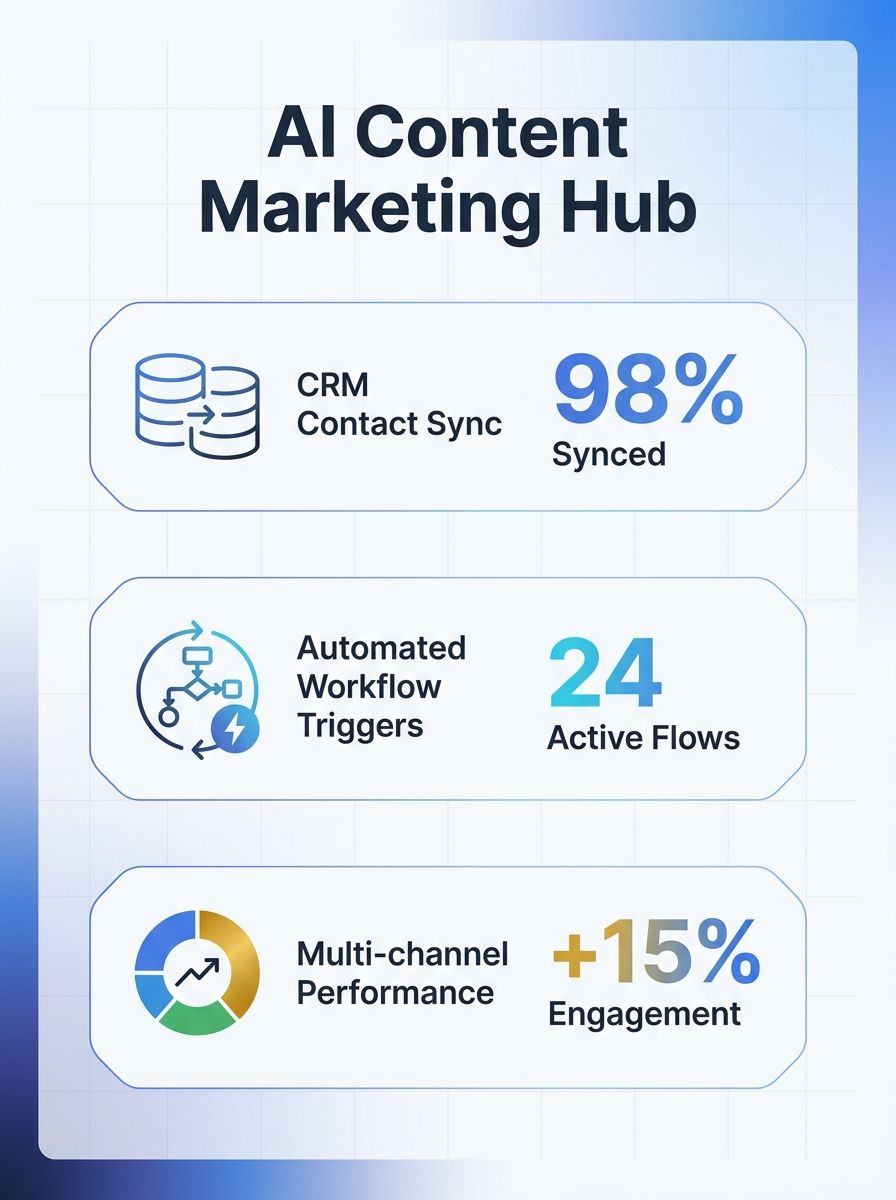
The guide identifies HubSpot's Content Hub as the lead recommendation, describing it as an "AI-powered content marketing software" that unifies creation, management, and distribution within a single platform. Content Hub's Breeze AI assistant connects to existing CRM records to ground content in documented customer behavior rather than assumed personas, according to the published specifications.
While HubSpot acknowledges competing platforms in the automation category, the guide's structure positions integrated suites against what it characterizes as "tool fragmentation"—the operational debt accumulated when marketing teams string together disconnected SaaS products. Organizations adopting piecemeal solutions face synchronization failures, duplicated licensing costs, and training overhead that erodes the efficiency gains AI promises, the analysis states.
The 80% adoption figure represents a 23-percentage-point increase from HubSpot's 2025 State of Marketing Report, which recorded 57% of marketers using AI for content tasks. That year-over-year acceleration aligns with broader enterprise software trends documented in recent B2B software buyer research, where AI chatbots displaced traditional search engines as the primary discovery channel for vendor evaluation.
Technical Requirements Shift Toward Agentic Workflows and Real-Time Data Access
The guide's emphasis on agentic AI capabilities reflects a market maturation beyond supervised generation. Agentic systems plan editorial calendars, trigger distribution sequences based on engagement thresholds, and optimize messaging variants without awaiting human approval at each decision node. This autonomous execution model addresses the publishing bottleneck that persists even when AI accelerates initial draft production—approval queues and manual scheduling still constrain output velocity in most organizations.
Real-time CRM integration solves a separate constraint: generic content that fails to convert because it lacks buyer-specific context. By querying live customer data, automation platforms can personalize references, case studies, and calls-to-action based on the recipient's documented stage in the purchase journey. HubSpot frames this capability as essential for maintaining relevance as search engines and AI answer engines increasingly filter out undifferentiated content.
The AEO-readiness criterion addresses distribution beyond owned channels. As generative AI platforms like ChatGPT and Google's AI Overviews capture search volume, content that ranks in traditional SERPs but fails to appear in AI-generated answers loses discoverability. HubSpot's framework treats AEO assessment as a production-stage requirement rather than a post-publishing audit, embedding answer-engine compatibility into the creation workflow.
Context and Outlook
The 80% adoption threshold signals that AI content automation has crossed from early-adopter experimentation into mainstream operational infrastructure. HubSpot's data positions 2026 as the year marketing organizations resolve the manual-versus-automated publishing trade-off, with integrated platforms capturing budget that previously supported freelance writers, editorial agencies, and scheduling tools.
The evaluation framework's emphasis on native CMS integration and agentic capabilities suggests the market is consolidating around platforms that can execute end-to-end workflows without human handoffs. Organizations evaluating tools in this category should prioritize demonstrated CRM connectivity and measurable publishing velocity improvements over feature breadth, particularly as the guide notes that disconnected tools create "governance risks" when AI outputs bypass approval controls. Teams seeking to maintain brand consistency while scaling content operations will likely face pressure to migrate from multi-vendor stacks to unified suites that embed AI across the entire production chain.
The reported adoption surge also reinforces the urgency of AEO capability, as marketing teams competing for visibility in AI-mediated discovery must optimize for answer engines simultaneously with traditional search. HubSpot's positioning of AEO-readiness as table stakes rather than optional enhancement reflects the growing consensus that content invisible to ChatGPT and Perplexity forfeits half the addressable audience, regardless of Google ranking performance.

Alex Chen
Alex Chen is a digital marketing strategist with over 8 years of experience helping enterprise brands and agencies scale their online presence through data-driven campaigns. He has led marketing teams at two successful SaaS startups and specializes in conversion optimization and multi-channel attribution modeling. Alex combines technical expertise with strategic thinking to deliver actionable insights for marketing professionals looking to improve their ROI.
Related Articles
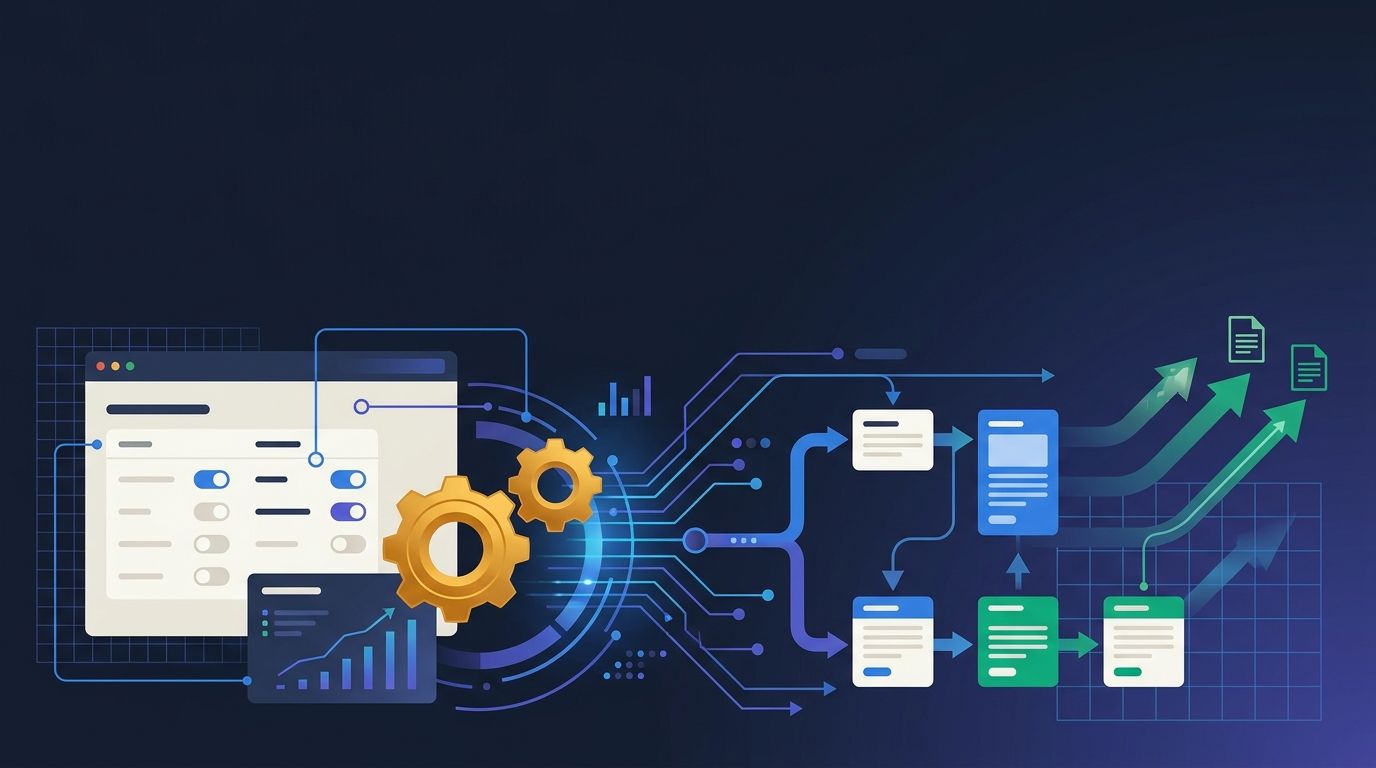
HubSpot Publishes Content Automation Workflow Guide Mapping Five-Stage Lifecycle Implementation
Content automation workflows now span five distinct lifecycle stages—research, drafting, optimization, distribution, and measurement—replacing manual handoffs with programmatic pipelines, according to a workflow guide HubSpot published July 1. The guide, authored by Kenny Lee, documents how marketin
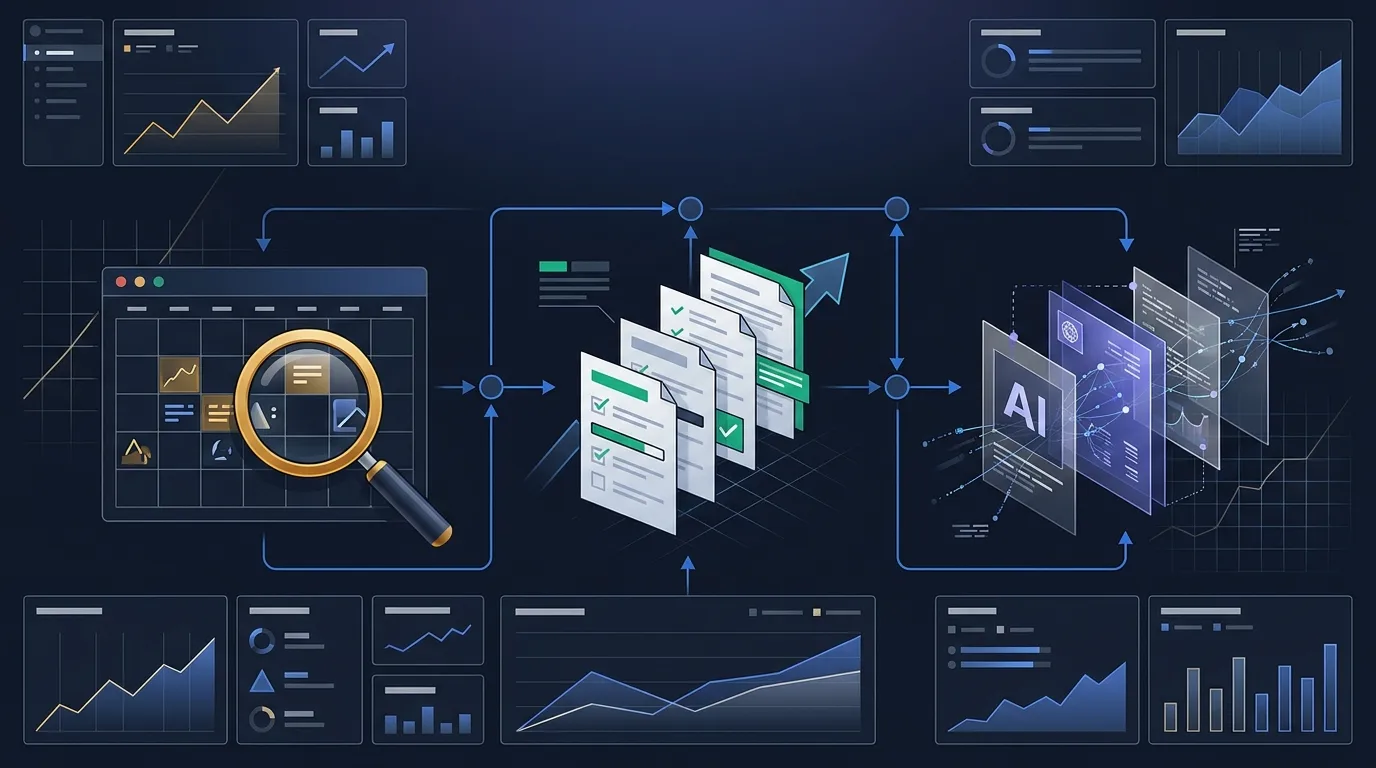
AI Content Production Guide Published Emphasizing Workflow Audit Over Tool Selection
TrySight.ai published a three-step framework on August 2, 2026, for scaling content operations with AI tools, positioning workflow auditing and strategic oversight ahead of technology implementation, according to the 2,400-word guide targeting marketing directors, solo founders, and agency teams.

Marketing Automation Speed Race Masks Emerging Battle Over Proprietary Intelligence Layer
Ninety percent of marketing organizations now use AI agents operationally in their tech stack, not as pilot programs, according to Scott Brinker's Martech for 2026 research cited by EMARKETER, marking the first half of 2026 as the period when marketing automation platforms compressed campaign launch
Explore more topics