
Digital Marketing Agency Publishes Analysis Showing AI Reshaping Paid Search Campaign Infrastructure from Keyword-Driven to Intent-Based Matching
Digital marketing agency ClickSlice published an analysis on August 4, 2026, documenting how artificial intelligence has shifted paid search advertising from manual keyword-driven campaigns to intent-based matching systems, according to the agency's report.

Digital Marketing Agency Publishes Analysis Showing AI Reshaping Paid Search Campaign Infrastructure from Keyword-Driven to Intent-Based Matching
Digital marketing agency ClickSlice published an analysis on August 4, 2026, documenting how artificial intelligence has shifted paid search advertising from manual keyword-driven campaigns to intent-based matching systems, according to the agency's report. The analysis, authored by ClickSlice founder Joshua George, identifies four structural changes: conversational search behavior replacing short keyword queries, AI-powered ad matching using multiple signals beyond keywords, automation-centered campaign management through smart bidding, and AI-generated summaries compressing attention on search results pages.
The report examines how search platforms now process detailed natural-language queries rather than the two-to-three-word keyword strings that dominated paid search strategy through 2024. George's analysis cites data showing users now type fuller questions describing specific needs—"what's the best CRM for a small plumbing business that needs invoicing and scheduling" instead of "best CRM"—giving platforms more context for ad matching.
Platform Matching Now Uses Multi-Signal Assessment
Google and competing search platforms now use AI to evaluate search intent, device type, location, time of day, previous behavior, audience signals, and historical conversion data when deciding which ads to serve, according to the ClickSlice analysis. The report cites research from JumpFly showing search platforms have moved beyond simple keyword matching to assess the underlying problem a searcher is trying to solve.
The change means advertisers can lose ground even with appropriate keyword targeting if messaging, landing pages, or conversion tracking are weak. "Ad matching is no longer driven only by the keyword in your account," the ClickSlice report states. "The platform is trying to judge which advertiser best fits the likely intent behind the query."
This shift parallels broader automation trends in ad campaign management, where platforms increasingly handle optimization decisions previously controlled by human managers.
Smart Bidding Replaces Manual Auction Management
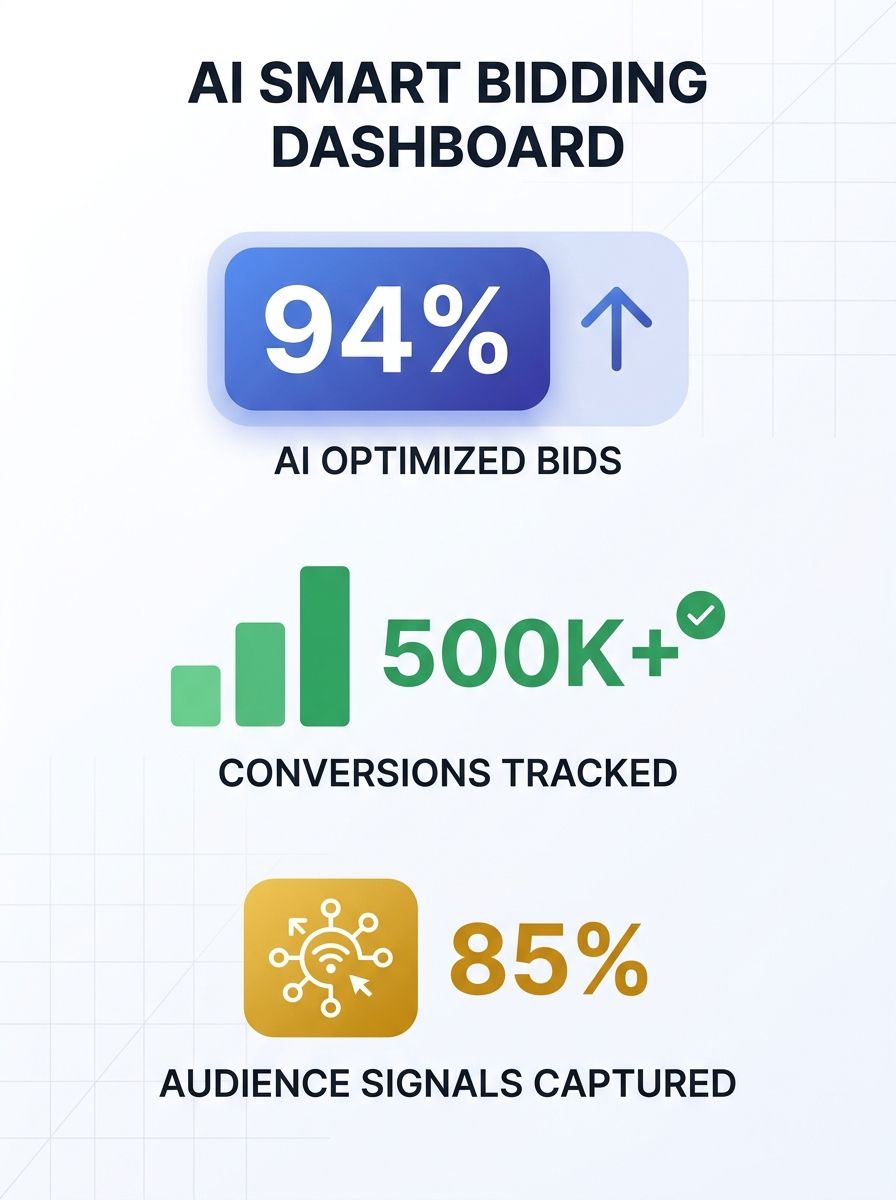
AI-powered bidding strategies including maximize conversions, target CPA, and target ROAS have become central to paid search campaign management, the analysis shows. The report notes machines can process auction-time signals faster than manual adjustment allows, but warns that poor conversion tracking or unclear campaign goals cause automated systems to optimize in counterproductive directions.
George's analysis emphasizes that reduced manual work increases the importance of strategic setup. Strong input data—accurate conversion tracking, clear campaign objectives, clean audience signals—determines whether automation improves or degrades performance.
The agency's findings align with the recommendation that advertisers focus on intent signals and conversion quality rather than expanding keyword volume to capture AI-driven traffic.
Broad Match Gains Ground as Intent Signals Strengthen
Platforms are pushing advertisers toward broader match types supported by smart bidding and stronger intent signals, according to the ClickSlice report. The analysis cites JumpFly research showing marketers should focus on ad copy quality, conversion tracking accuracy, and the signals that help AI understand conversion likelihood rather than building extensive keyword lists.
The trend represents a structural change for advertisers trained on tight keyword control. "The key now is not building the longest keyword list," the report states. "It is understanding which searches reflect real commercial intent and making sure your campaign can respond to them well."
AI Summaries Compress Click Opportunities
The analysis highlights competitive pressure from AI-generated summaries appearing in search results. Citing research from Basis, the ClickSlice report notes AI Overviews occupy more space on results pages and reduce attention for traditional listings, including paid ads. Users often scan AI-generated summaries first and scroll less, decreasing click opportunities for advertisers.
The change creates measurable effects: click-through rates may decline, competition for remaining clicks intensifies, cost per click becomes harder to justify, and stakeholders may misinterpret weaker CTR as campaign failure rather than structural page changes. George's analysis notes informational and research-heavy queries show the strongest effect from AI summary placement.
The phenomenon mirrors broader zero-click search trends where AI-generated answers reduce traffic to underlying sources.
Context and Outlook
The ClickSlice analysis frames AI's impact on paid search as a fundamental shift in how campaigns are built and measured rather than incremental optimization improvements. The report's emphasis on intent signals, conversion quality, and automation infrastructure reflects the industry's movement away from keyword-volume strategies that dominated through the early 2020s.
For digital marketing agencies and in-house teams, the analysis suggests campaign performance benchmarks require recalibration. If AI summaries compress click opportunities and platforms prioritize intent matching over keyword precision, historical CTR and impression-share metrics become less reliable indicators of campaign health. The focus shifts to conversion quality, audience signal strength, and the ability to feed automation systems accurate data about which clicks deliver business value.
The timing of ClickSlice's analysis coincides with broader questions about how paid search fits into multi-channel acquisition strategies as AI-generated answers increasingly satisfy user queries without requiring clicks to advertiser sites. Agencies managing paid search budgets now face dual pressures: optimizing campaigns for platforms that rely more heavily on AI-driven matching, while justifying spend in an environment where fewer searches result in site visits.

Sarah Chen
SEO strategist and web analytics expert with over 10 years of experience helping businesses improve their organic search visibility. Sarah covers keyword tracking, site audits, and data-driven growth strategies.
Related Articles

AI Overviews Now Trigger on 48% of Google Searches, Slashing Organic CTR Up to 61%
AI Overviews now appear on 48 percent of all Google search queries—a 58 percent increase over the past three months—and zero-click searches have climbed to 83 percent on queries that trigger the feature, according to data published by Quasa on May 24. The shift has driven organic click-through rate

Seventy-Three Percent of Marketers Now Prioritize AI-Generated Answer Optimization as Google Query Volume Reaches Record High
Seventy-three percent of marketers now prioritize content designed to appear in AI-generated search answers, according to a July 21 analysis by SEO Essex citing 2026 Interactive Advertising Bureau data, as Google search query volume reaches an all-time high despite declining click-through rates on t

Marketing Teams Report Organic Traffic as Primary KPI Despite 48% AI Overview Coverage and 68% Zero-Click Search Rate
Marketing teams continue to structure quarterly search performance reports around organic traffic and click-through metrics even as Google's AI Overviews now generate answers for 48 percent of all queries without requiring users to click any result, according to June 2026 research published by Spark
Explore more topics