
Seventy-Three Percent of Marketers Now Prioritize AI-Generated Answer Optimization as Google Query Volume Reaches Record High
Seventy-three percent of marketers now prioritize content designed to appear in AI-generated search answers, according to a July 21 analysis by SEO Essex citing 2026 Interactive Advertising Bureau data, as Google search query volume reaches an all-time high despite declining click-through rates on t
Seventy-Three Percent of Marketers Now Prioritize AI-Generated Answer Optimization as Google Query Volume Reaches Record High
Seventy-three percent of marketers now prioritize content designed to appear in AI-generated search answers, according to a July 21 analysis by SEO Essex citing 2026 Interactive Advertising Bureau data, as Google search query volume reaches an all-time high despite declining click-through rates on traditional organic listings.
The analysis, released by the Essex-based agency, found that Google Search ad revenue rose 19 percent year-over-year in the first quarter of 2026, a jump Alphabet Inc. attributed to query growth fueled by AI features including AI Overviews and AI Mode during its Q1 2026 earnings call. The convergence of record search usage and radically altered engagement patterns has forced local businesses to restructure content for AI visibility rather than traditional click-through metrics.
The strategic pivot comes as AI-generated summaries now appear in 18 percent of Google searches, fundamentally changing how users interact with search results and which visibility signals matter most to businesses competing for consumer attention.
Traditional Click-Through Rates Contract Under AI Summary Dominance
AI-generated summaries at the top of Google search results have measurably altered user behavior, according to Pew Research Center analysis of browsing data from 900 U.S. adults. Users click traditional search result links in just 8 percent of visits when an AI summary appears, compared with 15 percent when no summary is present, the 2025 Pew study found.
Engagement with the summaries themselves remains minimal. Links inside AI overviews drew clicks in only 1 percent of visits, according to the Pew data. Users also abandon browsing sessions more frequently after viewing AI-enhanced results pages, with 26 percent stopping after pages containing summaries compared with 16 percent for traditional results pages.
The shift has direct implications for local businesses that historically relied on organic traffic metrics. Site visits, page views, and click-through rates become less reliable visibility indicators when user interaction halts at the search engine results page. Businesses are instead tracking brand mentions and direct inquiries as primary performance signals, the SEO Essex analysis noted.
Conversational Query Growth Drives Record Search Volume
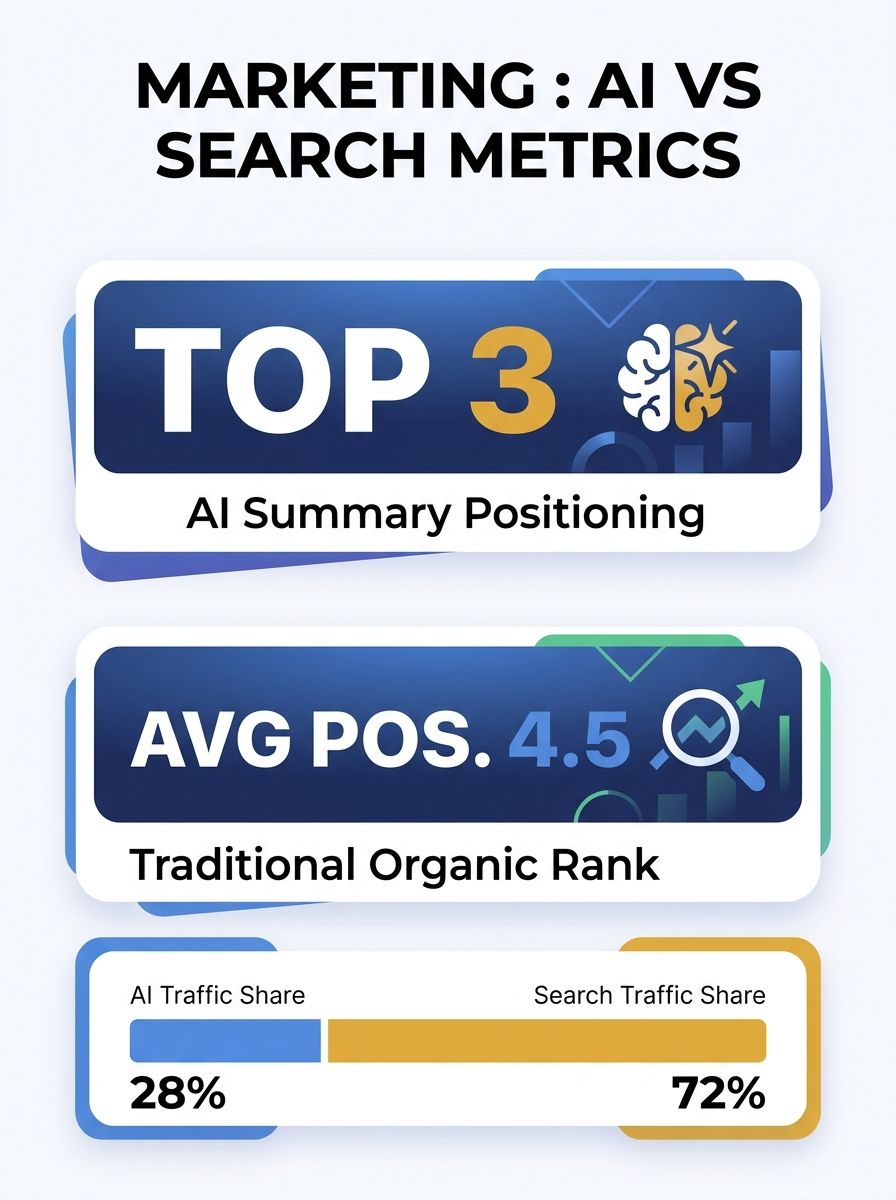
Overall search query volume continues expanding even as click-through rates on individual pages decline, driven by users adopting conversational and long-tail question formats that use AI's natural-language capabilities. Roughly 60 percent of search queries beginning with question words like "who," "when," "what," or "why" now trigger AI-generated summaries, according to Pew Research Center's 2025 analysis.
The surge in query complexity presents a structural challenge for local businesses. Increased search volume no longer translates predictably into website traffic under traditional conversion models. Businesses must restructure information architecture to serve as direct data sources for AI systems rather than destinations for click-through traffic.
Providing entity-structured content, precise data, and clear information increases the likelihood of AI summary placement, the analysis found. Businesses that fail to structure digital presence for natural language processing risk exclusion from both AI summaries and traditional organic listings, effectively becoming invisible to systems mediating consumer discovery.
The pattern mirrors findings in recent research showing AI-referred traffic converts at higher rates but remains largely invisible to standard analytics platforms, creating measurement gaps for marketers tracking cross-channel performance.
Small Business AI Adoption More Than Doubles in Two Years
Small and medium-sized enterprises are rapidly integrating generative AI into operations and marketing to maintain competitive positioning as search mechanics evolve. Fifty-eight percent of U.S. small businesses now actively use generative AI, according to a 2025 survey of 3,870 enterprises by the Chamber of Commerce Technology Engagement Center.
The adoption rate more than doubled from 23 percent in 2023 and rose from 40 percent in 2024, the Chamber data showed. High-tech adopters report stronger sales and profits than low-tech peers, with 84 percent of owners planning to expand technology use.
Small businesses apply AI tools to content generation, SEO audits, review management, and structural optimization. Companies ensure core business data including hours, services, pricing, and locations remains accessible to algorithms powering search results. This enables smaller enterprises to produce organized information that search engines and AI models can parse and validate, the analysis noted.
The widespread adoption suggests AI-driven information structuring has shifted from experimental advantage to baseline requirement for local market survival, according to SEO Essex's assessment.
Marketing Priorities Shift Toward Answer Engine Positioning
The Interactive Advertising Bureau's 2026 Outlook Study surveyed more than 200 brand and agency buyers and found artificial intelligence has become the defining force reshaping marketing priorities. The 73 percent figure indicating marketers now prioritize AI-generated answer optimization represents a fundamental strategic pivot from traditional search engine optimization focused on click-through traffic.
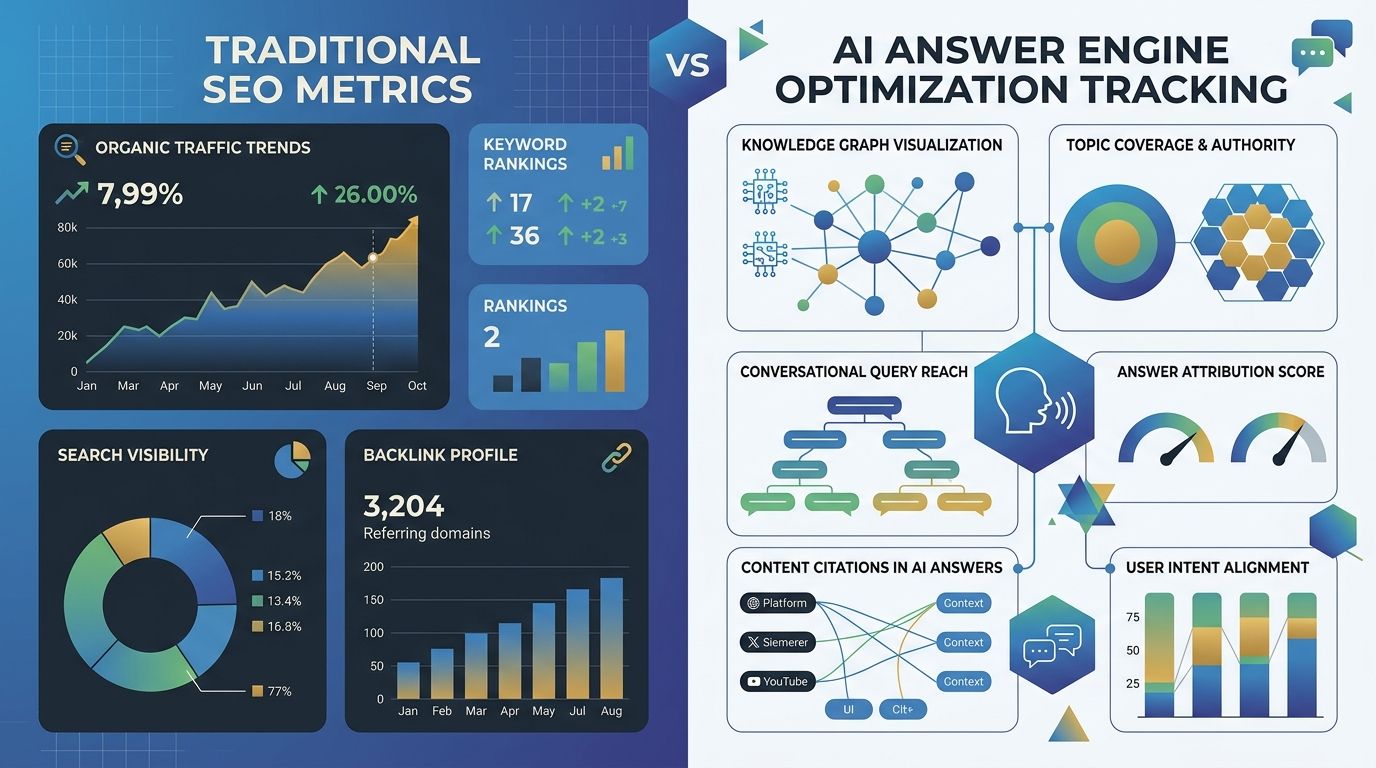
Marketers are moving toward what the industry terms "answer engine optimization" or "generative engine optimization," distinct from traditional SEO in its focus on citation placement within AI-generated responses rather than link positioning on search results pages. The approach prioritizes structured data, entity clarity, and direct answers over keyword density and backlink volume.
The shift parallels patterns documented in HubSpot's reported 1,850 percent lead increase through answer engine optimization strategy, demonstrating measurable business outcomes from the strategic reorientation.
Organizations are restructuring content teams and measurement frameworks to accommodate the new visibility paradigm, with some agencies reporting they now allocate more budget to AI answer positioning than to traditional organic search optimization.
What Happens Next
The convergence of record search volume and declining traditional click-through rates will likely accelerate the marketing industry's structural shift toward answer engine optimization as the primary search visibility strategy. Businesses that continue optimizing exclusively for traditional organic rankings without addressing AI answer placement face growing disadvantage as AI summaries expand to cover more query types and occupy more prominent positions in search interfaces.
The measurement challenge remains unresolved for most organizations. Standard analytics platforms track clicks and sessions but lack native instrumentation for brand mentions within AI-generated answers or indirect conversions that bypass traditional referral paths. Marketing teams will need to implement custom tracking frameworks or adopt specialized tools designed for multi-channel SEO visibility that encompasses both traditional search and AI answer engines.
Local businesses with structured entity data, clear service descriptions, and authoritative information sources positioned to meet AI model requirements will gain disproportionate visibility advantages over competitors still optimizing for 2023-era search mechanics. The 58 percent small business AI adoption rate suggests the capability gap is closing rapidly, making early 2026 a critical window for businesses to restructure information architecture before answer engine optimization becomes table stakes across all local markets.
Sarah Chen
SEO strategist and web analytics expert with over 10 years of experience helping businesses improve their organic search visibility. Sarah covers keyword tracking, site audits, and data-driven growth strategies.
Related Articles
Brands Ranking #1 on Google Missing 62% of AI Overview Citations, Adweek Analysis Shows
Brands holding first-page Google rankings are absent from 62% of citations in AI-generated search answers, according to a July 22 analysis by Adweek examining generative engine optimization adoption patterns, as only 38% of pages cited in Google's AI Overviews come from URLs in the top ten tradition
AI Overviews Now Trigger on 48% of Google Searches, Slashing Organic CTR Up to 61%
AI Overviews now appear on 48 percent of all Google search queries—a 58 percent increase over the past three months—and zero-click searches have climbed to 83 percent on queries that trigger the feature, according to data published by Quasa on May 24. The shift has driven organic click-through rate
Marketing Teams Report Organic Traffic as Primary KPI Despite 48% AI Overview Coverage and 68% Zero-Click Search Rate
Marketing teams continue to structure quarterly search performance reports around organic traffic and click-through metrics even as Google's AI Overviews now generate answers for 48 percent of all queries without requiring users to click any result, according to June 2026 research published by Spark
Explore more topics