
Marketing Teams Report Organic Traffic as Primary KPI Despite 48% AI Overview Coverage and 68% Zero-Click Search Rate
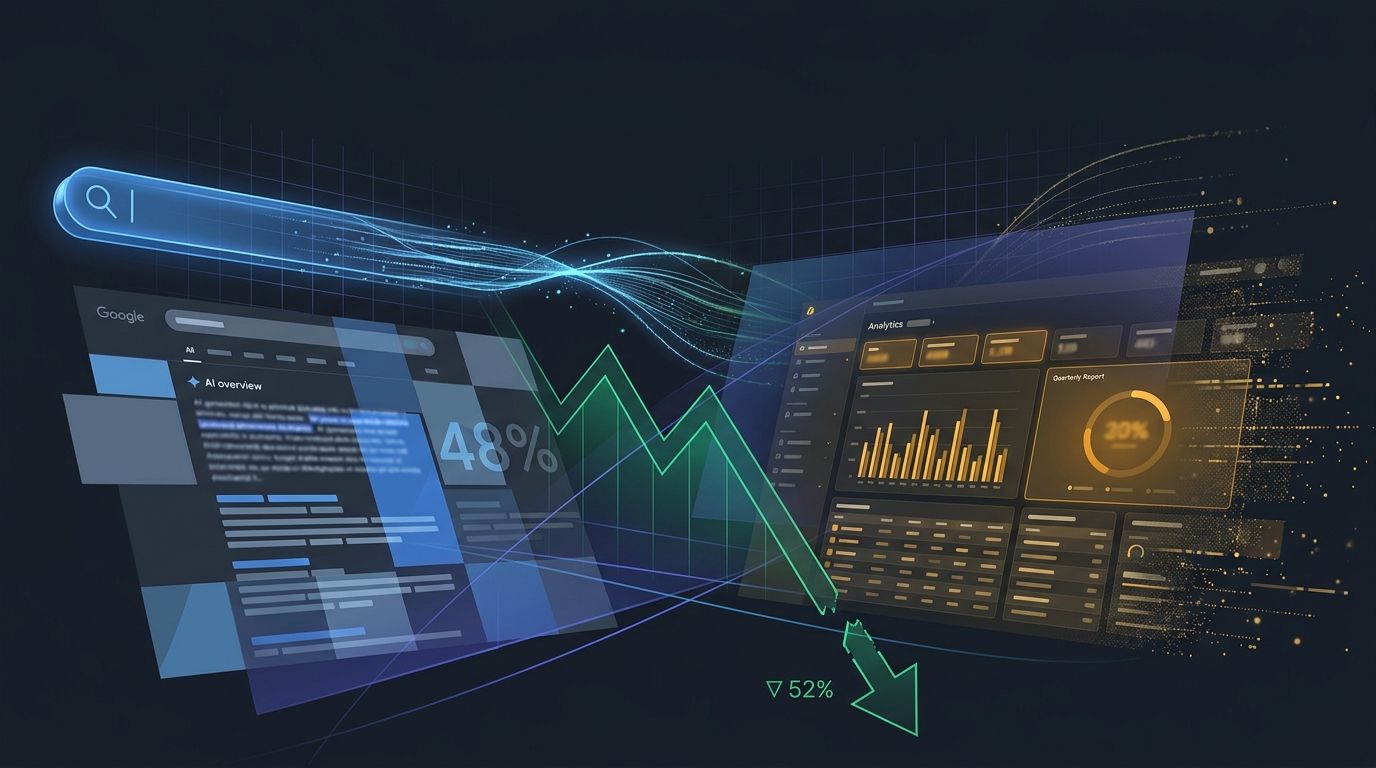
Marketing teams continue to structure quarterly search performance reports around organic traffic and click-through metrics even as Google's AI Overviews now generate answers for 48 percent of all queries without requiring users to click any result, according to June 2026 research published by Spark
Marketing Teams Report Organic Traffic as Primary KPI Despite 48% AI Overview Coverage and 68% Zero-Click Search Rate
Marketing teams continue to structure quarterly search performance reports around organic traffic and click-through metrics even as Google's AI Overviews now generate answers for 48 percent of all queries without requiring users to click any result, according to June 2026 research published by SparkToro analyzing Similarweb clickstream data.
AI Overview Deployment Accelerates to 48 Percent Query Coverage
Google expanded AI Overview coverage from roughly 30 percent of queries to 48 percent in just three months, according to tracking data published by TheStacc. The 18-percentage-point expansion represents one of the fastest feature rollouts Google has deployed across its search platform.
Sixty-eight percent of all Google searches in the United States ended without a single click during the first four months of 2026, the SparkToro analysis found. That figure rose from 60.45 percent in 2024 and roughly 45 percent a decade earlier. The zero-click share includes searches that produce no clicks to any destination—organic results, paid ads, or Google's own properties.
Click-Through Rates Drop 47 Percent When AI Overviews Appear
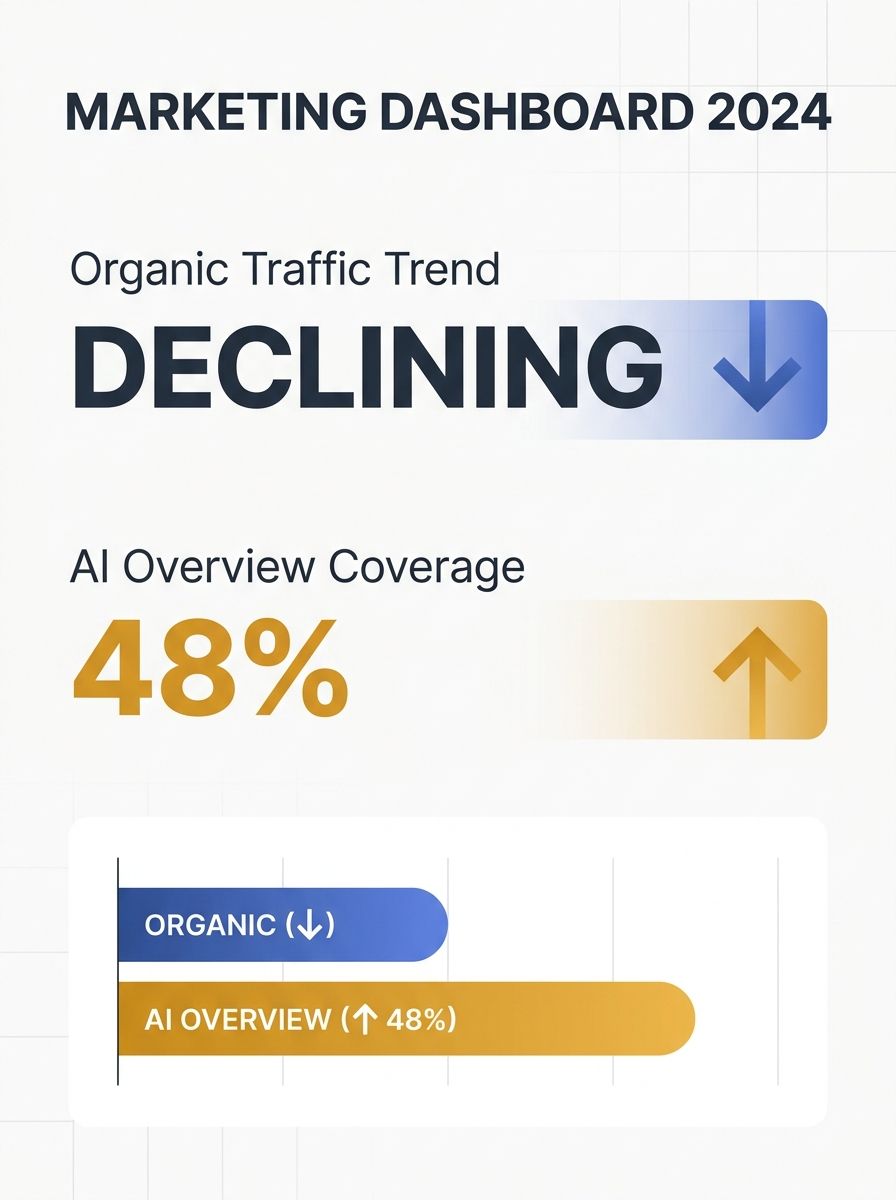
Users click through on just 8 percent of searches when an AI Overview is present, compared with 15 percent without one, according to research published by Pew Research. The 47-percent decline in click-through rate occurs even as the AI Overview itself frequently sources information from the same domains that would have received those clicks under traditional results.
SparkToro founder Rand Fishkin documented in the June report that the share of searches generating at least one click of any kind fell 9.51 percentage points between 2024 and 2026, a 22.9-percent decline over two years. During the same period, the share of searches that led to another Google search rose 7.2 percentage points, indicating Google successfully retains users within its ecosystem rather than sending them to external sites or competing search engines.
The shift has not impaired Google's financial performance. "Google's financial and stock performance suggests these changes have boosted both ad revenue and investor confidence," Fishkin wrote in the analysis. Paid clicks and cost per click have both risen over the same period that organic clicks declined, similar to patterns documented in previous research showing first-page rankings now deliver 58 percent fewer clicks.
Most Quarterly Reports Still Measure Traffic as Primary Search Success Indicator
Marketing organizations continue to treat organic sessions and click-through rate as the primary indicator of content strategy performance, according to the SparkToro report. That framework assumes a click is roughly proportional to value delivered—more visibility produces more clicks which produces more business outcomes.
Zero-click search breaks that assumption. A brand's content can serve as the exact source an AI Overview draws from, shaping what millions of searchers read as the answer, while the same brand's analytics dashboard registers no activity because no user clicked through to generate a measurable session. The disconnect between actual search visibility and reported performance is widening as AI Overview coverage expands.
Google confirmed at I/O 2026 that AI Mode, a more conversational search interface that produces even fewer clicks than standard AI Overviews, had already surpassed one billion monthly users, with query volume more than doubling each quarter. AI Mode accounted for only 0.34 percent of searches during the SparkToro study period, suggesting the zero-click share measured in early 2026 represents a floor rather than a ceiling.
Branded and Transactional Queries Retain Higher Click Rates
Certain query categories still convert to clicks at meaningfully higher rates despite AI Overview expansion. Branded searches, local business queries, and high-intent transactional searches maintain above-average click-through performance, according to search analyst Cyrus Shepard's research on which sites continue to win traffic from Google.
But informational and comparison content—the broad middle category that most brand marketing has historically been built around—now generates clicks as the exception rather than the rule. Marketing teams optimizing content to rank for these queries may see improved rankings with no corresponding traffic increase if an AI Overview appears for the target terms, a dynamic similar to brands holding first-page rankings while missing 62 percent of AI Overview citations.
Fishkin Recommends Brand Mention Frequency as Replacement Metric
Fishkin's analysis recommends marketing teams stop treating traffic as the primary KPI and build what he calls a "correlation dashboard" instead. The framework includes audience research to understand where a brand's actual audience pays attention, direct measurement of brand mention frequency inside AI answers, and influence metrics on platforms a brand doesn't own or control, rather than metrics that only register a visit back to owned property.
The recommendation aligns with broader industry recognition that traditional SEO visibility audits must expand beyond Google rankings to account for how users actually encounter brand information across AI-powered search experiences. Marketing analytics platforms have been slow to incorporate these signals, leaving most teams reporting against metrics that describe a shrinking share of actual search behavior.
The Takeaway
The 48-percent AI Overview coverage and 68-percent zero-click rate are not temporary anomalies Google is managing but structural shifts the company has clear financial incentive to expand. Marketing teams building quarterly search reports around organic traffic and click-through rate are measuring a phenomenon that describes less than a third of what search delivers, and that share is declining each quarter.
The practical implication isn't that SEO stops mattering—it's that the evidence a brand's search strategy is working has moved from clicks counted in analytics to mentions detected inside AI-generated answers. Teams that continue reporting traffic as the primary search KPI will show declining performance even when their content successfully shapes what millions of searchers read as authoritative answers, because the measurement framework wasn't built for a search environment where most queries never produce a click to count.
The gap between what quarterly reports measure and what actually determines search visibility will widen as AI Mode adoption accelerates and AI Overview coverage continues expanding beyond the current 48-percent baseline.
Alex Chen
Alex Chen is a digital marketing strategist with over 8 years of experience helping enterprise brands and agencies scale their online presence through data-driven campaigns. He has led marketing teams at two successful SaaS startups and specializes in conversion optimization and multi-channel attribution modeling. Alex combines technical expertise with strategic thinking to deliver actionable insights for marketing professionals looking to improve their ROI.
Related Articles
AI Overviews Now Trigger on 48% of Google Searches, Slashing Organic CTR Up to 61%
AI Overviews now appear on 48 percent of all Google search queries—a 58 percent increase over the past three months—and zero-click searches have climbed to 83 percent on queries that trigger the feature, according to data published by Quasa on May 24. The shift has driven organic click-through rate
Ranking #1 on Google Now Delivers 58% Fewer Clicks Than It Used To, Gravitate Analysis Finds
First-position organic search results on Google now generate 58% fewer clicks when AI Overviews appear on the page compared to traditional search results, according to an analysis released July 9 by Gravitate, a Vancouver-based digital marketing agency.
Brands Ranking #1 on Google Missing 62% of AI Overview Citations, Adweek Analysis Shows
Brands holding first-page Google rankings are absent from 62% of citations in AI-generated search answers, according to a July 22 analysis by Adweek examining generative engine optimization adoption patterns, as only 38% of pages cited in Google's AI Overviews come from URLs in the top ten tradition
Explore more topics