
Google Publishes First Official Guide for AI Search Visibility as Agencies Double Down on Generative Engine Optimization
Google released its first official guidance for optimizing content in AI-generated search features in mid-May 2026, marking the company's most explicit acknowledgment that generative engine optimization has become a distinct practice alongside traditional search engine optimization, according to doc

Google Publishes First Official Guide for AI Search Visibility as Agencies Double Down on Generative Engine Optimization
Google released its first official guidance for optimizing content in AI-generated search features in mid-May 2026, marking the company's most explicit acknowledgment that generative engine optimization has become a distinct practice alongside traditional search engine optimization, according to documentation published on Google's support site.
The guidance addresses what influences visibility in AI Overviews and AI Mode, Google's two AI-powered layers that now appear above traditional search results. The document debunks practices marketed under the generative engine optimization banner over the past two years, including special schema markup and inauthentic brand mention campaigns, instead prioritizing unique content grounded in expertise that AI systems cannot source elsewhere.
PMG, one of the world's largest independent marketing agencies, now advises clients to pilot generative engine optimization at 1.5 to 2 times their existing search budget, according to Matt Allfrey, the firm's head of SEO EMEA. The recommendation reflects industry-wide recognition that AI-generated answers have become the primary search product, replacing the traditional list of blue links.
Investment Patterns Shift Toward AI Search Optimization
A June 2026 Semrush study of nearly 500 marketing professionals found that 38 percent plan to invest in AI search optimization compared to 36 percent planning traditional SEO investment, marking the first time AI optimization investment intent has exceeded conventional search optimization. The same study reported that 85 percent of marketers said AI has already changed how they approach search.
The crossover reflects structural changes in how search engines present results. In early May 2026, Google announced updates to AI Mode and AI Overviews that include suggested follow-up angles at the end of AI responses, website previews appearing when users hover over links, highlighted results from news publications a user subscribes to, and citations placed directly beside relevant text.
Referral traffic from search engines has fallen by approximately 60 percent for small publishers and 47 percent for medium-sized publishers over the past two years, according to Nieman Lab reporting cited in the guidance analysis. The decline correlates with the expansion of AI-generated answer features that synthesize information without requiring users to click through to source websites.
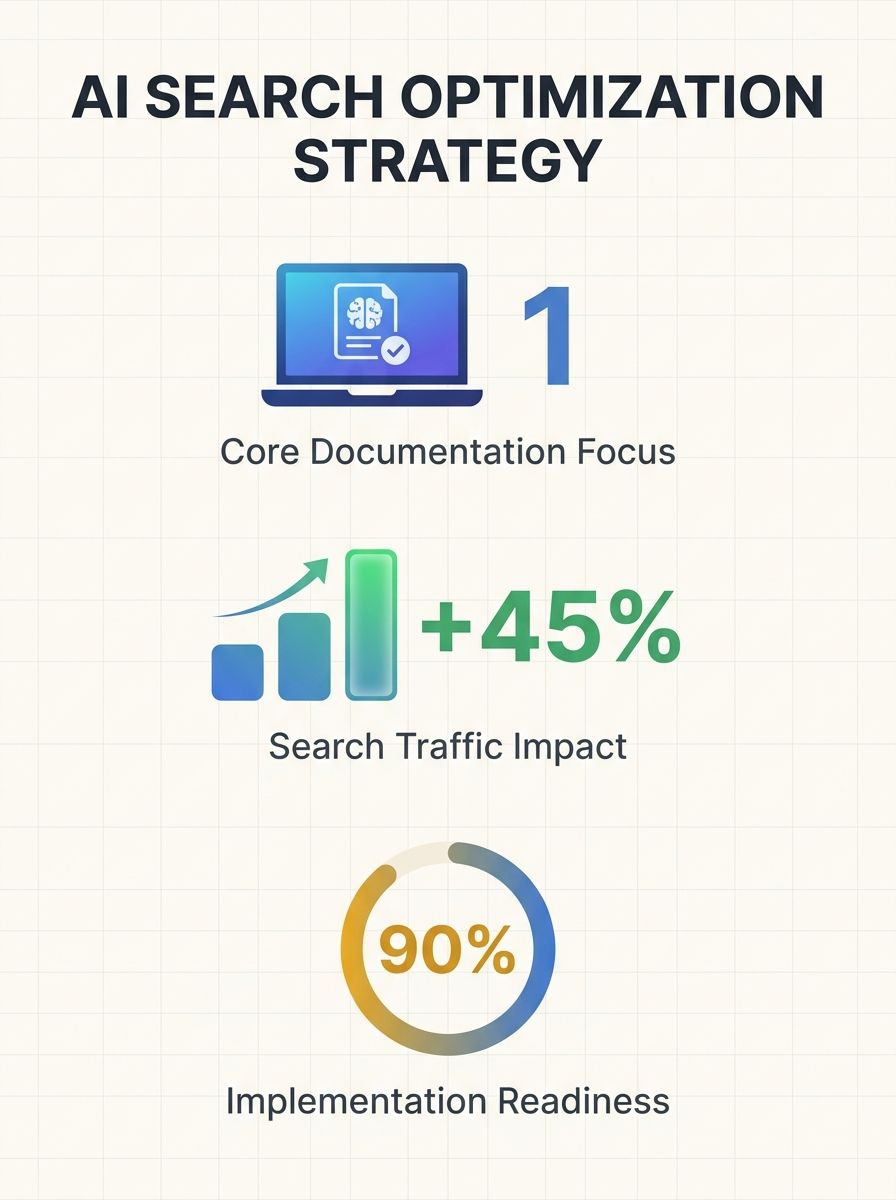
Google Names GEO and AEO as Formal Service Categories
In early June 2026, Google updated its long-standing guidance on hiring SEO help, adding documentation on evaluating third-party tools and services and explicitly naming generative engine optimization (GEO) and answer engine optimization (AEO) as service categories. The updated guidance includes vetting questions for business owners: whether providers cite official Google documentation and whether their AI optimization advice aligns with Google's published guidance.
The May 2026 optimization guide states that optimizing for generative AI search remains fundamentally search engine optimization from Google's perspective, but operates within different visibility dynamics. The document emphasizes that AI visibility functions as a winner-takes-all environment where businesses appearing in AI-generated recommendations capture disproportionate attention compared to those absent from algorithmic citations.
Google's guidance contradicts several aggressive marketing claims made by GEO service providers over the past two years. The company states no special schema markup unlocks AI visibility, and pursuing inauthentic brand mentions across the web delivers less effectiveness than many optimization firms suggest. The documentation instead rewards unique, non-commodity content that demonstrates genuine subject matter expertise.
The official guidance represents Google's first acknowledgment that AI-powered search features require distinct optimization approaches while remaining grounded in search quality principles. Prior to May 2026, the company had not published formal documentation addressing how businesses should approach visibility in AI Overviews or AI Mode, leaving marketing teams to rely on third-party analysis and experimental testing.
Digital marketing professionals tracking AI-generated answer optimization trends have noted that 73 percent of marketers now prioritize AI answer optimization as Google query volume reaches record highs, while separate research shows brands ranking number one on Google miss 62 percent of AI Overview citations, illustrating the disconnect between traditional search rankings and AI visibility.
What Happens Next
Marketing agencies and in-house teams will likely adjust budget allocations based on Google's formal recognition of GEO and AEO as distinct service categories, particularly given the investment guidance from firms like PMG recommending budgets at 1.5 to 2 times existing search spend. The June 2026 Semrush data showing AI search optimization investment intent exceeding traditional SEO for the first time suggests this budget shift is already underway across the industry.
Google's publication of official optimization guidance creates a reference standard for evaluating third-party GEO service claims, particularly the vetting questions included in the June hiring guidance update. Marketing managers can now compare vendor recommendations against Google's stated positions on schema markup effectiveness and brand mention strategies, potentially reducing adoption of tactics the company has explicitly dismissed.
The traffic decline figures—60 percent for small publishers and 47 percent for medium-sized publishers over two years—indicate that businesses delaying AI visibility efforts face compounding disadvantage as AI-generated answers become the primary search interface. Organizations that implement Google's guidance framework before competitors establish citation patterns in AI responses will likely capture disproportionate visibility in the winner-takes-all environment the company's own documentation now acknowledges.
Alex Chen
Alex Chen is a digital marketing strategist with over 8 years of experience helping enterprise brands and agencies scale their online presence through data-driven campaigns. He has led marketing teams at two successful SaaS startups and specializes in conversion optimization and multi-channel attribution modeling. Alex combines technical expertise with strategic thinking to deliver actionable insights for marketing professionals looking to improve their ROI.
Related Articles
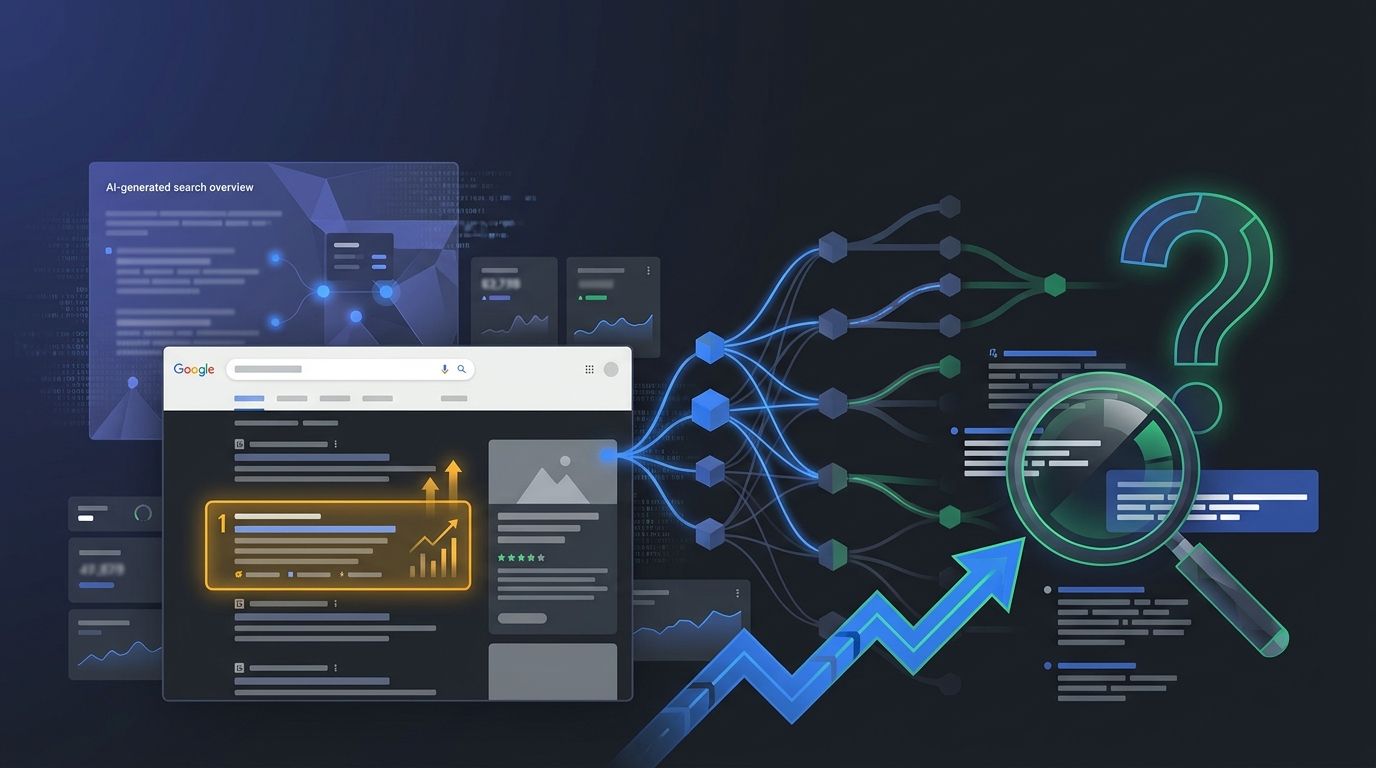
Brands Ranking #1 on Google Missing 62% of AI Overview Citations, Adweek Analysis Shows
Brands holding first-page Google rankings are absent from 62% of citations in AI-generated search answers, according to a July 22 analysis by Adweek examining generative engine optimization adoption patterns, as only 38% of pages cited in Google's AI Overviews come from URLs in the top ten tradition
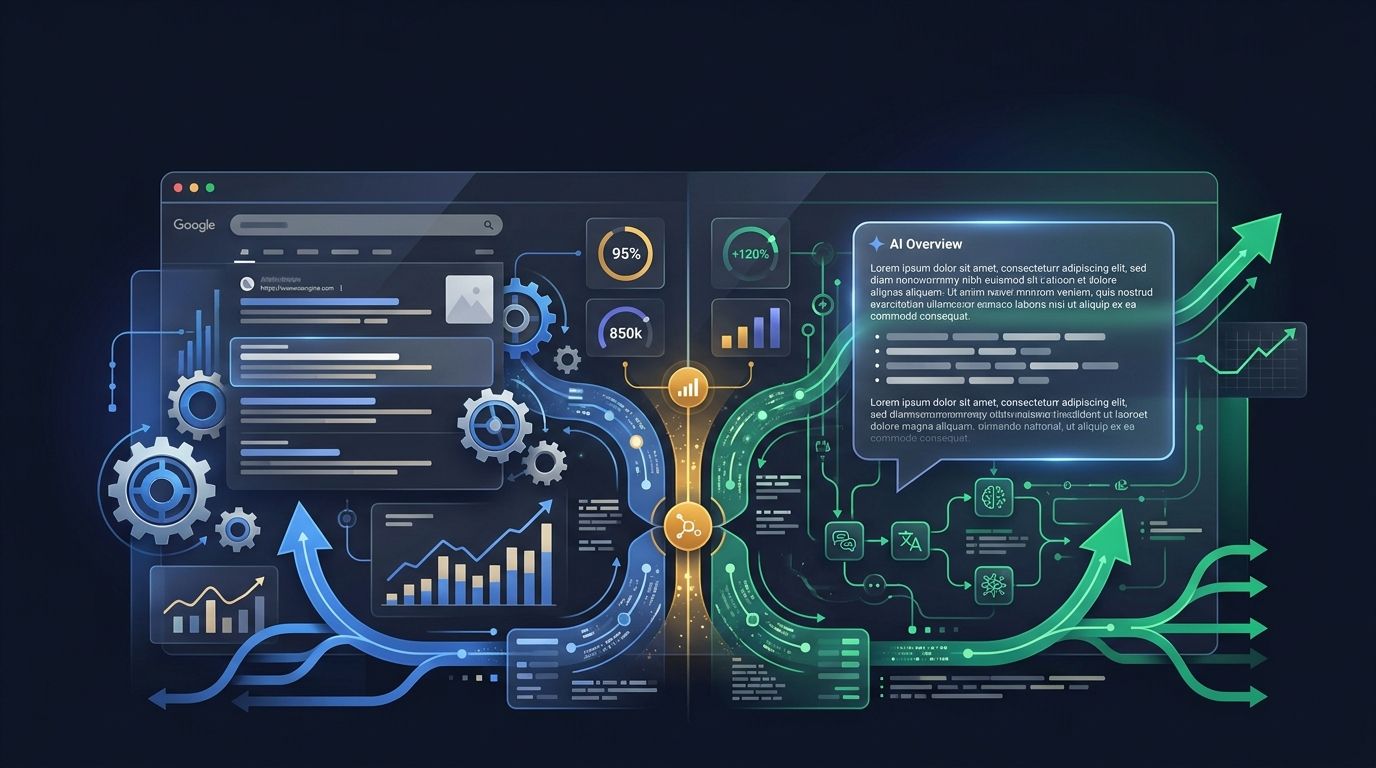
The Dual-Engine Visibility Strategy: Getting Your Content Into Both Google Search and AI Overviews in 2026
Google's own AI optimization guide, published May 15, 2026, explicitly advises site owners against creating separate AI-specific content. That guidance contradicts the central premise of every "AEO specialist" selling parallel content strategies for traditional search and generative AI surfaces.
The GEO Visibility Gap: Why Your Google Rankings Don't Matter If AI Chatbots Can't Find You
Arobis AI Research released a study on July 1 analyzing 100 SaaS brands across 10 software categories and found that Google search rankings and AI chatbot recommendations have, in the study's words, "almost nothing to do with each other.
Explore more topics