
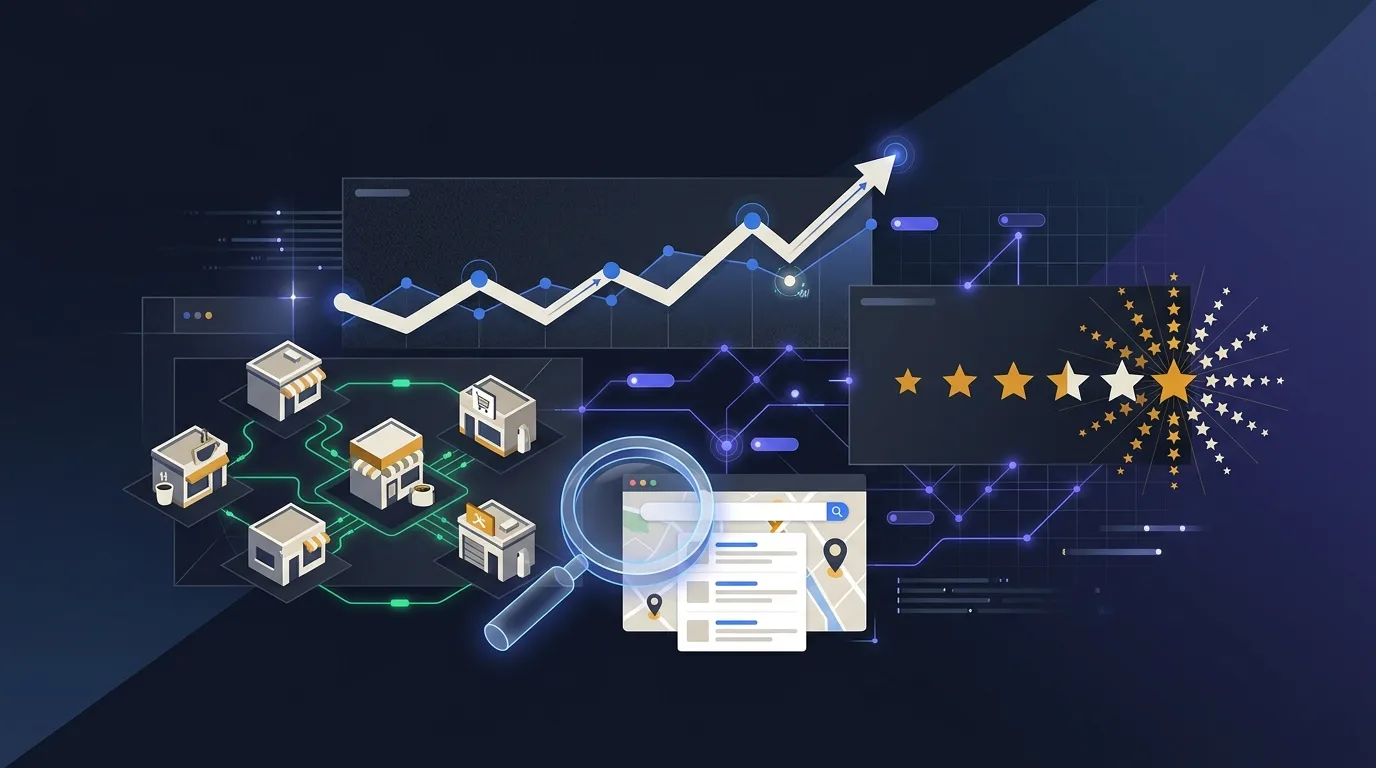
AI Tool Adoption for Local Business Recommendations Jumps from 6% to 45% in Twelve Months
Adoption of AI tools for local business recommendations surged from 6% to 45% within twelve months, according to local SEO statistics published July 15, 2026 by Affinco, while 46% of all Google searches now carry local intent and only 35% of small and mid-sized businesses maintain a Google Business
AI Tool Adoption for Local Business Recommendations Jumps from 6% to 45% in Twelve Months
Adoption of AI tools for local business recommendations surged from 6% to 45% within twelve months, according to local SEO statistics published July 15, 2026 by Affinco, while 46% of all Google searches now carry local intent and only 35% of small and mid-sized businesses maintain a Google Business Profile.
The data set, compiled from Google's 2026 local search metrics and third-party research, shows 80% of US consumers search for a local business online at least once per week, with 32% conducting daily searches. Affinco reported that 84% of local searches target new businesses rather than brand-name queries, indicating high openness to discovery among searchers.
The shift toward AI-powered recommendations coincides with Google's introduction of AI Overviews in search results, which has reshaped how users encounter local business information. Monthly "near me" searches exceeded 200 million globally in early 2026, with the keyword phrase alone accounting for 7.1 million monthly searches in Semrush data.
AI Platforms Challenge Google's Local Search Dominance
AI chatbots and recommendation engines now handle nearly half of local business discovery queries, marking the fastest platform migration in local search history. The 39-percentage-point increase occurred between January 2025 and January 2026, according to the Affinco research.
The report noted that consumers still cite Google Maps, Google Search, and business websites as the three most trusted sources for local business information, but AI platforms have inserted themselves into the consideration phase. Affinco operates SEO campaigns across 29 domains and reported an estimated 18% year-over-year increase in local intent queries across its portfolio, even as overall organic clicks declined due to AI Overview placement in search results.
The global SEO services market reached $83.98 billion in 2026 and is projected to grow to $148.86 billion by 2031, driven in part by demand for multi-platform visibility strategies that extend beyond Google alone. This trajectory aligns with broader shifts documented in research showing AI-referred traffic converts at 11 times the rate of traditional search, though attribution challenges persist.
"Near Me" Queries Deliver 76% Store Visit Rate Within 24 Hours
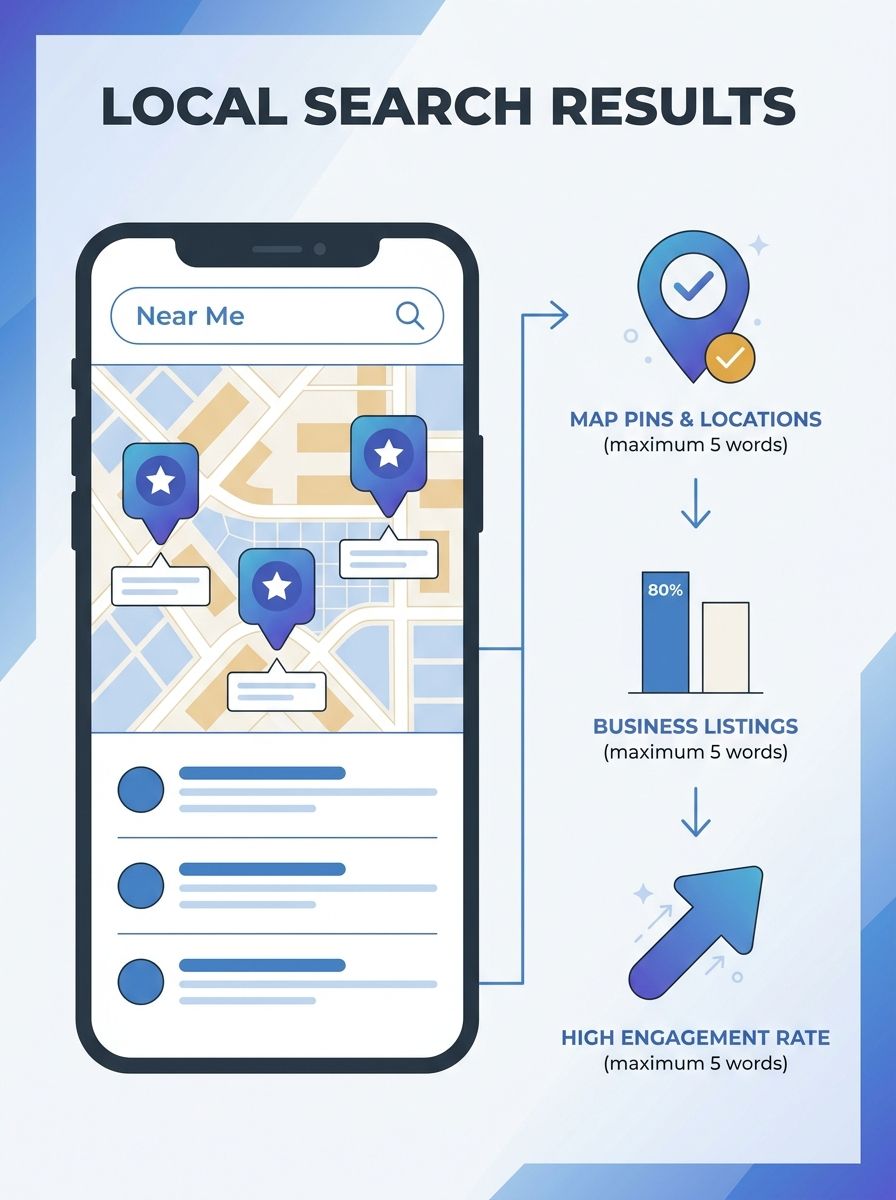
Mobile searches containing "near me" or local-intent signals generated physical store visits within one day for 76% of queries, the statistics show. Twenty-eight percent of all local searches resulted in a purchase within 24 hours, and 72% of local searchers visited a store within five miles of their location.
The conversion timeline for local search substantially outpaces other digital channels. Affinco's analysis found 88% of local searches trigger an action—whether a visit, call, or purchase—within one week of the initial query. Forty-six percent of consumers report frequently adding "near me" to their search queries, though Google's algorithm increasingly detects local intent without explicit geographic modifiers.
Affinco projected that by 2027, explicit "near me" phrasing will become optional for over 60% of local-intent queries as Google's machine learning models improve at inferring searcher location and intent. The company noted local pack results now appear on generic queries where no location term was used, accelerating a trend first observed in 2025.
Seventy Percent Visibility Lift From Complete Google Business Profiles
Businesses with complete Google Business Profile listings are 2.7 times more likely to be perceived as reputable, 70% more likely to receive visits, and 50% more likely to be considered for purchase, according to Google data cited in the report. Verified profiles generate an average of 200 monthly clicks or interactions, with optimized listings reaching between 80 and 300 interactions.
Despite the measurable impact, only 35% of small and mid-sized businesses maintain a Google Business Profile, the research found. While 89% of SMBs report investing in organic SEO, just 40% operate a dedicated business website. Profile views convert into calls, clicks, or visits at rates exceeding 5% for maintained listings.
The distribution of profile views favors Google Search over Google Maps by a 3:1 ratio—943 average views from Search versus 317 from Maps. Seventy-six percent of marketers ranked Google Business Profile management as the most valuable local service offering, and 86% of consumers use Google Maps to find business locations.
Affinco recommended treating profiles as landing pages rather than directory entries, citing Google data showing businesses that post regularly receive up to five times more profile views. Complete service lists, accurate operating hours, fresh photos, and weekly posts were identified as high-impact optimization elements.
The report noted that 98% of consumers used the internet to find information about a local business within the past year, making online visibility a baseline requirement rather than a competitive advantage. The gap between consumer search behavior and business profile adoption represents what Affinco called "the single highest-ROI missed opportunity in local marketing."
Reading Between the Lines
The 39-point swing in AI adoption for local recommendations signals a fundamental platform diversification for agencies managing local search campaigns. The speed of the shift—compressed into twelve months—suggests established playbooks centered exclusively on Google Business Profile optimization and local pack rankings no longer capture the full visibility landscape. Practitioners optimizing for traditional Google rankings while AI chatbots remain unable to surface their clients now face a bifurcated optimization challenge: one strategy for algorithmic search, another for conversational recommendation engines.
The two-thirds of SMBs operating without Google Business Profiles expose a persistent education gap in local markets. The data showing complete profiles deliver 2.7x higher perceived reputation and 70% more visit likelihood makes the 35% adoption rate economically irrational. For agencies, this gap represents a low-complexity, high-impact service entry point—particularly when paired with the finding that 84% of local searches target new businesses rather than established brands. The opportunity window favors the visible.
The convergence of 46% local-intent search volume, 45% AI recommendation adoption, and sub-40% business profile penetration creates a transient arbitrage period. Businesses claiming and optimizing profiles today compete against a two-thirds majority that remains invisible to the 98% of consumers conducting online local research. That imbalance narrows as lagging adopters catch up, but the first-mover advantage in AI platform visibility—where citation and recommendation patterns are still forming—compounds differently than late-stage Google Map pack competition. Position while the field is light.

Alex Chen
Alex Chen is a digital marketing strategist with over 8 years of experience helping enterprise brands and agencies scale their online presence through data-driven campaigns. He has led marketing teams at two successful SaaS startups and specializes in conversion optimization and multi-channel attribution modeling. Alex combines technical expertise with strategic thinking to deliver actionable insights for marketing professionals looking to improve their ROI.
Related Articles

The Local SEO Blindspot: Why Incomplete Business Profiles Cost You More Than Lost Rankings
Incomplete Google Business Profiles trigger compounding failures across three systems at once: Google's local pack algorithm, AI-generated search answers, and user trust at the moment of conversion.
Multi-Location Brands Face 68% AI Data Mismatch as ChatGPT Local Search Usage Hits 45% of Consumers
Google Business Profile signals now account for 32% of local pack ranking weight, the single largest ranking factor, while only 68% of business contact information displayed in ChatGPT and Perplexity matches Google Business Profile data, according to multi-location SEO statistics published by BizIQ

Seventy-Three Percent of Marketers Now Prioritize AI-Generated Answer Optimization as Google Query Volume Reaches Record High
Seventy-three percent of marketers now prioritize content designed to appear in AI-generated search answers, according to a July 21 analysis by SEO Essex citing 2026 Interactive Advertising Bureau data, as Google search query volume reaches an all-time high despite declining click-through rates on t
Explore more topics