
The GEO Visibility Gap: Why Your Google Rankings Don't Matter If AI Chatbots Can't Find You
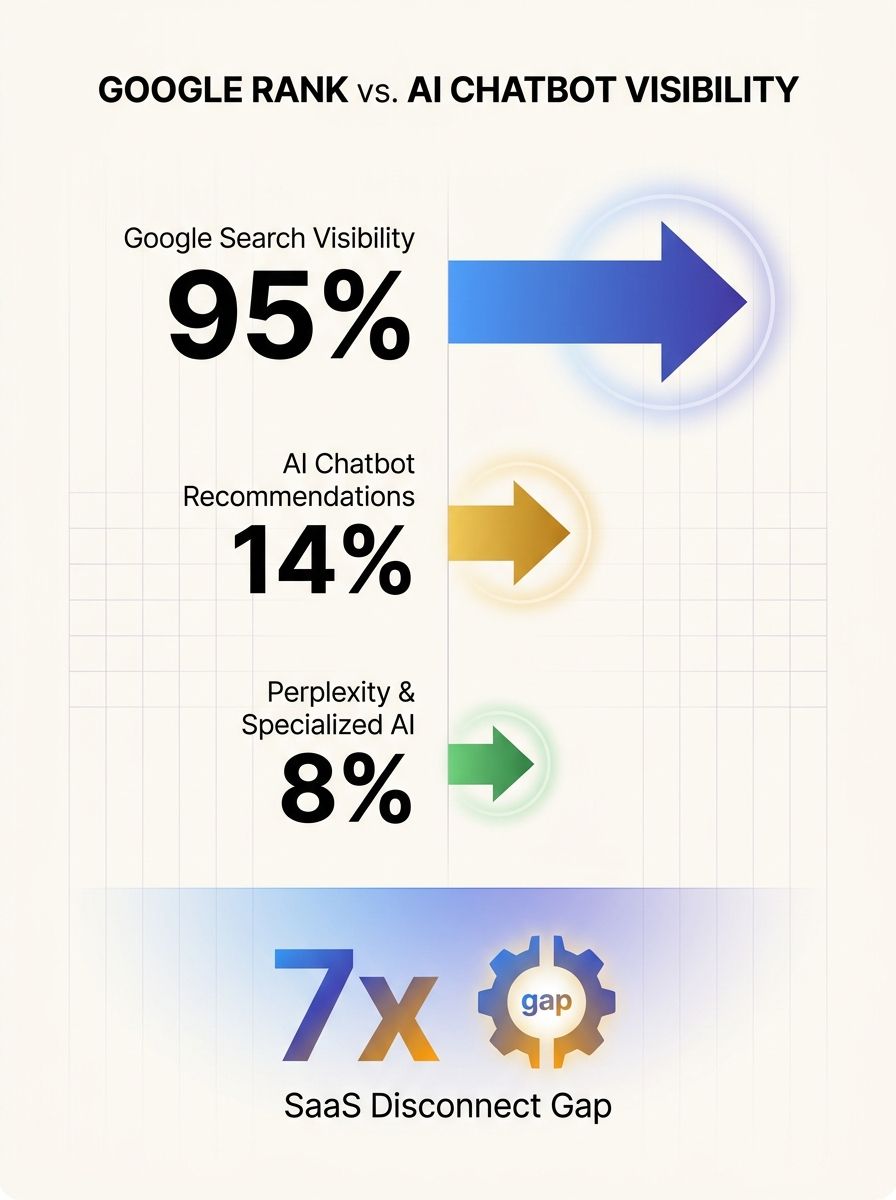
Arobis AI Research released a study on July 1 analyzing 100 SaaS brands across 10 software categories and found that Google search rankings and AI chatbot recommendations have, in the study's words, "almost nothing to do with each other.
The GEO Visibility Gap: Why Your Google Rankings Don't Matter If AI Chatbots Can't Find You
Arobis AI Research released a study on July 1 analyzing 100 SaaS brands across 10 software categories and found that Google search rankings and AI chatbot recommendations have, in the study's words, "almost nothing to do with each other." For any paid media team building campaign strategy around Google Ads position data, that finding should trigger an immediate budget review.
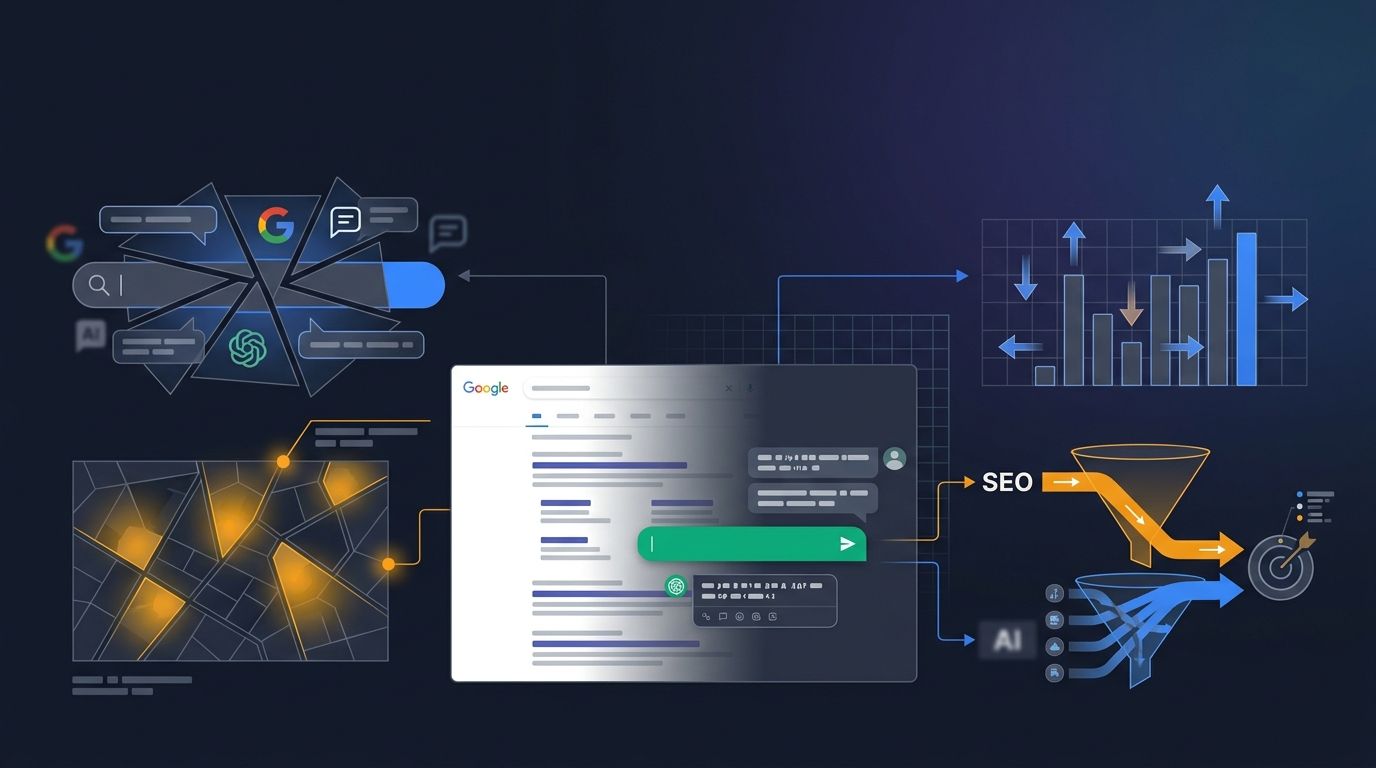
The disconnect between traditional search visibility and generative engine optimization GEO performance has been building for over a year, but the Arobis data makes it concrete: brands spending heavily to dominate Google SERPs are invisible in the AI-powered discovery layer where an increasing share of buyers begin their research. This is a paid media problem as much as an SEO problem. When 64% of customers say they're ready to purchase products suggested by AI, according to a Master.of.Code study, your ad budget's return depends on whether ChatGPT, Perplexity, and Gemini know you exist. And right now, the data says they probably don't. ChatGPT recommends only 1.2% of all local business locations, leaving 98.8% of local businesses completely invisible in AI-generated recommendations. That invisibility erodes paid media performance because users who consult AI chatbots before clicking your Google Ad have already narrowed their consideration set without you in it.
The Discovery Layer Has Fractured, and Paid Budgets Haven't Caught Up
B2B software buyers have shifted from Google to AI chatbots as their primary research starting point, and the spending math hasn't adjusted. A paid media team at a mid-market SaaS company might allocate $40,000 per month to Google Ads based on keyword volume data that reflects where searches happen inside Google's ecosystem, while 63% of websites already report traffic originating from AI search, per Ahrefs data. The organic click-through rate on AI Overview queries dropped 61%, falling to just 0.61% as of September 2025, which means the Google SERP real estate you're paying for is shrinking in value even when you win it. Between 2024 and 2025, 73% of B2B websites experienced significant traffic losses from Google, and tech publishers lost up to 58% of their Google-referred traffic.
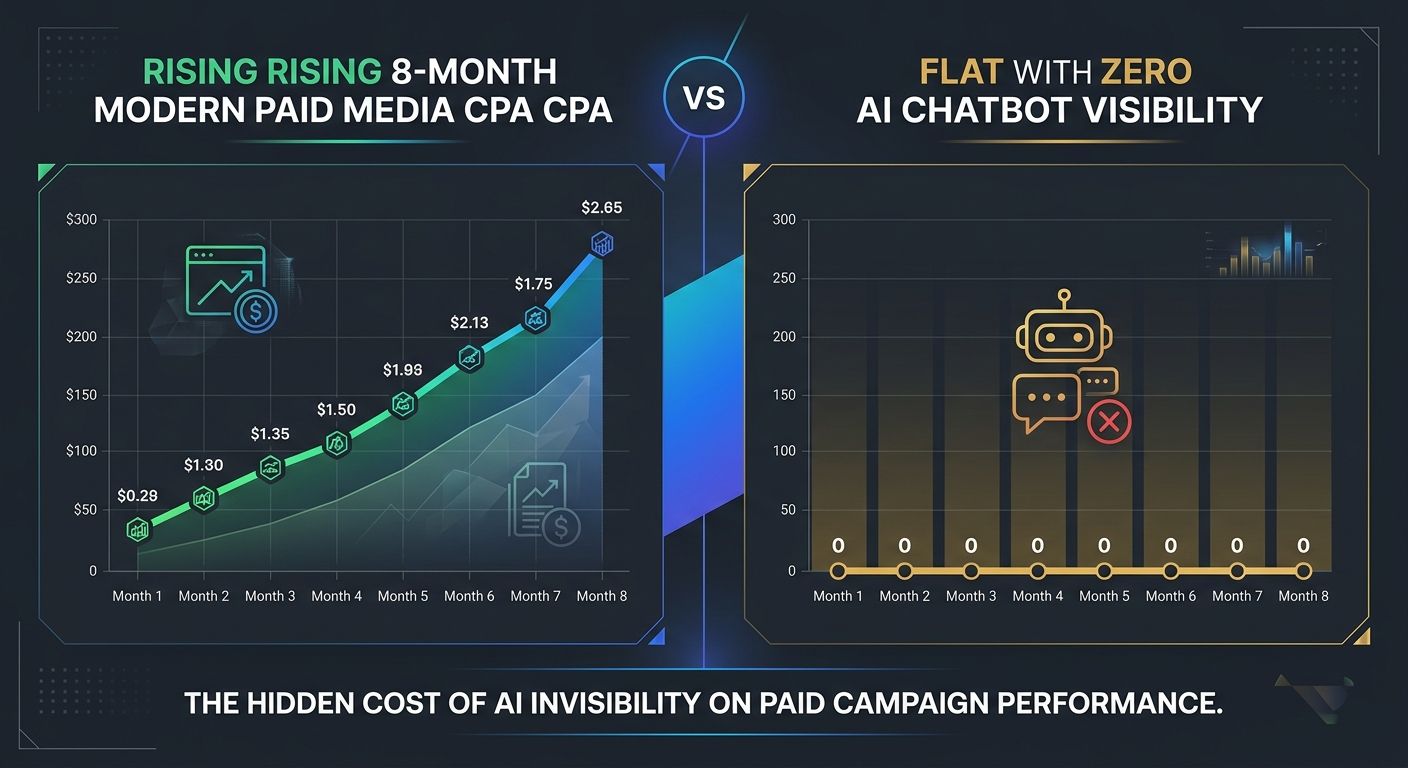
These aren't marginal shifts. They represent a structural fracture in the discovery layer that every paid media budget was built around. Louis Riat-Bonello, SEO expert at Optisearch, framed this shift as "structural rather than tactical," which captures why incremental Google Ads optimizations won't close the gap. The G2 case illustrates the paradox perfectly: the platform suffered an 84.5% organic traffic loss despite being cited in 23.1% of AI Overviews. Visibility in AI responses and traffic to your site are decoupled in ways that break traditional PPC attribution models. If your landing page is optimized for Google Ad Quality Score but invisible to ChatGPT's browsing mode, you're optimizing for a channel that represents a declining share of buyer attention. I've worked with enterprise clients whose Google Ads CPA climbed 30%+ year-over-year while their AI search visibility remained at zero, simply because nobody on the paid team was tracking AI chatbot recommendations at all.
How AI Recommendations Undermine Your Cost-Per-Acquisition
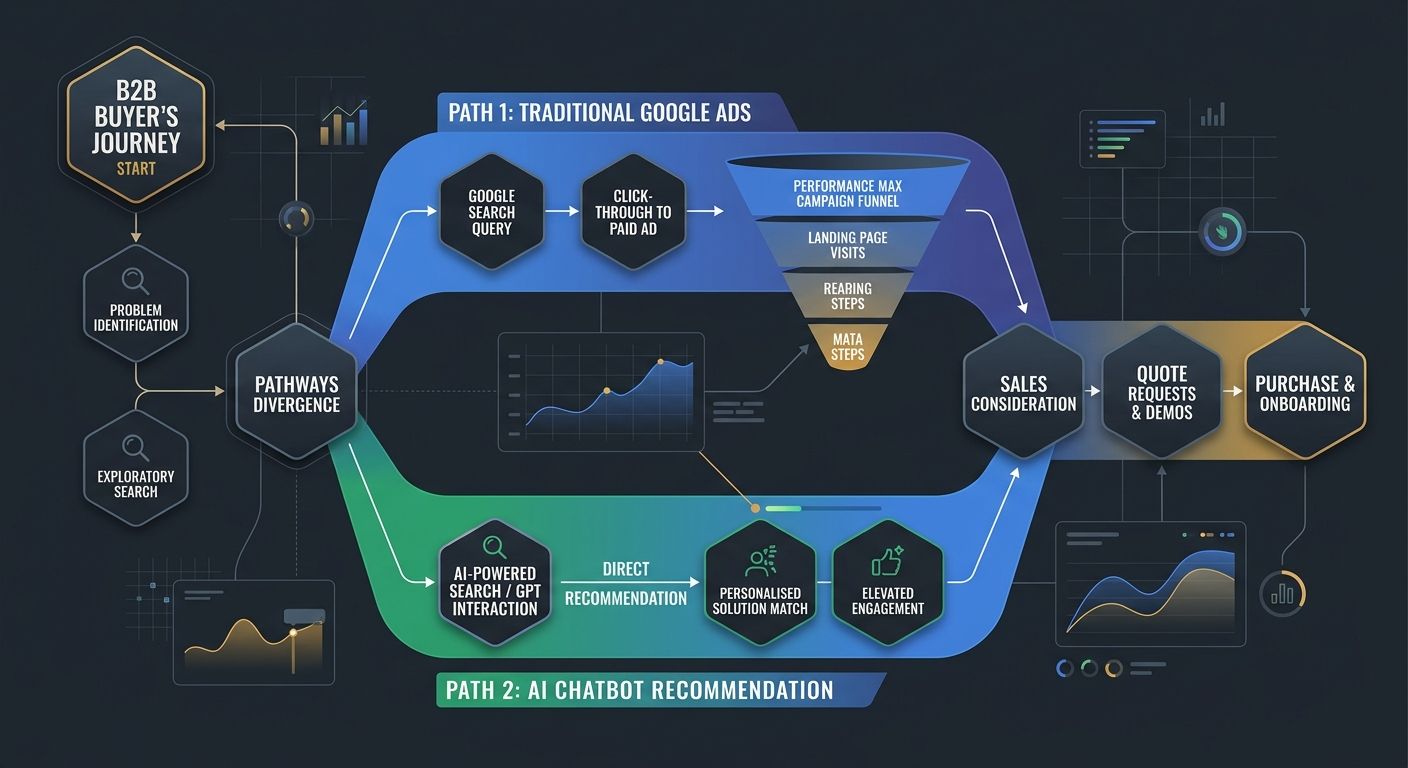
The mechanism behind this is worth understanding because it changes how you should evaluate paid media ROI. ChatGPT, when browsing is enabled, synthesizes information from many sources to generate recommendations. If those sources describe your brand inconsistently, the model's confidence in recommending you drops. This means your brand positioning across review sites, documentation, press mentions, and structured data directly affects whether AI chatbots include you in their responses. A Google Ad can get the click, but if the user already asked ChatGPT "what's the best project management tool for remote teams" and your product wasn't mentioned, your ad is fighting against a pre-formed consideration set.
I ran a visibility audit for a B2B client this spring that exposed this exact pattern. They held position 1-3 for their primary commercial keywords in Google Ads, spending roughly $22 per click, and their conversion rate had declined from 4.2% to 2.8% over eight months. When we queried the same commercial-intent phrases across ChatGPT, Perplexity, and Gemini, the client appeared in zero AI-generated responses. Their three largest competitors appeared in all of them. The paid clicks were arriving, but buyers had already been primed by AI recommendations that excluded the client entirely. As the multi-channel visibility audit framework we've outlined before makes clear, tracking Google Ads performance in isolation produces a dangerously incomplete picture of how buyers actually find and evaluate your product. Generative engine optimization GEO fills that gap by ensuring your content gets cited when AI engines answer user questions, as Frase.io's GEO guide defines it. The practice targets ChatGPT, Perplexity, Google AI Overviews, and Claude simultaneously. That multi-platform search strategy represents the new baseline for any brand spending on paid acquisition, because your paid funnel's efficiency depends on a discovery layer you're probably not measuring.
This also reshapes how you think about ChatGPT SEO optimization relative to paid budgets. Without browsing enabled, ChatGPT generates responses based on training data, and the citations it produces aren't always real, as Vikas Jha documented in his analysis of how ChatGPT finds and cites content. The model predicts what a citation might look like rather than fetching it live. This means brand visibility in AI search depends on consistent, well-structured mentions across the web, not on whether your Google Ads are running. A multi-platform approach that unifies search engine SEO, generative engine optimization, and marketplace visibility across six high-impact discovery channels is where the industry is heading, and paid media teams that don't participate in that conversation are optimizing a shrinking slice of the funnel.
Reallocating Budget Toward AI Search Visibility
Bridging this gap requires paid media teams to expand their definition of "media" beyond Google and Meta. The shift from Google to AI chatbots as a primary research channel means that a portion of your acquisition budget should fund AI search visibility directly. This doesn't mean buying ads inside ChatGPT (though that's coming). It means investing in the content, structured data, and brand consistency work that makes your product extractable by generative engines.
I evaluate this investment through what I call the Paid-GEO Allocation Framework, which maps budget decisions across three dimensions: extraction readiness (can AI engines parse your claims, features, and differentiators from your content?), citation density (how many third-party sources mention your brand consistently enough for an LLM to synthesize?), and response coverage (across ChatGPT, Perplexity, Gemini, and Google AI Overviews, how many commercial-intent queries return your brand?). Scoring each dimension on a 1-5 scale gives you a baseline for how much of your paid budget is being undermined by AI invisibility. A brand scoring below 2 on response coverage is effectively subsidizing competitor discovery through its own paid clicks, because buyers who click the ad already trust the competitor that ChatGPT recommended.
The practical shift looks like this: take 10-15% of your Google Ads budget and redirect it toward content that AI engines can extract. That means clear, unambiguous product positioning pages. It means earning brand mentions in authoritative third-party sources that LLMs train on and browse. It means building the kind of structured, citation-rich content we described in our unified SEO strategy across Google and AI engines. And it means auditing your brand's AI visibility monthly, the same way you audit keyword positions and Quality Scores. Search Engine Journal reported just three days ago that multi-location brands must now adapt to fragmented search visibility across Google, Maps, AI assistants, and social platforms simultaneously. The fragmentation is real, and the brands treating beyond Google SEO 2026 as an optional experiment are the ones whose CPAs will keep climbing.
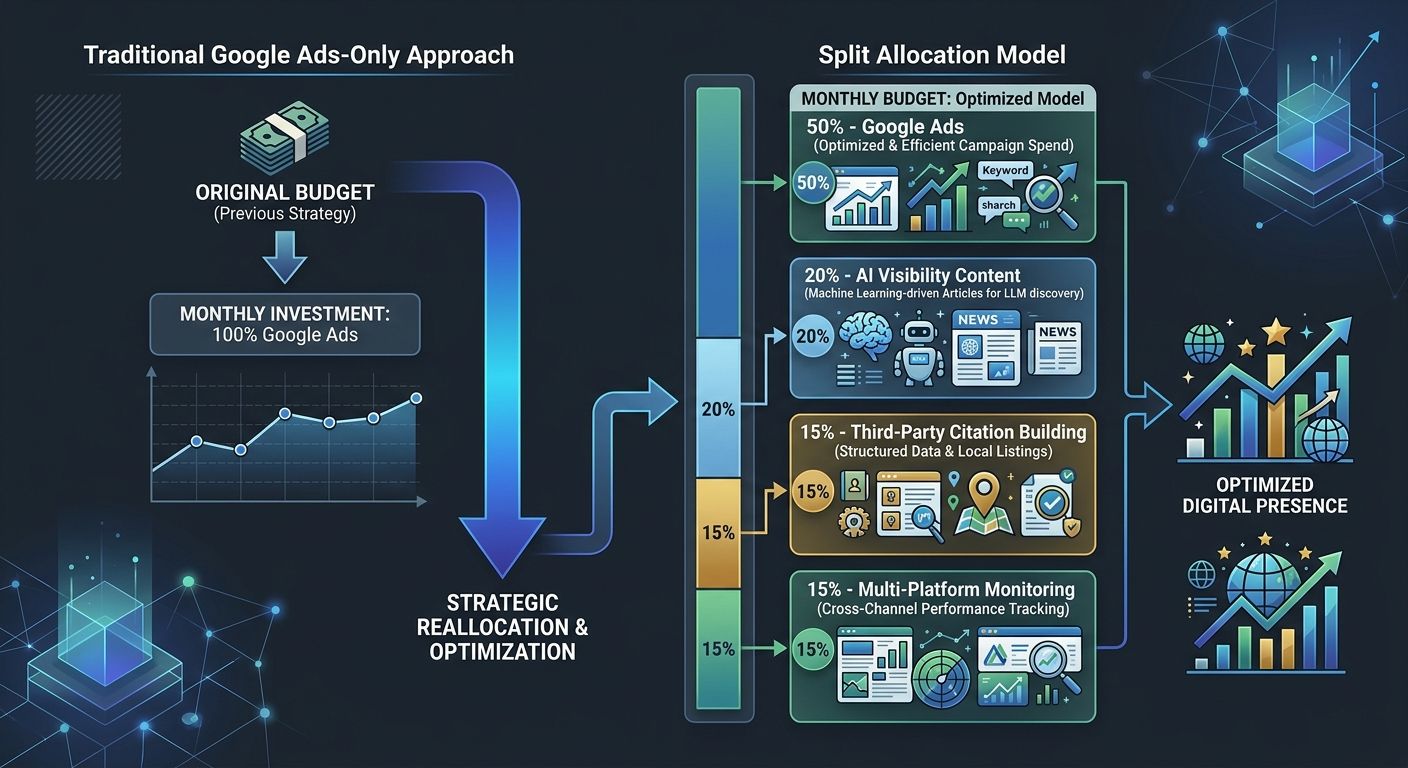
The organizational siloing problem compounds this challenge significantly. Paid media teams, SEO teams, and content teams often operate under different reporting structures with separate KPIs. The paid team measures CPA and ROAS. The SEO team measures organic rankings and traffic. Nobody measures AI chatbot mention rate. Until that metric enters the shared dashboard, the GEO visibility gap will persist, and paid budgets will continue flowing toward a discovery channel that represents a declining share of how buyers actually make decisions.
Where the Budget Conversation Gets Hard
The uncomfortable part of this analysis is that the measurement infrastructure barely exists. Google Analytics can track referral traffic from Perplexity or ChatGPT browsing sessions, but it can't tell you how many buyers consulted an AI chatbot, didn't see your brand, and then never clicked your Google Ad because you'd already been filtered out. That counterfactual is where the real cost lives, and nobody has a clean way to quantify it.
The Arobis study of 100 SaaS brands gives us the clearest signal yet that this gap is real and growing. But the causal relationship between AI invisibility and paid media performance degradation remains hard to isolate from the dozens of other variables affecting CPA. I'm convinced, based on the client data I've seen and the trajectory of buyer behavior shifts, that AI search visibility will become a standard line item in paid media budgets within the next 12 to 18 months. The 63% of websites already receiving AI search traffic, per Ahrefs data reported by Insightland, confirms the channel has achieved critical mass. What remains uncertain is how quickly attribution models will evolve to capture the interplay between AI chatbot recommendations and downstream paid click performance. Until they do, paid media teams are flying partially blind, optimizing for a funnel that has a leak they can't yet see in their dashboards. The brands that start measuring AI search visibility now, even imperfectly, will have months of baseline data to work with when better measurement tools arrive. The ones that wait for perfect attribution before acting will discover that their competitors already occupy the AI recommendation slots they needed.

Sarah Chen
SEO strategist and web analytics expert with over 10 years of experience helping businesses improve their organic search visibility. Sarah covers keyword tracking, site audits, and data-driven growth strategies.
Related Articles
Brands Ranking #1 on Google Missing 62% of AI Overview Citations, Adweek Analysis Shows
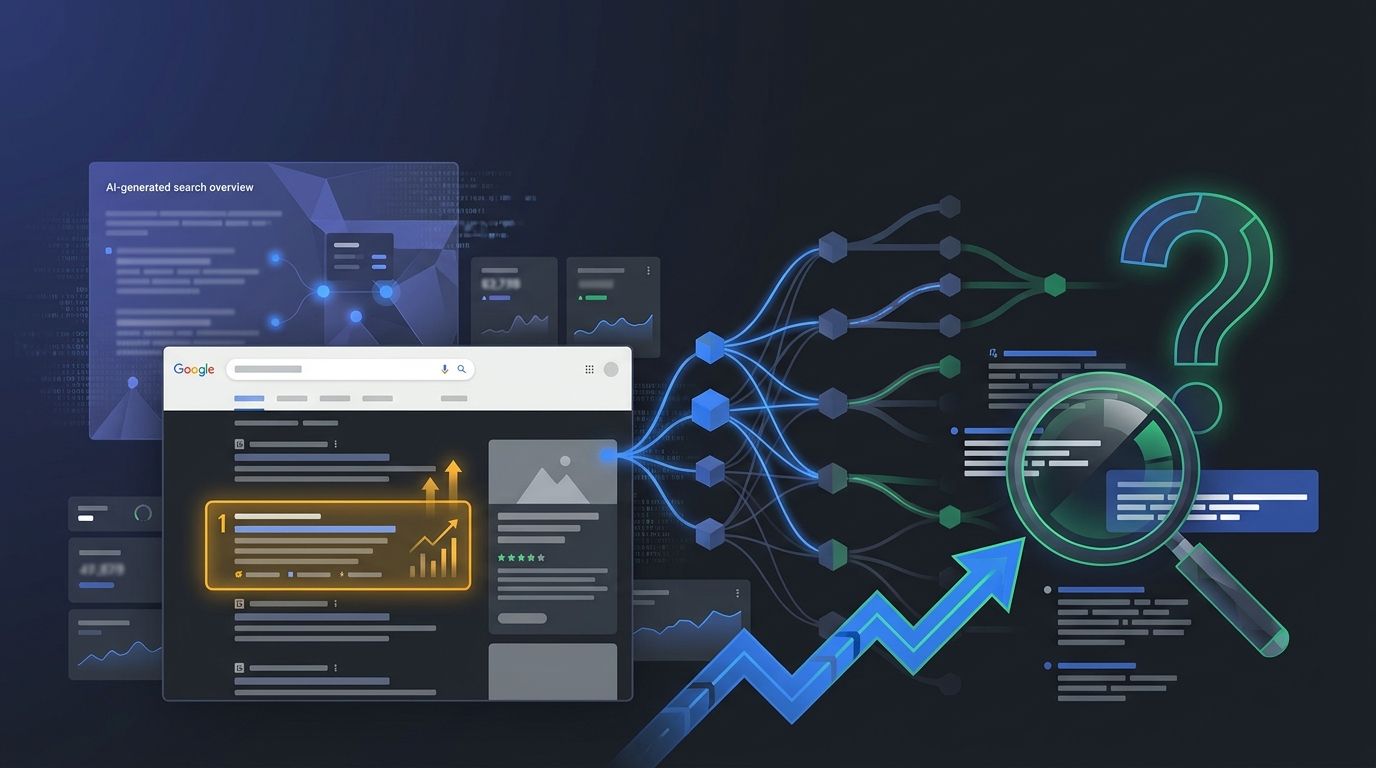
Brands holding first-page Google rankings are absent from 62% of citations in AI-generated search answers, according to a July 22 analysis by Adweek examining generative engine optimization adoption patterns, as only 38% of pages cited in Google's AI Overviews come from URLs in the top ten tradition
The AI Visibility Blind Spot: Why Your SEO Rankings Don't Matter If ChatGPT Doesn't Know You Exist
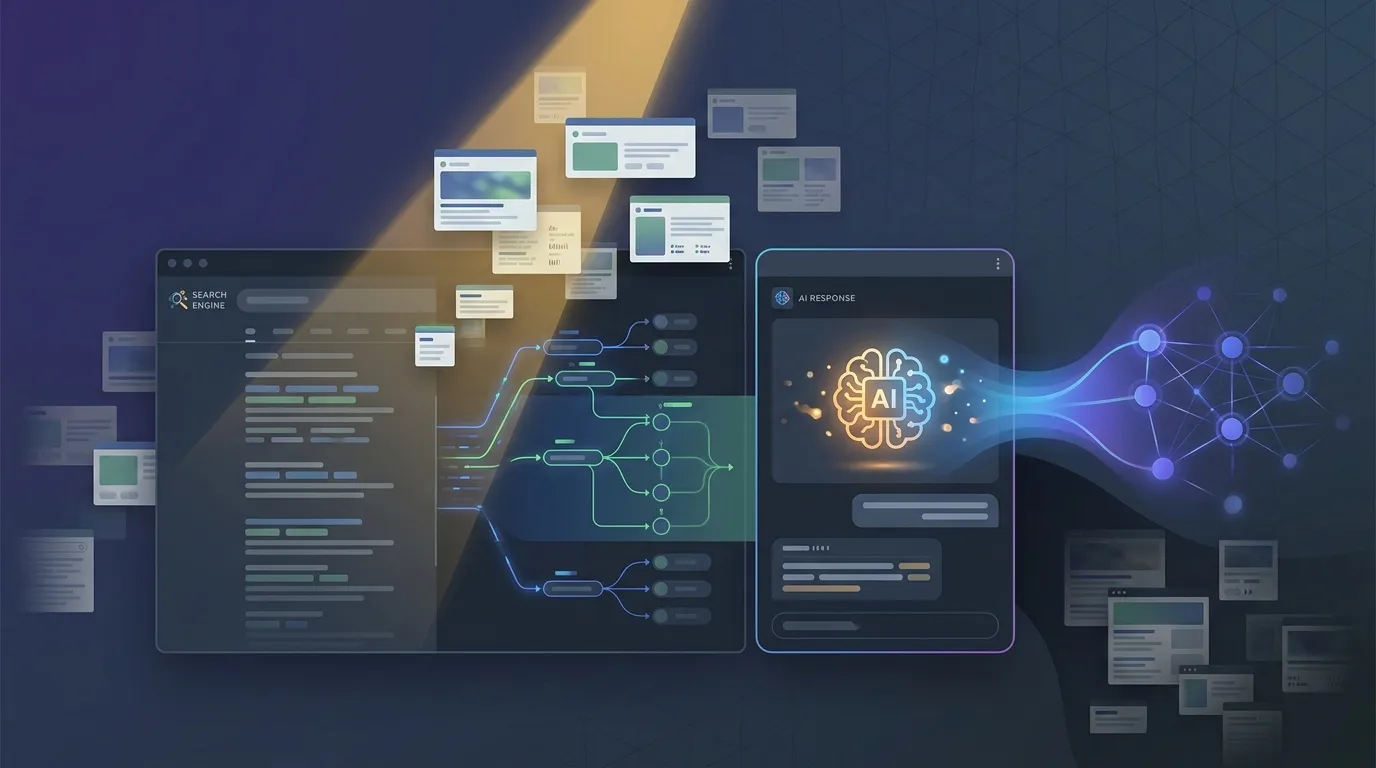
Ahrefs data shows Google AI Overviews reduce position-1 click-through rates by 58%, while a SimilarWeb study found that visitors arriving through ChatGPT recommendations view 12 pages per session and spend 11.8 minutes on site, compared to 6.5 pages and 5.6 minutes for other traffic sources.

Google Publishes First Official Guide for AI Search Visibility as Agencies Double Down on Generative Engine Optimization
Google released its first official guidance for optimizing content in AI-generated search features in mid-May 2026, marking the company's most explicit acknowledgment that generative engine optimization has become a distinct practice alongside traditional search engine optimization, according to doc
Explore more topics