
The Local SEO Blindspot: Why Incomplete Business Profiles Cost You More Than Lost Rankings
Incomplete Google Business Profiles trigger compounding failures across three systems at once: Google's local pack algorithm, AI-generated search answers, and user trust at the moment of conversion.

The Local SEO Blindspot: Why Incomplete Business Profiles Cost You More Than Lost Rankings
Incomplete Google Business Profiles trigger compounding failures across three systems at once: Google's local pack algorithm, AI-generated search answers, and user trust at the moment of conversion. The common assumption that a sparse profile costs a few ranking spots misses the actual mechanism, where each empty field degrades AI search local signals and shrinks the probability a searcher ever contacts you.
How Google's Local Algorithm Processes Profile Completeness
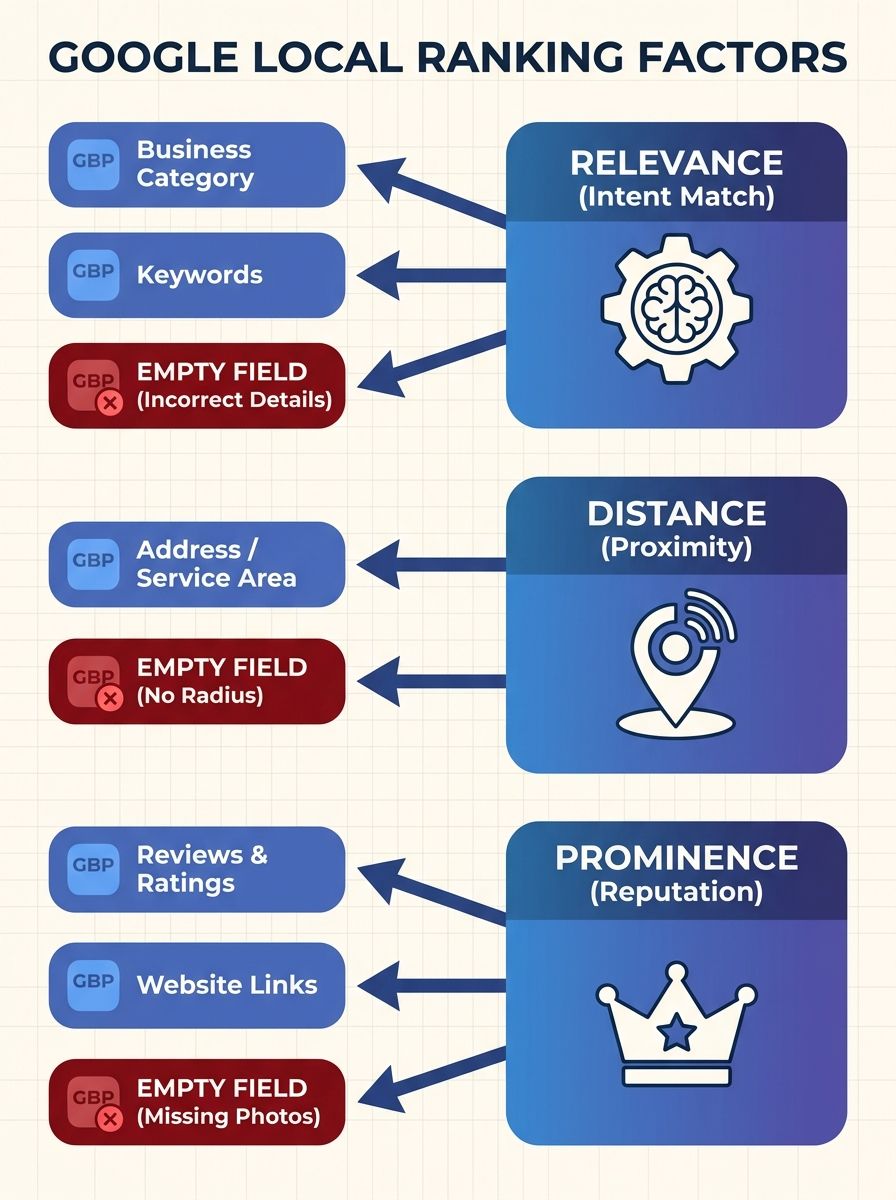
Google's local ranking model evaluates three primary factors: relevance, distance, and prominence. Profile completeness directly influences two of those three. When a business leaves categories empty, skips service descriptions, or neglects to add hours, the algorithm has less relevance data to match against search queries. Prominence suffers too, because engagement metrics like clicks, calls, and direction requests drop when users encounter thin profiles.
According to SearchScaleAI's April 2026 analysis, an unclaimed or incomplete Google Business Profile is the single highest-impact issue for local rankings, with fixes yielding measurable visibility improvements within 60 to 90 days. That timeline tells you the algorithm re-evaluates profile signals frequently. A profile you fix today starts feeding better data into Google's model within weeks.
The mechanism works because Google treats each profile field as an entity attribute. Your primary category tells Google what you are. Your secondary categories tell Google what else you do. Service descriptions, business attributes (wheelchair accessible, veteran-owned, free Wi-Fi), and product listings each add structured data points the algorithm uses to determine which queries your business answers. Leave those fields blank and you've handed Google a partial entity record that can't compete with a complete one in the same service area.
I call this the Three-Layer Extraction Model: Google's ranking algorithm, AI answer engines, and user trust evaluation all extract from the same GBP data independently. A gap in one field doesn't create one problem. It creates three, each compounding in its own system.
NAP Inconsistency Multiplies the Damage
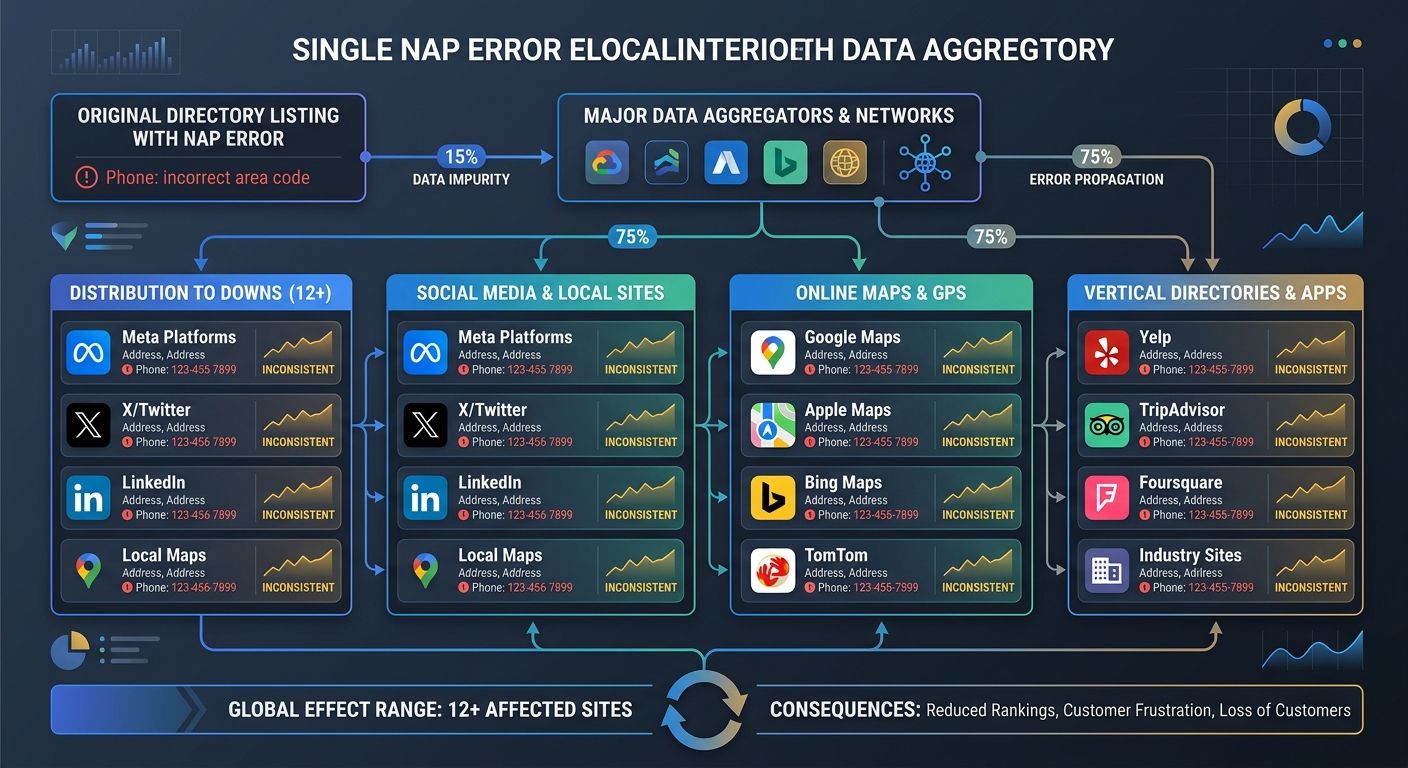
Name, Address, and Phone number (NAP) consistency across directories is a well-documented ranking factor, but the propagation mechanism behind the damage is less understood. Google cross-references your GBP data against third-party citations (Yelp, Apple Maps, industry directories, data aggregators) to build confidence in your entity record. When your phone number on Yelp doesn't match your GBP, or your suite number varies between your website and your Apple Maps listing, Google's confidence score for your entity drops.
A May 2026 analysis from Galaxy Marketing Services found that inconsistent business information ranks among the top five reasons profiles fail to appear in Google Maps results, alongside weak website authority and poor review strategies. The problem compounds because data aggregators propagate errors. One wrong listing feeds into dozens of downstream directories, each creating another inconsistency that Google detects.
This matters far more now than it did even 18 months ago. AI answer engines like Google's AI Overviews and ChatGPT pull entity data from the same sources Google Maps does. A Connectica report citing BrightLocal data found that 45% of users now use ChatGPT to find local businesses, up from just 6% in January 2025. If your entity record is fractured across directories, AI systems face the same ambiguity Google's algorithm does. They either serve a competitor's cleaner data or hedge their answer, which means your business name doesn't appear in the response at all.
The fix requires auditing every directory where your business appears and correcting discrepancies to a single canonical NAP. For businesses managing multiple locations, this audit shares the same diagnostic principles as mapping how authority flows through your site architecture, because both problems involve tracing signals through interconnected systems where errors propagate downstream.
AI Answer Engines Pull From the Same Data Pool
The shift toward AI-driven search surfaces has changed what "visibility" means for local businesses, and this week's developments underscore how fast the landscape is moving. Google started surfacing social media posts inside Google Business Profiles in local search results just days ago, adding another data layer that AI systems can extract and summarize. Businesses maintaining active social profiles linked to their GBP will generate richer entity records than those that don't.
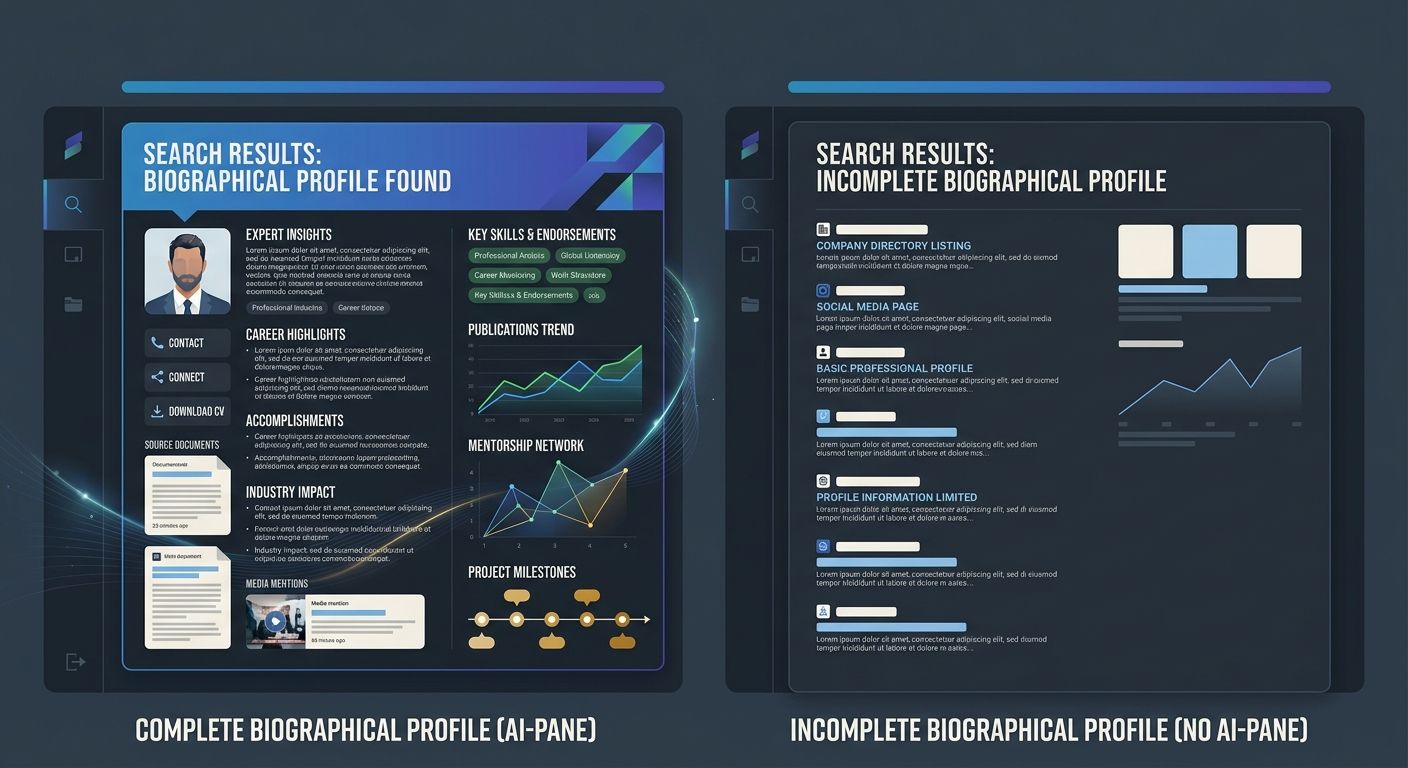
When someone asks Google's AI Overview or ChatGPT "best plumber near me," the system doesn't crawl results live. It pulls from pre-indexed entity data, review summaries, and structured profile information to assemble an answer. Businesses with optimized profiles, detailed content, and strong reviews are more likely to appear in AI-generated search summaries, according to Bullseye Strategy's 2026 research on AI local search signals.
Traditional search returns ten blue links; even a poorly optimized business might appear at position seven or eight. AI-generated answers typically reference one to three businesses total. The inclusion bar is higher, and the data quality threshold is stricter. If you've been building an AI answer engine tracking stack for your organic content, the same measurement principles apply to local results, but with entity-level data replacing page-level metrics.
Ensuring accurate categories, verified hours, and precise map pin placement is essential for AI discovery. The Ad Firm's analysis found that a miscategorized business (a plumber listed as a general contractor, for example) will fail to rank for correct local queries in traditional search. In an AI-generated answer, miscategorization means total exclusion from the response. You're not ranked lower. You're absent.
Review Signals and Engagement Create a Self-Reinforcing Loop
Review volume and response rate aren't standalone ranking factors. They feed into the same prominence calculation that profile completeness does, creating a feedback loop that either accelerates or decays your local visibility over time. A complete profile attracts more clicks. More clicks generate more reviews. More reviews, especially responded-to ones, increase prominence. Higher prominence means more visibility, which restarts the cycle.
Connectica's analysis highlights that 46% of all Google searches carry local intent, and users increasingly phrase those searches conversationally through voice assistants. A business with 200 reviews and a 4.6 rating doesn't just outrank a business with 12 reviews. It also generates a stronger signal for AI systems that summarize "best" and "top-rated" businesses in a category, because review volume serves as a proxy for entity confidence.
Growth Rocket's May 11, 2026 report found that agencies managing local SEO are failing their clients primarily through operational gaps rather than strategic ones: unanswered Q&A sections, outdated service listings, and missing review responses. Google uses profile engagement as a ranking signal, which makes ongoing maintenance essential. An incomplete profile with neglected reviews tells the algorithm the business isn't actively managed, reducing its prominence score relative to competitors who respond to every review within 24 hours.
The click data reinforces how expensive this gap is. BrightLocal's research shows incomplete profiles receive up to 7x fewer clicks than complete ones. And with over 60% of local searches ending without a website click, the GBP itself has become the conversion surface. If you're thinking about why trust signals matter for search visibility in 2026, this is the local version of that same principle: trust is built on the profile page, before a user ever reaches your site.
Location-Based Content Bridges Profile and Website
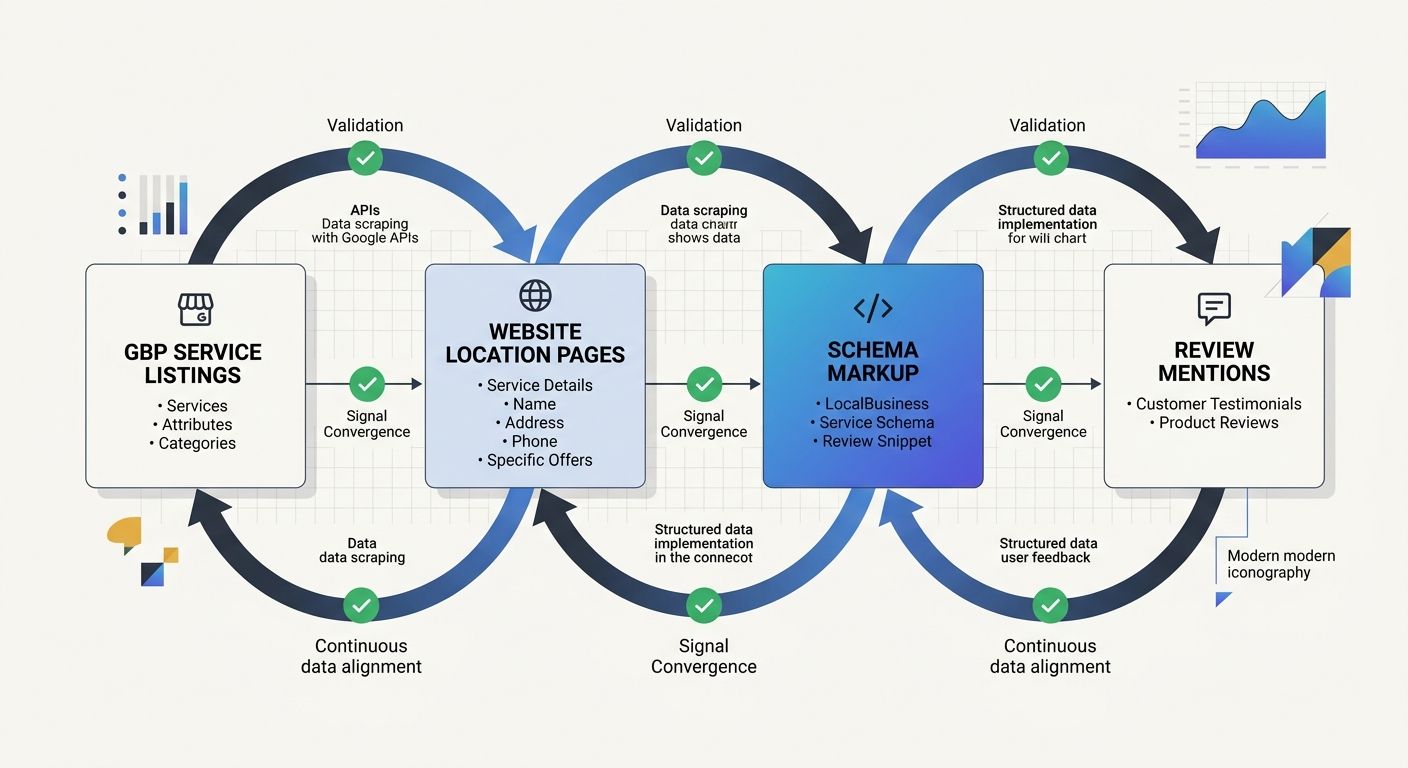
Your Google Business Profile doesn't exist in isolation. Google cross-references your profile data against your website content to validate entity claims. If your GBP lists "emergency plumbing" as a service but your website has no page mentioning emergency plumbing in your service area, the algorithm has a weaker basis for ranking you on that term.
A location-based content strategy solves this by creating dedicated pages that reinforce every service and location combination your GBP claims. This means building pages with location-specific titles, locally relevant content, and structured data markup that mirrors your GBP categories. Location-based page titles improve your chances of ranking for "near me" searches while making your service area immediately clear to both users and algorithms.
The mechanism works through entity validation. Google sees "emergency plumbing" in your GBP service list, then finds a dedicated page on your website about emergency plumbing in your specific city, then finds reviews mentioning "emergency plumbing." Three independent data points confirm the same entity attribute. That convergence produces ranking confidence that a single signal source can't match.
For businesses building schema markup to signal topic authority across content clusters, local business schema (LocalBusiness, Service, GeoCoordinates) is the local equivalent. It gives AI systems machine-readable data that confirms what your GBP already claims. And if your site structure has gaps in how it signals topical authority, those gaps will bleed into your local SEO performance because location pages without sufficient internal linking never get crawled and indexed properly.
Where This Model Breaks
The Three-Layer Extraction Model has clear limits, and pretending otherwise would make this analysis dishonest. Distance remains the single most powerful local ranking factor, and no amount of profile optimization overrides geography. A perfectly complete GBP for a plumber in Houston won't rank in Google's local pack for searches made in Dallas.
Competition density also caps the returns. In saturated markets where ten competitors all maintain complete profiles with 500+ reviews each, the differentiator shifts to review velocity, website authority, and content depth. Profile completeness gets you into the competition. It doesn't guarantee you win.
Google's own algorithmic instability introduces noise as well. The February 2026 spam filtering changes on Google Business Profiles increased ranking volatility as fake listings got removed and legitimate ones reshuffled. Businesses that saw ranking drops during this period didn't necessarily have incomplete profiles; they were caught in algorithmic turbulence that has since mostly stabilized.
The model also assumes Google's AI Overview behavior remains stable, which it won't. As Google experiments with how AI answers display local results, the specific signals determining inclusion will shift. But the foundational principle holds: systems that generate answers need complete, consistent data to work with. Businesses that maintain clean entity records adapt faster to algorithmic changes because the underlying data is already solid.
The costs of an incomplete profile extend into AI answer exclusion, degraded trust at the conversion surface, and a weakened feedback loop that makes every other local SEO investment less effective. The businesses dominating local search this month treat their Google Business Profile as their primary marketing channel for local discovery. Among the most common local SEO mistakes 2026 has exposed, treating a GBP as a one-time directory submission rather than an ongoing marketing channel remains the one with the highest measurable cost.

Alex Chen
Alex Chen is a digital marketing strategist with over 8 years of experience helping enterprise brands and agencies scale their online presence through data-driven campaigns. He has led marketing teams at two successful SaaS startups and specializes in conversion optimization and multi-channel attribution modeling. Alex combines technical expertise with strategic thinking to deliver actionable insights for marketing professionals looking to improve their ROI.
Related Articles

AI Tool Adoption for Local Business Recommendations Jumps from 6% to 45% in Twelve Months
Adoption of AI tools for local business recommendations surged from 6% to 45% within twelve months, according to local SEO statistics published July 15, 2026 by Affinco, while 46% of all Google searches now carry local intent and only 35% of small and mid-sized businesses maintain a Google Business
Multi-Location Brands Face 68% AI Data Mismatch as ChatGPT Local Search Usage Hits 45% of Consumers
Google Business Profile signals now account for 32% of local pack ranking weight, the single largest ranking factor, while only 68% of business contact information displayed in ChatGPT and Perplexity matches Google Business Profile data, according to multi-location SEO statistics published by BizIQ

From Organic to GEO: Building a Unified SEO Strategy Across Google, AI Engines, and Local Search in 2026
Citation rates for top-10 organic results inside Google's AI Overviews dropped from 76% in mid-2025 to between 17% and 54% in 2026.
Explore more topics