
How Content Hubs Transformed B2B Lead Generation: Case Studies in Pillar Page Strategy
Most B2B companies are sitting on 200+ blog posts that generate almost nothing. No leads. No rankings. No compounding returns. The posts exist in isolation, each one fighting for attention against every other page on the internet, with no structural advantage whatsoever.
How Content Hubs Transformed B2B Lead Generation: Case Studies in Pillar Page Strategy
Most B2B companies are sitting on 200+ blog posts that generate almost nothing. No leads. No rankings. No compounding returns. The posts exist in isolation, each one fighting for attention against every other page on the internet, with no structural advantage whatsoever. I've audited dozens of B2B content libraries, and the pattern is always the same: great individual pieces, zero architecture connecting them. The companies that figured this out and reorganized their content into hubs? They're the ones doubling traffic in a single quarter.
This isn't theory. It's a structural shift in how search engines (and now AI systems) evaluate authority. And the data from real B2B implementations tells a very clear story.
What Content Hub Architecture Actually Looks Like
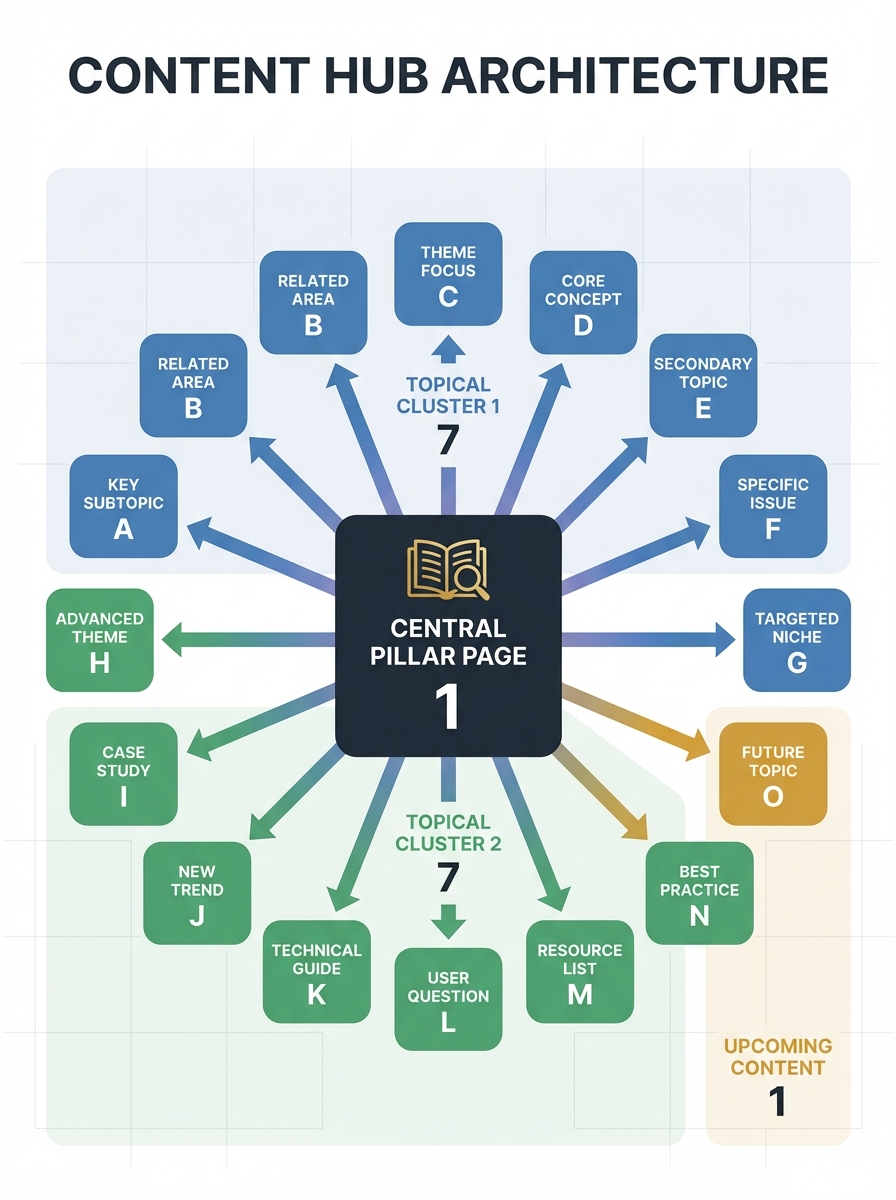
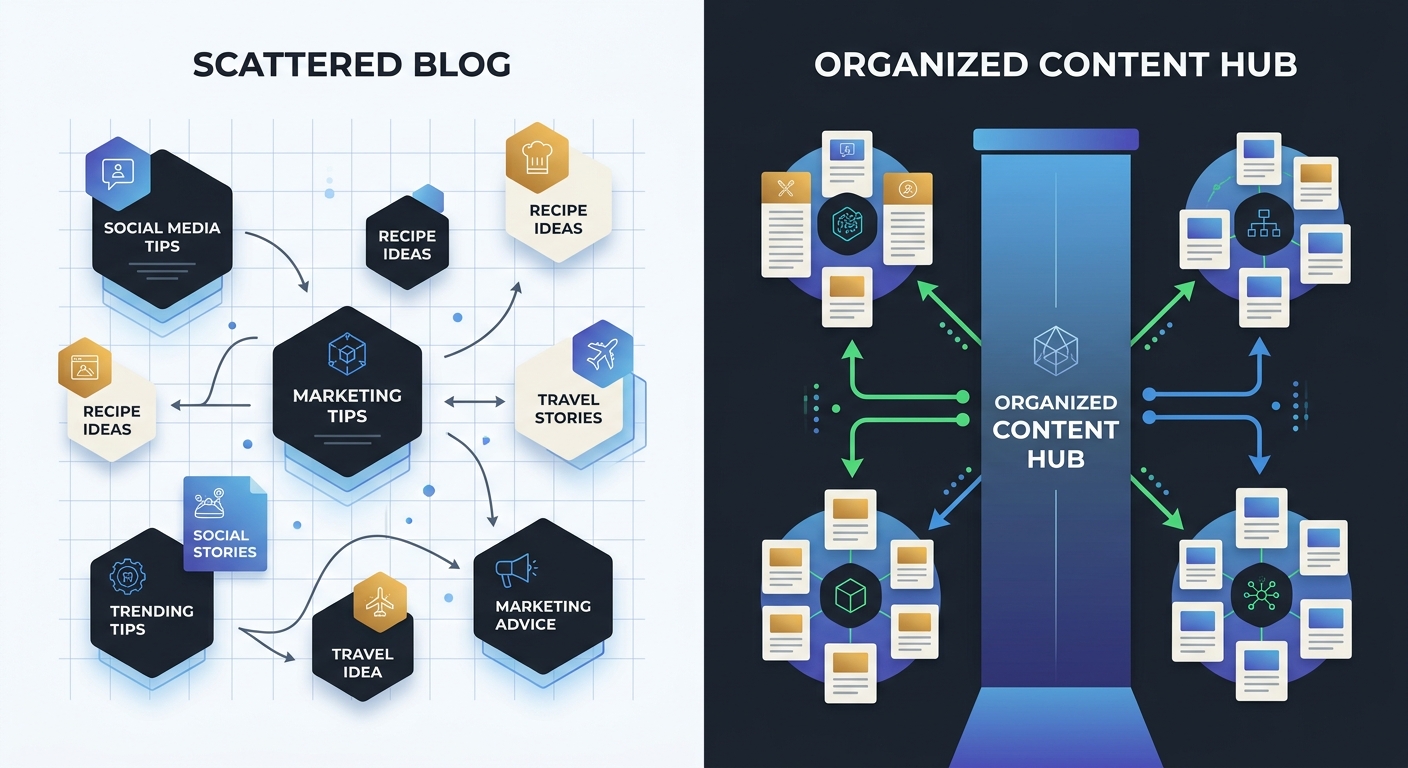
A content hub is not a blog category page. It's not a resource library with filters. It's a deliberately engineered system where one pillar page serves as the authoritative center of a topic, with 15-30 cluster articles branching off from it, all connected through intentional internal linking.
Think of it like a wheel. The pillar page is the hub. Each spoke is a cluster article covering a specific subtopic in depth. Every spoke links back to the hub, and the hub links out to every spoke. When done right, this signals to search engines that your site covers a topic thoroughly, not just superficially.
HubSpot first formalized this topic cluster model back in 2016, reorganizing their entire content architecture around pillar pages plus supporting clusters. The results were so dramatic that the approach became standard practice in B2B marketing. But here's the thing: most companies still implement it poorly, because they treat it as an organizational exercise rather than an engineering problem.
The best mental model I've seen comes from a developer who compared content hubs to a code monorepo: your pillar content is the core library, your topic clusters are feature-specific packages, and the pillar page itself is the README that gives the high-level overview and links to everything. If you've ever worked with a well-organized codebase, you know exactly how powerful that kind of structure is for discoverability.
The Numbers That Made Me a Believer
I used to think pillar pages were just long blog posts with more headings. Then I started tracking the actual performance data across B2B implementations, and the numbers changed my mind completely.
Here's what the research shows:
43% average increase in organic traffic for sites using topic clusters (HubSpot research)
15% improvement in domain authority (Semrush, 2024)
10% uplift in conversion rates for sites organized around topic clusters (Moz)
25% increase in internal linking traffic lift (SearchPilot)
But the standout content hub ROI case study is Human Marketing Agency. They went from 500 to 190,000 monthly visitors through systematic cluster implementation. That's a 37,900% increase. Even if you assume some of that came from other factors, the magnitude is hard to ignore.
One case study cited a client doubling their website traffic in just three months using a strategic pillar-and-cluster model. Three months. That timeline matters because B2B marketing teams are constantly under pressure to show results within a quarter.
Why This Works for B2B Lead Generation Specifically
B2B buying cycles are long. Your prospects are researching a problem for weeks or months before they ever talk to sales. Content hub architecture maps directly onto this behavior because it covers a topic from every angle a buyer might approach it from.
When someone lands on a cluster article about a specific pain point, the internal links guide them to your pillar page. From the pillar page, they discover related content that addresses their adjacent questions. Each touchpoint builds trust and keeps them on your site. If you've been working on strategies to convert traffic into actual revenue, you know that keeping visitors engaged across multiple pages is one of the strongest signals of purchase intent.
The best pillar pages balance education with conversion. As one analysis from Flow Agency noted, the combination of thorough content and strategic CTAs makes pillar pages function as both educational tools and conversion drivers for potential leads. This dual purpose is exactly why they outperform standalone B2B lead generation content.
Here's how the conversion mechanics typically work:
Ungated pillar page draws organic traffic and establishes authority
Cluster articles capture long-tail searches and link back to the pillar
Gated resources (templates, calculators, whitepapers) within the hub capture leads
Email sequences triggered by downloads nurture the lead through related cluster content
The pillar page itself must remain ungated. Full stop. If search engines can't crawl it, you lose the entire SEO benefit. The lead capture happens through strategically placed offers within the hub ecosystem.
Anatomy of a Pillar Page Strategy That Actually Converts
After studying dozens of implementations, I've identified the structural elements that separate high-performing pillar pages from those that just take up space.
Length and Depth
Pillar pages that perform well typically run 3,000-5,000 words. Backlinko's analysis of 912 million posts found that content over 3,000 words generates 77.2% more backlinks than shorter pieces. But length alone isn't the point. Every section needs to earn its place by answering a real question your audience has.
Internal Linking Density
This is where most teams fall short. Each cluster article should link back to the pillar page and to 2-3 related cluster pages. Research from Zyppy SEO found that pages with 40-44 internal links receive 4x more clicks than those with fewer than 5. Meanwhile, Semrush reports that 25% of web pages have zero internal links, making them invisible to search engines.
When you're building your first content marketing strategy, this linking architecture should be your blueprint from day one. Retrofitting it later is much harder.
Topic Cluster Optimization
Each cluster article needs a distinct search intent. This is critical. If two cluster articles target the same query, you create keyword cannibalization, and both pages suffer. Map every cluster article to a specific long-tail keyword and a specific stage of the buyer's awareness.
Good topic cluster optimization follows this pattern:
Awareness clusters: "What is [problem]?" and "Why does [problem] happen?"
Consideration clusters: "How to solve [problem]" and "[Solution A] vs [Solution B]"
Decision clusters: "[Product category] comparison" and "How to evaluate [solution]"
Freshness and Maintenance
Content updated within the past three months receives roughly twice as many AI citations compared to outdated content, according to SE Ranking's 2024 analysis. Your pillar pages aren't set-and-forget assets. They're living documents that need quarterly reviews, updated statistics, and new cluster links added as you publish more supporting content.
This is where repurposing content into an evergreen strategy becomes essential. A single webinar can become a cluster article, a social series, and an addition to your pillar page. The hub gives you a home for every piece of content you create.
The AI Visibility Factor You Can't Ignore
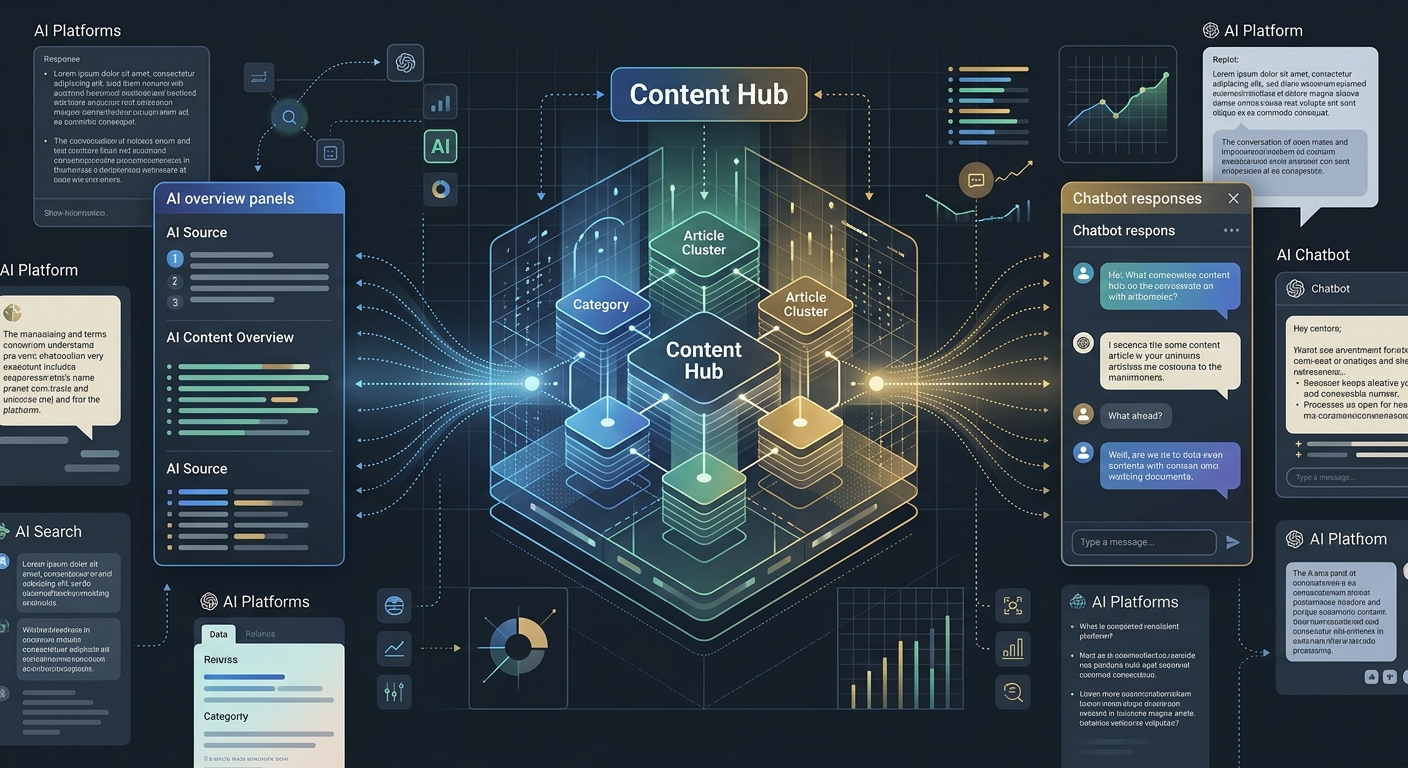
Here's something that's changed the calculus significantly: AI search systems are now evaluating content hubs to determine what to cite in AI-generated answers. Princeton University's GEO study found that pages with cited statistics are 30-41% more likely to be referenced by AI, while pages with expert quotes see a 41% increase in citation likelihood.
Surfer SEO's analysis of 173,020 URLs showed that pages ranking for both primary and "fan-out" queries (related sub-questions) are 161% more likely to be cited in AI Overviews. A well-structured content hub naturally creates these fan-out patterns, because your cluster articles cover every sub-question around your pillar topic.
With AI search reshaping how competitive rankings work, content hub architecture isn't just an SEO play anymore. It's your strategy for showing up in AI-generated recommendations too.
The Mistakes I See B2B Teams Make Over and Over
Mistake 1: Too many pillar pages, not enough clusters. I've seen companies launch 10 pillar pages with only 3-4 cluster articles each. That's backwards. You're better off with 2-3 pillar pages supported by 20+ clusters each. Depth beats breadth every time.
Mistake 2: Treating the pillar page as static. If your pillar page hasn't been updated in six months, it's decaying. Search engines and AI systems reward freshness. Make pillar updates part of your editorial calendar.
Mistake 3: No conversion mechanism inside the hub. A content hub without gated offers, CTAs, or lead magnets is just a library. It might rank beautifully and generate zero leads. Every hub needs at least one mid-funnel offer that captures contact information. If your conversion rates are underperforming, the fix is often as simple as adding contextual lead capture within your existing hub content.
Mistake 4: Ignoring intent differentiation. When multiple cluster articles compete for the same keyword, search engines get confused about which page to rank. Audit your clusters for overlap and consolidate where needed.
Building Your First Content Hub: A Practical Framework
If you're starting from scratch, here's the approach that has consistently produced results:
Pick one topic where your company has genuine expertise and that maps to a high-value service or product
Identify 20-30 subtopic keywords using search console data, competitor analysis, and customer questions from your sales team
Write the pillar page first, covering the full topic at overview level in 3,000-5,000 words
Prioritize your first 10 cluster articles by search volume and relevance to your highest-value conversions
Publish 2-3 cluster articles per week, linking each one back to the pillar and to 2-3 sibling clusters
Add a gated resource (checklist, template, or assessment tool) to the pillar page and at least half the cluster articles
Review and update the pillar page monthly for the first quarter, then quarterly after that
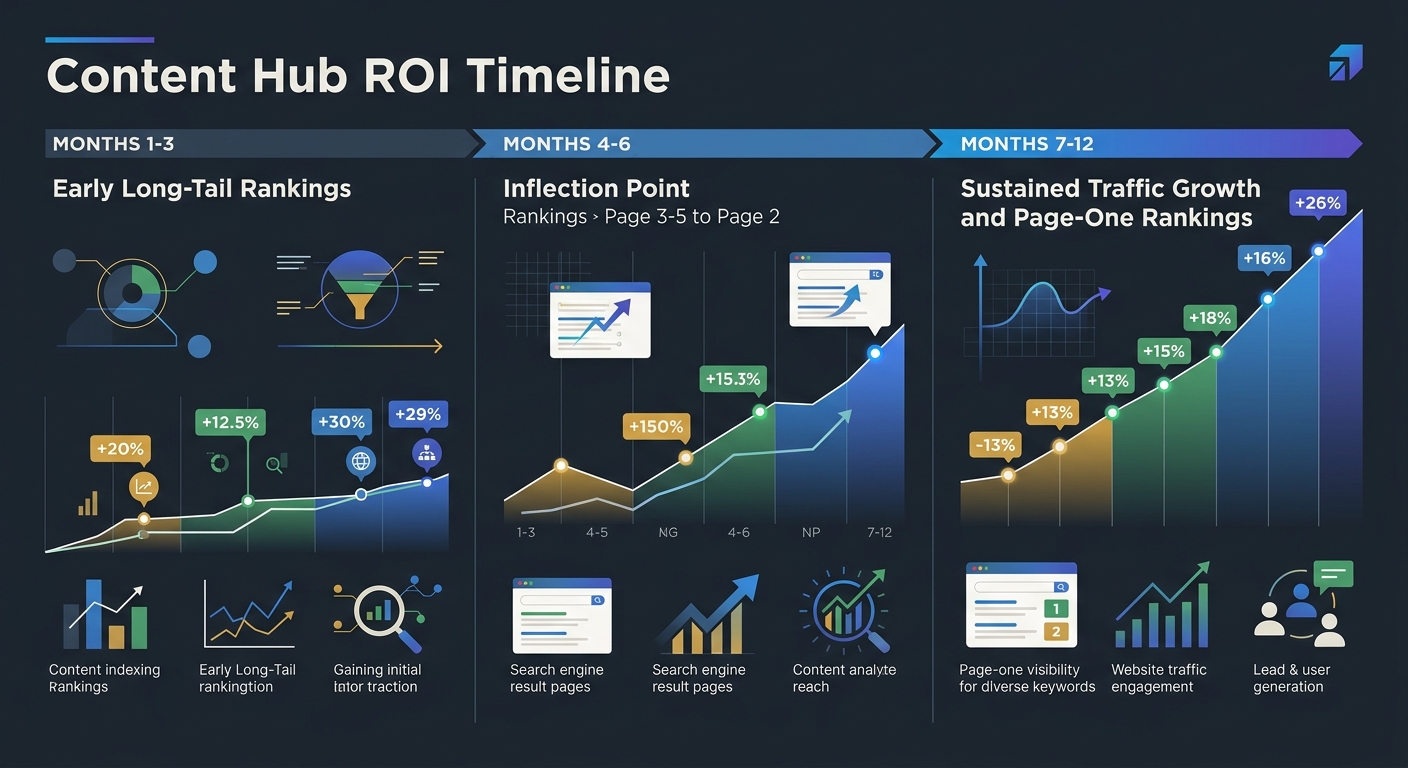
Expect months 1-3 to feel slow. You'll see early long-tail ranking improvements but not dramatic traffic shifts. Months 4-6 are the inflection point where rankings move from page 3-5 into page 2 territory. Months 7-12 are where the compounding starts, and traffic growth accelerates.
The companies that win with pillar page strategy aren't the ones with the biggest content teams. They're the ones with the most disciplined architecture. Build the structure right, fill it with content that actually helps your buyers, and the leads follow.

Sarah Chen
SEO strategist and web analytics expert with over 10 years of experience helping businesses improve their organic search visibility. Sarah covers keyword tracking, site audits, and data-driven growth strategies.
Frequently Asked Questions
- What is a content hub and how does it differ from a blog category page?
- A content hub is a deliberately engineered system where one pillar page serves as the authoritative center of a topic, with 15-30 cluster articles branching off from it, all connected through intentional internal linking. Unlike a blog category page or resource library with filters, this structure signals to search engines that your site covers a topic thoroughly rather than superficially.
- How much can a content hub increase organic traffic and leads?
- Sites using topic clusters see a 43% average increase in organic traffic, 15% improvement in domain authority, and 10% uplift in conversion rates. One standout case study showed Human Marketing Agency growing from 500 to 190,000 monthly visitors through systematic cluster implementation, while another client doubled website traffic in just three months.
- How long should a pillar page be and how many internal links does it need?
- High-performing pillar pages typically run 3,000-5,000 words, as content over 3,000 words generates 77.2% more backlinks than shorter pieces. Each cluster article should link back to the pillar and to 2-3 related cluster pages, with research showing pages having 40-44 internal links receive 4x more clicks than those with fewer than 5.
- What are the different types of cluster articles by buyer awareness stage?
- Cluster articles should be mapped by awareness stage: awareness clusters answer 'What is the problem?' and 'Why does it happen?', consideration clusters cover 'How to solve it' and comparisons, and decision clusters focus on product category comparisons and evaluation methods. Each cluster article must target a distinct search intent to avoid keyword cannibalization.
- Should pillar pages be gated or ungated?
- Pillar pages must remain ungated so search engines can crawl them and capture the full SEO benefit. Lead capture should happen through strategically placed gated offers (templates, calculators, whitepapers) within the hub ecosystem and via email sequences triggered by downloads.
- How often should pillar pages be updated?
- Pillar pages should be reviewed and updated monthly for the first quarter, then quarterly after that. Content updated within the past three months receives roughly twice as many AI citations, and regular updates with fresh statistics, new cluster links, and refreshed examples dramatically extend the ranking life of your content hub.
- What is the typical timeline to see results from a content hub?
- Months 1-3 feel slow with early long-tail ranking improvements, months 4-6 are the inflection point where rankings move from page 3-5 into page 2 territory, and months 7-12 are where compounding starts and traffic growth accelerates significantly.
- Why are content hubs important for B2B lead generation specifically?
- B2B buying cycles are long, with prospects researching problems for weeks or months before contacting sales. Content hub architecture covers topics from every angle a buyer might approach, keeping visitors engaged across multiple pages—a strong signal of purchase intent—while building trust through linked content addressing adjacent questions.
Explore more topics