
The March 2026 Core Update Shock: Why AI Bot Traffic and GEO Are Reshaping Competitive Rankings
A 71% traffic drop for mass-produced AI content. A 22% gain for sites with original research and named experts. Those aren't projections from a think piece.
The March 2026 Core Update Shock: Why AI Bot Traffic and GEO Are Reshaping Competitive Rankings
A 71% traffic drop for mass-produced AI content. A 22% gain for sites with original research and named experts. Those aren't projections from a think piece. They're real numbers from an analysis of 600,000 web pages measured across the March 2026 core update, which Google confirmed complete just hours ago. If your traffic graph looks like a cliff this week, you're not alone. But the story behind this update is bigger than any single algorithm tweak. It's the collision of three forces: a major core update, a 300% surge in AI bot traffic eating publisher revenue, and the rise of generative engine optimization as a real competitive strategy.
I've spent the past twelve days watching this rollout in real time across client sites and my own properties. Here's what actually happened, what it means, and what you should do about it right now.
When Did the Update Actually Ship?
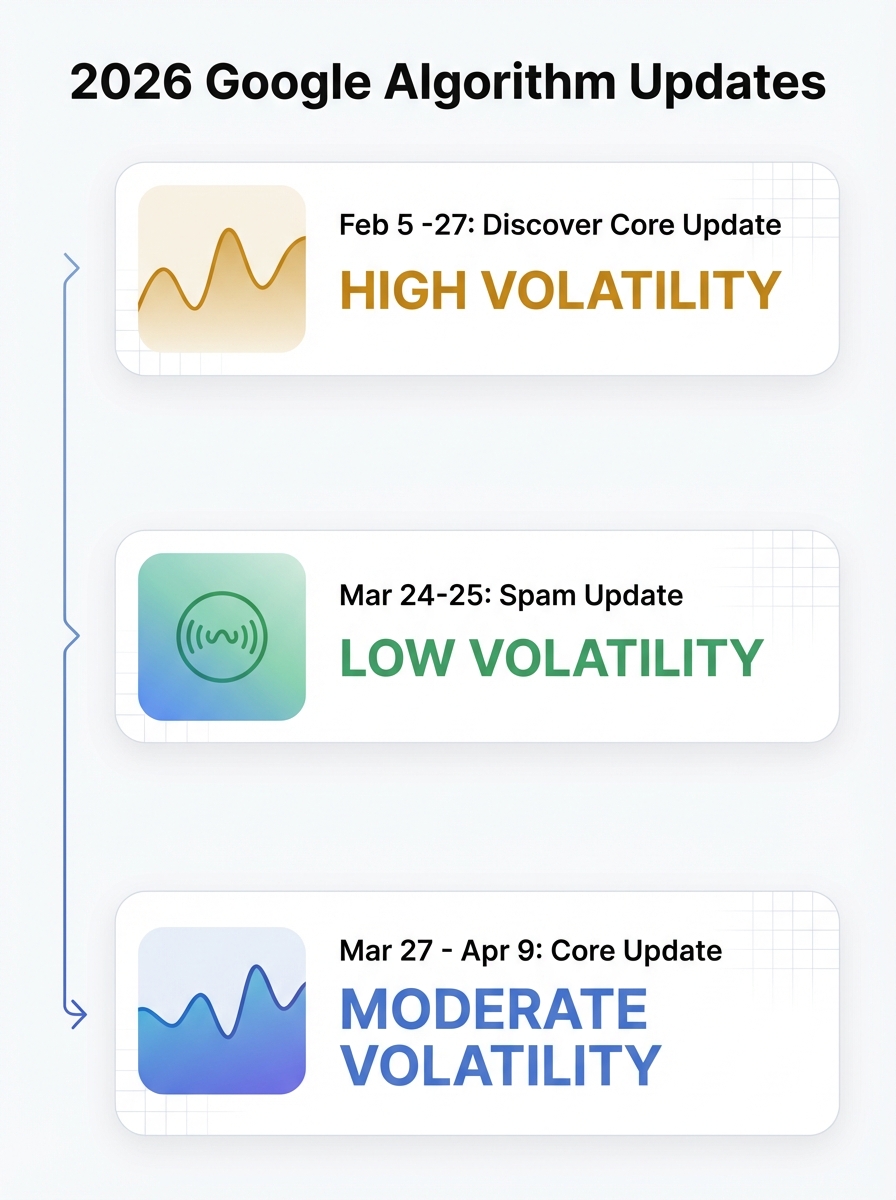
Google's March 2026 core update began rolling out on March 27 and finished its full deployment as of today, April 9. But that wasn't the only algorithm change this quarter. Google also shipped a February 2026 Discover Core Update (February 5-27) and a separate March 2026 Spam Update that concluded in under 20 hours on March 25. Three updates in roughly six weeks. That's an unusual amount of pressure on the index, and it's why so many publishers saw extreme ranking fluctuations throughout late March.
The spam update specifically targeted low-quality content, manipulative link-building, and scaled content abuse. Then, just two days later, the core update landed on top of it. The compounding effect is what caught so many sites off guard.
If you've been tracking your positions and noticed a sudden shift, it's worth separating what happened before March 27 from what happened after. The spam update and core update have different signatures, and conflating them will lead you to the wrong diagnosis. This is where solid keyword rank tracking becomes essential, not optional.
Who Won and Who Lost Traffic
The core update content strategy adjustment Google is pushing is clearer than ever. "Information Gain" is now a dominant ranking signal. Pages that just rephrase what already ranks well are getting crushed. Pages that offer original data, named expert perspectives, or genuine first-hand experience are climbing.
Here's the pattern I'm seeing across about 40 sites I have visibility into:
Sites with original research and case studies: Up 15-22% in organic visibility
Sites with AI-assisted content backed by real editorial oversight: Flat or slightly up
Sites running AI content at scale with minimal human editing: Down 20-35%
Sites doing pure AI content farming with no editorial layer: Down 50-71%
The 22% gains aren't random. They correlate strongly with pages that have verifiable author credentials, cited sources, and content that can't be found anywhere else on the web. Google is rewarding scarcity of insight, not volume of coverage.
And here's what's tricky: E-E-A-T isn't just a YMYL thing anymore. As ALM Corp's analysis noted, even outside health and finance topics, trust is a practical differentiator. Readers and ranking systems alike prefer pages that are clear about who is speaking, what is known, and what isn't known. So don't treat E-E-A-T as a cosmetic layer you bolt onto existing content. It has to be structural.
If your rankings dropped and you're unsure why, the starting point is understanding the common causes behind ranking declines and then mapping those causes against what this specific update targeted.
The 300% AI Bot Traffic Surge Nobody Expected
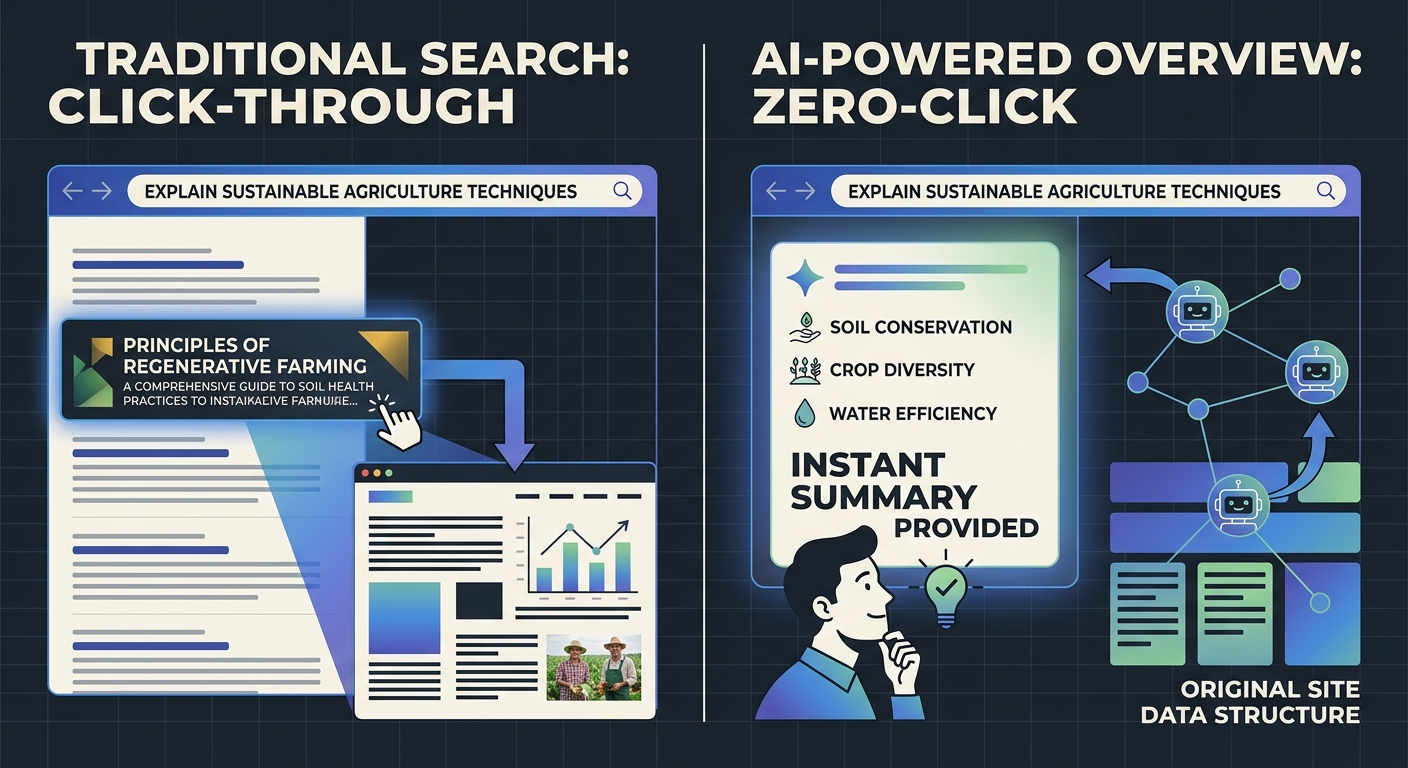
While everyone was watching the core update, something equally disruptive was happening in server logs. AI fetcher bots have surged 300% in traffic volume, hitting publishers hardest. These bots scrape your content to power real-time AI answers that bypass your site entirely. The result? Users get their answer from ChatGPT, Perplexity, or Google's AI Overviews, and never click through to your page.
The AI bot traffic SEO consequences are real and measurable. A Semrush study of 10,000 informational keywords found that AI-generated summaries significantly reduced both organic and paid click-through rates. You're getting crawled more but visited less. Your content feeds the machine, but the machine doesn't send the traffic back.
This creates a brutal paradox. You need to be indexed and crawled so AI systems can cite you. But the more effectively they cite you, the fewer people click through to your actual site.
The BBC reported this week that businesses are scrambling to restructure how they present information specifically to get noticed by AI search systems. That restructuring is what's now called generative engine optimization, and it's no longer theoretical.
How Generative Engine Optimization Actually Works
Here's my take: generative engine optimization GEO strategy isn't replacing traditional SEO. It's a parallel track you now have to run simultaneously. The brands that figure out both will dominate. The brands that pick one or the other will bleed traffic.
The data supports this. According to Launchcodex's analysis, brands cited in AI Overviews earn 35% more organic clicks than those not cited on the same queries. Read that again. Being referenced in the AI summary doesn't just give you AI visibility. It lifts your traditional click-through rate too. It's a trust signal that compounds.
So what does a GEO strategy look like in practice?
Structure content for extraction. AI systems pull concise, well-structured answers. Use clear definitions, numbered steps, and direct statements that can stand alone as a quoted response.
Include original data and named sources. AI systems prefer to cite content that has unique information. If your page says the same thing as 50 others, you won't get cited.
Build topical authority, not just page authority. Cover subjects in depth across multiple interlinked pages. AI systems evaluate site-level expertise, not just individual URLs.
Optimize for the follow-up question. Google's intent matching now anticipates what users will ask next. A page about "fixing crawl errors" should also address "when to redirect vs. remove."
This pairs directly with the broader shift we've been watching, where rebuilding your SEO strategy around AI recommendations is becoming a survival requirement, not an optional experiment.
Why Technical Performance Became a Qualifying Filter
The March 2026 core update also reinforced something that's been true for a while but keeps getting ignored: technical performance is a qualifying filter. If your pages are slow, nothing else matters.
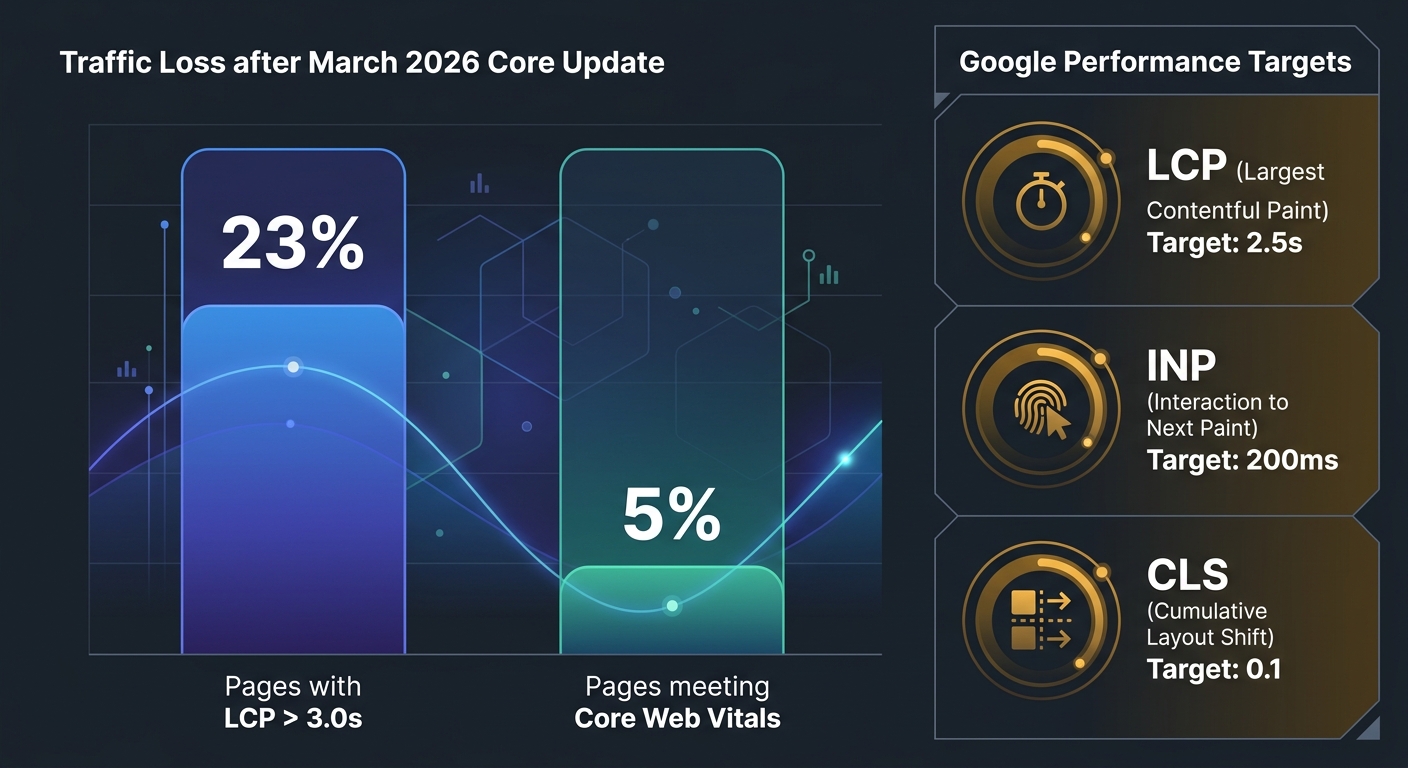
Google's 2026 targets remain LCP under 2.5 seconds, INP under 200 milliseconds, and CLS under 0.1. Pages with LCP above 3 seconds lost 23% more traffic than faster competitors after this update. That's not a rounding error. That's a quarter of your traffic gone because your server response time or image optimization wasn't up to par.
If you haven't audited your site performance metrics since before the update, do it today. Not next week. The data is stabilizing now, and you need a baseline before you can measure recovery.
Gemini referral traffic has also doubled, which means Google's own AI products are sending measurably more visits to cited sources. But those referrals only go to fast, well-structured pages. Slow sites get scraped but not cited. That's the worst possible outcome: you pay the server costs of bot traffic and get nothing back.
The Inconsistencies Nobody's Talking About
I want to flag something uncomfortable. Early data from LinkDoctor.io shows cases where AI-generated sites with little authority gained significant traffic after this update, even when they appear to violate Google's own spam policies. This includes sites with thin content, minimal author information, and clear signs of scaled AI production.
Does this mean Google's update failed? Not necessarily. Core updates are blunt instruments. They shift weights across ranking signals, and some sites fall through the cracks. But it does mean you shouldn't assume the update is perfectly calibrated. Some results will look wrong. Some competitors will gain traffic they probably don't deserve. That's how every core update works.
The smart move is to focus on what you can control, not rage about what seems unfair. If your analytics data looks off, make sure you're measuring accurately before drawing conclusions about algorithm changes. Misattributed bot traffic can make real performance look worse than it is.
Your Recovery Plan for the Next 14 Days
Google has been explicit: focus on helpful, reliable, people-first content. That's not new advice. But here's a concrete framework for the next 14 days:
Pull your Search Console data from March 27 forward and compare it to the prior four weeks. Look at page-level changes, not just site averages. Aggregate numbers hide the signal.
Identify your top 20 declining pages. For each one, ask: does this page contain anything a reader can't find elsewhere? If the answer is no, that's your problem.
Audit your content for AI-scalability signals. Generic structure, no named author, no original data, no specific examples. These are the pages the update targeted.
Check your Core Web Vitals. Specifically LCP. If you're above 2.5 seconds on mobile, fix it before doing anything else.
Start tracking AI Overview citations. Note which of your pages appear in AI summaries and which don't. This is now a KPI, not a curiosity.
Review your robots.txt for AI crawlers. Decide intentionally whether you want to allow or block AI fetcher bots. Blocking them protects your content but removes you from AI citation. Allowing them costs server resources but opens the GEO channel.
The Bigger Picture
The March 2026 Google core update impact extends beyond any single ranking change. It marks the point where traditional SEO and generative engine optimization officially became two sides of the same coin. You can't ignore either one.
AI bot traffic will keep rising. AI Overviews will keep reducing click-through rates on informational queries. And Google will keep rewarding content that has something genuinely original to say.
The sites that will thrive in this environment are the ones that treat content as a product, not a production line. Original research, named expertise, fast technical performance, and deliberate GEO strategy. That's the playbook now. Recovery for sites hit by this update will likely require substantive improvements, and the effects probably won't show up until the next core update, expected around June or July.
Start building the evidence of your expertise today. Not because an algorithm told you to, but because that's what's actually worth reading.

Sarah Chen
SEO strategist and web analytics expert with over 10 years of experience helping businesses improve their organic search visibility. Sarah covers keyword tracking, site audits, and data-driven growth strategies.
Frequently Asked Questions
- How much did mass-produced AI content traffic drop in the March 2026 Google core update?
- Mass-produced AI content saw a 71% traffic drop according to an analysis of 600,000 web pages measured across the March 2026 core update. Sites running AI content at scale with minimal human editing lost 20-35%, while pure AI content farming with no editorial layer dropped 50-71%.
- What type of content gained traffic in the March 2026 core update?
- Sites with original research, case studies, and named expert perspectives gained 15-22% in organic visibility. Pages offering unique data, verifiable author credentials, cited sources, and content that cannot be found elsewhere on the web saw the strongest gains.
- What is generative engine optimization and why does it matter?
- Generative engine optimization (GEO) is a parallel SEO strategy focused on getting your content cited in AI Overviews and AI summaries. According to Launchcodex's analysis, brands cited in AI Overviews earn 35% more organic clicks than those not cited, making it essential for maintaining traffic as AI search systems grow.
- How much has AI bot traffic increased and what's the impact on publishers?
- AI fetcher bots have surged 300% in traffic volume, scraping content to power AI answers that bypass publisher sites entirely. This creates a paradox where content gets crawled more but visited less, as users get answers from ChatGPT, Perplexity, or Google's AI Overviews instead of clicking through to the original page.
- What are the key GEO strategy tactics to get cited by AI systems?
- Key GEO tactics include structuring content for extraction using clear definitions and numbered steps, including original data and named sources, building topical authority across multiple interlinked pages, and optimizing for follow-up questions that users might ask next.
- How did technical performance affect rankings in the March 2026 core update?
- Pages with LCP (Largest Contentful Paint) above 3 seconds lost 23% more traffic than faster competitors after the update. Google's 2026 targets are LCP under 2.5 seconds, INP under 200 milliseconds, and CLS under 0.1.
- When will I see recovery from the March 2026 core update?
- Recovery from this core update will likely require substantive improvements and probably won't show up until the next core update, expected around June or July. Google advises against making sweeping content changes during the first two weeks after a core update completes.
- Should I block AI crawler bots in my robots.txt file?
- Blocking AI crawlers protects your content from being scraped but removes you from AI citation opportunities. Allowing them costs server resources but opens the generative engine optimization channel and enables your content to appear in AI summaries.
Explore more topics