
Three Conversion Tracking Configuration Errors Systematically Degrade Google Smart Bidding Performance, Technical Analysis Shows
Improperly normalized personally identifiable information, misconfigured Consent Mode signals, and mismatched conversion values degrade Google Smart Bidding algorithms by feeding them incomplete or inaccurate data, according to a technical analysis published by Search Engine Journal on August 20, 20

Three Conversion Tracking Configuration Errors Systematically Degrade Google Smart Bidding Performance, Technical Analysis Shows
Improperly normalized personally identifiable information, misconfigured Consent Mode signals, and mismatched conversion values degrade Google Smart Bidding algorithms by feeding them incomplete or inaccurate data, according to a technical analysis published by Search Engine Journal on August 20, 2026. The errors leave conversion counts intact in campaign reports while systematically undermining automated bidding optimization.
The analysis identifies configuration problems that produce valid-looking conversion data unsuitable for algorithmic training. "Most Smart Bidding problems get blamed on the wrong thing," the analysis states, noting that practitioners typically adjust bidding strategies or conversion targets when the underlying tracking infrastructure is sending corrupted signals to Google's machine learning systems.
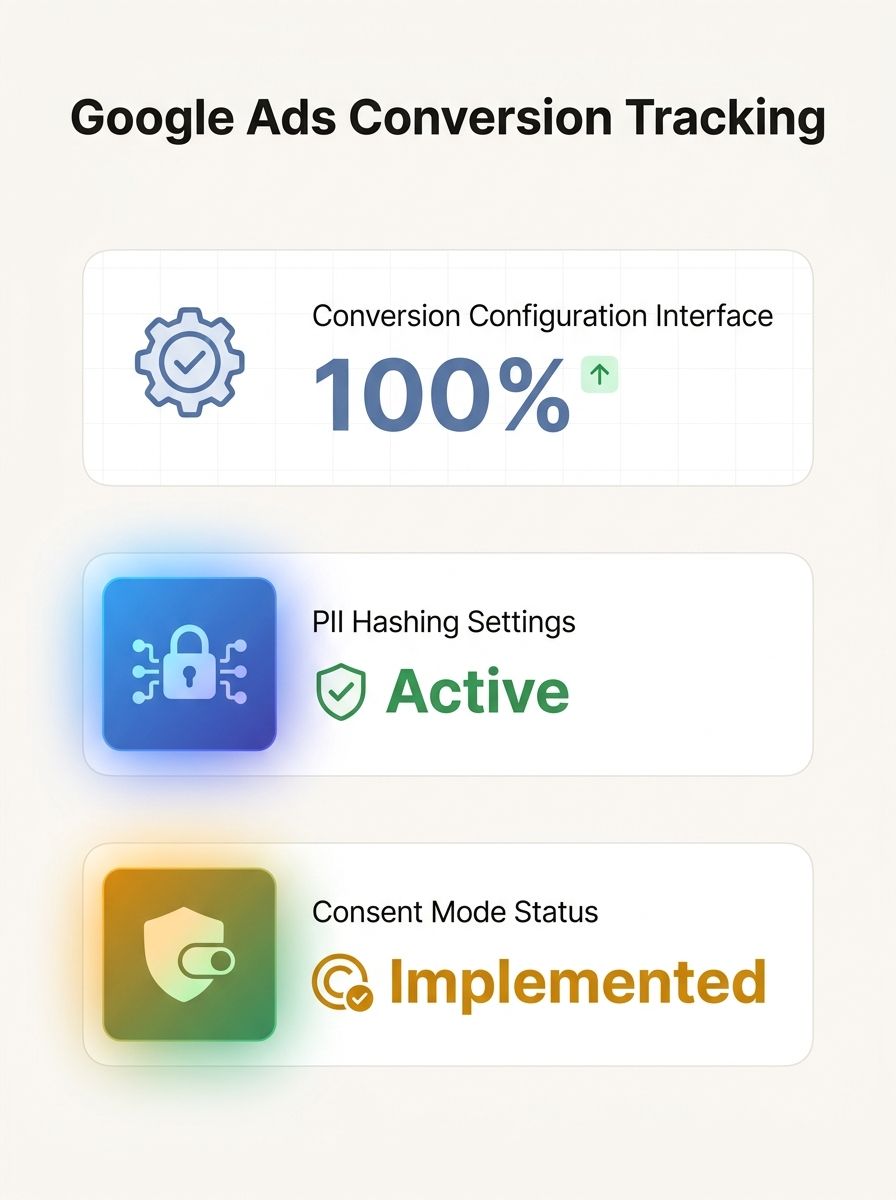
PII Hashing Failures Break Enhanced Conversion Matching
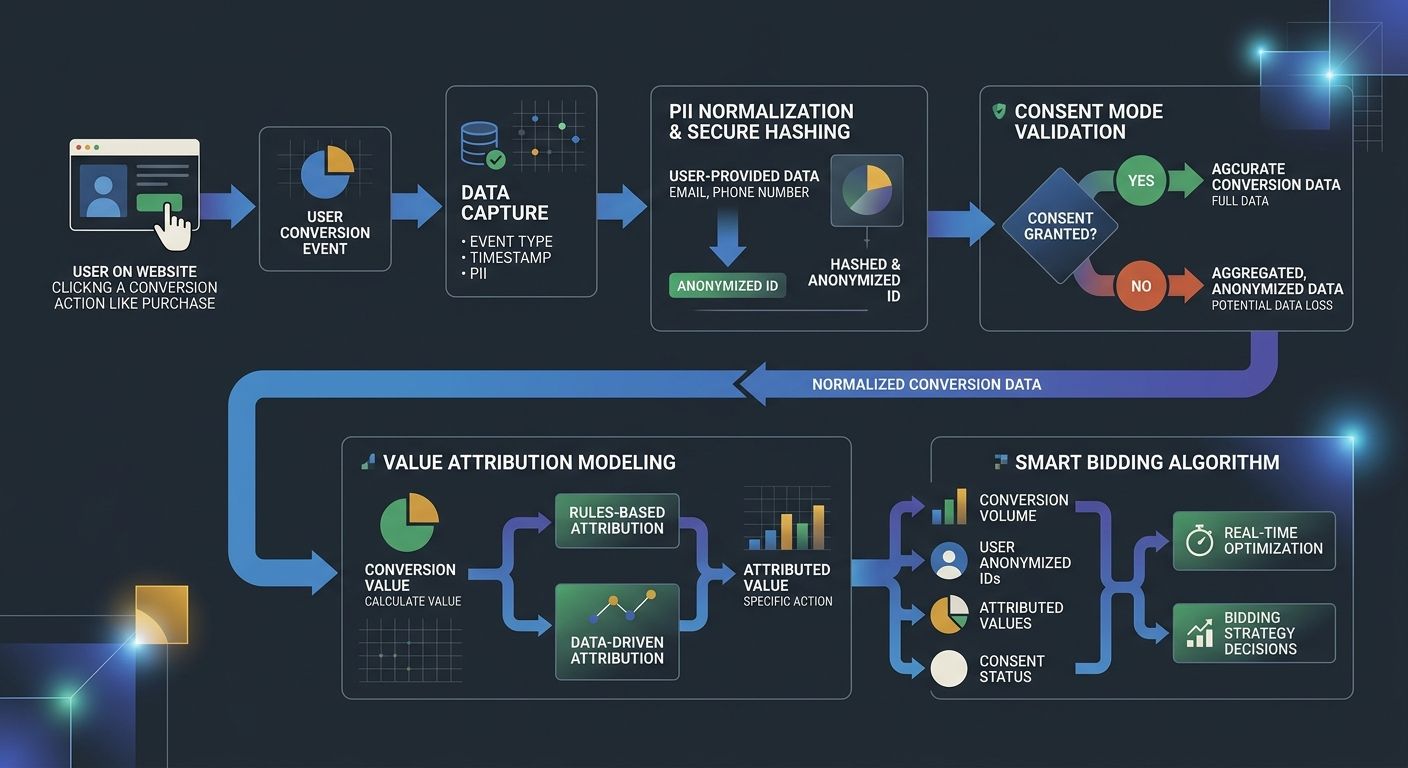
Enhanced conversions require first-party data—email addresses and phone numbers—to be normalized before hashing, the analysis explains. Email addresses must be lowercased and stripped of whitespace; phone numbers must follow E.164 international format with country codes and no punctuation.
A hash generated from " [email protected] " produces a different cryptographic output than "[email protected]", the report notes, preventing Google from matching the conversion to a signed-in user profile. The conversion still records through standard cookie-based tracking, masking the match failure. "Nothing errors. The conversion still records through your normal tracking. What you lose is the enhanced match," according to the analysis.
Match rate diagnostics in Google Ads conversion action settings surface the problem. The analysis recommends testing known conversions with verified signed-in email addresses to confirm successful matching when diagnostic rates fall below Google's reported benchmarks.
Consent Mode Signal Mapping Blocks Data Flow in Privacy Jurisdictions
In the European Economic Area, United Kingdom, and Switzerland, enhanced conversions route through Google's Consent Mode framework, which requires explicit user permission signals. The most common failure occurs when the ad_user_data and ad_personalization parameters remain unmapped to "granted" status after users accept tracking consent, the analysis finds.
"The Google tag checks that in real time and withholds the match key without it," the report states. The technical infrastructure fires conversion tags correctly, but the authorization layer required for enhanced matching never transmits.
A timing gap compounds the configuration problem. On certain implementations, consent status updates only trigger on the next page load rather than immediately when users click acceptance buttons. Purchase or lead conversions that fire on the same page as consent acceptance transmit under pre-consent states, losing enhanced matching for the highest-value events.
The analysis notes that advanced Consent Mode recovers more data than basic implementation by sending limited browser and device signals from non-consenting users for aggregated modeling, but flags unresolved privacy questions. "Whether a payload like that is clean anonymization or data you are still sending without consent is exactly the argument practitioners are having," the report states, recommending data controllers consult privacy stakeholders before enabling the feature.
Banner acceptance rates independently constrain data volume regardless of technical configuration quality. "A technically flawless setup on a banner that 40% of users reject is still only working with 60% of your traffic," according to the analysis.
Conversion Value Mismatches Skew Target ROAS Bidding
Target ROAS bidding strategies optimize against conversion values rather than conversion counts, making value accuracy critical. The analysis identifies three systematic value errors: static values hardcoded across variable-price transactions, mixed currency denominations in single reporting columns, and gross versus net revenue distinctions.
Shipping costs included in conversion values cause Smart Bidding to prioritize orders with higher shipping charges over identical free-shipping purchases, the report explains, even when shipping represents cost rather than margin. Discounted merchandise that generates future returns shows identical conversion values to full-price sales in gross-value configurations, training algorithms to acquire more discount-seeking customers.
"Feed either in and Smart Bidding optimizes toward whatever logic you picked, not toward what is actually profitable," the analysis states.
The analysis recommends organizations running Target ROAS campaigns audit whether conversion values reflect transaction economics or reporting conventions, noting the distinction directly determines which customer segments algorithms prioritize.
Similar technical infrastructure challenges affect AI-driven paid search campaign transitions from keyword-driven to intent-based matching, where signal quality determines automation effectiveness.
Marketing Implications
PPC managers operating Google Smart Bidding campaigns face a diagnostic priority shift. Performance problems attributed to bidding strategy selection or target aggressiveness frequently stem from upstream conversion tracking misconfiguration that reporting dashboards do not surface. Match rate diagnostics, consent signal timing tests, and conversion value audits become prerequisite troubleshooting steps before strategy adjustments.
The Consent Mode finding carries particular weight in European markets, where privacy compliance frameworks intersect with marketing infrastructure. Technical teams must verify not only that consent management platforms capture user permissions, but that those permissions propagate to Google's systems before conversion events fire—a timing gap absent from most implementation checklists.
Target ROAS campaigns require conversion value definitions aligned with business economics rather than transaction totals. Including shipping costs, promotional discounts, or gross revenue figures in conversion values trains bidding algorithms to optimize for reporting metrics rather than profitability, systematically misallocating budget toward lower-margin customer segments that appear identical to high-value buyers in campaign data.

Sarah Chen
SEO strategist and web analytics expert with over 10 years of experience helping businesses improve their organic search visibility. Sarah covers keyword tracking, site audits, and data-driven growth strategies.
Related Articles

Digital Marketing Agency Publishes Analysis Showing AI Reshaping Paid Search Campaign Infrastructure from Keyword-Driven to Intent-Based Matching
Digital marketing agency ClickSlice published an analysis on August 4, 2026, documenting how artificial intelligence has shifted paid search advertising from manual keyword-driven campaigns to intent-based matching systems, according to the agency's report.

AI-Referred Traffic Converts at 11x the Rate of Traditional Search, Yet Remains Invisible to Most Analytics Platforms
Visitors referred by large language models convert to sign-ups at 1.66%, more than eleven times the 0.15% rate recorded for traditional search traffic, yet most analytics platforms classify this traffic as "direct" or "unknown," according to an analysis published July 13 by Rankability, a St.

Local Marketing Analysis Identifies Conversion Gap Costing Service Businesses High-Intent Leads
An analysis published June 12, 2026, by the Rockland County Times identifies a structural blind spot in local marketing programs: businesses optimize for map pack visibility but fail to build conversion systems for the high-intent traffic they generate, according to the publication's examination of
Explore more topics