
Local Marketing Analysis Identifies Conversion Gap Costing Service Businesses High-Intent Leads
An analysis published June 12, 2026, by the Rockland County Times identifies a structural blind spot in local marketing programs: businesses optimize for map pack visibility but fail to build conversion systems for the high-intent traffic they generate, according to the publication's examination of

Local Marketing Analysis Identifies Conversion Gap Costing Service Businesses High-Intent Leads
An analysis published June 12, 2026, by the Rockland County Times identifies a structural blind spot in local marketing programs: businesses optimize for map pack visibility but fail to build conversion systems for the high-intent traffic they generate, according to the publication's examination of local service marketing practices. The gap appears largest in high-value professional services where ranking improvements deliver decision-ready visitors that never convert into contacted leads.
The analysis points to an organizational problem rather than a technical one. Local SEO teams measure rankings, map pack placement, and click volume, while conversion rate optimization typically sits elsewhere or doesn't exist at all for local campaigns. That handoff gap becomes expensive when the traffic being wasted comes from "near me" searches and city-specific queries, the visitors closest to a buying decision and constrained by geography.
Where High-Intent Visitors Drop Off
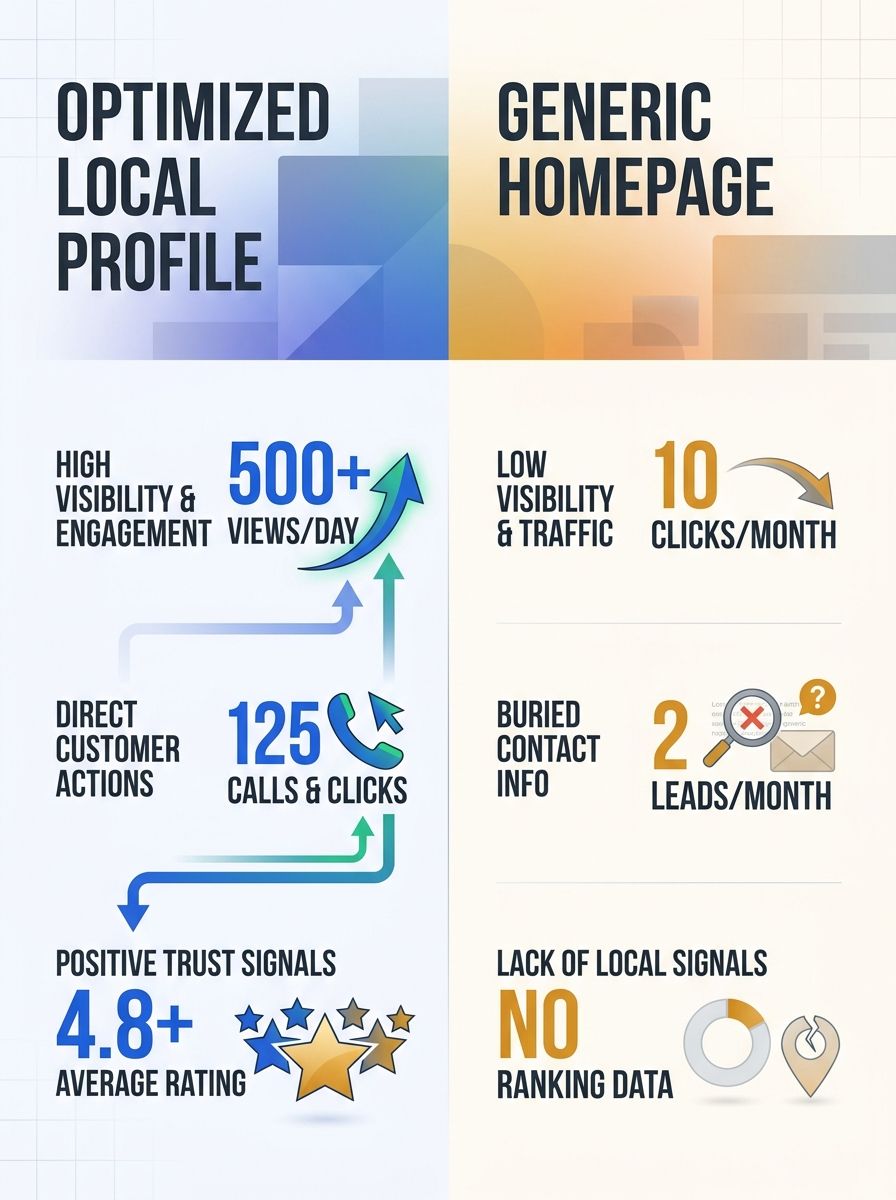
The Rockland County Times piece maps four conversion leak points between map pack impression and contacted lead. Google Business Profiles that appear neglected, outdated photos, unanswered reviews, missing service details, lose visitors before they reach the website. Local searchers who click through to generic homepages with no city-specific signals get a worse experience than the Business Profile promised. High-stakes buyers in categories like legal services, medical care, and home repair scan for immediate trust signals; when credentials and local proof aren't visible in the first screen, they return to compare the next listing.
Friction at the point of contact closes the loop. The analysis flags buried phone numbers, long forms, no mobile click-to-call functionality, and missing after-hours contact options as conversion killers on traffic that often arrives with urgent intent.
The argument aligns with earlier findings on multi-location AI data consistency, where fragmented location data creates trust gaps across both traditional and AI-powered search surfaces.
Business Profile as Transaction Surface
The analysis reframes the Google Business Profile from a ranking asset into a conversion platform where increasing numbers of transactions complete without ever reaching the business website. Calls, messages, bookings, and question-answer interactions happen natively in the profile interface. The piece recommends treating profile completeness, review volume and recency, service and product population, and seeded Q&A as managed conversion features rather than directory hygiene tasks.
For businesses that do pull visitors to owned properties, the analysis argues location-specific landing pages must deliver local proof and local contact paths rather than templated content with city names swapped. Multi-location businesses in professional services show the widest performance gap between genuinely distinct location experiences and thin doorway pages that rank occasionally but convert rarely.
Core Web Vitals Impact Both Channels
Page speed emerges as a dual-impact factor. The analysis notes that local intent frequently arrives with urgency, infrastructure failures, legal deadlines, health issues, and that urgency eliminates tolerance for load delays. A page requiring four seconds to become usable on cellular connections loses a share of visitors before the content even renders. Speed affects both Core Web Vitals ranking thresholds and the conversion rate of the traffic those rankings deliver.
The framework connects speed optimization to conversion outcomes rather than treating it purely as a ranking input, arguing that the same technical investment serves both visibility and revenue goals.
What Happens Next
The analysis challenges the common local marketing org structure where SEO teams own visibility metrics but have no conversion accountability. For digital agencies managing local campaigns, the structural argument suggests that delivering ranking improvements without conversion infrastructure leaves client revenue on the table and weakens the case for continued investment.
The framework fits into broader post-cookie measurement shifts toward first-party data, where businesses need to track outcomes beyond rank and click. Local campaigns generate some of the highest-intent traffic available; whether agencies build systems to capture that intent determines which programs scale and which plateau at visibility without revenue impact.
The immediate application target is high-value local service categories, legal, medical, financial, home services, where the economic difference between a 2% and 5% conversion rate on the same traffic volume exceeds the value of incremental ranking gains. Agencies that staff both sides of the visibility-to-conversion chain have a structural advantage in those verticals.

Alex Chen
Alex Chen is a digital marketing strategist with over 8 years of experience helping enterprise brands and agencies scale their online presence through data-driven campaigns. He has led marketing teams at two successful SaaS startups and specializes in conversion optimization and multi-channel attribution modeling. Alex combines technical expertise with strategic thinking to deliver actionable insights for marketing professionals looking to improve their ROI.
Related Articles

AI Tool Adoption for Local Business Recommendations Jumps from 6% to 45% in Twelve Months
Adoption of AI tools for local business recommendations surged from 6% to 45% within twelve months, according to local SEO statistics published July 15, 2026 by Affinco, while 46% of all Google searches now carry local intent and only 35% of small and mid-sized businesses maintain a Google Business
Multi-Location Brands Face 68% AI Data Mismatch as ChatGPT Local Search Usage Hits 45% of Consumers
Google Business Profile signals now account for 32% of local pack ranking weight, the single largest ranking factor, while only 68% of business contact information displayed in ChatGPT and Perplexity matches Google Business Profile data, according to multi-location SEO statistics published by BizIQ

The Local SEO Blindspot: Why Incomplete Business Profiles Cost You More Than Lost Rankings
Incomplete Google Business Profiles trigger compounding failures across three systems at once: Google's local pack algorithm, AI-generated search answers, and user trust at the moment of conversion.
Explore more topics