
Search Volume Filter Screens Out High-Intent Content Opportunities, SEO Analyst Says
Search volume as a keyword prioritization filter systematically excludes the highest-intent questions buyers ask AI assistants because those conversational prompts never appear in traditional keyword tools, according to an analysis published by Search Engine Journal on August 18, 2026.

Search Volume Filter Screens Out High-Intent Content Opportunities, SEO Analyst Says
Search volume as a keyword prioritization filter systematically excludes the highest-intent questions buyers ask AI assistants because those conversational prompts never appear in traditional keyword tools, according to an analysis published by Search Engine Journal on August 18, 2026. The filtering effect occurs because AI systems break natural-language questions into multiple sub-queries rather than executing single searches, meaning the original prompt generates no measurable search volume despite representing higher purchase intent.
The mechanism behind the mismatch centers on how AI assistants process user questions, according to Search Engine Journal. When someone asks ChatGPT or Google AI Overviews a question, the system does not execute that question as a single search query.
Query Fan-Out Technique Breaks Volume Signal
Google's documentation on AI features describes a "query fan-out" technique in which AI Overviews and AI Mode issue multiple related searches across subtopics and data sources to develop a single response. The company notes that its models identify additional supporting pages while generating responses, which explains why AI results cite a wider spread of sources than traditional search results pages.
OpenAI employs a comparable approach, rewriting user prompts into multiple search queries before retrieval begins. The shared architecture means the same user question triggers different search patterns depending on whether someone types it into a search box or speaks it to an assistant.
The structural shift breaks search volume as a prioritization signal because competition now extends beyond ranking for a single keyword's results page to becoming one of multiple sources synthesized into an AI-generated answer. Content can earn citations for sub-questions it never explicitly targeted, or lose visibility on topics it covers because it only addressed the headline term rather than underlying decision factors.
Conversational Prompts Invisible to Keyword Tools
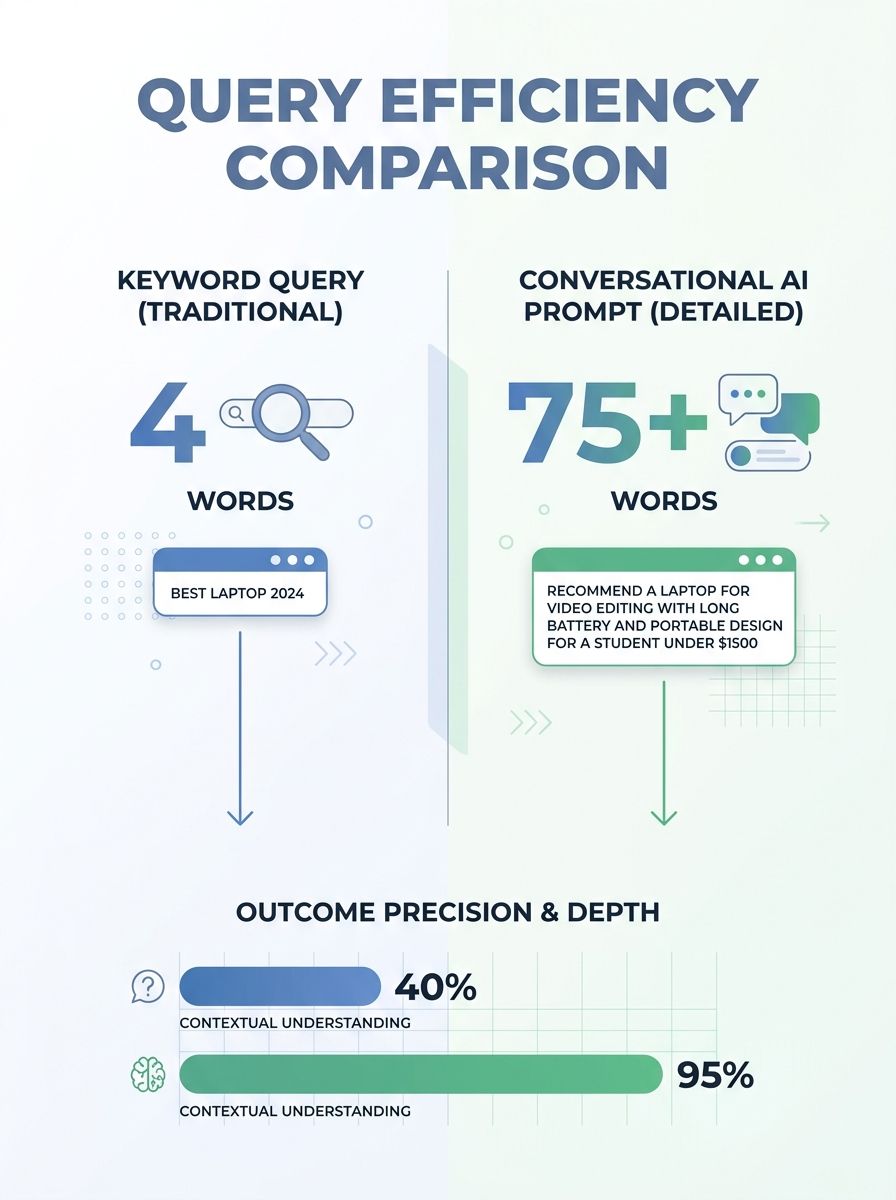
Keyword research platforms report demand for strings people type into search boxes. AI prompts follow different patterns—longer, conversational, and structured around situations rather than queries. The analysis provided three comparison examples: a user searching "best crm for small business" versus prompting "We're a 12-person agency outgrowing spreadsheets. What CRM should we move to, and how painful is the switch?"
Each conversational prompt carries constraints, a decision to make, and an implied objection, the analysis noted. Each also delivers higher business value than the traditional search because the person asking provides context and stands closer to a purchasing decision. Yet each conversational prompt returns zero results in a keyword volume column because few users type that exact sentence.
Teams sorting keyword lists by search volume will consistently prioritize traditional searches over actual prompts, the analysis argued. This approach optimizes for queries that are easiest to count rather than most valuable to answer. The trend mirrors broader industry movement from keyword-driven to intent-based matching that agencies documented in paid search infrastructure earlier this year.
Four-Shift Prioritization Framework
The published framework recommended four prioritization shifts that do not require new tools but change what content teams look for. First, prioritize sub-questions rather than head terms by writing out the eight to ten things someone needs answered before acting on a topic, then verify whether existing content genuinely answers those questions or only gestures at them.
Second, prioritize entities and concepts over exact-match strings. Because synthesis matches on meaning rather than phrasing, exact-match keyword repetition delivers less value than comprehensive subject coverage—naming relevant products, standards, methods, and alternatives and explaining how they relate.
Third, prioritize decision support over definitions. The analysis noted that users rarely ask AI assistants for definitions anymore because they receive those instantly. Instead, they use assistants to help decide, making comparisons, selection criteria, trade-offs, and objections primary content targets rather than sections appended to buyer's guides.
Fourth, retain volume-based targeting where it still applies. Short transactional queries settled by traditional search results pages—brand terms, product terms, local intent, and "near me" searches—still respond to volume signals and should not be rebuilt around conversational prompts.
The framework positions search volume as one input among several rather than the primary filter. The shift addresses warnings from other practitioners about content volume approaches that fail to account for how AI systems retrieve and synthesize information.
Marketing Implications
Content teams that continue using search volume as the primary keyword filter may systematically under-invest in the questions that carry the highest buyer intent. The August 18 analysis suggests that AI query fan-out architecture has created a visibility gap between what keyword tools measure and what AI assistants actually retrieve when assembling answers.
The recommended response does not require expensive new platforms. The four prioritization shifts described in the framework work with existing research inputs—customer conversations, sales objections, product documentation, and support tickets—that already surface the decision-level questions conversational prompts contain. The operational change involves expanding prioritization criteria beyond volume to include decision proximity and sub-question coverage.
Teams should audit current content roadmaps to identify where volume sorting may have filtered out high-intent decision questions that appear in conversational form but generate no measurable search volume. Rebalancing toward intent-based prioritization may require smaller content portfolios focused on comprehensive subject coverage rather than larger portfolios chasing incremental volume variants.

Alex Chen
Alex Chen is a digital marketing strategist with over 8 years of experience helping enterprise brands and agencies scale their online presence through data-driven campaigns. He has led marketing teams at two successful SaaS startups and specializes in conversion optimization and multi-channel attribution modeling. Alex combines technical expertise with strategic thinking to deliver actionable insights for marketing professionals looking to improve their ROI.
Related Articles

Seventy-Three Percent of Marketers Now Prioritize AI-Generated Answer Optimization as Google Query Volume Reaches Record High
Seventy-three percent of marketers now prioritize content designed to appear in AI-generated search answers, according to a July 21 analysis by SEO Essex citing 2026 Interactive Advertising Bureau data, as Google search query volume reaches an all-time high despite declining click-through rates on t

Full Throttle SEO Warns Against Content Volume Approach for AI Search Optimization
Ivy Boyter, founder of Full Throttle SEO, cautioned businesses July 12 against producing high volumes of content to gain AI search visibility, arguing the strategy repeats content bloat and keyword cannibalization mistakes that damaged websites during the traditional SEO era, according to a statemen

AI Search Tools Supplement Rather Than Replace Google, Similarweb Traffic Data Shows
Ninety-five percent of ChatGPT's 494 million users also actively use Google, according to Similarweb data tracking audience overlap between March and May 2026, showing AI search tools have not replaced traditional search engines but instead added a supplementary layer to existing search behavior, ac
Explore more topics