
Google Analytics Adds Campaign Benchmarking Through Ask Advisor Interface
Google added campaign benchmarking functionality to its Analytics platform on August 10, 2026, allowing marketing teams to compare performance against anonymized industry averages through the Ask Advisor interface, according to a blog post from Josh Moser, Senior Director of Product Management at Go
Google Analytics Adds Campaign Benchmarking Through Ask Advisor Interface
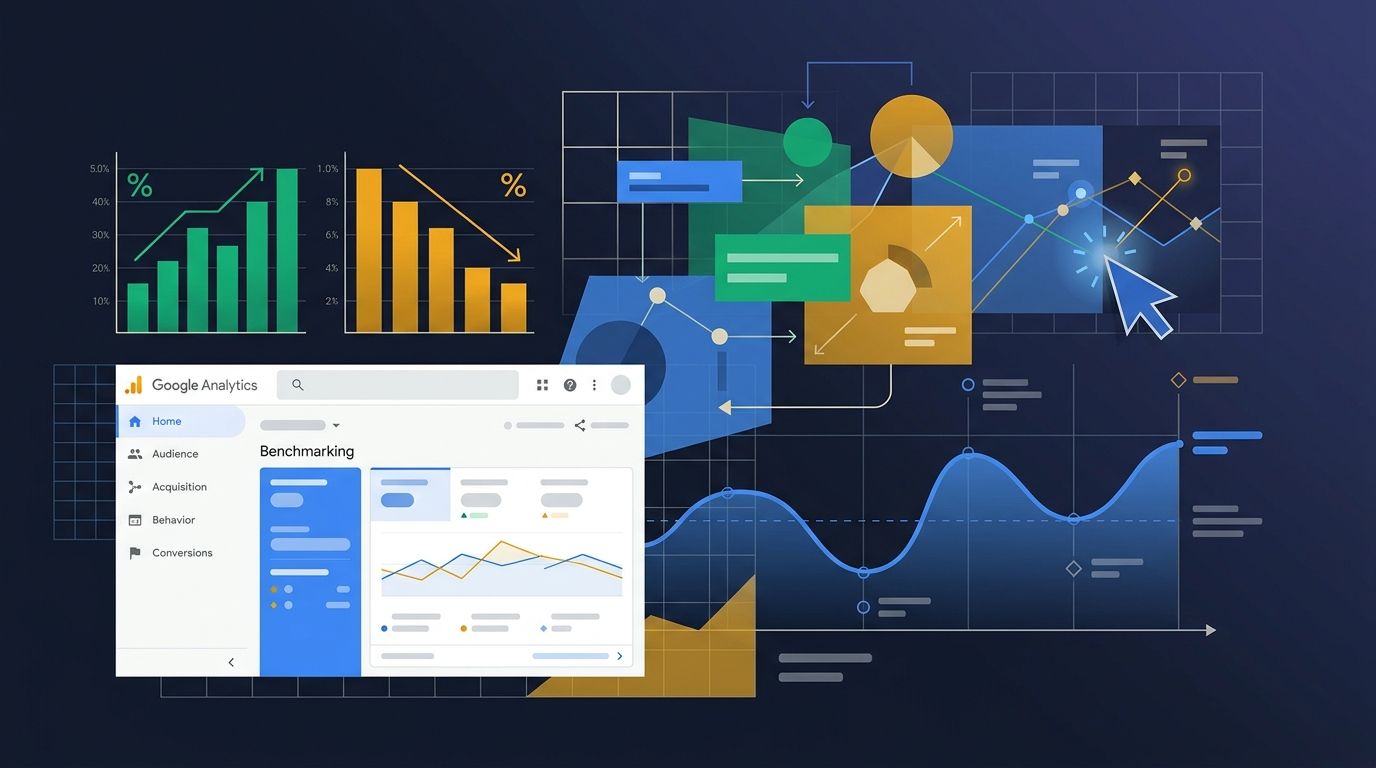
Google added campaign benchmarking functionality to its Analytics platform on August 10, 2026, allowing marketing teams to compare performance against anonymized industry averages through the Ask Advisor interface, according to a blog post from Josh Moser, Senior Director of Product Management at Google.
The announcement marks Ask Advisor's expansion beyond its initial May 2026 launch at Google Marketing Live, where the tool debuted as a cross-product agent spanning Google Ads, Analytics, Merchant Center, and Google Marketing Platform.
How the Benchmarking System Works
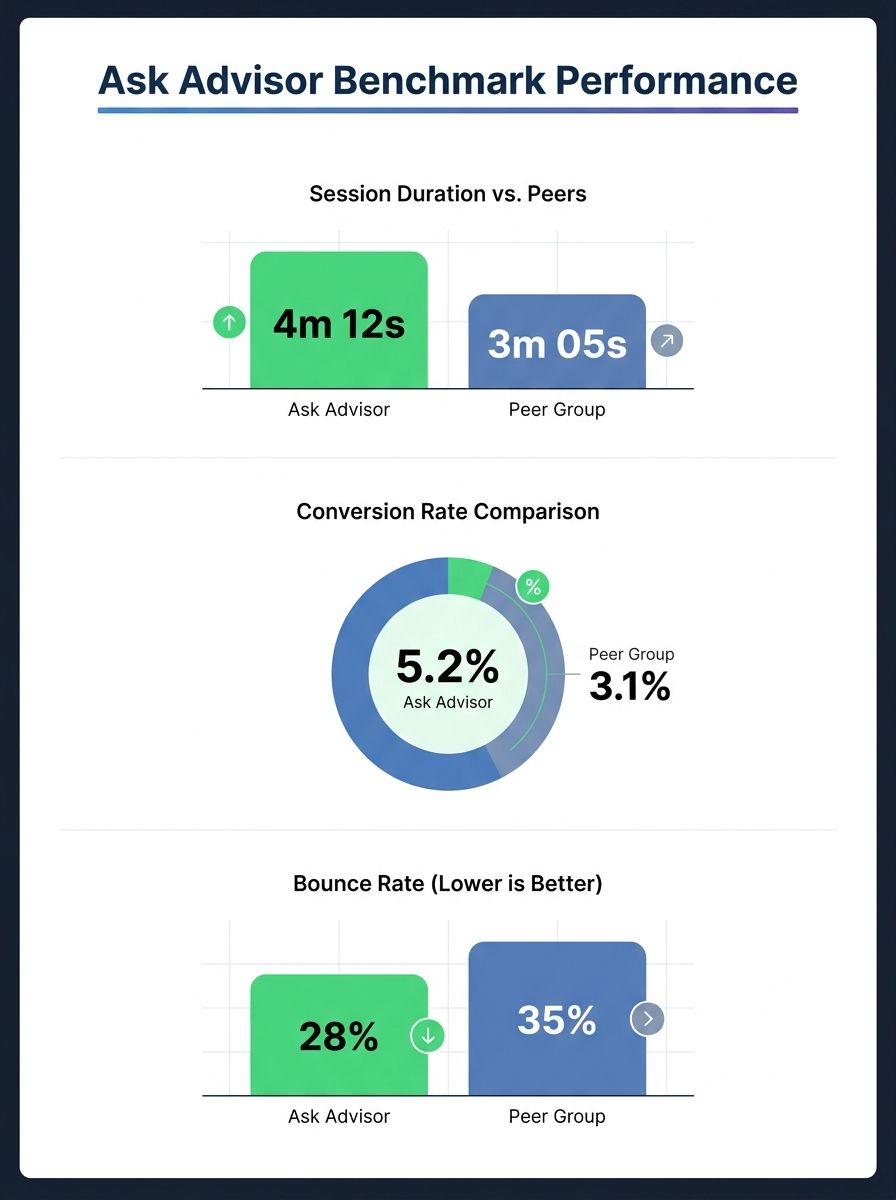
The benchmarking feature responds to natural-language queries about campaign performance. Marketing teams can ask "How am I doing?" and receive comparative data showing their metrics against the median, 25th percentile, and 75th percentile of similar businesses, according to Google's product documentation. The comparison data appears across Acquisition, Engagement, Monetization, and Retention reports as well as the Analytics home page overview.
Ask Advisor pulls from anonymized performance data submitted by businesses that share industry classification and operational signals. The system operates in beta status for English-language accounts only, Google stated in the announcement.
Technical Requirements and Peer Group Configuration
Properties must enable "Modeling contributions & business insights" in the Admin section to access benchmarking data. Google constructs peer groups from the industry category selected during initial property setup, combined with signals extracted from domain URLs and mobile app attributes, the documentation shows.
Google offers 25 top-level industry categories, each containing multiple subcategories that drill down to specific business types such as athletic footwear or consumer electronics. Marketing managers can manually adjust their peer group assignment if the default classification misaligns with their actual business model, according to the company's guidance.
The announcement did not specify whether Ask Advisor's benchmarking uses the same peer groups configured in existing Analytics benchmarking reports or constructs independent comparison sets. Google also did not clarify whether the Modeling contributions requirement applies to Ask Advisor benchmarks in the same manner it gates standard benchmarking features.
Additional Analytics Features in August Rollout
Google simultaneously released what it labels "AI Overviews" for Analytics—summary cards that highlight metric changes since a user's last login. The feature name refers to automated Analytics summaries, not the AI-generated search results that now cover 68% of queries, according to separate industry research.
Users can configure push notifications or email alerts for these summaries and set delivery frequency through account preferences, Google stated. The company also announced insights cards for Google Ads personalized to individual business patterns, plus a Dashboards feature that generates visualization charts from text prompts. Dashboards will reach Google Analytics without a specified timeline, the company said.
All three features—Ask Advisor benchmarking, Ads insights cards, and Dashboards—remain in beta access limited to English-language accounts, according to Moser's announcement.
Context and Outlook
The benchmarking addition addresses a persistent challenge in digital marketing performance evaluation: establishing whether observed metrics reflect competitive positioning or broader industry trends. Marketing teams consistently report organic traffic as their primary KPI despite rising AI Overview coverage and zero-click search rates, making peer comparison data increasingly valuable for contextualizing traffic patterns.
Google's documentation emphasizes that benchmark accuracy depends on peer group composition. The company's Merchant Center benchmarking pilot, which launched in July 2026, does not allow manual peer group adjustment—a limitation that drew criticism from agency practitioners managing multi-vertical portfolios. The Analytics implementation preserves category modification controls, suggesting Google distinguished between product-level benchmarking needs and property-level analytics use cases.
The timing coincides with Google's August 2026 algorithm update triggering ranking volatility across 45% of tracked websites, a period when comparative performance data becomes especially critical for separating site-specific issues from systemic market shifts.

Sarah Chen
SEO strategist and web analytics expert with over 10 years of experience helping businesses improve their organic search visibility. Sarah covers keyword tracking, site audits, and data-driven growth strategies.
Related Articles

The Benchmarking Blindspot: Why Your Analytics Comparison Strategy Is Missing Critical Industry Context
GA4 benchmarking groups your site into one of 15 industry categories and compares engagement rate, sessions, and bounce rate against anonymized peers within that bucket.

Google Publishes First Official Guide for AI Search Visibility as Agencies Double Down on Generative Engine Optimization
Google released its first official guidance for optimizing content in AI-generated search features in mid-May 2026, marking the company's most explicit acknowledgment that generative engine optimization has become a distinct practice alongside traditional search engine optimization, according to doc

The Dual-Engine Visibility Strategy: Getting Your Content Into Both Google Search and AI Overviews in 2026
Google's own AI optimization guide, published May 15, 2026, explicitly advises site owners against creating separate AI-specific content. That guidance contradicts the central premise of every "AEO specialist" selling parallel content strategies for traditional search and generative AI surfaces.
Explore more topics