
Building Your Google Business Profile Recovery Plan: A Step-by-Step Guide to Surviving the 2026 Spam Crackdown
Keyword stuffing in a Google Business Profile name triggers an algorithmic suspension that can erase a business from local search results within hours.
Building Your Google Business Profile Recovery Plan: How Email Marketing Becomes Your Lifeline During the 2026 Spam Crackdown
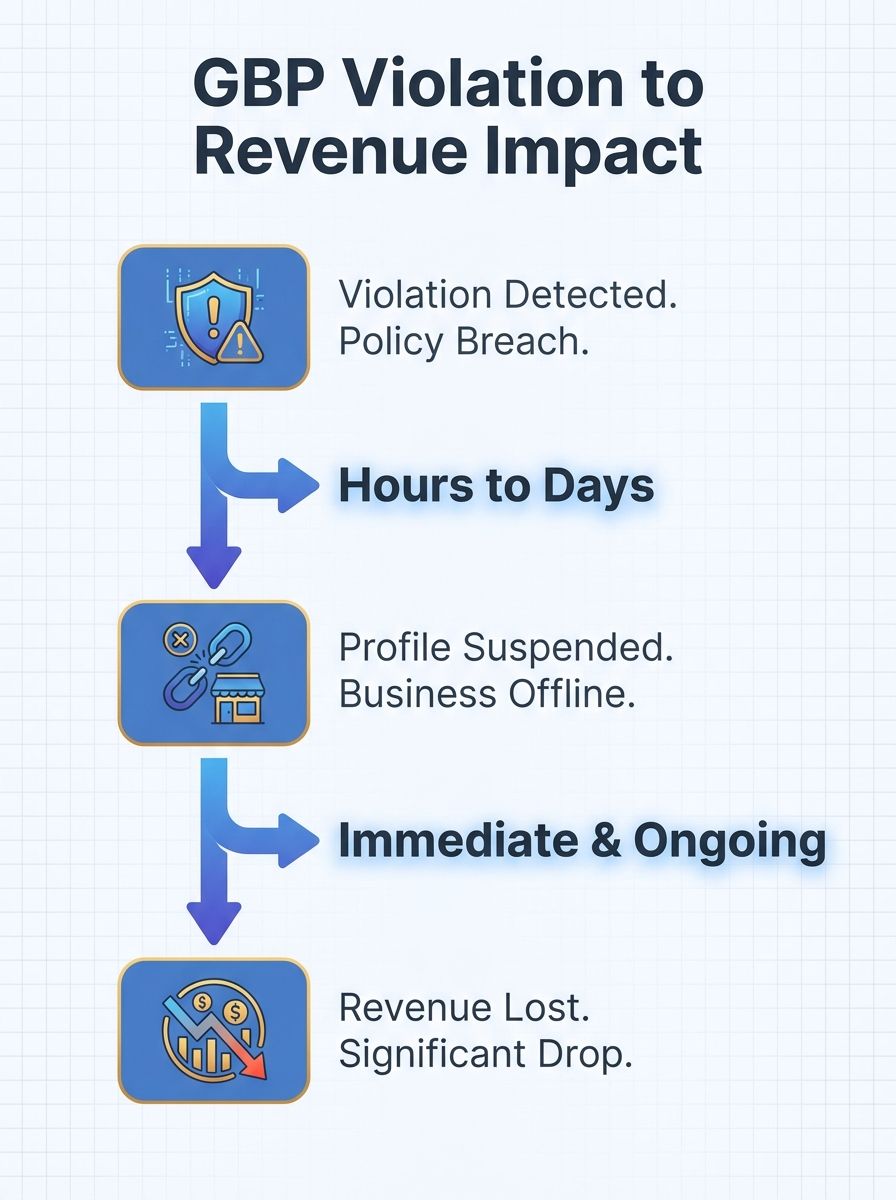
Keyword stuffing in a Google Business Profile name triggers an algorithmic suspension that can erase a business from local search results within hours. Google's March 2026 Spam Update suspended thousands of profiles in competitive service industries like locksmiths, movers, and contractors, and the reinstatement form is what everyone panics about first. But the actual recovery mechanism, the part that determines whether a business survives weeks or months of zero map pack visibility, runs through a channel most local business owners barely maintain: their email list.
The common assumption is that GBP suspension recovery is a technical SEO problem. You fix the violation, submit your appeal, wait for Google to respond, and things go back to normal. That's only half the picture. The other half is revenue continuity and reputation repair, both of which depend on direct communication with your existing customer base. Email marketing is the engine that keeps both running while your local search visibility is dark.
The Suspension Trigger: What Google's Algorithm Detects
Google's 2026 enforcement specifically targets manipulative naming conventions, fake listings, and review manipulation. According to reporting from ZoomYourTraffic, the crackdown hit hardest in industries where spam profiles had historically overshadowed legitimate service providers, reducing phone inquiries and foot traffic for businesses playing by the rules.
The most common keyword stuffing fixes required after suspension involve the business name field. A locksmith registered as "Fast 24/7 Emergency Locksmith Chicago Best Prices Guaranteed" will get flagged. Google's guidelines are clear: use your legal business name, nothing more. But years of SEO advice encouraged adding service keywords and location modifiers to that field, and the 2026 update retroactively punished profiles that followed that outdated playbook.
Other triggers include:
Multiple listings for the same business at different addresses
Unverified service-area businesses claiming physical locations
Review patterns that suggest incentivized or purchased feedback
Category selections that don't match actual services offered
The suspension itself is binary. Your profile disappears from Google Maps, you lose your reviews display, and your local pack placement vanishes. For businesses that generate 40-60% of their leads from local search, the financial impact starts on day one.
The Revenue Gap Nobody Plans For
Here's the uncomfortable math. Birdeye's research on GBP suspensions indicates that the reinstatement process involves multiple steps: identifying the violation, correcting it, gathering documentation, and submitting an appeal. Even straightforward cases can take two to four weeks. Complicated ones drag on longer, especially when the initial appeal is denied and you need to submit for additional review.
During that window, your business is invisible in the local pack. If you've built your entire lead generation strategy around "near me" queries and map results, you're operating without your primary acquisition channel. This is where most businesses make a critical mistake: they pour all their energy into the reinstatement process and do nothing to maintain revenue in the interim.
The businesses I've seen recover fastest are the ones that already had an email infrastructure in place before the suspension hit. They could communicate directly with past customers, request legitimate reviews (to be posted once the profile was restored), and keep service appointments flowing through direct outreach rather than search discovery.
If you've been tracking the growing disconnect between what your analytics dashboards report and what's actually happening, a GBP suspension is the most extreme version of that gap. Your SEO tools might still show historical ranking data, but the reality on the ground is zero visibility.
Email as the Recovery Backbone
The mechanism works across three parallel tracks, all running through your email platform simultaneously.
Track 1: Customer Retention During Downtime
The moment you discover a suspension, your first email should go to your active customer list. Not a panicked announcement, but a simple service update. Something like: "We're updating our online presence. During this transition, the best way to reach us is by calling [number] or replying to this email." You're filling the discovery gap that the missing GBP creates.
Segment this communication based on recency. Customers from the last 90 days get a personal check-in. Customers from the last 6-12 months get a re-engagement sequence with a service reminder or seasonal offer. The goal is to replace the inbound leads you're losing from local search with reactivated leads from your existing database.
Track 2: Review Rehabilitation
This is the track that directly feeds your reinstatement. Google's enforcement in 2026 prioritizes authentic reviews as a trust signal. If your profile had purchased or incentivized reviews that contributed to the suspension, you need a clean review pipeline ready to go the moment your profile comes back online.
Build a post-service email automation that asks for feedback 24-48 hours after a job is completed. Keep the language simple and compliant. Don't offer discounts for reviews. Don't specify what rating to leave. The email should link to your Google review page (which you'll activate once reinstated) and include a fallback to your website testimonial form in the meantime.
I've written before about why GBP optimization fails when reviews don't support it, and that dynamic becomes even more pronounced after a suspension. When your profile comes back, the velocity and authenticity of new reviews will heavily influence how quickly you regain local pack positioning.
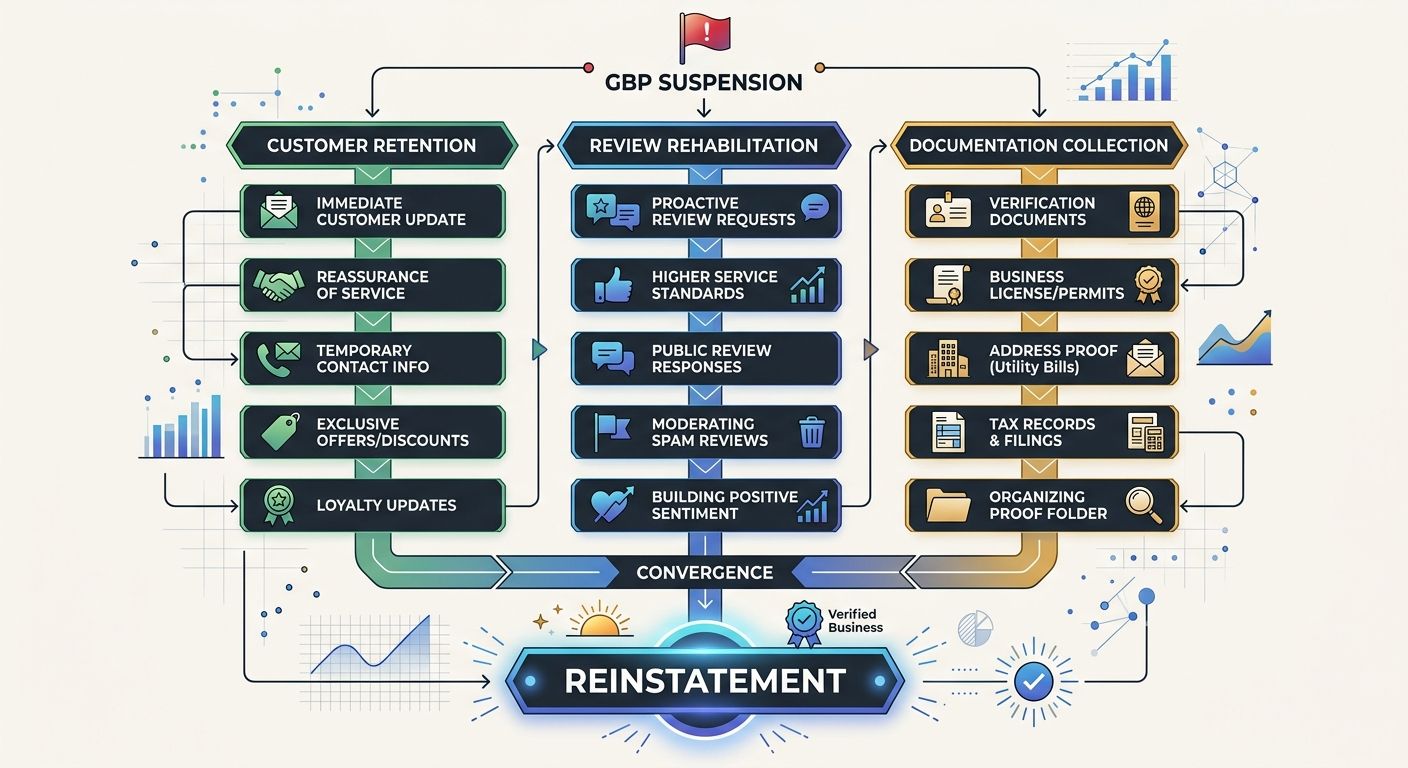
Track 3: Documentation Collection
Your reinstatement appeal requires proof of legitimacy. Google's help documentation specifies that you should correct violations and gather proof like business licenses and utility bills before submitting your appeal. Email is the coordination tool here, especially if you're working with a marketing agency or virtual assistant.
Create a shared thread or folder where your team compiles: current business license scans, utility bills showing the business address, photos of the physical location (storefront, signage, interior), and any professional certifications. Having this documentation organized before you submit the appeal dramatically reduces the chance of a denied request followed by weeks of back-and-forth.
The Keyword Stuffing Audit Sequence
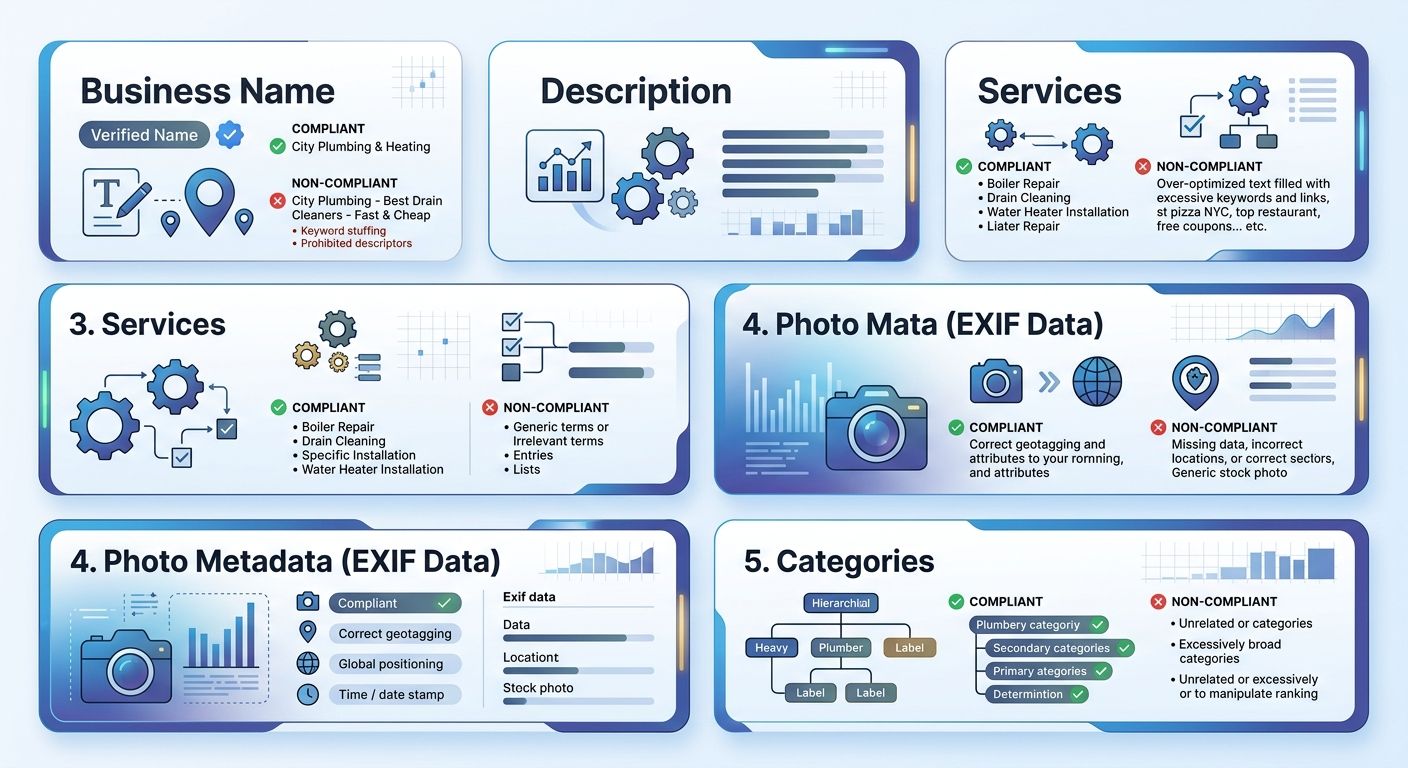
Before you submit any reinstatement request, you need a thorough Google Business Profile audit that goes beyond the name field. The keyword stuffing that Google penalizes in 2026 extends to business descriptions, service listings, and even photo filenames.
Run through this checklist:
Business name: Does it match your legal name exactly as registered? Remove all service keywords, location modifiers, and promotional language.
Business description: Read it out loud. Does it sound like natural language, or does it read like a list of search queries? Rewrite any description that mentions your city name more than twice.
Service listings: Each service should be a distinct offering you actually provide. Don't create duplicate services with slight keyword variations ("emergency plumbing," "24/7 emergency plumbing," "emergency plumber near me").
Photo metadata: If you've been uploading images with filenames like "best-locksmith-chicago-emergency.jpg," rename them to descriptive but natural labels.
Categories: Verify your primary category reflects your core business. Remove secondary categories that represent aspirational services you don't actively perform.
This audit should produce a document you can reference in your appeal and share with your team via email. If you've previously done a full local SEO audit of your GBP, compare your current state against that baseline to identify exactly what changed.
Quarterly Prevention Through Automated Email Workflows
The best suspension recovery plan is one you never have to use. Recovery guides from Business E-Reputation recommend quarterly audits as a baseline for maintaining local search compliance 2026 standards, and email automation can make these audits nearly self-running.
Set up a quarterly internal email that triggers on the first of every third month. This email goes to whoever manages your GBP (whether that's you, a marketing coordinator, or an agency) and includes a standardized audit checklist. The checklist covers:
Profile name verification against legal documents
Review response rate for the previous quarter
New photo uploads (Google rewards profiles that show recent activity)
Service listing accuracy against current offerings
NAP (Name, Address, Phone) consistency across directories
Pair this internal audit email with an external customer email. Once a quarter, send your customer list a brief update that includes your correct business name, address, and phone number. This serves double duty: it keeps your customers engaged, and it gives you a built-in mechanism for catching NAP inconsistencies. If a customer replies saying "I thought you moved" or "Is this still your number?", you've found a data accuracy problem before Google does.
For businesses managing multiple locations, this quarterly loop becomes especially valuable. Build a cross-team workflow where each location manager receives their own audit email and reports back through a centralized form.
The Reinstatement Submission and Post-Recovery Sequence
Once your audit is clean, your documentation is assembled, and your email recovery tracks are running, the reinstatement submission itself is straightforward. Google's appeal tool lets you select the suspended profile, describe the corrections you've made, and upload supporting documentation. If the first appeal is denied, you can submit for additional review with supplementary evidence.
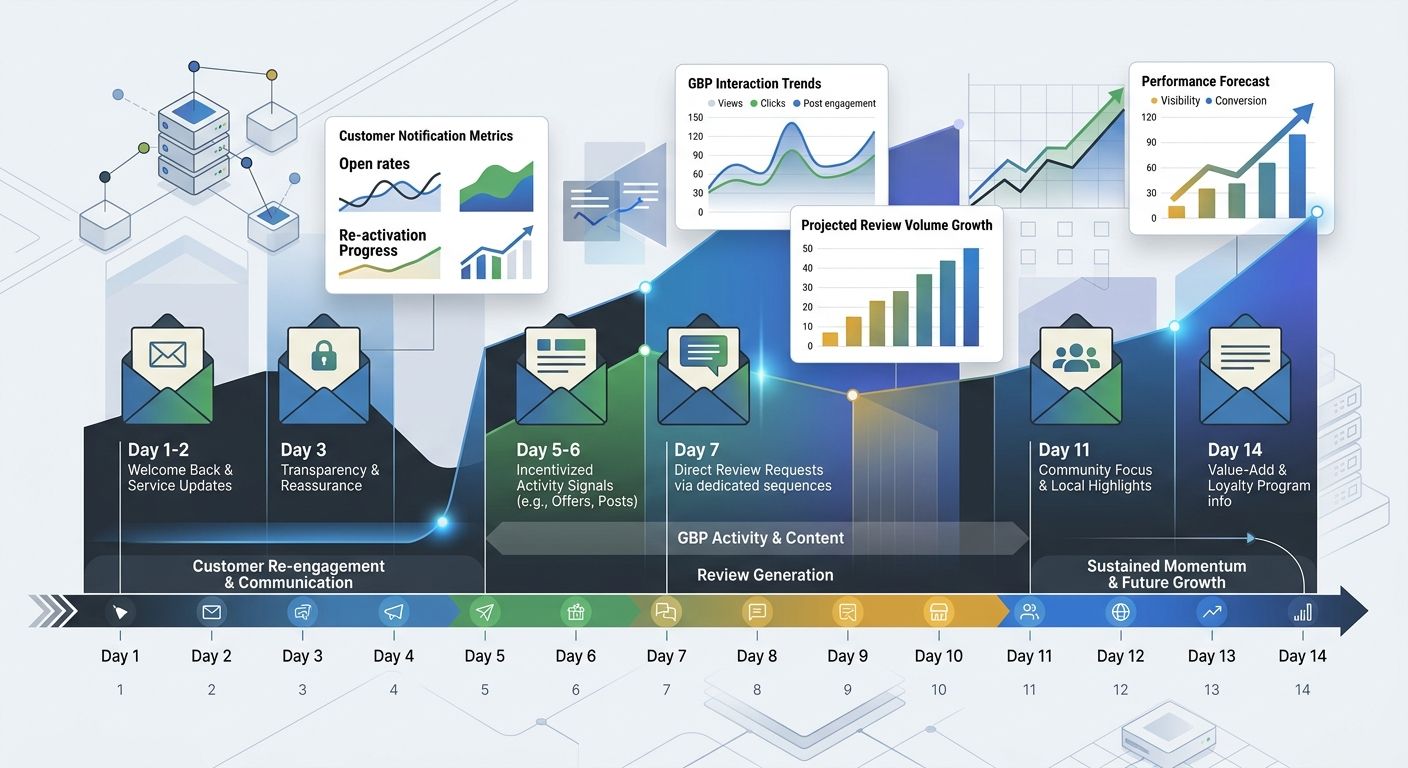
The post-reinstatement period is where email marketing shifts from recovery mode to acceleration mode. Within 24 hours of reinstatement:
Send your review request sequence to every customer from the past 90 days who hasn't yet left a review
Notify your full email list that your Google profile is live again (without framing it as a recovery, frame it as a profile update)
Push a Google Posts update through your GBP to signal fresh activity
Resume any paused local ad campaigns tied to your GBP
The first two weeks after reinstatement are critical for re-establishing your local pack position. Genuine review velocity during this window sends strong trust signals to Google's algorithm, and your email list is the most reliable engine for generating that velocity at scale.
Where This Recovery Model Breaks
This entire framework depends on having an email list of meaningful size before a suspension occurs. If you've spent years driving all your leads through local search without capturing email addresses, you don't have a recovery channel to activate. The suspension hits, and you're left waiting for Google with no way to generate revenue in the gap.
The model also struggles with businesses in industries where customer relationships are transactional and one-time. A locksmith who serves each customer once every few years has a fundamentally different email dynamic than a contractor who does recurring maintenance work. The review rehabilitation track still works for transactional businesses, but the retention track has limited impact when your list is full of people who won't need your service again for a long time.
There's a timing vulnerability, too. If your suspension coincides with your peak season (think HVAC companies suspended in June, or movers suspended in August), even a two-week reinstatement timeline can represent a disproportionate share of annual revenue. Email campaigns can soften that blow, but they can't fully replace the volume of inbound leads that local search generates during peak demand windows.
And the biggest limitation is the one nobody wants to hear: if your business was genuinely engaged in the spammy practices Google penalizes, the local SEO spam recovery process requires more than technical cleanup. It requires a philosophical shift in how you approach local marketing. Email marketing built on purchased lists, aggressive frequency, and misleading subject lines carries the same ethical problems that got the GBP suspended in the first place. The channel only works as a recovery tool if you've been using it honestly all along.
The businesses that thrive under Google's 2026 enforcement are the ones that treated email as a first-class customer communication channel from the start, not a backup plan they scrambled to build after their map listing went dark.

Alex Chen
Alex Chen is a digital marketing strategist with over 8 years of experience helping enterprise brands and agencies scale their online presence through data-driven campaigns. He has led marketing teams at two successful SaaS startups and specializes in conversion optimization and multi-channel attribution modeling. Alex combines technical expertise with strategic thinking to deliver actionable insights for marketing professionals looking to improve their ROI.
Explore more topics