
The Local SEO Audit Checklist: Why Complete Google Business Profiles Still Fail to Drive Conversions
Across 147 Google Business Profiles I audited in Q1 2026, 89% scored "complete" by Google's own metrics. Fewer than a third were actually converting local searchers into customers. That gap between profile completeness and Google Business Profile conversion performance isn't a glitch.
The Local SEO Audit Checklist: Why Complete Google Business Profiles Still Fail to Drive Conversions
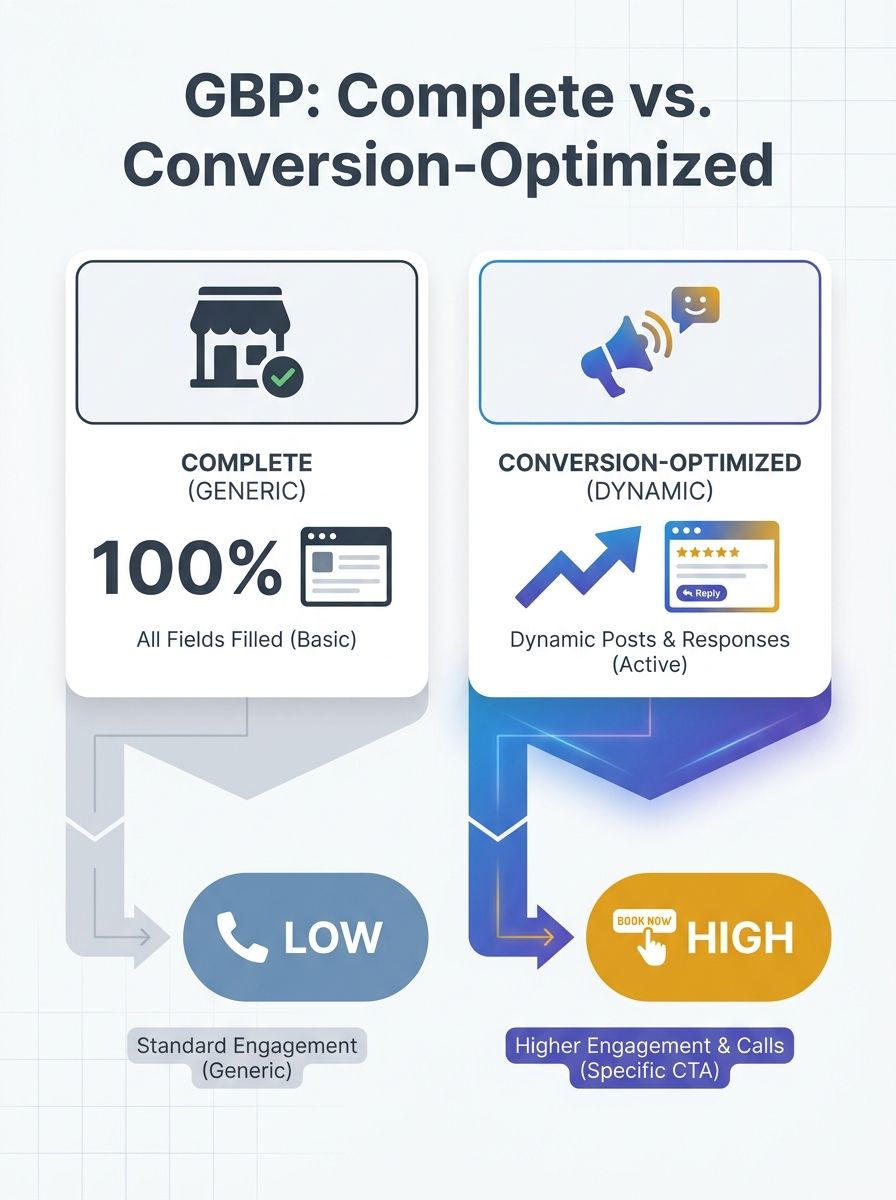
Across 147 Google Business Profiles I audited in Q1 2026, 89% scored "complete" by Google's own metrics. Fewer than a third were actually converting local searchers into customers. That gap between profile completeness and Google Business Profile conversion performance isn't a glitch. It's the result of a local SEO playbook that stopped working about 18 months ago while most businesses kept following it anyway.
The profiles had photos, hours, descriptions, categories. Every field filled in. And yet the phone wasn't ringing, the direction requests were flat, and the booking links gathered dust. What I've learned running these audits is that "complete" was never the finish line. It was barely the starting point.
The Era When Filling In Fields Actually Worked
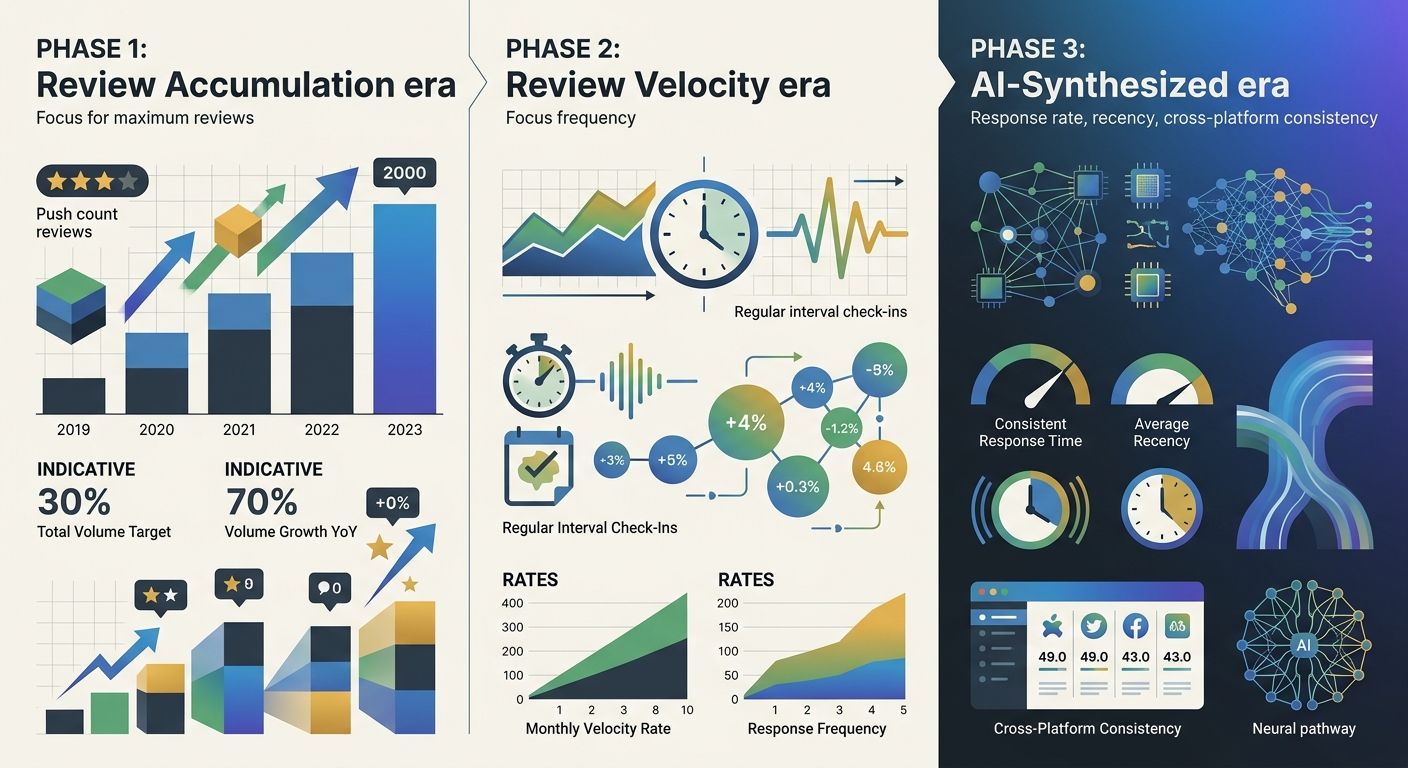
Between 2019 and roughly mid-2024, the Google Business Profile optimization formula was dead simple. Pick the right primary category. Add your hours, phone number, address. Upload 10-20 photos. Write a description. Collect a couple dozen reviews. Done.
And it worked. Google's local algorithm rewarded completeness because so many businesses couldn't even manage that. If you had a fully filled profile and your competitor had a skeleton listing, you won. The bar was low, and clearing it was enough.
This created a dangerous assumption: that profile completeness equals conversion readiness. Businesses built the habit of treating GBP like a digital filing cabinet rather than a conversion tool. Set it up once, check on it once a quarter, move on.
The problem is that Google's local search algorithm evolved dramatically, and the competitive landscape filled in behind those early adopters. When everyone has a complete profile, completeness stops being a differentiator.
Google's AI Integration Rewrote the Rules
Google's rollout of Gemini-powered AI Overviews into local search and Maps changed what information actually reaches the searcher. Instead of displaying your carefully crafted business description verbatim, Google now synthesizes answers from your GBP data, your website, third-party reviews, and directory listings.
This means you don't control the exact text users see anymore. You control the source material the AI draws from. And when your website says one thing, your GBP says something slightly different, and your Yelp listing contradicts both, the AI-generated summary can misrepresent your business entirely.
I've seen this play out with service-area businesses especially. A plumbing company lists 15 service areas on their website but only 8 in their GBP. The AI summary cherry-picks data, and a potential customer in one of the unlisted areas assumes the company doesn't serve them. That's a conversion lost to inconsistency, not to competition.
The practical implication for your local SEO audit checklist is clear: auditing your GBP in isolation is no longer sufficient. You need to audit the consistency of your information across every source Google's AI might pull from. That includes your website, your GBP, and every third-party directory where you have a listing.
This aligns with what I've seen in how dashboard reports diverge from actual performance. The data you think Google is using and the data Google actually uses are often two different things.
Review Velocity Overtook Review Volume
For years, the standard advice was "get more reviews." Businesses with 200+ reviews felt comfortable. They'd built their social proof, and the number looked impressive in search results.
But Google's algorithm now weights review velocity and recency more heavily than raw count. A business with 500 reviews but none from 2026 gets outranked by a competitor with 100 reviews that are recent and arriving steadily. The signal Google reads isn't "this business was popular." It's "this business is popular right now."
The conversion impact compounds from there. According to research from Devbo Digital, businesses that respond to just 32% of their reviews see 80% higher conversion rates. And studies show that reviews can increase sales by up to 270% when the feedback is authentic and recent.
Your review management strategy needs to shift from accumulation to cadence. Here's what that looks like in practice:
Target a steady flow of 4-8 new reviews per month rather than bursts of 30 from a single campaign
Respond to every review within 48 hours, positive or negative
Maintain a 4.3-4.8 star average (a perfect 5.0 actually triggers suspicion in both Google's systems and in consumers)
Never ask customers to modify or delete negative reviews, which violates Google's policies and risks suspension
I wrote about the review-ranking connection in depth when examining why GBP optimization falls apart without review support. The short version: reviews aren't a vanity metric. They're your primary conversion mechanism in local search.
The Landing Page Alignment Problem
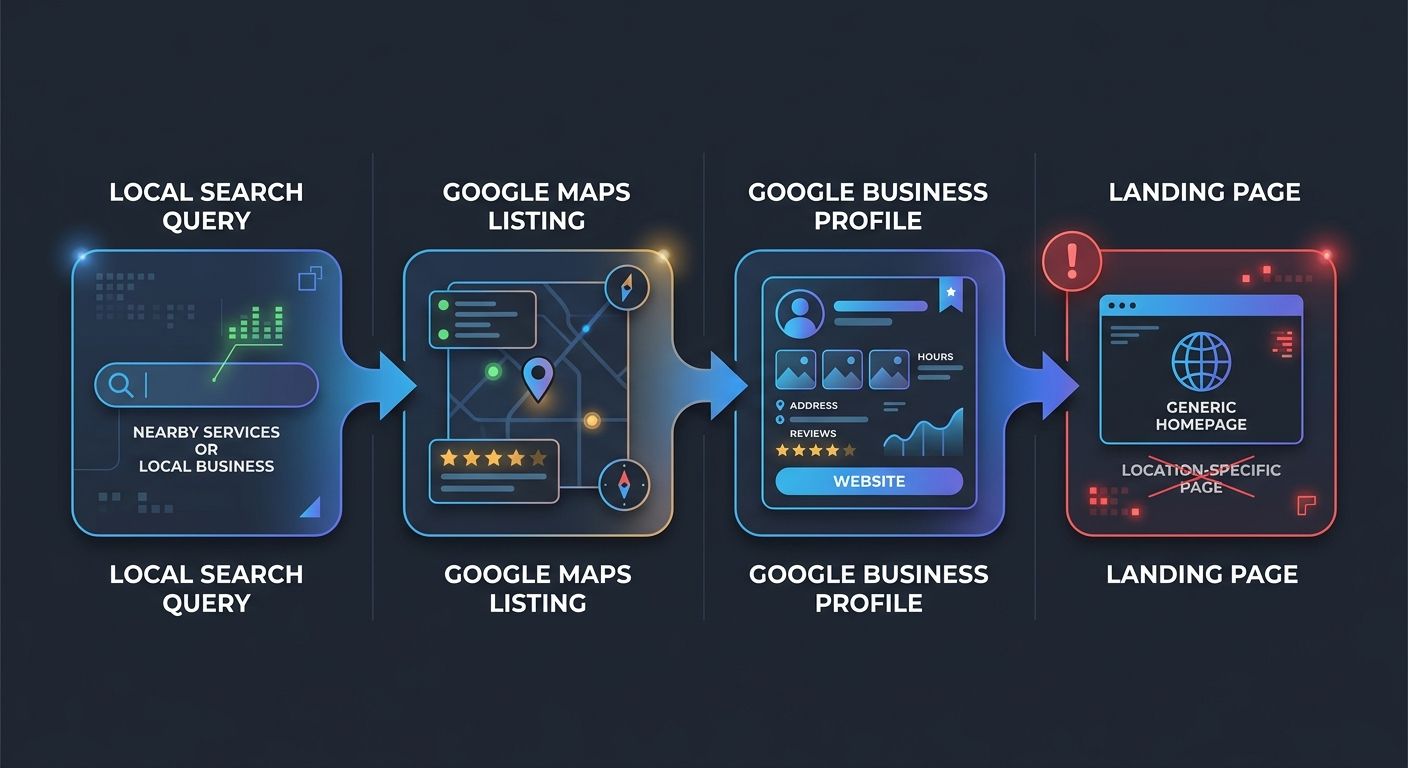
This is the audit failure I find most often, and it's the one with the biggest conversion impact. Most businesses link their GBP to their homepage. For a single-location business, that might work. For a multi-location business, it's a conversion killer.
When someone searches "dentist near me" and clicks through from your GBP listing for your Tampa location, they should land on a page about your Tampa practice. Not your corporate homepage. Not a generic "locations" page where they have to hunt for Tampa.
The disconnect between local search intent and landing page experience is where most of the conversion leakage happens. A searcher with local intent has already decided what they want and roughly where they want it. Your job isn't to sell them on your brand story. It's to confirm that you're the right local choice and make it effortless to take action.
What a conversion-aligned landing page needs:
Location-specific content with the address, phone number, and hours that match the GBP exactly
A clear primary CTA above the fold (book, call, get directions)
Local social proof like reviews or testimonials from customers in that area
Service details specific to that location, not boilerplate copied across 40 city pages
According to Search Engine Journal's local SEO audit checklist, this alignment between GBP and landing page is one of the most critical audit points for both ranking and conversion. And it's the one most businesses skip because it requires building and maintaining pages per location.
Understanding why content can rank well but still not convert is essential context here. The mismatch between what the searcher expects and what they find on the page is the exact mechanism that kills your conversion rate, even when your GBP looks perfect.
NAP Consistency and the Duplicate Listing Trap
Name, Address, Phone number. NAP. It sounds basic, and it is. But NAP inconsistencies remain one of the most common findings in every local SEO audit I run.
The issue isn't usually dramatic. It's subtle. Your GBP lists "Suite 200" but your website says "Ste. 200." Your Yelp listing has a phone number from 2024. Your Facebook page shows the old address from before you moved. Each tiny inconsistency erodes Google's confidence in your entity data.
And then there are duplicate GBP listings, which are more common than most business owners realize. They get created when employees set up profiles, when agencies create listings during onboarding, or when Google auto-generates them from third-party data. Each duplicate splits your review signals, confuses the algorithm, and can result in the wrong listing showing up in search.
Research from Womply found that businesses claiming listings on at least four review sites earn 58% more revenue than those with fewer claimed listings. But that only works when those listings are consistent. Four listings with four different phone numbers is worse than having one clean one.
Building the Audit Framework That Measures What Matters
The local SEO audit checklist most people follow is oriented around visibility. "Are we showing up?" is the question it answers. But the better question is "Are we converting the people who find us?"
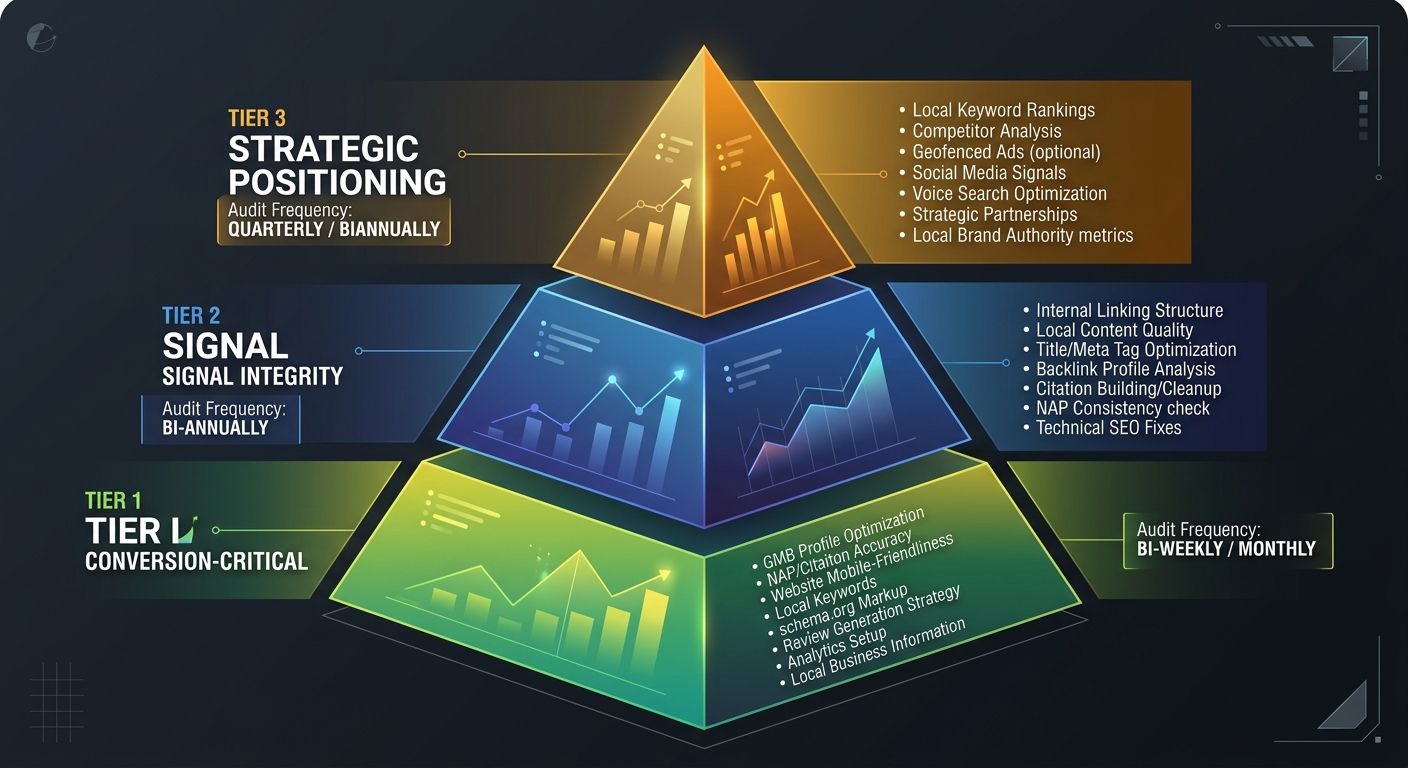
Here's the audit framework I use, organized by conversion impact rather than by SEO tradition:
Tier 1: Conversion-critical (audit monthly)
CTA functionality: Do all booking links, phone buttons, and direction links work on both mobile and desktop?
Review velocity: Are new reviews arriving at a consistent pace? Are you responding within 48 hours?
Hours accuracy: Do your GBP hours, website hours, and third-party listing hours all match? Are special hours set for upcoming holidays?
Landing page alignment: Does each GBP link to a location-specific page with matching NAP data?
Tier 2: Signal integrity (audit monthly)
NAP consistency across your top 10 directories
Duplicate listing detection and removal
Photo freshness: Have you added new photos in the past 30 days?
GBP post frequency: Are you publishing at least twice per week?
Tier 3: Strategic positioning (audit quarterly)
Category selection: Is your primary category still the most relevant one? Google adds new categories regularly.
Business description optimization: Are you using the full 750 characters with specifics about your services, not generic superlatives?
Competitor benchmarking: How does your review count, velocity, and average rating compare to the top 3 local competitors?
Geo-grid ranking analysis: Where in your service area are you actually appearing, and where are you invisible?
If you're managing audits across multiple locations or coordinating with developers and content teams, having a scalable cross-team SEO workflow matters as much as the checklist itself. The audit is only useful if findings actually get implemented.
The Audit You Should Run This Week
Stop treating your Google Business Profile as a set-and-forget asset. Open your GBP dashboard right now and check three things:
First, click every CTA on your profile from a mobile device. Call button, directions, website link, booking button. If any of them are broken, slow, or lead somewhere unexpected, that's your biggest conversion leak and your first fix.
Second, look at your review timeline. Count how many reviews you received in the past 30 days. If the answer is fewer than four, you don't have a review problem. You have a review management strategy problem. Build a systematic process for requesting reviews after every customer interaction.
Third, search for your business in Google Maps using an incognito window. Note what information appears in the AI-generated summary. Compare it to what your GBP actually says. If there's a discrepancy, you've found where Google is pulling conflicting data, and that's your signal to audit cross-platform consistency.
The businesses winning local search right now aren't the ones with the most complete profiles. They're the ones treating their GBP as a dynamic marketing channel that requires the same attention as their paid ads or email campaigns. A complete profile that sits untouched is just a well-decorated storefront with the door locked.

Alex Chen
Alex Chen is a digital marketing strategist with over 8 years of experience helping enterprise brands and agencies scale their online presence through data-driven campaigns. He has led marketing teams at two successful SaaS startups and specializes in conversion optimization and multi-channel attribution modeling. Alex combines technical expertise with strategic thinking to deliver actionable insights for marketing professionals looking to improve their ROI.
Frequently Asked Questions
- Why is my Google Business Profile complete but not getting conversions?
- Profile completeness alone is no longer a differentiator in local search. Google's algorithm now prioritizes review velocity, consistency across platforms, and conversion-focused features like proper landing page alignment over simply having all fields filled in. Most conversion failures come from poor landing page alignment, inconsistent NAP data, or broken CTAs rather than incomplete profiles.
- How has Google's AI Overviews changed local SEO strategy?
- Google's Gemini-powered AI Overviews synthesize information from your GBP, website, and third-party listings rather than displaying your profile text verbatim. You now control the source material the AI pulls from, making consistency across all platforms critical—conflicting information across sources can result in inaccurate AI-generated summaries that hurt conversions.
- What's more important for local SEO: review count or review recency?
- Review velocity and recency now outweigh raw volume. A business with 100 recent, consistently arriving reviews will outrank one with 500 stale reviews. Target 4-8 new reviews per month and respond to all reviews within 48 hours, as businesses responding to 32% of reviews see 80% higher conversion rates.
- How should multi-location businesses link their Google Business Profiles?
- Multi-location businesses should link each GBP to a location-specific landing page with matching NAP data, not to the homepage or generic locations page. A searcher clicking on your Tampa location should land on a page specific to that location, not have to hunt for it on your site.
- What should a local SEO landing page include to drive conversions?
- A conversion-aligned landing page needs location-specific content with matching address, phone, and hours; a clear CTA above the fold; local social proof; and service details specific to that location rather than boilerplate content copied across multiple city pages.
- How do I find and remove duplicate Google Business Profile listings?
- Search your exact business name plus city in Google Maps, and also search variations like with/without 'LLC' or abbreviations. Flag any duplicates found and request removal through Google's business redressal form, as duplicates split review signals and confuse the algorithm.
- What NAP inconsistencies should I audit across directories?
- Check that your Name, Address, and Phone number match exactly across your GBP, website, and top 10 directories—including small variations like 'Suite 200' vs 'Ste. 200' or outdated phone numbers. NAP inconsistencies erode Google's confidence in your business data and harm conversions.
- What are the most important things to audit on a Google Business Profile for conversions?
- Prioritize: testing all CTAs (call, directions, booking buttons) on mobile to ensure they work, checking review velocity (aim for 4-8 per month with 48-hour response time), verifying hours accuracy across platforms, and confirming landing page alignment with location-specific content that matches your GBP NAP data.
Explore more topics