
The GEO Playbook Imperative: How to Optimize Your Content for AI-Driven Brand Discovery in 2026
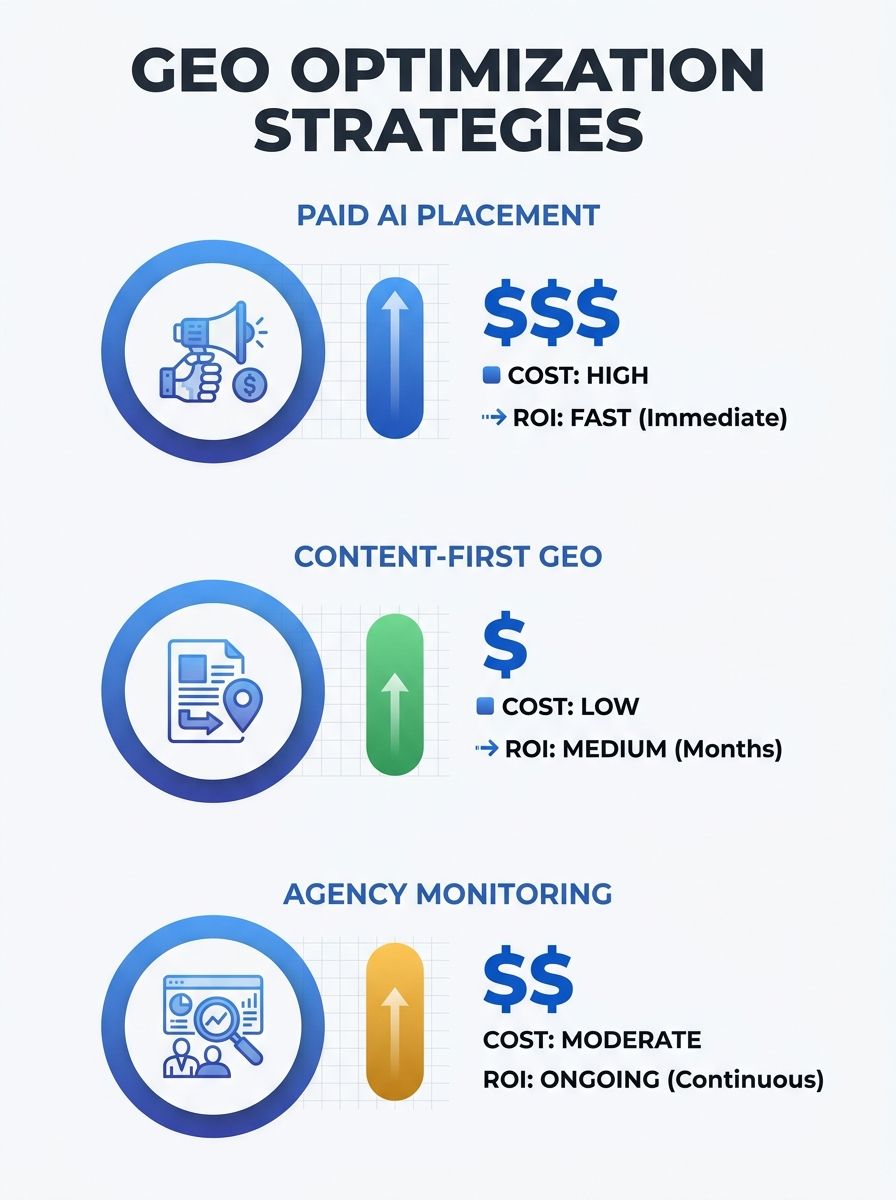
Paid media teams are splitting budgets three ways across a decision that barely existed at the start of the year: buying placement inside AI answer engines, earning organic citations through structured GEO content, or hiring an agency to monitor and manage brand mentions across every generative plat
The GEO Playbook Imperative: How to Optimize Your Content for AI-Driven Brand Discovery in 2026
Paid media teams are splitting budgets three ways across a decision that barely existed at the start of the year: buying placement inside AI answer engines, earning organic citations through structured GEO content, or hiring an agency to monitor and manage brand mentions across every generative platform at once. This week's announcements from IBM, Adobe, and Semrush each reinforced a different one of these three models. The choice you make between them will shape how your brand shows up when ChatGPT, Perplexity, Gemini, and Bing Copilot answer the questions your customers are asking.
Gartner projects a 25% decline in traditional search traffic by the end of this year, which is the kind of forecast that forces immediate budget conversations. Discovery is fragmenting across platforms, and as I wrote about when examining how top brands are disappearing from AI search results, strong traditional rankings no longer guarantee visibility where your audience is actually looking. The question for anyone managing paid media budgets in Q2 and Q3 is straightforward: which of the three emerging generative engine optimization strategy models deserves the largest share of your spend?
Let's break each one down.
Buying Your Way In: Direct Paid Placement on AI Platforms
OpenAI's nascent ad network, Shopify's agentic storefronts, and emerging sponsored answer integrations represent the most familiar path for paid media professionals. You're purchasing visibility directly on the platform where discovery happens, the same mental model as buying Google Ads or Meta placements.
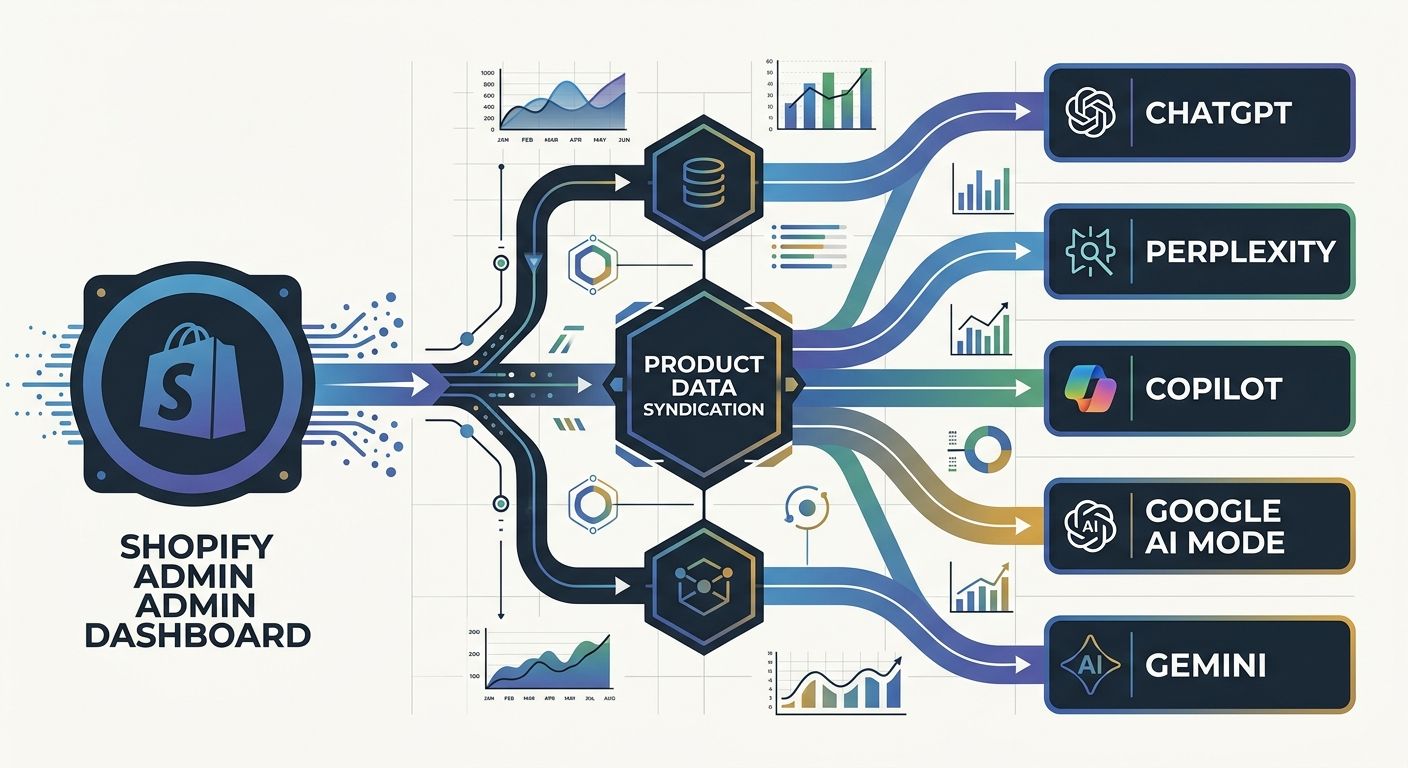
Shopify's move is the most concrete example. Their agentic storefronts feature, enhanced in February 2026, lets merchants syndicate product catalogs directly to ChatGPT, Perplexity, Microsoft Copilot, Google AI Mode, and Gemini. Merchants control AI visibility per product from their admin dashboard. For e-commerce brands already on Shopify, the friction is remarkably low.
The broader trend is accelerating. Brands are opening wallets for ChatGPT and Gemini visibility as AI search competition intensifies, with marketers telling Moneycontrol they want clarity on what winning looks like inside AI chatbots and how it sits alongside existing SEO and content investments.
Where this approach works well
If you're in e-commerce with a defined product catalog, direct paid placement offers the fastest path to AI search visibility. You already understand cost-per-click models. The targeting is different (you're optimizing for conversational queries rather than keyword bids), but the spending mechanics feel familiar. Brands with large SKU counts benefit from catalog syndication because individual product optimization at that scale through content alone is impractical.
Where it falls short
Measurement is still immature. Unlike Google Ads, where you can track impressions, clicks, and conversions through well-established attribution models, AI platform ad analytics are in their infancy. You'll spend confidently but struggle to prove ROI to your CFO. I covered this measurement gap in depth when looking at what the OpenAI ad network means for SEO budgets, and the attribution challenges have only gotten muddier as more platforms enter the market.
The other risk is dependency. When you stop paying, you disappear. There's no compounding effect, no long-term asset creation. For brands with healthy margins and aggressive growth targets, that trade-off can be acceptable. For everyone else, it gets expensive fast.
Earning Citations: The Content-First GEO Approach
IBM published a 12-part GEO system this week, arguing that every brand needs a generative engine optimization playbook to remain visible in machine-made decisions. Earlier this month, Lumar released an 80-page guide built around a 4-pillar GEO strategy framework. And Foundation Inc. has been tracking how and why certain brands get cited while others vanish from AI-generated answers entirely.
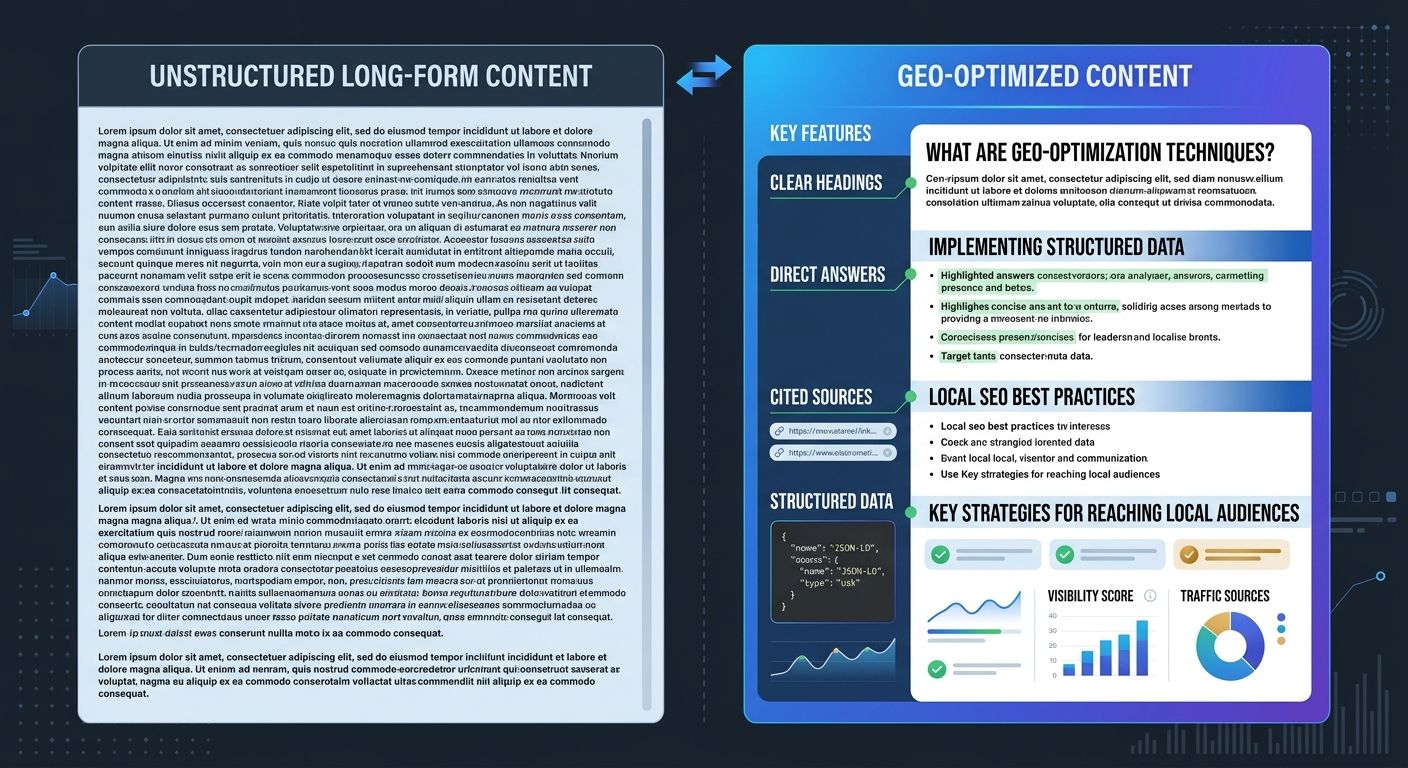
The content-first model treats GEO optimization as an extension of your existing content investment. Instead of paying platforms for placement, you structure your content so AI models naturally select it as a source when generating answers. The core principles:
State definitive answers within the first 100 words. AI models pull from content that gives clear, direct responses to questions. Burying your expertise in paragraph six means it never gets cited.
Use question-based headings that mirror conversational queries. Generative engines parse content differently than traditional crawlers, and heading structure influences which passages get surfaced.
Cite named sources with recent dates. Content updated within 90 days gets preferential treatment from systems like Perplexity, according to the GEO content framework published on MarketingAgent.blog in February.
Prioritize depth over breadth. Owning three topics completely is more valuable than shallow coverage across twenty.
Where this approach works well
B2B companies, SaaS brands, professional services firms, and anyone whose purchase cycle involves research benefit enormously. When a procurement officer asks Claude "what are the best project management tools for construction companies" and your content gets cited, that's worth more than a thousand display impressions. The 2026 SEO evolution has made this kind of visibility increasingly tied to how well your content architecture supports AI comprehension, which we explored in detail when covering how Google's dual-pane AI search mode breaks traditional content strategy.
And the economics are attractive. Production cost is the primary investment. Once the content exists and performs, it generates citations without ongoing media spend.
Where it falls short
Time to impact is measured in months, not days. You're building an asset, not flipping a switch. For brands facing competitive pressure right now, a content-only approach may move too slowly.
There's also an expertise gap. GEO optimization requires writers who understand how AI models parse information, how citation selection works, and how to structure content for both human readers and machine consumption. That talent pool is thin, and the learning curve for existing content teams is real. Creating a shared knowledge base of successful content patterns helps, but the institutional knowledge takes time to develop.
The Agency Monitoring Model: Multi-Platform Tracking with Performance Accountability
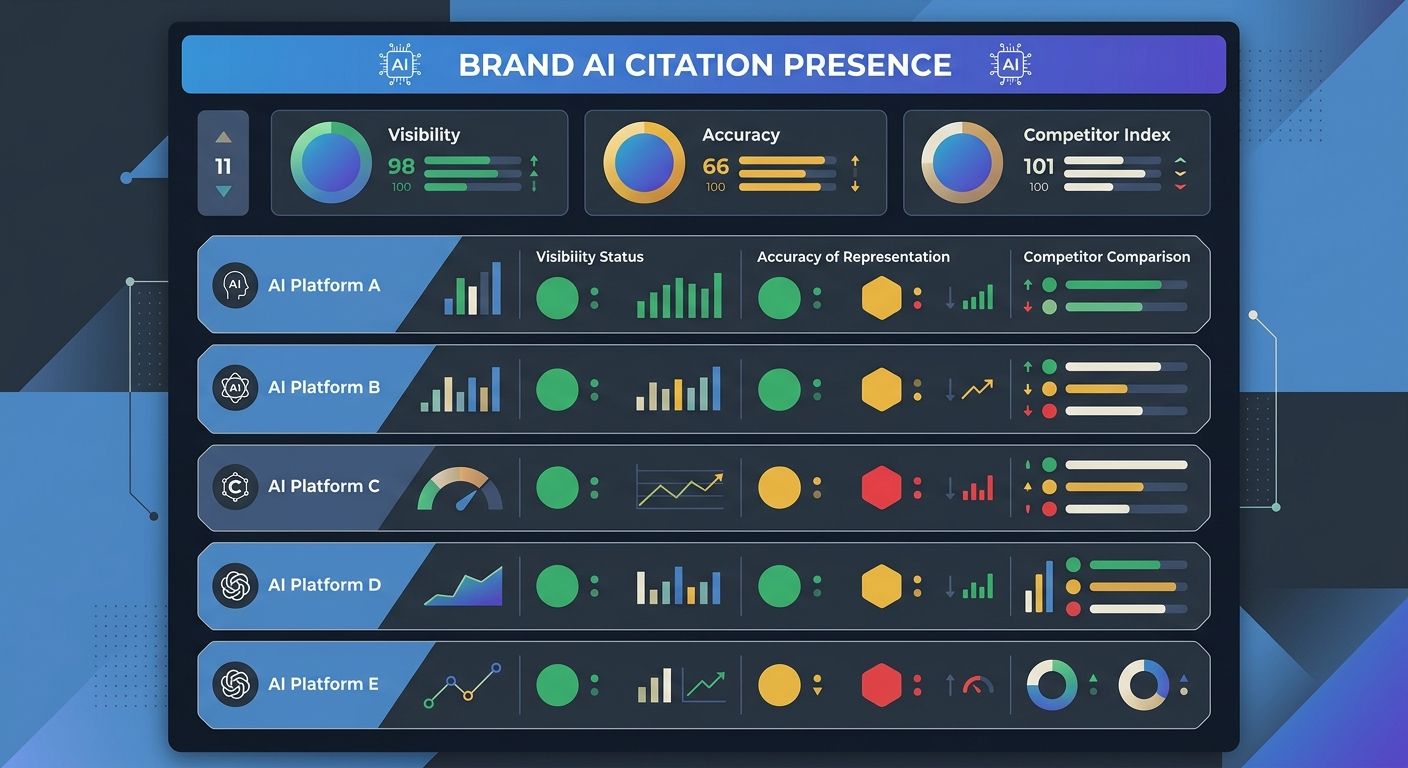
The third option is outsourcing AI brand discovery management to specialized agencies that monitor your brand's presence across ChatGPT, Claude, Perplexity, Gemini, and Google AI Overviews simultaneously. These agencies combine visibility tracking tools with optimization services, and they're increasingly moving toward performance-based pricing models.
According to reporting from OpenPR, agencies that pair multi-platform monitoring with performance-based accountability will define the standard for AI brand visibility as the market matures through the rest of 2026 and beyond. Search Engine Journal hosted a webinar this week outlining a 90-day framework for building AI visibility from scratch, reflecting the growing demand for structured implementation support.
Adobe's new brand visibility tools, unveiled days ago, add another layer to this model. Platform-level tooling makes it easier for agencies to track where brands appear (and where they're absent) across AI discovery surfaces.
Where this approach works well
Enterprise brands managing visibility across dozens of product lines and hundreds of topics benefit from centralized monitoring. If you can't tell which AI platforms are citing your brand, you can't optimize for them. The agency model solves the awareness problem first, then addresses optimization second. That sequencing matters, because the disconnect between dashboard reports and actual performance is even more pronounced in AI search where measurement standards are still forming.
Brands with limited in-house GEO expertise also benefit. An agency absorbs the learning curve and applies patterns they've identified across multiple clients.
Where it falls short
Cost structures vary wildly. Some agencies charge monitoring-only retainers. Others bundle content production, technical optimization, and placement management into fees that rival your existing paid search spend. Without clear performance benchmarks tied to actual business outcomes (leads, revenue, pipeline), you're paying for a dashboard and a monthly report.
There's also a control problem. Your brand's AI representation becomes mediated through a third party. If the agency misunderstands your positioning or optimizes for visibility metrics that don't align with your business goals, you can end up visible in the wrong conversations.
How To Choose Between These Three
The honest answer depends on two variables: your timeline and your content maturity.
If you need AI brand discovery visibility within 30 days and you sell physical products, direct paid placement through Shopify's agentic storefronts or emerging AI platform ad buys gives you the fastest path to results. Budget accordingly, and accept that you're renting visibility rather than building it.
If your brand competes on expertise and thought leadership, the content-first GEO approach will generate the highest long-term return. Commit to at least a 90-day horizon. Restructure existing high-performing content to meet citation-readiness criteria before producing anything new. IBM's 12-part system and Lumar's 4-pillar framework both provide actionable scaffolding for teams that want to build this capability internally.
If you're an enterprise brand managing visibility across multiple product lines and you genuinely don't know where you stand in AI search results today, start with the agency monitoring model for 90 days to establish a baseline. Use that data to decide whether to shift investment toward paid placement, content optimization, or some combination of both.
Most brands I've worked with over the past several months end up running a hybrid. They invest in content-first GEO as the foundation, supplement with paid placement for high-intent product queries, and use monitoring tools (whether agency-managed or in-house) to track progress across platforms. The split varies. E-commerce brands tend to allocate 60% toward paid placement and 40% toward content. B2B brands flip that ratio, sometimes going 70/30 in favor of content investment.
The generative engine optimization strategy you pick matters less than picking one and measuring it rigorously. AI brand discovery is where attention is migrating, and the brands that treat this as a "wait and see" line item are the ones already losing ground in every AI-generated answer their competitors now own.

Sarah Chen
SEO strategist and web analytics expert with over 10 years of experience helping businesses improve their organic search visibility. Sarah covers keyword tracking, site audits, and data-driven growth strategies.
Explore more topics