
Local SEO's Achilles Heel: Why Google Business Profile Optimization Fails When Reviews Don't
One pattern keeps surfacing in local visibility audits: businesses with perfectly optimized Google Business Profiles losing to competitors whose profiles are bare-bones. The consistent difference isn't category selection, photo quality, or description keywords. It's review velocity.
Local SEO's Achilles Heel: Why Google Business Profile Optimization Fails When Reviews Don't
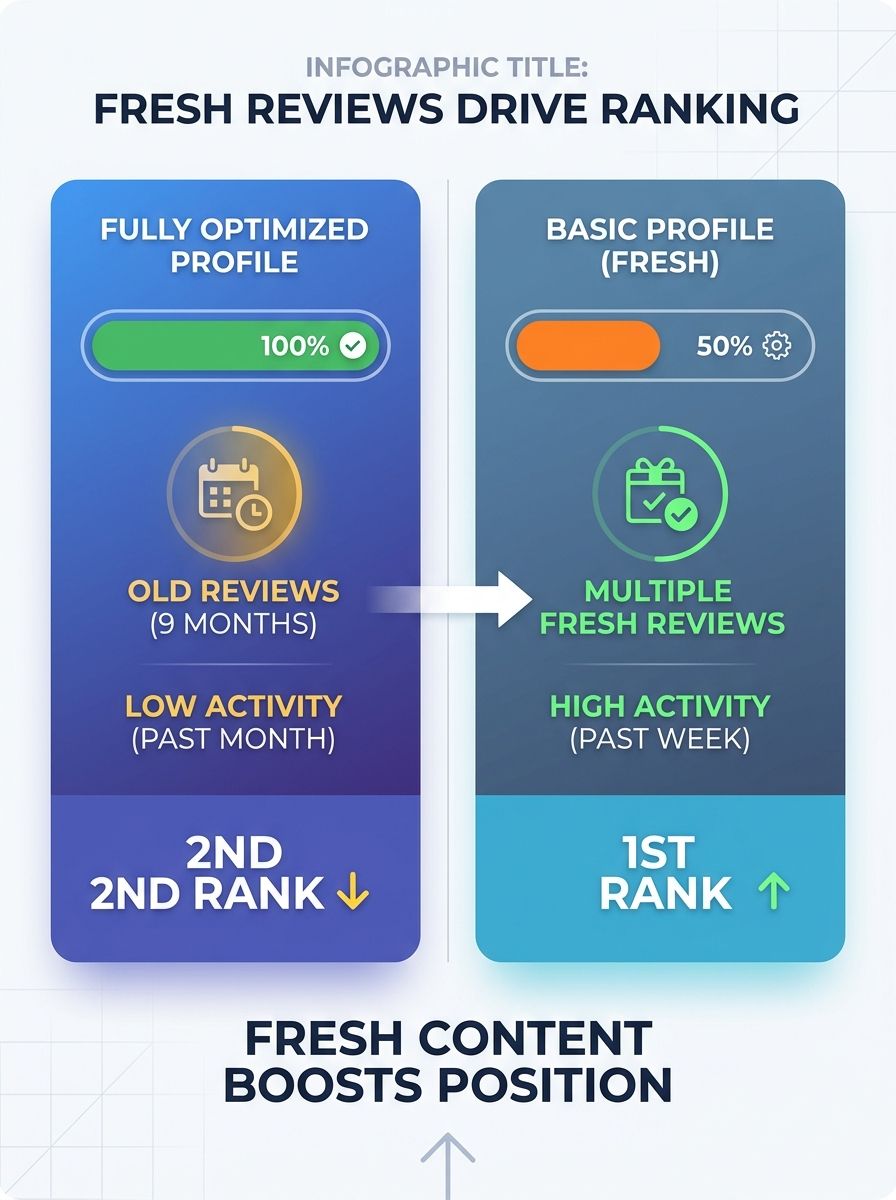
One pattern keeps surfacing in local visibility audits: businesses with perfectly optimized Google Business Profiles losing to competitors whose profiles are bare-bones. The consistent difference isn't category selection, photo quality, or description keywords. It's review velocity. A client with every GBP field completed, NAP consistency across 47 directories, and weekly photo updates was being crushed by a competitor whose profile looked like it was set up during a lunch break. That competitor had 38 fresh reviews from the past 60 days. My client's most recent review was from nine months ago.
That single gap invalidated thousands of dollars in local SEO work. And I keep seeing this pattern repeat across businesses of every size.
Here's the uncomfortable truth about Google Business Profile optimization: it's necessary but wildly insufficient when your review profile is stale, thin, or ignored. You can check every box on the GBP audit checklist, and a competitor with half your effort but twice your review velocity will still eat your lunch in the local pack.
The Review Signal Problem Most Businesses Ignore
Google's own documentation spells it out plainly. According to their Business Profile Help center, prominence as a local ranking factor is based partly on "how many reviews you have" and that "more reviews and positive ratings can help your business's local ranking." That's Google telling you directly: reviews are a ranking factor.
But volume alone doesn't tell the full story. Research from Local Falcon shows that the freshness of reviews (recency) and review velocity (how frequently you receive them) also impact your ranking. So a business with 500 reviews collected over five years can absolutely be outranked by a competitor with 120 reviews that arrived steadily over the past six months.
This is where most local SEO mistakes originate. Teams pour energy into profile completeness, category selection, and keyword-rich descriptions while treating reviews as something that "just happens." Reviews don't just happen. They require a system.
Why a Perfect Profile Still Loses
I've run local visibility audits for over 40 businesses across service industries, and the pattern is remarkably consistent. Businesses that invest heavily in GBP optimization but neglect reviews tend to plateau at positions 4-7 in the local pack. They're visible enough to feel like things are working, but not visible enough to capture meaningful click-through traffic.
The reason comes down to how Google weighs local ranking factors. The Whitespark Local Search Ranking Factors survey, most recently updated in November 2025, consistently identifies GBP signals as the number one factor for local pack visibility, followed by proximity and keywords in the business title. But within that GBP signals bucket, reviews carry enormous weight.
Think of it this way: your completed profile gets you into the conversation. Your reviews determine whether Google trusts you enough to recommend you.
And with AI Overviews now pulling review content into local search results, stale reviews mean Google's AI has less credible material to reference about your business. If you've been tracking how AI answer engines are reshaping search visibility, you know that the signals feeding those AI summaries matter more than ever.
The Trust Signal Cascade
Google sees reviews as a trust signal. A business with strong, recent reviews will almost always outperform one without them, even if the broader SEO work is weaker. That's the observable behavior across hundreds of local search results.
The cascade works like this:
Fresh reviews signal an active, operating business
Review content provides natural keyword relevance for long-tail queries
Review responses demonstrate engagement and customer care
Consistent review velocity indicates sustained customer satisfaction
All of these feed Google's prominence calculation
When any link in that chain breaks, the whole signal weakens.
The Three Review Failures I See Most Often
After running dozens of these audits, the failures cluster into three predictable categories. Identifying which one applies to you is the first step toward fixing it.
1. The Review Desert
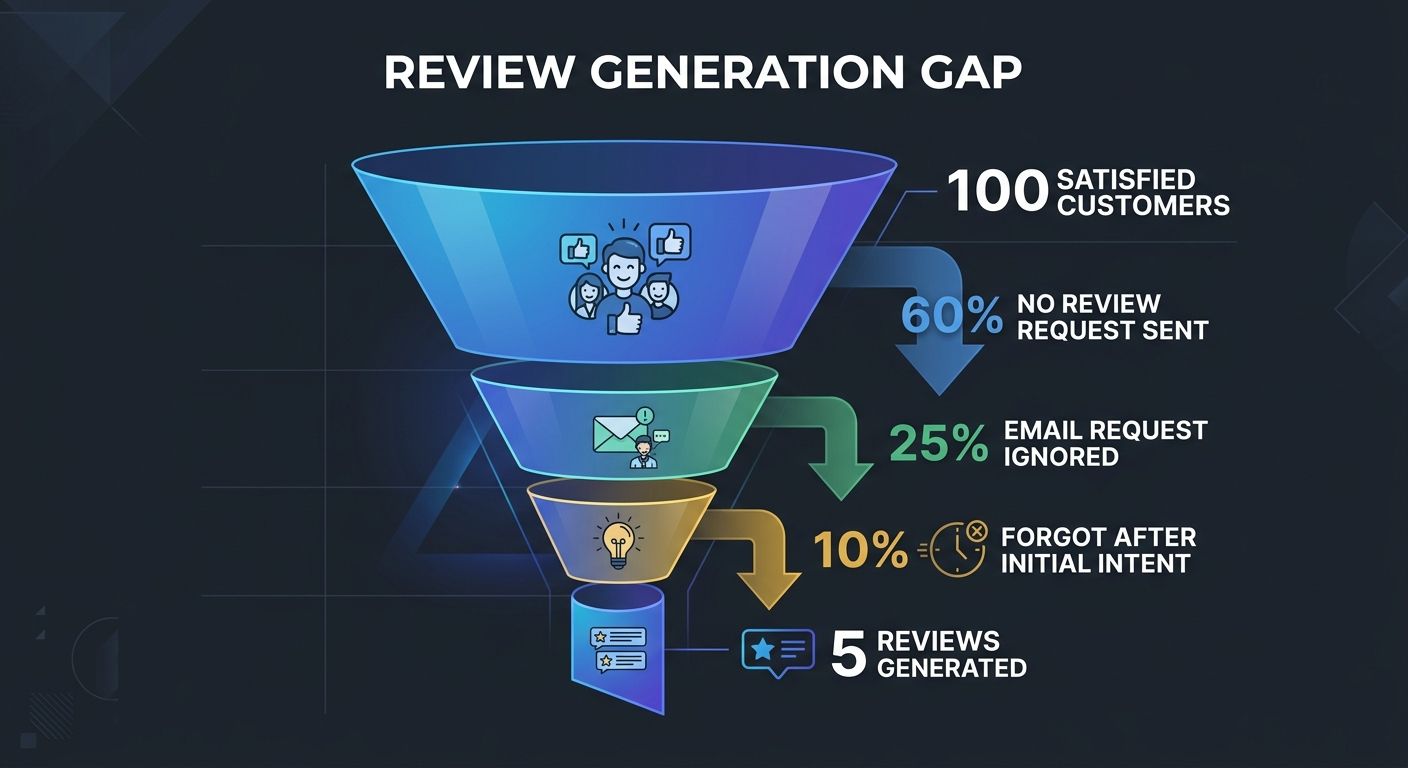
This is the business with fewer than 20 reviews total, or no reviews in the past 90 days. It's surprisingly common among businesses that otherwise invest seriously in digital marketing. The root cause is almost always the same: no systematic process for requesting reviews.
Research shows that most customers intend to leave a review but simply forget once they leave your store or website. Without a prompt, the review never materializes. Your customers aren't unhappy. They're just busy.
2. The Review Graveyard
This business has reviews, maybe even hundreds, but they're old. The most recent cluster is from a campaign that ran two years ago, and since then, nothing. Google interprets this exactly how you'd expect: the business was active, then something changed.
I worked with a dental practice that had 340 reviews with a 4.7 average. Sounds great on paper. But 290 of those reviews were from a single push in 2023. Their review velocity had dropped to roughly one per month. A competitor three blocks away with 95 total reviews but 8-10 new ones monthly was consistently outranking them for "dentist near me" queries.
3. The Review Void (No Responses)
86% of people hesitate to purchase from a business with poor reviews and a bad online reputation, according to research from Impulse Creative. But what many businesses miss is that ignoring reviews, even positive ones, sends its own negative signal.
Lack of engagement sends the wrong message to both Google and potential customers. When someone takes the time to write about their experience and gets radio silence in return, it tells the next prospective customer that this business doesn't particularly care. And it tells Google the profile isn't actively managed.
Building a Review System That Actually Works
Fixing review problems isn't complicated, but it does require consistency. Here's the step-by-step process I implement with clients, and it typically shows measurable ranking movement within 60-90 days.
Step 1: Benchmark Your Current Position
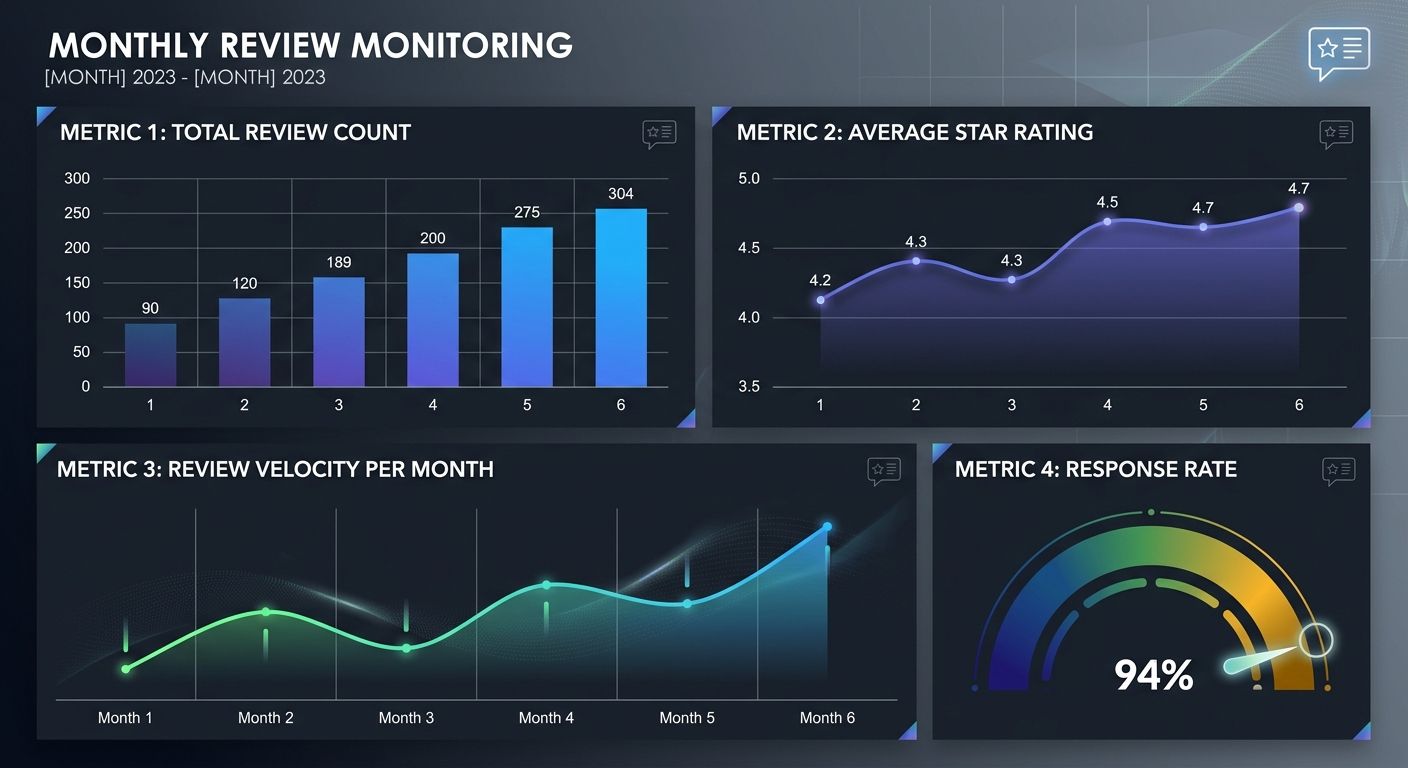
Before changing anything, document where you stand. Pull your current review count, average rating, review velocity (reviews per month over the past six months), and response rate. If you're already tracking local keyword rankings, layer this review data alongside your position data so you can correlate changes.
Step 2: Audit Your Competitors' Review Profiles
Check the top three businesses in your local pack for the same queries you're targeting. Note their total review count, recency of their most recent reviews, their velocity, and their response patterns. This gives you a concrete target to hit, not an abstract goal.
Step 3: Build the Request Workflow
The highest-converting review request method I've tested is a two-touch SMS sequence:
First touch: Sent 2-4 hours after service completion. Short, personal, includes a direct link to your Google review page.
Second touch: Sent 48 hours later only if no review was left. Even shorter, positioned as a gentle reminder.
SMS outperforms email for review requests by a wide margin. Email review requests average a 5-8% conversion rate in my experience. SMS sits closer to 15-20%.
Step 4: Respond to Every Single Review
Every review. Positive, negative, neutral. Within 48 hours if possible. Your responses don't need to be lengthy. Two to three sentences acknowledging the feedback and thanking the customer is sufficient for positive reviews. For negative reviews, show empathy, take ownership where appropriate, and offer to resolve the issue offline.
This is similar to what I've written about regarding the disconnect between technical performance and actual results. You can have every technical element right, but if the engagement layer is missing, the results won't follow.
Step 5: Monitor and Adjust Monthly
Set a calendar reminder. Every month, check your review velocity, average rating trend, and response completeness. If velocity drops, revisit your request workflow. If ratings dip, dig into the service issues driving complaints.
The Bigger Picture: Reviews Within Your Local SEO Stack
Reviews don't exist in isolation. They're one component of a broader local search strategy that includes profile optimization, citation management, local content, and link building. But they're the component most likely to be the bottleneck.
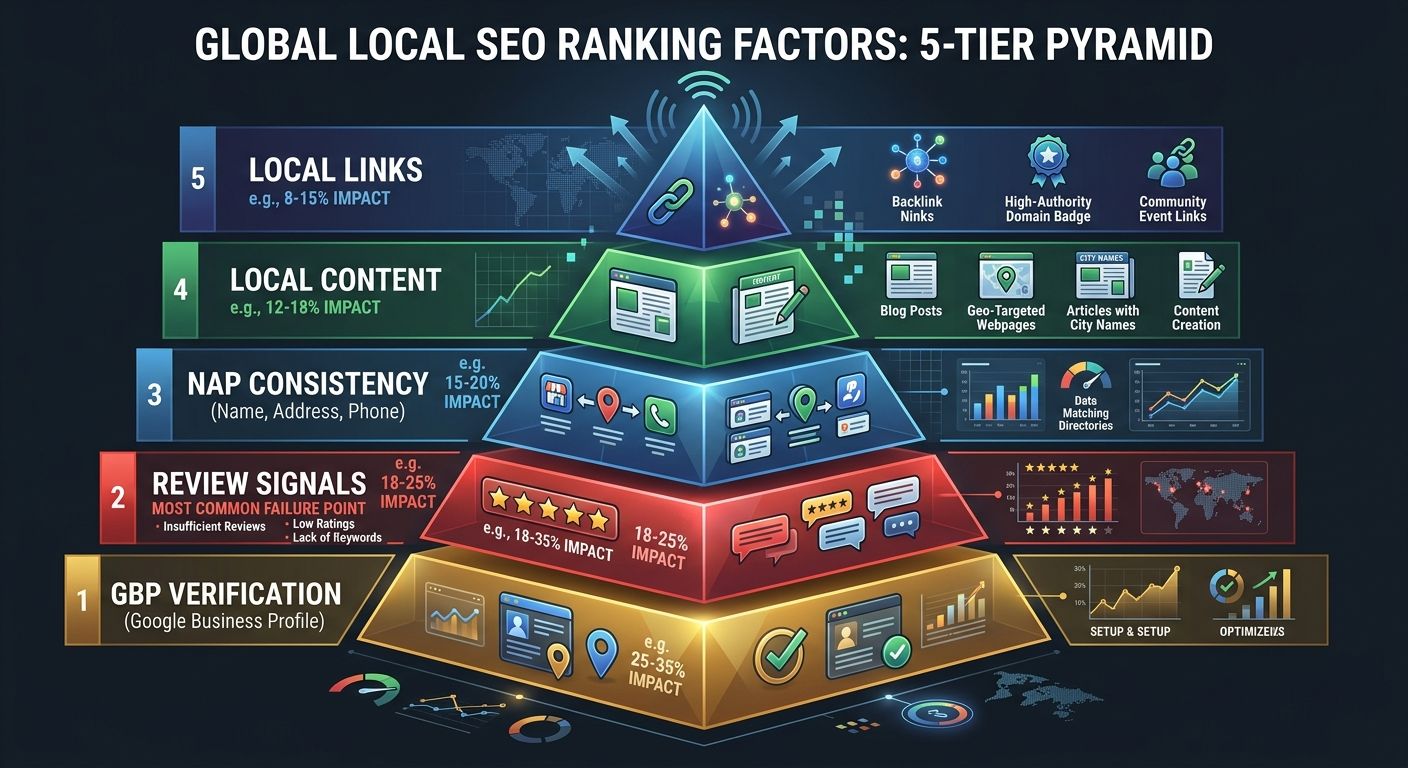
Here's how I prioritize local ranking factors when running a local visibility audit:
GBP verification and category accuracy (table stakes)
Review velocity and recency (the most common weak point)
NAP consistency across citations (foundational but often already handled)
On-page local content optimization (service pages, location pages)
Local link acquisition (harder, slower, but impactful long-term)
If you're building out an audit system that scales across multiple locations or clients, bake review health metrics into the first phase. Don't save them for a secondary pass. I've made that mistake before, and it cost me months of wasted optimization effort on profiles that couldn't rank because of anemic review signals.
Search Engine Land's audit framework reinforces this: GBP is still a top source of inbound leads for local businesses and one of the fastest ways to improve rankings with simple fixes. But those fixes have to include reviews, not just profile fields.
Count Your Reviews, Then Fix the Workflow
If your review count from the past 90 days is under 10 for a single-location business, you have a velocity problem that needs immediate attention. Scroll through your last 20 reviews and check your response rate—if more than 3 have no owner response, block 30 minutes this week to reply to every unanswered review. Then benchmark one competitor: pick whoever sits in position one of the local pack for your most important query and compare their review velocity, recency, and response rate to yours. That gap is your roadmap.
Google Business Profile optimization is real work, and it matters. But reviews are the multiplier that makes that work pay off. Without them, you're building on sand.

Alex Chen
Alex Chen is a digital marketing strategist with over 8 years of experience helping enterprise brands and agencies scale their online presence through data-driven campaigns. He has led marketing teams at two successful SaaS startups and specializes in conversion optimization and multi-channel attribution modeling. Alex combines technical expertise with strategic thinking to deliver actionable insights for marketing professionals looking to improve their ROI.
Explore more topics