
AI Answer Engines Are Eating Your SEO Traffic: How to Optimize for Non-Google Search in 2026
One of my clients held the number-one organic position for their most valuable keyword. Rankings steady. Content quality high. And their organic traffic from that keyword dropped 34% in a single quarter. The culprit wasn't a competitor outranking them or a Google penalty.
AI Answer Engines Are Eating Your SEO Traffic: How to Optimize for Non-Google Search in 2026
One of my clients held the number-one organic position for their most valuable keyword. Rankings steady. Content quality high. And their organic traffic from that keyword dropped 34% in a single quarter. The culprit wasn't a competitor outranking them or a Google penalty. It was ChatGPT answering the query directly, citing a competitor's blog post, and never sending a single user to a search results page. That moment crystallized something I'd been slow to accept: winning in Google's blue links is no longer enough. Your AI search strategy needs to account for platforms that don't even have a results page.
Impressions Climb While Clicks Crater
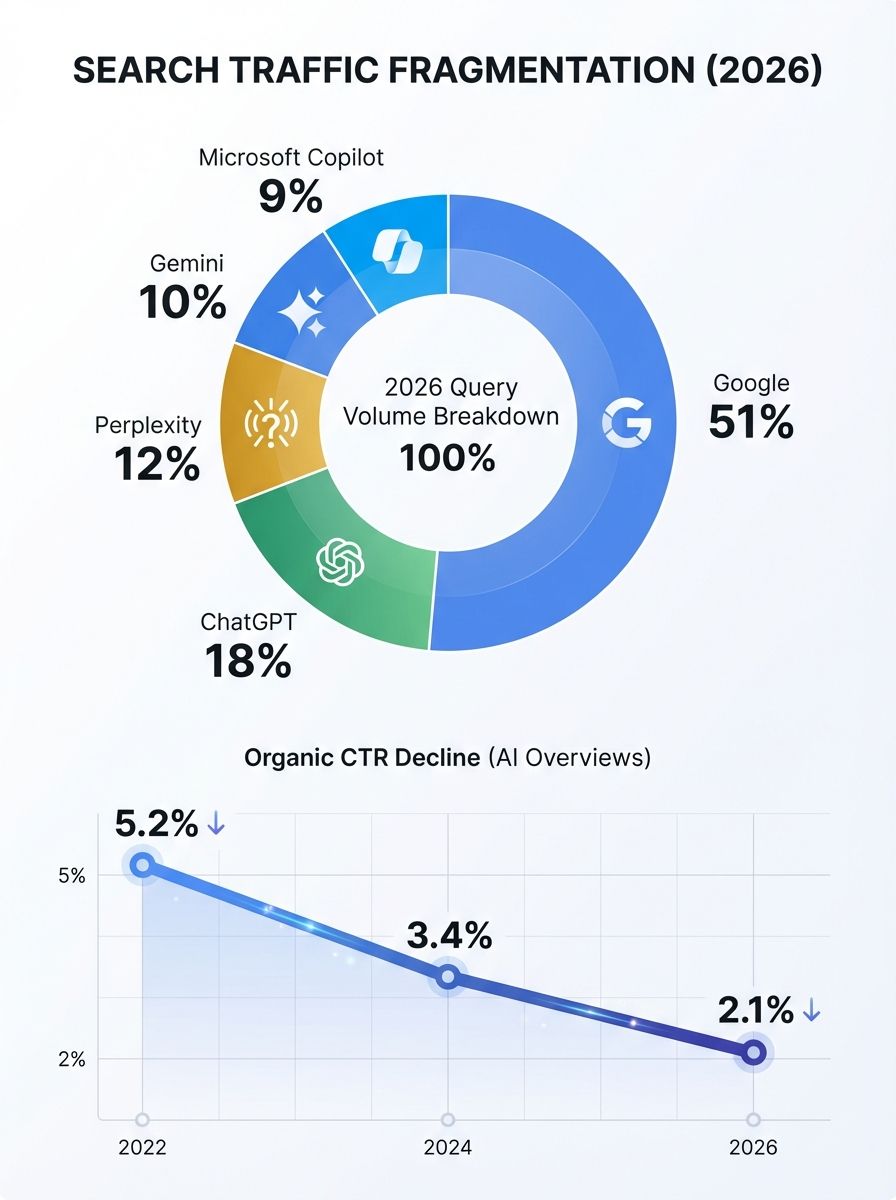
Here's the disorienting reality. Your Search Console dashboard might show impressions climbing while clicks crater. When AI Overviews appear in Google results, only about 8% of users click through to traditional organic links, according to data compiled by Position Digital. That translates to a 30-40% drop in organic click-through rates for affected queries.
And it's not just Google's own AI features you need to worry about. ChatGPT now ranks as the fifth most-visited website globally, pulling in nearly 5 billion visits per month. It accounts for an estimated 87.4% of all AI referral traffic. Perplexity, Gemini, Microsoft Copilot, and a growing list of alternative search engines in 2026 are fragmenting where and how people find answers.
The uncomfortable truth: up to 60% of searches now result in zero clicks. Users get their answer and move on. If your entire strategy is built around earning clicks from Google, you're optimizing for a shrinking pie.
Why Traditional SEO Isn't Dead (But It's Not Enough)
I want to be clear about something. I'm not writing a funeral notice for SEO. Analysis of over 250,000 search results shows that 38% of AI Overview citations come from pages already in Google's top 10. Strong traditional SEO is still the foundation. If your pages don't rank, AI models are less likely to cite them.
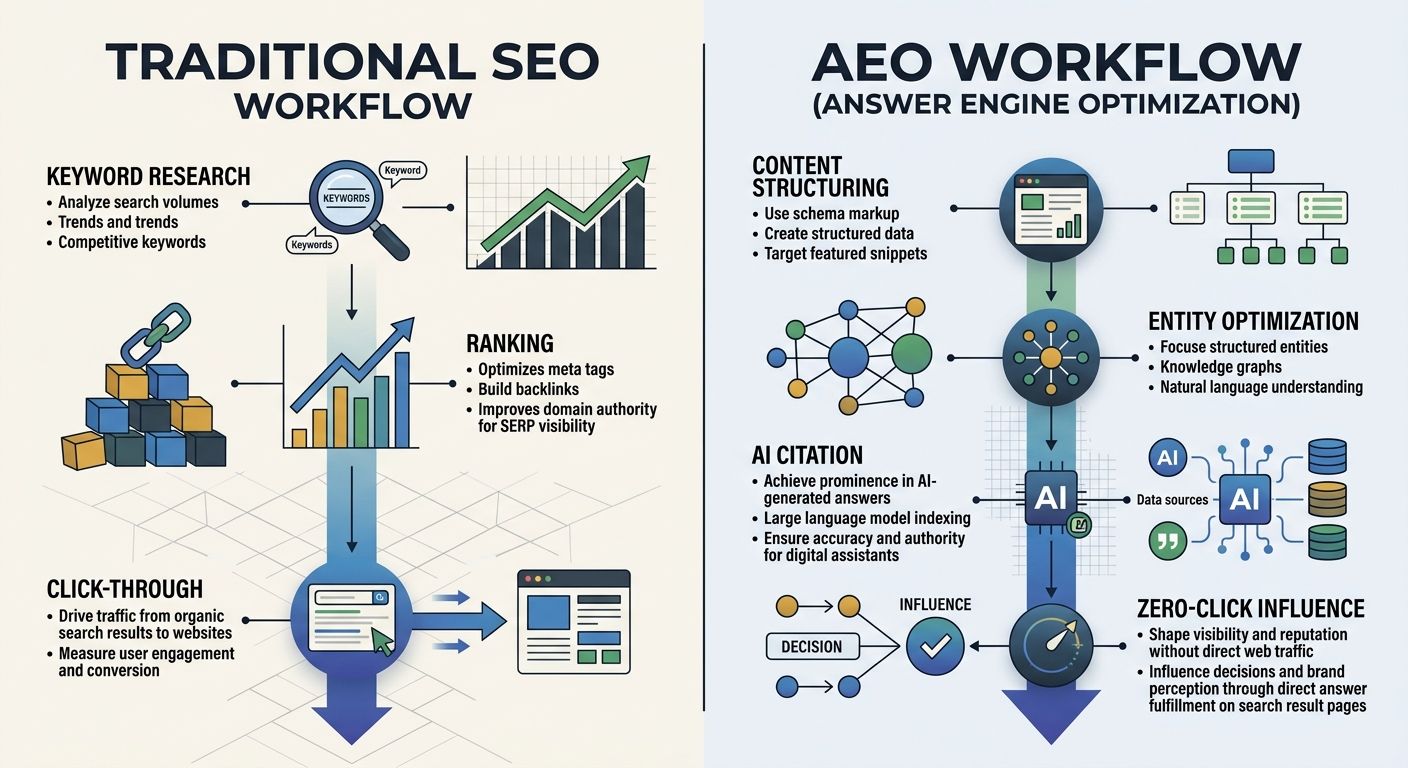
But there's a critical distinction between ranking and being cited. SEO targets clicks. Answer Engine Optimization (AEO) targets citations and zero-click influence. As Brosch Digital's analysis of 2026 SEO trends puts it, Generative Engine Optimization (GEO) is the process of ensuring your content is understood, trusted, and ultimately cited by Large Language Models when generating an answer.
Think of it this way: SEO gets you into the library. AEO and GEO get the librarian to recommend your book by name when someone asks a question.
If you've been tracking your keyword rankings with traditional tools alone, you're missing half the picture. The metrics that matter now include whether AI systems are citing your content, not just whether you hold position one in a SERP.
Five Shifts to Make Your Content AI-Citable
Non-Google search optimization requires thinking differently about how you structure, format, and maintain content. Here's what's actually working.
1. Lead Every Section with a Direct Answer
AI models scan your content looking for concise, extractable answers. They don't want to parse through three paragraphs of context to find the point. Place a clear, 40-60 word answer at the top of each section, then expand with detail below.
This isn't dumbing down your content. It's making it machine-readable while keeping it human-useful. Think of newspaper-style inverted pyramid writing. The most important fact comes first. Supporting detail follows.
I restructured a client's entire knowledge base using this pattern. Within two months, their content started appearing in Perplexity citations for queries they'd never ranked for in Google.
2. Structure Content at the Fact Level, Not the Page Level
Traditional SEO thinks in terms of pages. AI answer engines think in terms of facts. Each claim, statistic, and definition in your content is a potential extraction point.
This means:
Every factual claim should be self-contained enough to make sense if pulled out of context
Statistics should include their source within the same sentence or paragraph
Add a verifiable citation every 150-200 words to increase the likelihood of being referenced
Use numbered steps for processes and bullet points for lists of options
When you audit your content strategy, evaluate each piece not as a single ranking asset but as a collection of citable facts. The question isn't "does this page rank?" but "are the individual claims in this page structured clearly enough for an AI to extract and attribute them?"
3. Build Topical Authority Through Content Hubs
AI systems reward depth over breadth. A single article on a topic signals awareness. A cluster of interlinked articles signals expertise. This is why pillar page strategies for B2B lead generation are more relevant than ever.
Create a central pillar page for each core topic, supported by detailed subtopic pages that link back to it. This architecture mirrors how AI models evaluate topical authority. Analysis shows that topical authority is now the strongest on-page factor influencing both rankings and AI citations, surpassing even domain traffic volume.
One B2B SaaS company added FAQ schema markup to 1,120 blog posts organized in hub structures and saw a 9,200% increase in FAQ impressions. The structured data acted as a nutrition label for AI, making extraction trivially easy.
4. Keep Content Aggressively Fresh
AI engines have a measurable recency bias. URLs surfaced by AI are, on average, 1,064 days old compared to 1,432 days for traditional search results. That's a 25.7% freshness advantage. And AI citation rates drop sharply after about three months.
This means high-value content needs quarterly reviews at minimum. Update statistics. Refresh examples. Make sure the "last updated" date is accurate and visible. I've started building content refresh schedules directly into my editorial calendar, treating updates with the same priority as new posts.
5. Make Your Content Technically Accessible to AI Crawlers
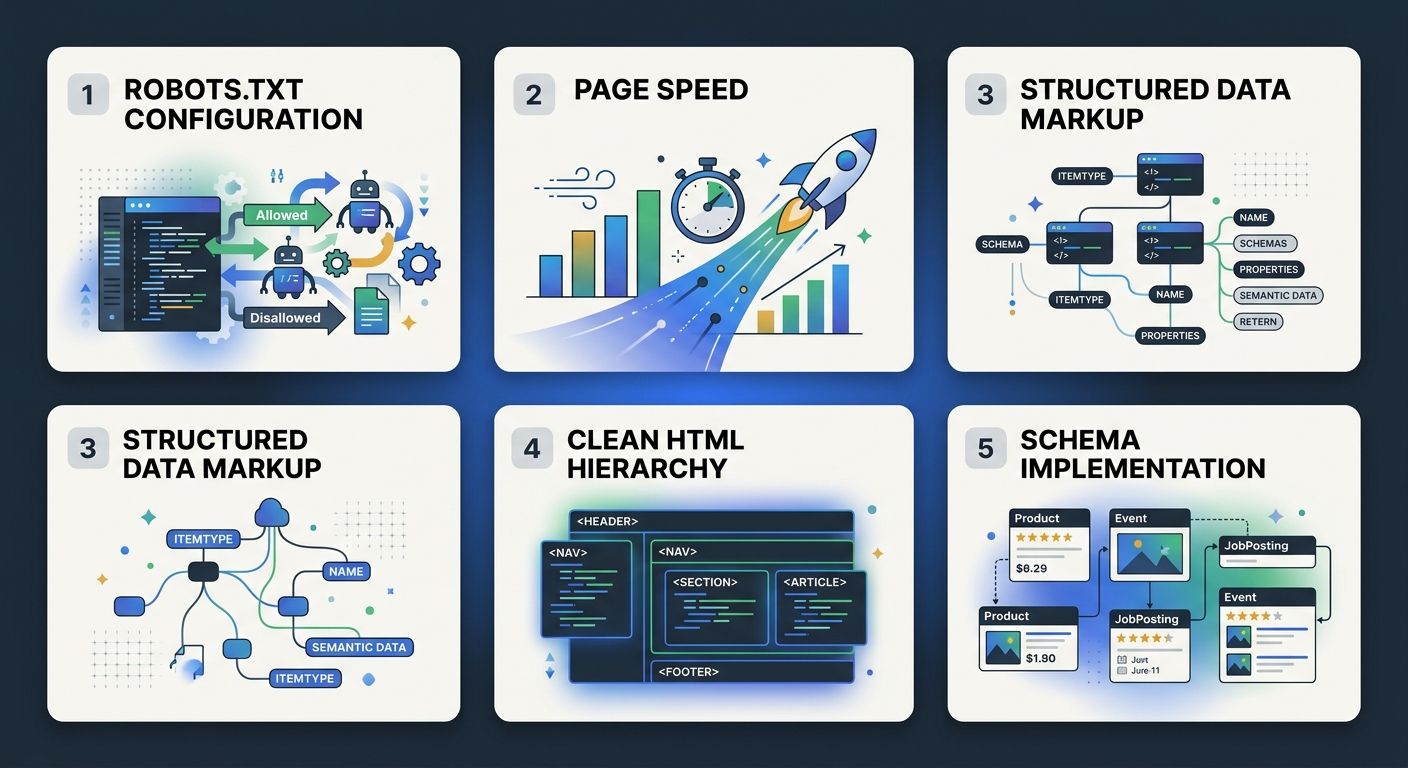
Your content should be accessible to AI bots and crawlers. This is the baseline requirement that too many sites fail. If ChatGPT's crawler can't access your content, it can't cite you. Period.
Check your robots.txt file. Many sites inadvertently block AI crawlers like GPTBot, ClaudeBot, or PerplexityBot. Your hybrid SEO strategy should explicitly account for which AI crawlers you're permitting and which you're blocking.
Ensure fast page load times, clean HTML structure, and properly implemented structured data. Use JSON-LD schema types like FAQPage, HowTo, and Article to give AI models clear signals about your content's purpose and structure. If you're wrestling with how AI bot traffic is reshaping competitive rankings, technical accessibility is where to start.
Measuring What Matters in AI Visibility
Here's where most teams stumble. They know AI answer engines SEO is important, but they have no idea how to measure it. Traditional rank tracking tools are built for Google's ten blue links. The new landscape demands new measurement.
Start with these three data points:
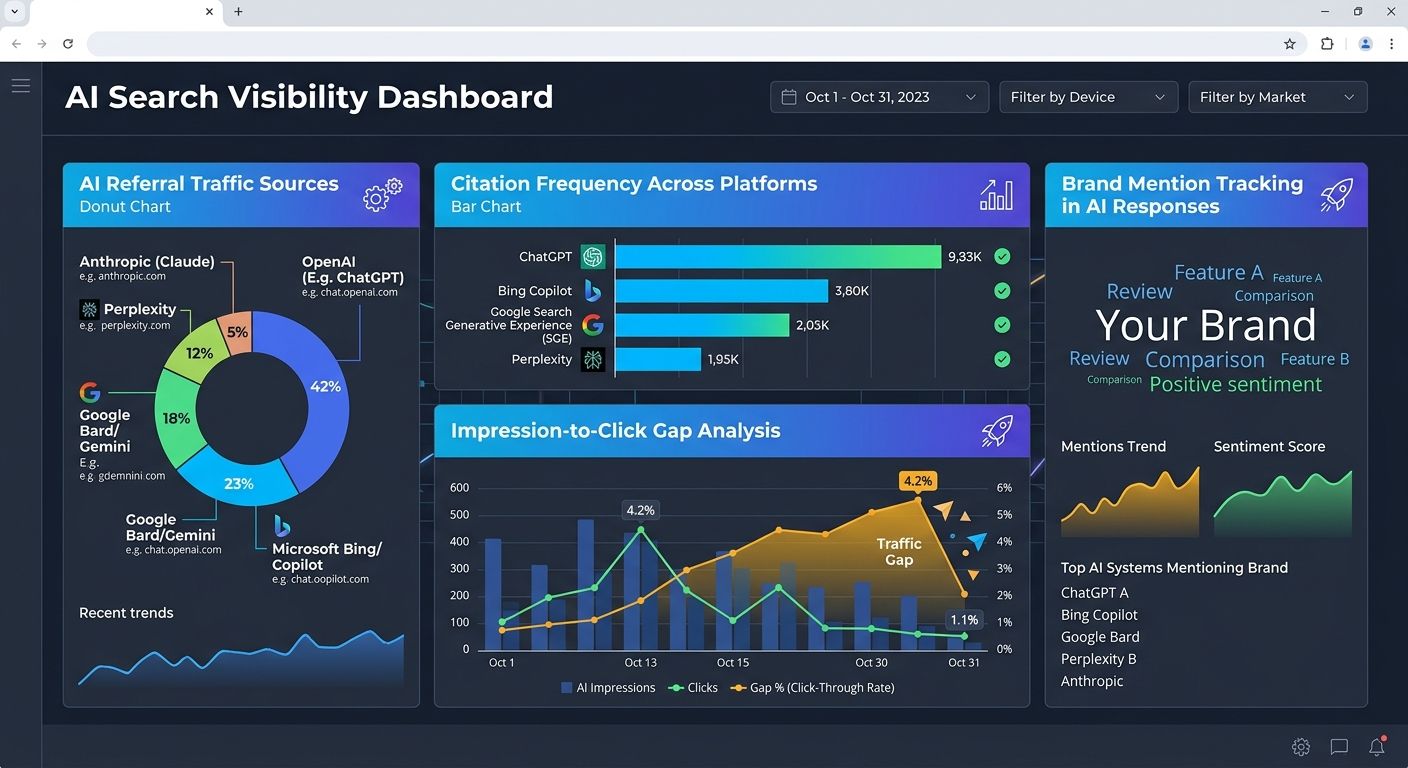
AI referral traffic: In your analytics platform, filter for referral sources like chat.openai.com, perplexity.ai, and copilot.microsoft.com. If you're seeing discrepancies between your analytics and reality, make sure you've properly configured these referral sources.
High impressions with low clicks in Search Console: This pattern often indicates your content is appearing in AI Overviews. The impression counts but the click doesn't happen because the AI answered the query directly.
AI citation tracking: Tools from Semrush, Profound, and Frase now monitor visibility across eight or more AI platforms. When you're comparing rank tracking software, look specifically for AI citation monitoring as a feature. It's no longer optional.
Gartner predicts that by the end of 2026, 25% of organic search traffic will shift to AI chatbots. If you're not measuring your visibility across these platforms, you're flying blind through the most significant shift in search behavior since mobile overtook desktop.
The Integration Play: SEO + AEO as One Strategy
The biggest mistake I see teams make is treating AI answer engine optimization as a separate initiative from their existing SEO work. It isn't. The evolution from blue links to AI recommendations is a spectrum, not a binary switch.
Strong SEO creates the credibility signals that AI models rely on. AEO ensures that credibility translates into citations. GEO shapes how AI discusses your brand in conversational contexts. They're layers of the same strategy.
Here's the framework I use with clients:
Audit existing content for AI extractability. Can each section answer a specific question in isolation?
Implement structured data across your highest-traffic pages first
Configure AI crawler access and verify it's working
Build or strengthen topical hubs around your core business areas
Establish quarterly content refresh cycles for your top 50 pages
Set up AI referral tracking and citation monitoring
Review and iterate monthly based on what's getting cited versus what isn't
Early adopters gain a citation advantage that compounds over time. AI models develop associations between topics and sources. Once a competitor becomes the default citation for a query, displacing them requires significantly more effort than if you'd been there first.
Your Move
The search landscape isn't dying. It's splintering. Google still matters enormously, but building your entire strategy around a single platform's blue links is the 2024 equivalent of building your business on a single social media algorithm. You're one update away from irrelevance.
Start this week: pick your five highest-value pages, restructure them with direct answers leading each section, add FAQ schema, verify your AI crawler access, and set up referral tracking for at least ChatGPT and Perplexity. That alone puts you ahead of roughly 80% of your competitors who are still staring at their Google rankings wondering where the traffic went.

Sarah Chen
SEO strategist and web analytics expert with over 10 years of experience helping businesses improve their organic search visibility. Sarah covers keyword tracking, site audits, and data-driven growth strategies.
Explore more topics