
HubSpot Publishes Content Automation Workflow Guide Mapping Five-Stage Lifecycle Implementation
Content automation workflows now span five distinct lifecycle stages—research, drafting, optimization, distribution, and measurement—replacing manual handoffs with programmatic pipelines, according to a workflow guide HubSpot published July 1. The guide, authored by Kenny Lee, documents how marketin

HubSpot Publishes Content Automation Workflow Guide Mapping Five-Stage Lifecycle Implementation
Content automation workflows now span five distinct lifecycle stages—research, drafting, optimization, distribution, and measurement—replacing manual handoffs with programmatic pipelines, according to a workflow guide HubSpot published July 1. The guide, authored by Kenny Lee, documents how marketing teams deploy AI systems across the content lifecycle to maintain publishing cadence without increasing headcount.
The publication arrives as HubSpot's own 2026 State of Marketing Report shows 80% of marketers deploy AI tools for content creation and 75% for media production, marking content automation's shift from experimental to operational infrastructure. The guide distinguishes content automation—which addresses the entire content lifecycle—from content marketing automation, which focuses solely on campaign distribution.
Five-Stage Workflow Architecture
The guide breaks content automation into five functional stages where programmatic systems eliminate operational friction. In the research and ideation phase, AI analyzes search trends and CRM data to suggest topics and identify content gaps. "AI systems such as Breeze can further enhance this process by analyzing existing content performance and CRM data to recommend topic clusters aligned with audience intent," the guide states.
During drafting and creation, generative AI produces outlines or first drafts based on prompts, reducing time-to-market for routine blog posts and product pages. The optimization stage automatically checks keyword density, answer engine optimization (AEO) readiness, and readability to guarantee technical quality. Distribution workflows push content to social media, email, and web channels simultaneously, while measurement dashboards aggregate performance data and suggest content refreshes.
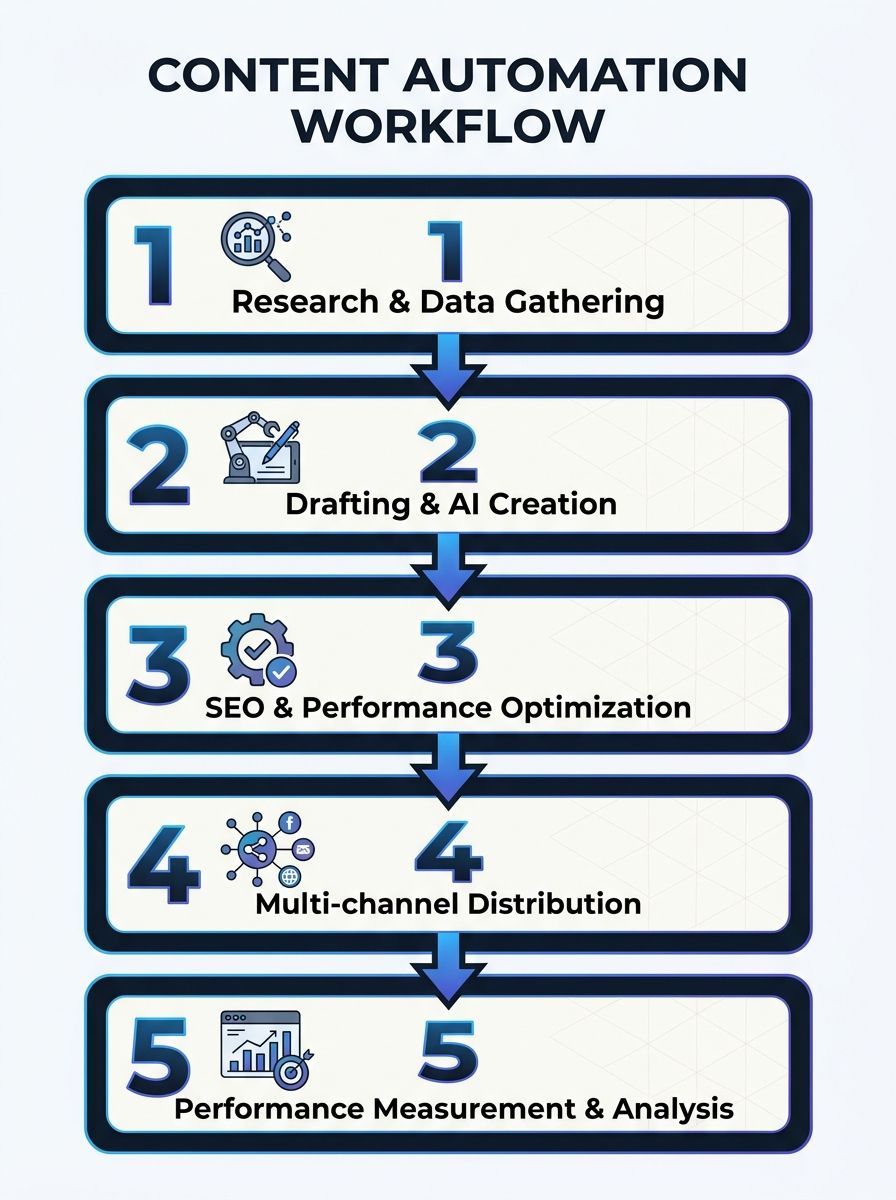
Organizations implementing these systems can now maintain consistent publishing cadence without proportional staffing increases, the guide notes, as automation handles governance, SEO checks, and cross-channel distribution programmatically.
Tool Landscape and Integration Requirements
The guide reviews automation tools across the content technology stack, positioning HubSpot Content Hub as an integrated CMS-CRM system that personalizes output at scale. The platform connects content management with customer relationship data to generate high volumes of data-driven content serving specific user intents across the buyer journey.
Other tools covered include AI writing assistants for drafting, SEO optimization platforms that check technical requirements, and workflow orchestration systems that coordinate multi-stage approvals. The guide emphasizes that modern content automation must connect disparate business activities to reduce friction and ensure brand consistency, distinguishing integrated platforms from point solutions.
Human Oversight and Quality Guardrails
The guide establishes boundaries for automation deployment, explicitly warning against fully automated content generation without editorial review. Marketing teams must vet AI-produced results, the guide states, particularly for brand voice consistency and factual accuracy. The document recommends maintaining human control over strategic decisions—topic selection, brand positioning, creative direction—while delegating operational tasks like formatting, scheduling, and performance tracking to automated systems.
This guardrail framework addresses quality concerns as AI content generation scales. The guide notes that automation improves content speed and scalability while maintaining brand governance only when human oversight remains active throughout the workflow.
Why This Matters Now
Content automation's maturation from experimental tool to operational infrastructure forces marketing teams to reconfigure production workflows or fall behind competitors who already deploy these systems. The five-stage lifecycle model HubSpot documents provides a blueprint for organizations that recognize manual content processes no longer scale but lack implementation frameworks. With 80% of marketers already using AI for content creation, teams that haven't mapped automation across their full content lifecycle—from research through measurement—risk operational inefficiency and inconsistent output quality as publishing volume demands increase.
The guide's emphasis on programmatic governance and technical standards directly addresses the scalability problem facing content operations: maintaining quality while increasing velocity. Organizations that automate only drafting without optimizing distribution, measurement, and iterative improvement leave performance gains on the table, while those that remove human oversight entirely sacrifice the strategic judgment that differentiates brand content from generic output.

Sarah Chen
SEO strategist and web analytics expert with over 10 years of experience helping businesses improve their organic search visibility. Sarah covers keyword tracking, site audits, and data-driven growth strategies.
Related Articles

HubSpot Data Shows 80% of Marketers Now Use AI for Content Creation as Automation Platforms Replace Manual Workflows
HubSpot's 2026 State of Marketing Report reveals that 80% of marketers now deploy AI tools for content and media creation, marking a fundamental shift from manual production to automated operational systems, according to a guide published June 29 by the marketing software company. The data underscor
AI Content Production Guide Published Emphasizing Workflow Audit Over Tool Selection
TrySight.ai published a three-step framework on August 2, 2026, for scaling content operations with AI tools, positioning workflow auditing and strategic oversight ahead of technology implementation, according to the 2,400-word guide targeting marketing directors, solo founders, and agency teams.

Marketing Departments Deploy Six-Stage AI Image Pipelines to Automate Visual Content Production
Marketing departments are deploying AI image automation workflows that generate, process, and publish visual content with minimal human intervention, according to a June 4, 2026 analysis from TrustAnalytica. The six-stage pipelines—spanning trigger, generation, processing, quality control, storage,
Explore more topics