
AI Content Production Guide Published Emphasizing Workflow Audit Over Tool Selection
TrySight.ai published a three-step framework on August 2, 2026, for scaling content operations with AI tools, positioning workflow auditing and strategic oversight ahead of technology implementation, according to the 2,400-word guide targeting marketing directors, solo founders, and agency teams.
AI Content Production Guide Published Emphasizing Workflow Audit Over Tool Selection
TrySight.ai published a three-step framework on August 2, 2026, for scaling content operations with AI tools, positioning workflow auditing and strategic oversight ahead of technology implementation, according to the 2,400-word guide targeting marketing directors, solo founders, and agency teams.
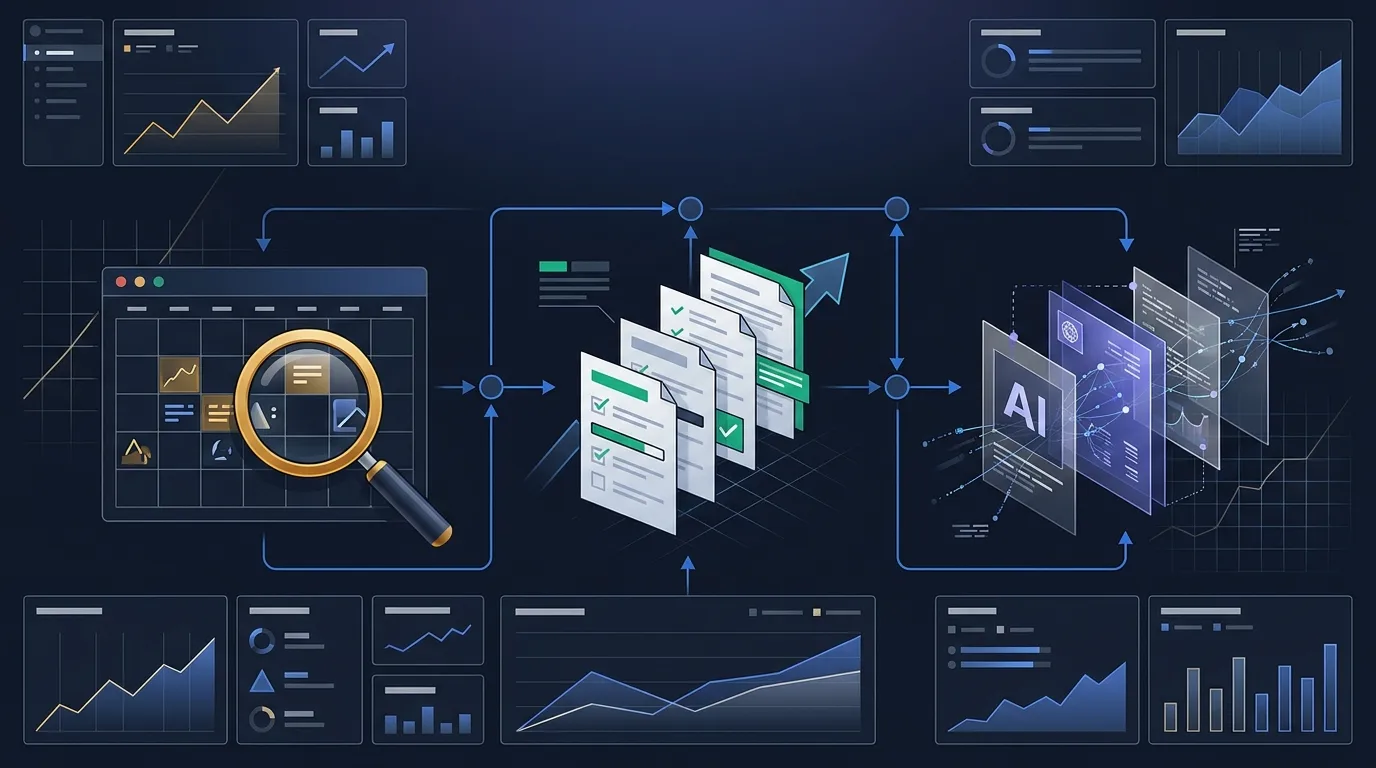
The guide identifies research synthesis, first-draft generation, outline creation, and meta description writing as primary AI augmentation points while reserving angle selection, fact-checking, proprietary insight addition, and final quality review for human oversight, according to the published framework.
Baseline Documentation Precedes AI Implementation
The framework opens with a workflow audit requirement that maps task ownership, time allocation per stage, and bottleneck locations across research sourcing, subject matter expert input, formatting, internal linking, and editorial review cycles. Teams document current monthly article output, average word count, and quality thresholds before introducing automation tools, the guide states.
TrySight.ai recommends analyzing time investment versus SEO impact by content type, noting that long-form guides may require three times the production time of listicles while driving disproportionate organic traffic. The audit captures baseline organic traffic, keyword rankings, and indexed page counts from SEO dashboards for post-implementation comparison, according to the methodology.
"The audit typically takes a few hours but saves weeks of wasted effort down the line," the guide states, framing documentation as foundational infrastructure.
GEO Target Lists Supplement Traditional SEO Keywords
The second framework stage layers Generative Engine Optimization targets alongside conventional keyword research, directing teams to identify questions audiences ask AI assistants rather than search engines. The guide recommends searching target topics in ChatGPT and Perplexity to observe which questions receive answers and which sources receive citations, positioning citation gaps as priority opportunities.
Content strategy includes keyword cluster mapping organized by topic pillars to prevent cannibalization as volume scales, the framework states. Teams prioritize informational guides, comparison pages, and how-to content for AI assistance based on format predictability and structural repeatability, according to the published methodology.
The guide segments content calendars into evergreen tracks delivering compounding long-term traffic and topical tracks capturing trending searches, assigning target word counts, formats, and internal linking goals to each piece before production begins.
Workflow Architecture Distinguishes Human and AI Roles
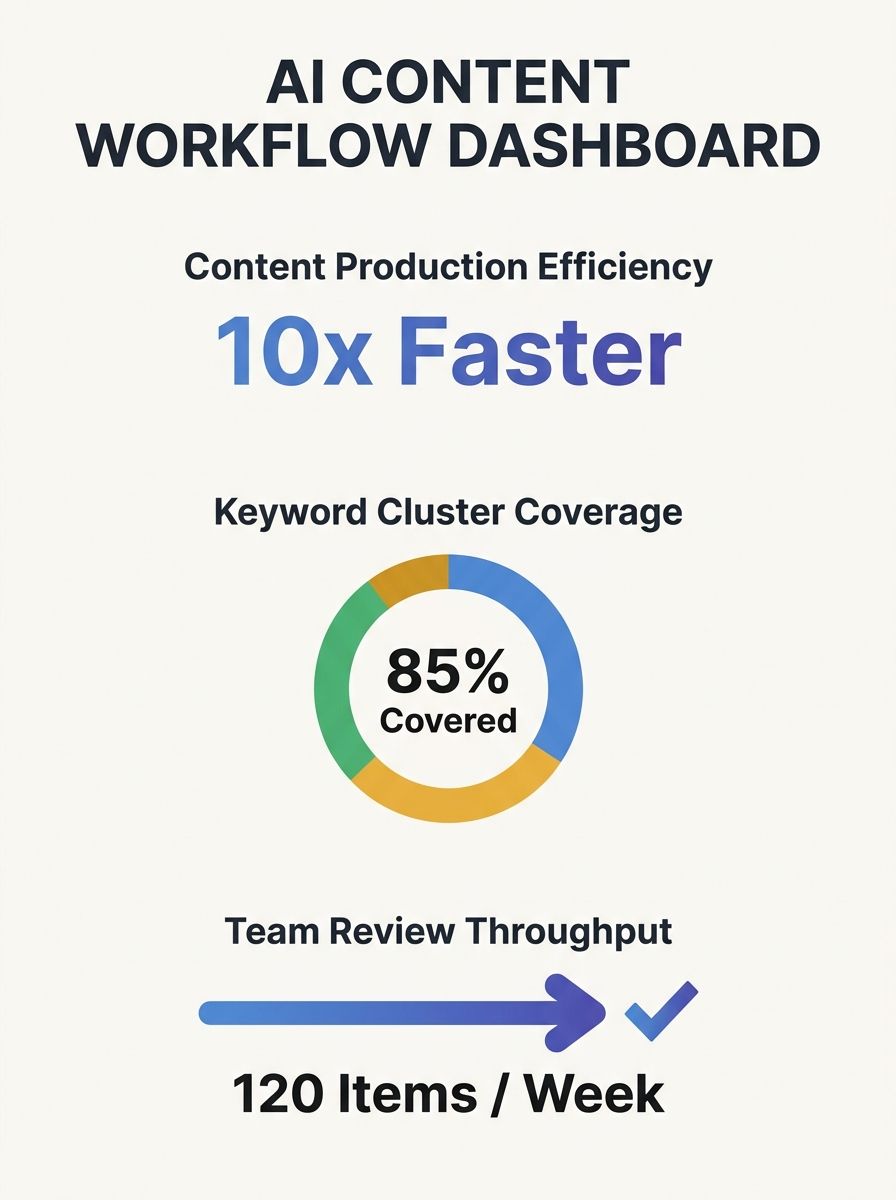
The third stage builds production workflows separating AI generation from strategic oversight. The framework assigns specific tasks to automation while maintaining human control over editorial direction and quality gates, according to the guide.
TrySight.ai positions the approach as removing bottlenecks rather than eliminating judgment, stating the goal is "to remove the bottlenecks that prevent your editorial judgment from scaling" rather than automating toward mediocrity.
The guide addresses teams hitting capacity constraints where content demand exceeds production ability across blog posts, landing pages, social copy, and product descriptions. The framework applies to solo founders competing with larger teams, marketing directors stretching resources, and agencies managing multi-client content operations, according to the stated scope.
Marketing Implications
The framework's emphasis on workflow auditing before tool adoption reflects growing recognition that AI content scaling failures stem from boosting existing inefficiencies rather than technology limitations. Marketing teams adopting AI writing tools without first mapping bottleneck locations and quality thresholds risk replicating manual workflow problems at higher volume, as HubSpot data showing 80% of marketers now using AI for content creation demonstrates widespread adoption without guaranteed quality outcomes.
The GEO target list methodology addresses the gap between traditional SEO keyword research and AI assistant citation patterns, a challenge highlighted in July research showing brands holding #1 Google rankings absent from 62% of AI Overview citations. Teams building content strategies around search engine rankings without considering how AI models surface and cite sources may produce high-volume content that remains invisible to the growing segment of users querying ChatGPT, Claude, and Perplexity rather than Google.
Content strategists implementing the framework should note the distinction between evergreen and topical production tracks requires different editorial standards and timelines even when both use AI assistance, potentially complicating quality control as output volume increases. The guide's task-level breakdown of AI-suited work versus human judgment requirements provides an operational starting point, though actual handoff points will vary by team capability and industry complexity.

Sarah Chen
SEO strategist and web analytics expert with over 10 years of experience helping businesses improve their organic search visibility. Sarah covers keyword tracking, site audits, and data-driven growth strategies.
Related Articles

HubSpot Data Shows 80% of Marketers Now Use AI for Content Creation as Automation Platforms Replace Manual Workflows
HubSpot's 2026 State of Marketing Report reveals that 80% of marketers now deploy AI tools for content and media creation, marking a fundamental shift from manual production to automated operational systems, according to a guide published June 29 by the marketing software company. The data underscor

HubSpot Publishes Content Automation Workflow Guide Mapping Five-Stage Lifecycle Implementation
Content automation workflows now span five distinct lifecycle stages—research, drafting, optimization, distribution, and measurement—replacing manual handoffs with programmatic pipelines, according to a workflow guide HubSpot published July 1. The guide, authored by Kenny Lee, documents how marketin

WordPress Content Practitioner Publishes Workflow Rejecting Complete AI Drafts in Favor of Incremental Assistance
A WordPress content practitioner published a workflow methodology on August 16, 2026 that rejects complete AI-generated drafts in favor of incremental assistance paired with manual review checkpoints, countering the industry's dominant one-click publishing approach. Victoria, writing on TopTut.
Explore more topics