
Instagram Tests Drag-to-Refresh Algorithm Controls and Conversational Feed Tuning
Instagram Chief Adam Mosseri announced June 28 that the platform is testing four new algorithm control features, including drag-down access to topic preferences and conversational prompts for feed refinement, according to Social Media Today. The experiments expand the app's "Your Algorithm" control

Instagram Tests Drag-to-Refresh Algorithm Controls and Conversational Feed Tuning
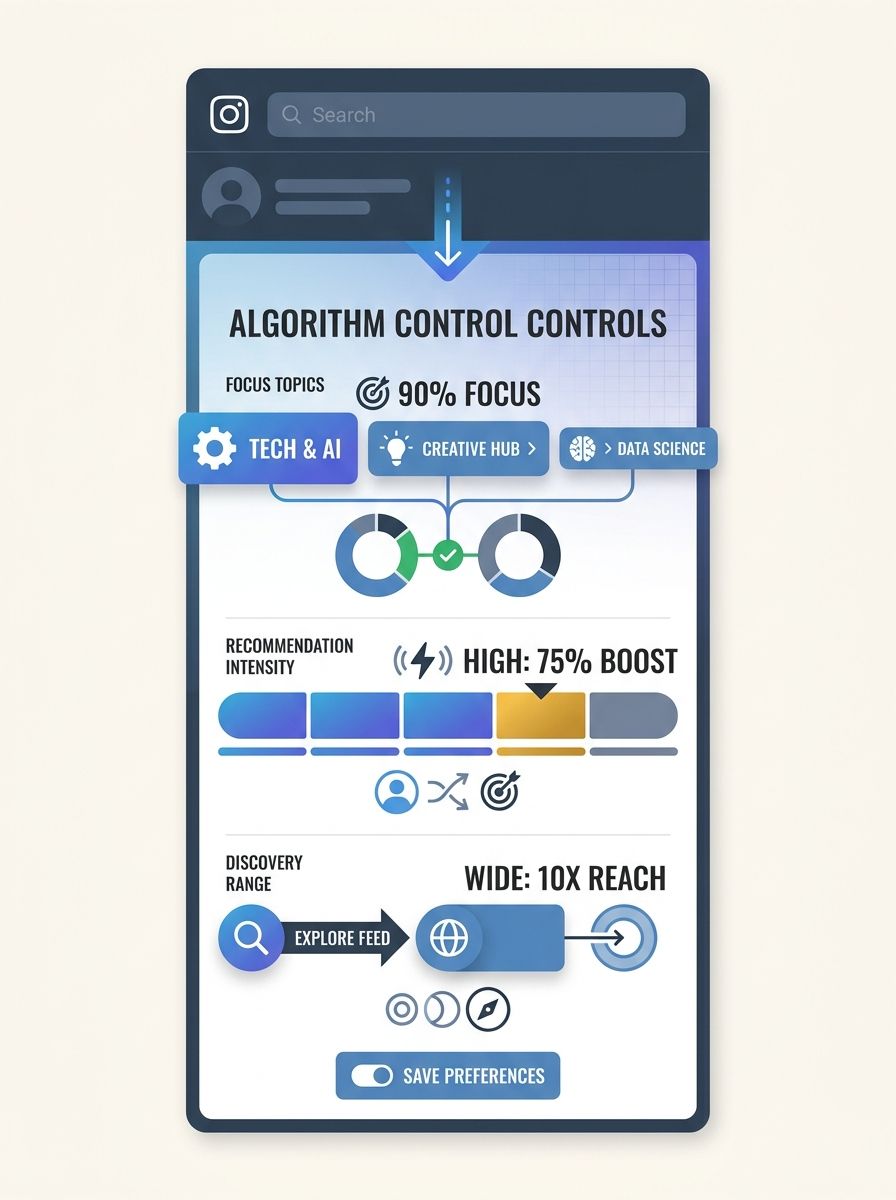
Instagram Chief Adam Mosseri announced June 28 that the platform is testing four new algorithm control features, including drag-down access to topic preferences and conversational prompts for feed refinement, according to Social Media Today. The experiments expand the app's "Your Algorithm" control panel, which launched in April 2026 and lets users add or remove interest topics the system assigns based on engagement behavior.
The tests aim to make algorithm controls "feel more present and useful across Instagram," Mosseri said in the announcement, though he cautioned that "some of this is testing now, some is coming soon, some might not work." The features represent Instagram's latest attempt to give users perceived agency over recommendation systems while maintaining the algorithm-driven feeds that Meta's internal data shows drive higher engagement than chronological or manually curated alternatives.
The Four Control Features Under Test
The first feature under evaluation simplifies access to the Your Algorithm panel from the home screen. Users would drag the screen downward to open topic preferences, where they can review and modify interest categories the platform assigned based on their likes, shares, and watch-time patterns.
Instagram is also testing direct topic-control insertion between Reels in the video feed. This placement would let users signal interest preferences without leaving the content stream, according to the announcement.
A third experiment adds lower-function-bar shortcuts for recommended Reels, placing algorithm controls within immediate reach while users scroll. Mosseri described the goal as making it "easier for users to improve their feed without specifying topics."
The fourth feature introduces conversational prompts to refine recommendations through natural-language input rather than topic selection. "Ideally, this will make the algorithm feel like something you talk to rather than something that happens to you," Mosseri said. The conversational interface relies on Instagram's AI systems to interpret user intent from text descriptions of preferences.
The Adoption Challenge
Meta's expansion of algorithm controls follows years of user requests for chronological feeds showing only manually followed accounts. The company has not provided that option, and the Social Media Today analysis notes that "algorithm-defined experiences drive way more engagement than letting users dictate the action themselves."
Historical data on user adoption of similar control features suggests low uptake rates. "This has come up time and time again with security changes, data protections, algorithm controls and feed preferences," the report states. "People demand these as options so they can feel more in control of their experience. But for the most part, these tools end up providing more value as a reassurance."
TikTok's feed algorithm, which adapts rapidly to user behavior without manual input, established the current standard for recommendation systems. Users now expect platforms to surface relevant content through passive observation of engagement signals rather than through active preference management, making manual control tools less attractive even to those who initially request them.
The Your Algorithm tool expanded to Instagram's Explore tab in April 2026, but Meta has not published usage statistics showing what percentage of the platform's user base actually accesses the feature or how frequently they adjust topic preferences. Mosseri's acknowledgment that some tests "might not work" suggests the company is measuring engagement impact before broader rollout.
The Takeaway
Marketing managers and content strategists running Instagram campaigns should treat these algorithm control features as user-level signals rather than distribution levers. The tests confirm Instagram will continue prioritizing algorithmic curation over chronological feeds, which means organic reach strategies must align with recommendation-system signals, watch time, shares, saves, and completion rates for Reels, rather than follower counts or post frequency.
The conversational tuning feature, if it scales beyond testing, could eventually surface new interest-graph data through Instagram's Ads Manager, giving paid campaigns access to stated preferences alongside behavioral targeting. However, the historical pattern of low adoption rates for manual controls suggests most users will remain passive algorithm recipients, making behavioral engagement signals more reliable targeting inputs than self-reported preferences.
Content teams should monitor whether these features change how Instagram displays "Not Interested" feedback loops. If the platform makes disinterest signals more accessible through drag-down controls or in-stream prompts, algorithmic penalties for low-relevance content may apply more quickly than under the current three-dot menu structure.

Alex Chen
Alex Chen is a digital marketing strategist with over 8 years of experience helping enterprise brands and agencies scale their online presence through data-driven campaigns. He has led marketing teams at two successful SaaS startups and specializes in conversion optimization and multi-channel attribution modeling. Alex combines technical expertise with strategic thinking to deliver actionable insights for marketing professionals looking to improve their ROI.
Related Articles

Instagram Restricts Recommendation Eligibility for Aggregator Accounts Across All Content Formats
Instagram restricted recommendation eligibility for aggregator accounts across all content formats on April 30, 2026, completing a policy shift that began with Reels and now extends to photos and carousels, according to Coruzant's algorithmic analysis.
Google Search Console Social Tracking Feature Draws Criticism as AI Click Loss Shield
Google's recent Search Console update enabling social media performance tracking serves as a strategic deflection from declining website referral traffic caused by AI-generated search summaries, according to a July 16 analysis published by Search Engine Journal.

AI Systems Recommend Brands Based on Third-Party Mentions, Not Direct SEO Signals, Agency Founder Says
Kris Jones, founder of LSEO and former CEO of Pepper Jam, stated that AI search systems recommend brands based on third-party mentions and brand signals rather than direct optimization efforts, according to a Search Engine Journal podcast published August 3, 2026.
Explore more topics