
Email Open Rates No Longer Reliable Performance Metric Due to Apple Privacy Protection, Digital Marketing Veteran Says
Digital marketing consultant Hank Hoffmeier published email marketing benchmarks for small businesses on August 1, 2026, warning that Apple's Mail Privacy Protection has rendered open rates unreliable and recommending click-to-open rates as the primary performance metric, according to More In Media.

Email Open Rates No Longer Reliable Performance Metric Due to Apple Privacy Protection, Digital Marketing Veteran Says
Digital marketing consultant Hank Hoffmeier published email marketing benchmarks for small businesses on August 1, 2026, warning that Apple's Mail Privacy Protection has rendered open rates unreliable and recommending click-to-open rates as the primary performance metric, according to More In Media. The guidance, based on 25 years of industry experience, identifies 20 to 30 percent as a healthy open rate baseline while noting that single-digit rates typically indicate deliverability failures rather than content problems.
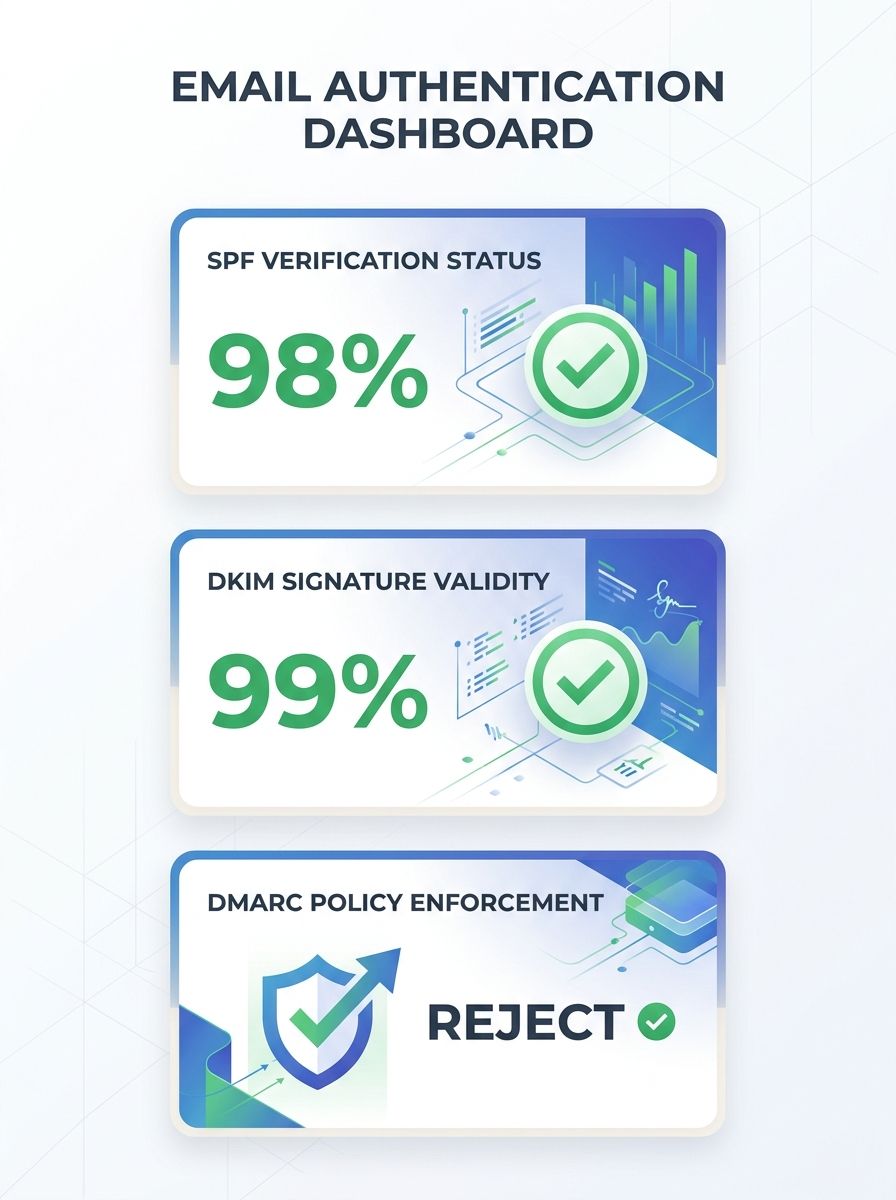
The shift comes as inbox providers now require SPF, DKIM, and DMARC authentication to determine whether emails reach primary inboxes or spam folders, with technical setup replacing content quality as the primary barrier to deliverability for small business campaigns.
Authentication Requirements Now Determine Inbox Placement
Email platforms must prove sending authorization through three authentication protocols before messages reach subscribers, Hoffmeier explained in the August 1 guidance. SPF confirms the email platform has permission to send from a business domain, DKIM verifies message content has not been altered during transmission, and DMARC instructs inbox providers on handling authentication failures.
"Every email you send either helps or hurts your domain and IP reputation," Hoffmeier stated, comparing the system to a credit score that inbox providers use to route messages. Opens, clicks, forwards, and "not spam" markings improve reputation scores, while bounces, spam complaints, and ignored messages decrease them.
Most email platforms now automate the authentication setup process, reducing technical complexity for business owners. Gmail, Yahoo, and Microsoft all enforce these requirements when filtering incoming messages.
Open Rates Inflated by Apple Privacy Changes
Apple's Mail Privacy Protection feature pre-opens emails on iPhones before recipients view them, artificially inflating open rate metrics regardless of actual engagement. The privacy tool registers an "open" event even when users delete messages without reading them, rendering the traditional open rate calculation unreliable for campaign performance analysis.
Hoffmeier recommended tracking click-to-open rates instead, since clicks reflect genuine engagement with message content. Conversion tracking through Google Analytics or direct customer inquiries provides additional verification that emails drove business outcomes.
The metric shift affects how small businesses evaluate email campaign success, particularly for lists with high iPhone user concentrations. Marketing managers who rely on open rates as their primary KPI may overestimate campaign performance if they have not adjusted measurement frameworks to account for Apple's privacy features—a challenge documented in previous research showing traditional organic traffic metrics mask underlying performance changes.
List Health Benchmarks and Warning Signs
A healthy email list maintains a 20 to 30 percent open rate under current measurement conditions, according to Hoffmeier's benchmarks published August 1. Single-digit open rates signal deliverability problems such as spam folder placement or authentication failures, not content quality issues.
The guidance cited a case study where a client's open rate dropped from 25-30 percent to 6-8 percent after a server migration, with no changes to email content. The decline resulted from broken technical configurations that redirected messages to spam folders.
Welcome emails generate the highest open rates of any message type because subscribers expect immediate contact after signing up, Hoffmeier noted. Most small businesses skip automated welcome sequences despite the metric advantage they provide.
Purchased email lists, scraped LinkedIn contacts, and cold conference attendee databases generate negative reputation signals because recipients do not recognize the sender, Hoffmeier warned. "It's simply about getting someone to give you permission to send them an email," he stated.
Email platform pricing ranges from free tiers for smaller lists to $20-70 per month for full-featured plans, making cost barriers minimal for small business implementation.
What Happens Next
Small business email marketers face a measurement adjustment period as Apple's privacy features force the industry away from open rates toward engagement and conversion metrics. The shift parallels broader changes in digital marketing analytics, where traditional performance indicators increasingly fail to capture actual business impact.
The authentication requirements create a technical barrier that separates permission-based email programs from spam operations, potentially improving inbox quality for subscribers while raising setup complexity for new businesses. Marketing managers who have not implemented SPF, DKIM, and DMARC face delivery failures even when subscribers explicitly opted in to receive messages.
List health audits and re-engagement campaigns will likely become standard practice as businesses prioritize engaged subscribers over list size, following Hoffmeier's recommendation to audit lists every six months. The metric transition away from open rates positions click-through rates and conversion tracking as the new baseline for email campaign performance evaluation in 2026.

Alex Chen
Alex Chen is a digital marketing strategist with over 8 years of experience helping enterprise brands and agencies scale their online presence through data-driven campaigns. He has led marketing teams at two successful SaaS startups and specializes in conversion optimization and multi-channel attribution modeling. Alex combines technical expertise with strategic thinking to deliver actionable insights for marketing professionals looking to improve their ROI.
Related Articles
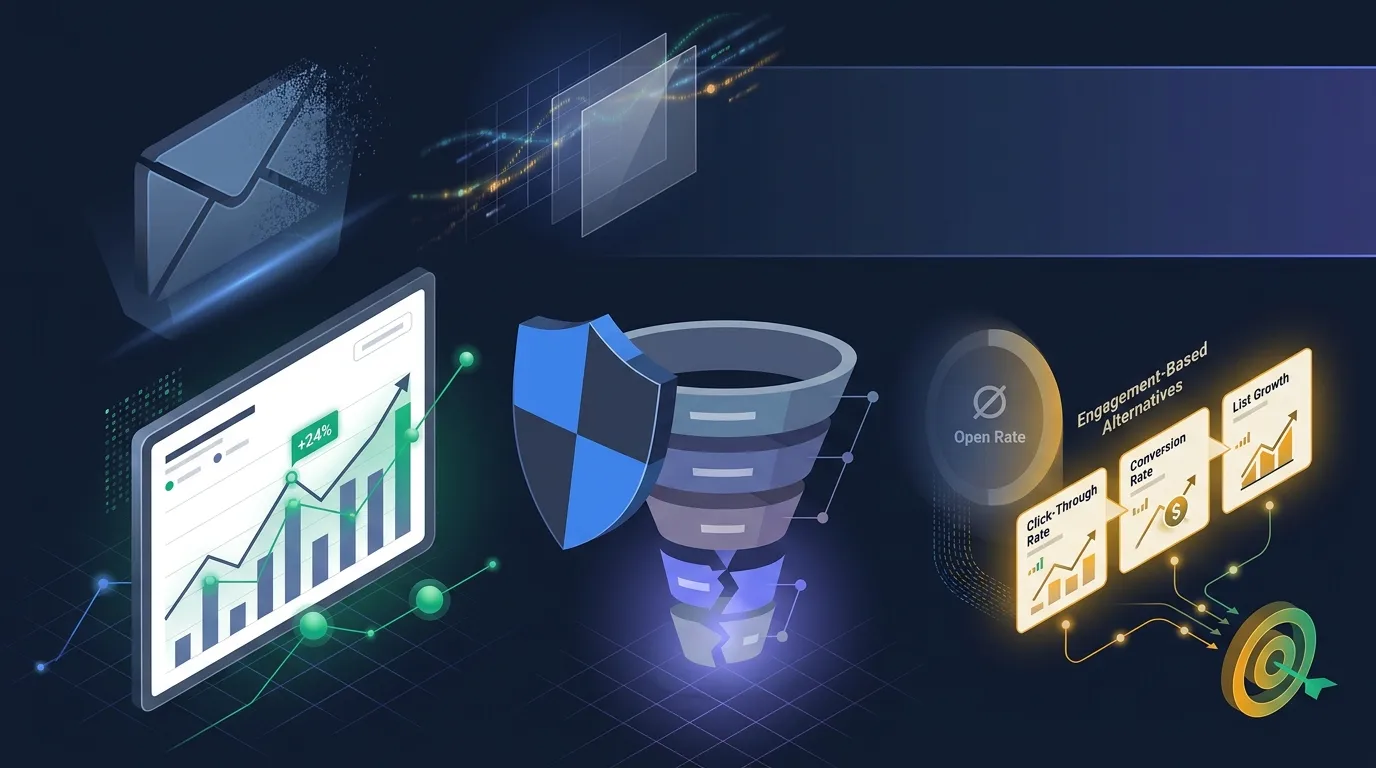
Email Marketing Teams Abandon Open Rates as Primary KPI Following Privacy-Driven Metric Collapse
B2B email marketing teams are replacing open rate tracking with conversion-focused metrics including click-to-open rate, revenue attribution, and deliverability health indicators, according to a June 17 analysis published by MarketBoats. Open rates jumped from 28% to 55% following Apple's Mail Priva
Marketing Consultant Publishes Three-Question Email Platform Framework with 2026 Pricing Benchmarks
A marketing consultant published a decision framework for email platform selection on August 29, 2026 showing businesses frequently overspend by selecting feature-rich platforms for workflows they never use, according to analysis from Lilach Bullock.
The Search Intent Mismatch Audit: Finding Hidden Revenue Loss in Your Top-Ranking Pages
Ranking #1 on Google for a keyword tells you nothing about whether that page will convert your email subscribers. Email marketers instinctively link to their highest-performing organic pages in campaigns, treating search visibility as a proxy for conversion readiness.
Explore more topics