
B2B Programmatic Advertising Shifts From Impression Volume to Intent Signal Integration, Analysis Shows
Programmatic display advertising in B2B environments now requires account intelligence and behavioural signals rather than impression volume alone, according to an analysis published by Acumen Intelligence on September 25.

B2B Programmatic Advertising Shifts From Impression Volume to Intent Signal Integration, Analysis Shows
Programmatic display advertising in B2B environments now requires account intelligence and behavioural signals rather than impression volume alone, according to an analysis published by Acumen Intelligence on September 25. The shift reflects enterprise buying journeys that involve 13 internal stakeholders and nine external participants on average, with 94 percent of business buyers using AI during purchase decisions, a 2026 industry report cited in the analysis found.
The analysis argues that traditional programmatic models—define audience, buy impressions, optimize for clicks—cannot address buying environments where more than 20 decision-makers typically participate. Effective programmatic targeting now requires identifying which accounts match ideal customer profiles, which stakeholders are actively researching, and whether engagement is strengthening across the buying group, the publication states.
Automation Executes Strategy But Cannot Fix Weak Data
More than 90 percent of advertisers now use AI to plan media, set budgets, optimize targeting, and generate creative, according to a 2026 survey of 182 US advertising agency and marketing leaders cited in the analysis. One-third of respondents believe AI will increase return on ad spend by more than 10 percent.
Yet 42 percent identified reliance on "black box" optimization systems as a key risk to media investment strategy, the same survey showed. The analysis positions this tension as a warning that programmatic automation can accelerate weak data strategies without improving accuracy.
Data quality presents operational contradictions: 66 percent of B2B respondents report high-quality target-audience data, but nearly 20 percent identify adopting a data-driven strategy as a major challenge, and 13 percent struggle to share data across their organization, studies referenced in the publication indicate. The analysis frames the issue as coordination failure rather than data scarcity—organizations possess fragmented data but cannot turn it into unified activation.
Intent Signals Distinguish Profile Fit From Buying Momentum
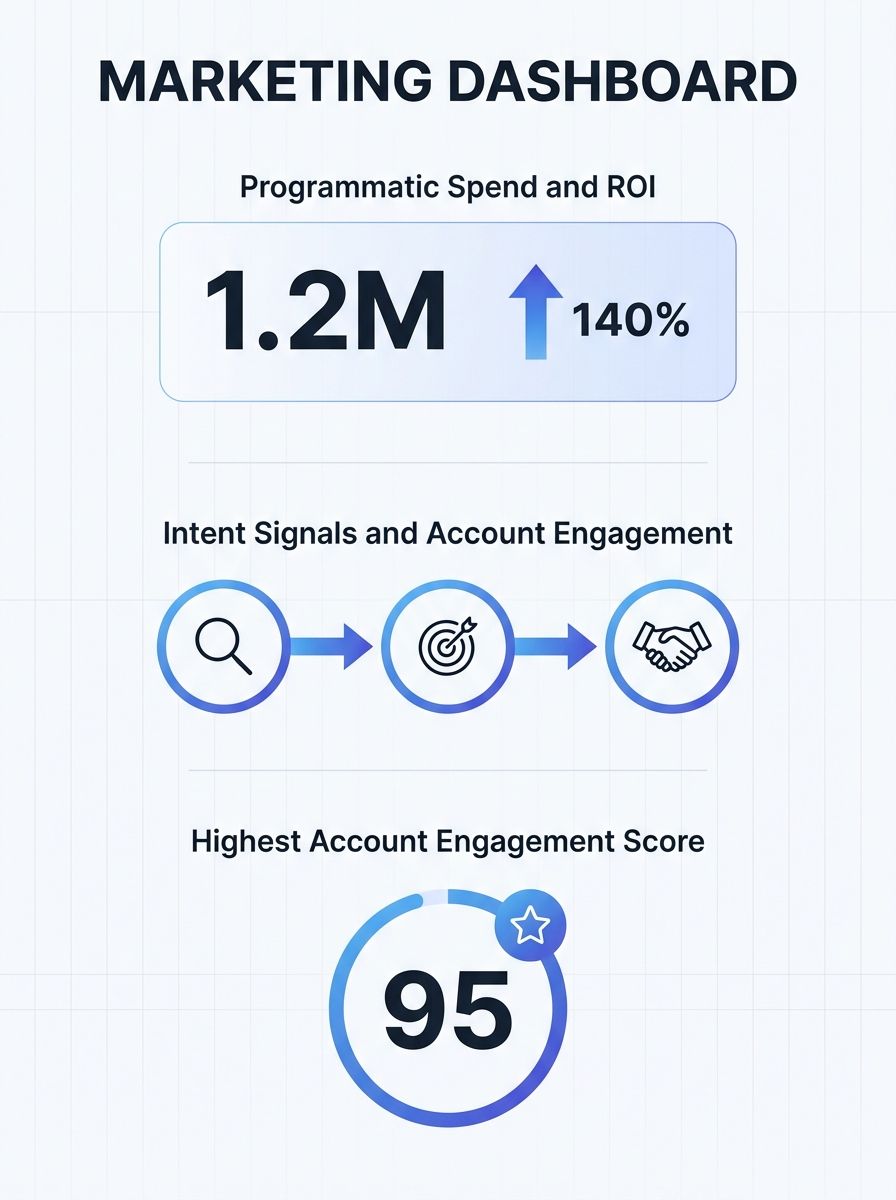
Intent-based advertising adds a temporal dimension to audience targeting, the analysis argues. An account researching cloud migration or cybersecurity architecture today should receive different messaging than an equally suitable account showing no active demand, according to the framework outlined.
Intent signals enable dynamic programmatic targeting: early research activity triggers educational content, stronger engagement shifts toward solution differentiation, and multi-stakeholder participation can reinforce account-based marketing motions rather than isolated display campaigns, the publication states. The model repositions programmatic advertising as response to buying behaviour rather than click pursuit, according to the analysis.
This approach parallels broader shifts documented in paid search, where campaign infrastructure has moved from keyword-driven to intent-based matching as AI systems reinterpret search query patterns.
Measurement Models Shift to Pipeline Contribution
Lead quality and marketing-qualified leads rank as the most important success metric for 39 percent of marketers in 2026, ahead of lead-to-customer conversion, ROI, customer acquisition cost, and lead volume, recent research cited in the analysis shows.
The publication recommends B2B programmatic measurement focus on three questions: whether priority accounts engaged, whether additional buying-group members appeared, and whether engagement translated into accepted leads, opportunities, or pipeline progression. This model moves beyond media metrics to commercial outcomes, the analysis states.
Measurement challenges extend across paid channels—conversion tracking configuration errors systematically degrade smart bidding performance when data quality issues upstream compromise downstream optimization, prior technical analysis has documented.
The Takeaway
The programmatic advertising model described in this analysis reflects a structural shift in B2B media buying—from audience reach to account intelligence. The data points are striking: 94 percent AI adoption among buyers, 90 percent automation across media planning, but 42 percent concern about black-box systems and persistent data-sharing failures despite reported quality. For marketing managers and agency professionals running demand generation programs, the implication is clear: programmatic infrastructure must connect to intent data, CRM systems, and account-based frameworks to deliver pipeline outcomes rather than impression counts. The question is no longer whether to automate media buying, but whether the data feeding that automation can identify buying momentum at the account level and coordinate activation across fragmented teams.

Sarah Chen
SEO strategist and web analytics expert with over 10 years of experience helping businesses improve their organic search visibility. Sarah covers keyword tracking, site audits, and data-driven growth strategies.
Related Articles

Digital Marketing Agency Publishes Analysis Showing AI Reshaping Paid Search Campaign Infrastructure from Keyword-Driven to Intent-Based Matching
Digital marketing agency ClickSlice published an analysis on August 4, 2026, documenting how artificial intelligence has shifted paid search advertising from manual keyword-driven campaigns to intent-based matching systems, according to the agency's report.

Marketing Automation Speed Race Masks Emerging Battle Over Proprietary Intelligence Layer
Ninety percent of marketing organizations now use AI agents operationally in their tech stack, not as pilot programs, according to Scott Brinker's Martech for 2026 research cited by EMARKETER, marking the first half of 2026 as the period when marketing automation platforms compressed campaign launch
B2B Marketing Programs Systematically Undervalue Outbound Channels in Last-Click Attribution Models, Analysis Finds
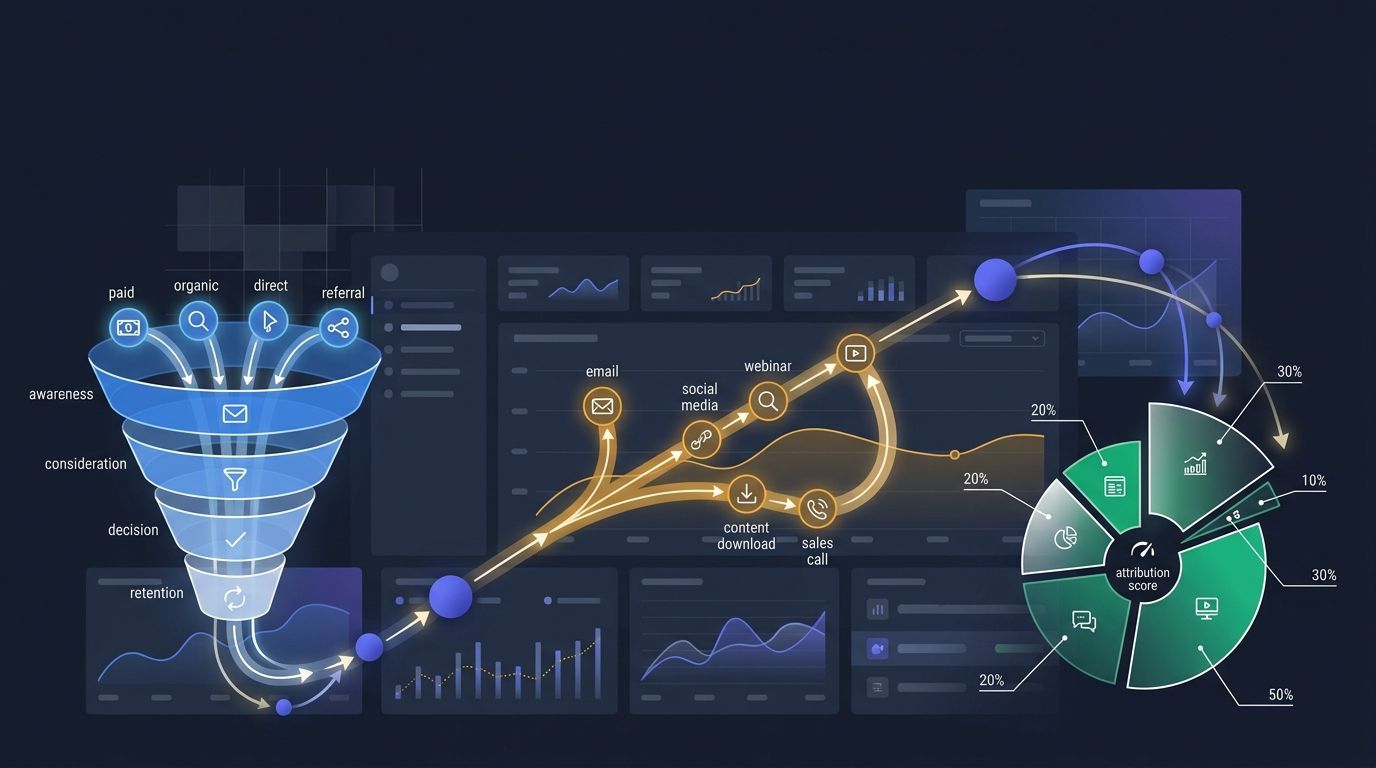
Marketing analysis published June 13, 2026, by Fypion Marketing identifies a structural reporting failure in B2B demand generation: last-click attribution assigns conversion credit to bottom-of-funnel branded searches and direct visits while erasing the cold emails, content interactions, and retarge
Explore more topics