
Content Management Systems Create Measurable Search Performance Gaps Through Technical SEO Implementation Barriers
A technical SEO guide published by asclique.com on September 20 identifies specific platform architecture differences that determine whether websites can implement Core Web Vitals optimization, schema markup, and crawl efficiency controls without requiring developer intervention for each change.

Content Management Systems Create Measurable Search Performance Gaps Through Technical SEO Implementation Barriers
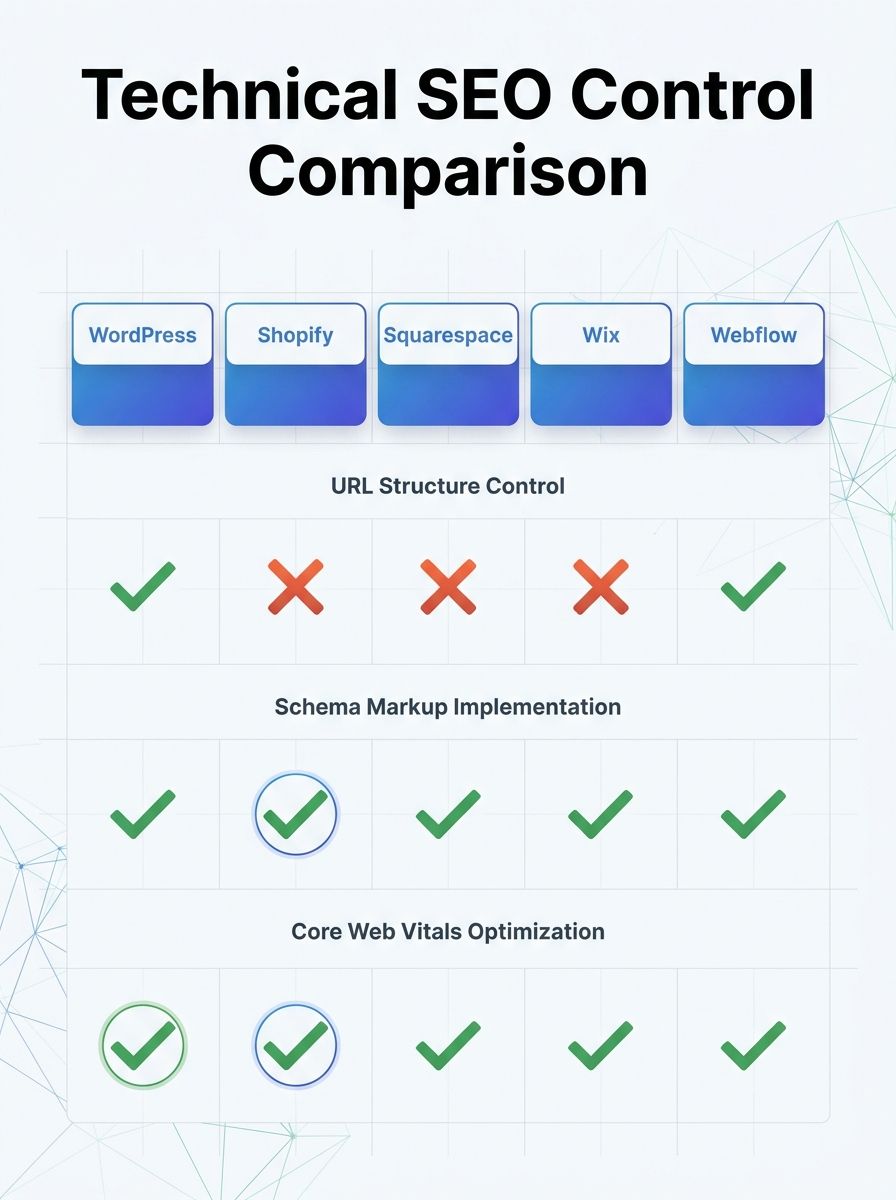
A technical SEO guide published by asclique.com on September 20 identifies specific platform architecture differences that determine whether websites can implement Core Web Vitals optimization, schema markup, and crawl efficiency controls without requiring developer intervention for each change. The analysis compares WordPress, Shopify, Squarespace, Wix, and Webflow against eight baseline technical requirements that affect search rankings, concluding WordPress maintains the largest advantage through plugin ecosystem depth while Shopify's fixed URL structure creates persistent ecommerce SEO constraints.
The guide establishes that search performance differences stem from whether platforms allow editors to control page titles, meta descriptions, canonical tags, heading hierarchy, schema markup, and XML sitemaps through native interfaces rather than custom development. Sites using platforms that generate URLs like /page?id=342 instead of /services/seo-consulting/ face indexing disadvantages, according to the analysis.
Platform Comparison Shows WordPress Dominance in Technical Control
WordPress delivers complete access to title tags, meta descriptions, canonical URLs, and schema markup through plugins including Yoast SEO, Rank Math, and All in One SEO without code modification, the guide reports. The platform's plugin ecosystem extends to image optimization through Imagify and ShortPixel, caching via WP Rocket and W3 Total Cache, and Core Web Vitals improvement tools that address the performance benchmarks tracked in Google's ranking algorithm.
The analysis identifies WordPress weaknesses including slow default performance without optimization plugins, variable theme HTML quality, and potential plugin conflicts that create technical SEO problems. Security vulnerabilities emerge when sites lack maintenance updates.
Shopify automatically generates sitemaps, canonical tags, and product structured data while including fast hosting infrastructure, but maintains fixed /collections/ and /products/ URL prefixes that cannot be removed through theme customization or app installation, the guide states. Pagination and variant pages create duplicate content requiring careful canonical tag management. Blog functionality remains limited compared to WordPress.
Technical Requirements Framework Defines Eight Baseline Capabilities
The guide establishes that SEO-friendly CMS platforms must provide individual editable title tags and meta descriptions for every page rather than auto-generating from page names. Clean, descriptive, editable URLs represent a non-negotiable requirement, with platforms generating query-string URLs failing this baseline.
Proper heading hierarchy through manual H1, H2, and H3 tag application without template auto-generation, editable alt text for every image with WebP support, and per-page canonical tag control for duplicate content management complete the on-page requirements, according to the analysis. Schema markup implementation through plugins or direct template access, render-blocking code minimization that preserves Core Web Vitals scores, automatic XML sitemap generation with content updates, and robots.txt access for crawl control round out the eight capabilities.
Squarespace provides clean mobile-responsive templates, automatic sitemaps, editable title tags and meta descriptions, but limits URL structure control and eliminates robots.txt access in standard plans, the guide reports. Schema markup requires workarounds, no plugin ecosystem exists for advanced customization, and JavaScript-heavy rendering creates crawling issues for complex sites. The analysis labels Squarespace "acceptable for simple small business sites" but not recommended for sites with significant SEO priorities.
Wix now supports most standard SEO requirements through its SEO Wiz setup tool, editable meta elements, and automatic sitemaps after historical JavaScript rendering problems, though URL structure limitations persist compared to WordPress, according to the guide. Webflow delivers full HTML structure control, clean code output without plugin dependencies, and strong page speed performance but requires steeper learning curves typically involving developers and lacks WordPress's plugin ecosystem.
Site Speed and Core Web Vitals Form Central Ranking Constraint
Platforms that generate excessive render-blocking code, bloated JavaScript, or slow database queries inflate page load times and degrade Core Web Vitals scores that Google incorporates into ranking algorithms, the guide states. Performance analysis shows conversion rates drop significantly between one-second and five-second page loads, compounding the ranking impact of slow CMS architecture.
The analysis notes that JavaScript-heavy rendering in platforms like Squarespace and historically in Wix creates crawling inefficiencies where search engines struggle to parse content, though Wix has invested in server-side rendering improvements. WordPress requires performance plugins and quality hosting to overcome slow default configurations, while Shopify includes fast hosting infrastructure as part of its closed ecosystem.
Schema markup support varies from WordPress's extensive plugin options to Webflow's requirement for custom code embeds, with Shopify automatically implementing product structured data but lacking comparable support for other schema types without third-party apps, according to the guide.
What This Means for Marketing Managers
Marketing teams evaluating CMS platforms should audit technical SEO requirements against platform capabilities before migration decisions, particularly for sites where organic search drives significant traffic. The fixed URL structure in Shopify creates permanent constraints that workarounds cannot fully resolve, while WordPress's flexibility comes with maintenance overhead and performance optimization requirements.
The analysis reinforces that website migrations carry inherent traffic risk, making upfront platform selection critical. Teams lacking technical resources should weigh WordPress's flexibility against platforms offering managed performance and security but reduced technical control. Platform choice represents a multi-year commitment affecting ranking potential across Core Web Vitals, schema implementation, and crawl efficiency that compound over time.
For existing sites underperforming in search, the guide suggests auditing whether the current CMS blocks implementation of baseline technical requirements rather than assuming content or backlink gaps alone explain rankings. Platform-level limitations may require migration to resolve rather than incremental optimization within a constrained system.

Alex Chen
Alex Chen is a digital marketing strategist with over 8 years of experience helping enterprise brands and agencies scale their online presence through data-driven campaigns. He has led marketing teams at two successful SaaS startups and specializes in conversion optimization and multi-channel attribution modeling. Alex combines technical expertise with strategic thinking to deliver actionable insights for marketing professionals looking to improve their ROI.
Related Articles

Wix SEO Capabilities Reach Production-Grade Performance in 2026, Web Developer Audit Finds
Wix website builder now generates clean semantic HTML, automatic schema markup, and strong Core Web Vitals scores—reversing the platform's decade-old reputation for poor search engine optimization—according to a technical audit published May 31, 2026 by Landon Cromwell, a web developer at Spider Des

Google Tightens Core Web Vitals LCP Threshold to 2.0 Seconds, Only 33% of Mobile Sites Pass
Google tightened its Largest Contentful Paint threshold from 2.5 seconds to 2.0 seconds in a March 2026 Core Web Vitals update, forcing website operators to reevaluate optimization strategies that previously passed the performance benchmark, according to a June 5, 2026 analysis published by The Visu

Website Migration Guide Establishes Expected 5% to 12% Organic Traffic Dip as Benchmark for Clean Redirects
Website migrations executed with complete URL mapping and tested 301 redirects should expect a temporary 5% to 12% organic traffic decline, while migrations without systematic redirect planning risk traffic crashes exceeding 40%, according to an SEO migration framework published by GadgetsFarms on A
Explore more topics