
B2B Marketing Programs Systematically Undervalue Outbound Channels in Last-Click Attribution Models, Analysis Finds
Marketing analysis published June 13, 2026, by Fypion Marketing identifies a structural reporting failure in B2B demand generation: last-click attribution assigns conversion credit to bottom-of-funnel branded searches and direct visits while erasing the cold emails, content interactions, and retarge
B2B Marketing Programs Systematically Undervalue Outbound Channels in Last-Click Attribution Models, Analysis Finds
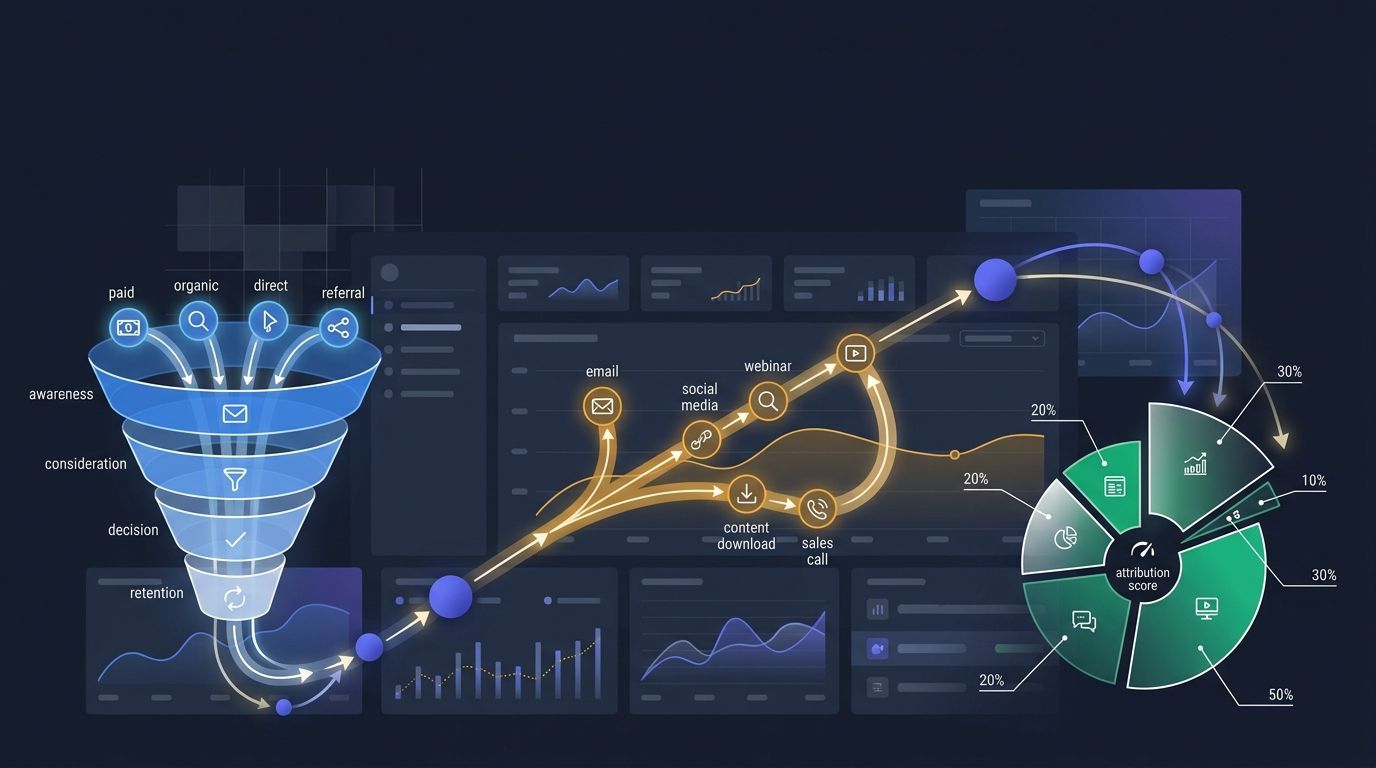
Marketing analysis published June 13, 2026, by Fypion Marketing identifies a structural reporting failure in B2B demand generation: last-click attribution assigns conversion credit to bottom-of-funnel branded searches and direct visits while erasing the cold emails, content interactions, and retargeting sequences that initiated buyer journeys. The gap creates predictable budget misallocation as finance teams redirect spend toward final-touch channels that close deals but don't originate pipeline.
The analysis documents a common B2B scenario: marketing sends a cold email to a target account, a prospect visits the site days later without replying, someone from the same company clicks a LinkedIn post the following week, sales follows up, and the prospect finally converts through a branded search. In last-click models, the CRM records the conversion as direct or organic traffic. The cold email, site visit, social engagement, and sales follow-up receive zero attribution value.
Roivenue data cited in the report shows 70% of conversion journeys involve two or more touchpoints. When most B2B buyer paths include awareness creation, problem validation, objection handling, and risk reduction across multiple channels before a meeting gets booked, single-touch attribution produces incomplete records by design.
Attribution Gaps Widen in Longer Sales Cycles
The distortion intensifies in B2B programs with extended sales cycles, account-based outbound prospecting, or pay-per-meeting pricing models. One person receives the first email, another visits the site later, a third joins the sales call, and the CRM logs the opportunity after an offline conversation. Last-click frameworks collapse this multi-actor, multi-channel sequence into one credited action.
"If your buyer journey includes awareness, education, follow-up, and handoff, last-click reporting is a convenience metric, not a decision system," the analysis states.
The business consequence is predictable: marketing teams cut budgets for outbound prospecting, content nurture, and early-stage education because those channels show low conversion rates in last-click reports. Finance redirects spend toward retargeting, branded search, and direct traffic, channels that appear in final-touch positions but depend on upstream work to generate the intent they capture.
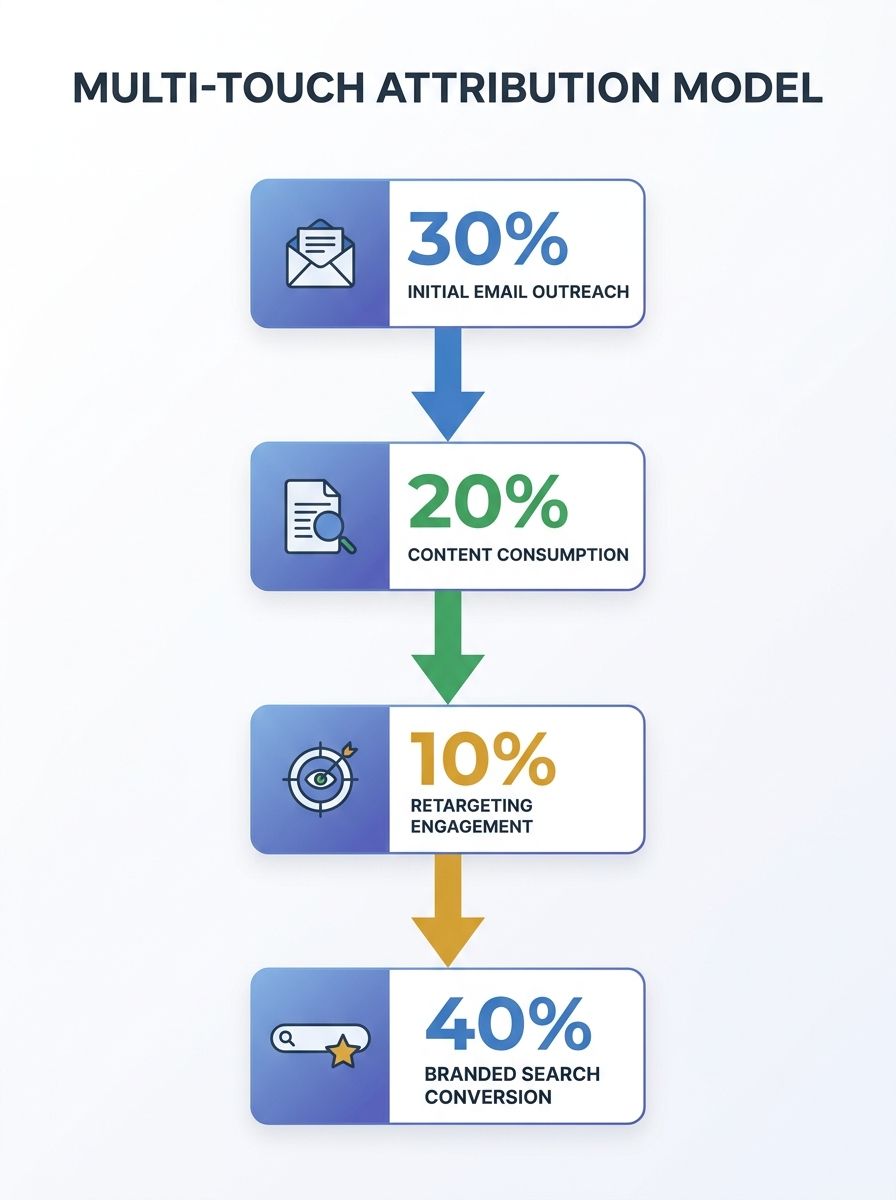
Multi-touch attribution models solve the framing error by asking "What sequence of touches moved this account toward revenue?" rather than "What was the last thing the buyer did?" The approach assigns fractional credit across the full path, letting teams measure channel influence rather than channel proximity to conversion.
Touchpoint Tracking Requirements
The framework defines a touchpoint as any recorded interaction that helps move an account forward. Trackable events include outbound engagement such as cold email opens, clicks, or replies; website behavior including landing page visits, pricing page sessions, or repeat returns; content consumption such as case study downloads or webinar attendance; sales interactions including booked calls or opportunity stage changes; and paid media actions such as ad clicks or retargeting impressions before direct returns.
The analysis notes that stitching these events together matters more than measuring them in isolation. A prospect might ignore the first two outbound messages, visit the website from a forwarded email, return through branded search, then convert after sales sends a calendar link. If reporting can't connect those events, teams optimize each channel separately and miss how they function as a system.
Attribution models range from simple first-touch (credits the initial interaction) and last-touch (credits the final action) to weighted approaches including linear (equal credit to all touchpoints), time-decay (more credit to recent touches), U-shaped (splits credit between first and last touch with smaller shares for middle interactions), and W-shaped (credits first touch, opportunity creation, and close).
The report recommends aligning attribution stages with existing funnel definitions, inquiry, marketing-qualified lead, meeting booked, opportunity created, closed-won, rather than adopting generic traffic metrics. Organizations already tracking pipeline stages can map touchpoint influence against those milestones to show which channels create awareness, which validate problems, and which lower risk enough for buyers to book meetings.
The digital ad attribution windows analysis published earlier this month documented similar measurement issues in performance campaigns, where overlapping attribution windows count the same conversion multiple times across channels. The startup content attribution framework released in May offered a parallel four-step system for tying editorial output to pipeline value in early-stage companies.
Marketing Implications
B2B marketing teams relying on last-click reporting are systematically defunding the channels that create initial buyer intent. When 70% of conversions involve multiple touchpoints, crediting only the final interaction guarantees budget flows toward bottom-of-funnel capture channels while starving top-of-funnel prospecting and nurture programs. The resulting underinvestment in outbound email, content education, and early-stage engagement shrinks pipeline creation over time even as retargeting and branded search efficiency metrics appear stable.
The practical fix requires stitching touchpoint data across email platforms, CRM systems, website analytics, and sales activity logs into unified buyer journey records. Marketing operations teams should prioritize attribution model selection based on which channels their organization actually runs, pay-per-meeting models need different credit allocation than content-led inbound programs, rather than adopting industry-standard frameworks that don't match their buyer path structure.
Implementation begins with mapping existing conversion journeys backward from closed deals to identify which touch sequences consistently appear in won opportunities. First-party data integration becomes essential as third-party tracking degradation accelerates; organizations that connect owned channel data see clearer attribution paths than those dependent on cross-site cookies. Teams should expect initial results to reallocate 15-30% of attributed value away from branded search and direct traffic toward earlier-stage channels currently invisible in last-click reports.

Sarah Chen
SEO strategist and web analytics expert with over 10 years of experience helping businesses improve their organic search visibility. Sarah covers keyword tracking, site audits, and data-driven growth strategies.
Related Articles

Email Marketing Teams Abandon Open Rates as Primary KPI Following Privacy-Driven Metric Collapse
B2B email marketing teams are replacing open rate tracking with conversion-focused metrics including click-to-open rate, revenue attribution, and deliverability health indicators, according to a June 17 analysis published by MarketBoats. Open rates jumped from 28% to 55% following Apple's Mail Priva

HubSpot Marketing Hub Deployments Show Widespread Attribution Configuration Gap, Pedowitz Group Audit Finds
The Pedowitz Group reported June 15 that multi-touch revenue attribution remains misconfigured in most HubSpot Marketing Hub Enterprise deployments the firm has audited, with organizations running the platform for 12 to 24 months unable to answer which marketing programs influenced quarterly pipelin

Startup Content Attribution Framework Ties Editorial Output to Pipeline Value in Four-Step Tracking System
A comprehensive framework for tracking content performance from traffic through closed revenue appeared June 6, 2026, addressing startup founders' struggle to justify editorial budgets in cash-constrained environments, according to a guide published by Mean CEO. The methodology connects web analytic
Explore more topics