
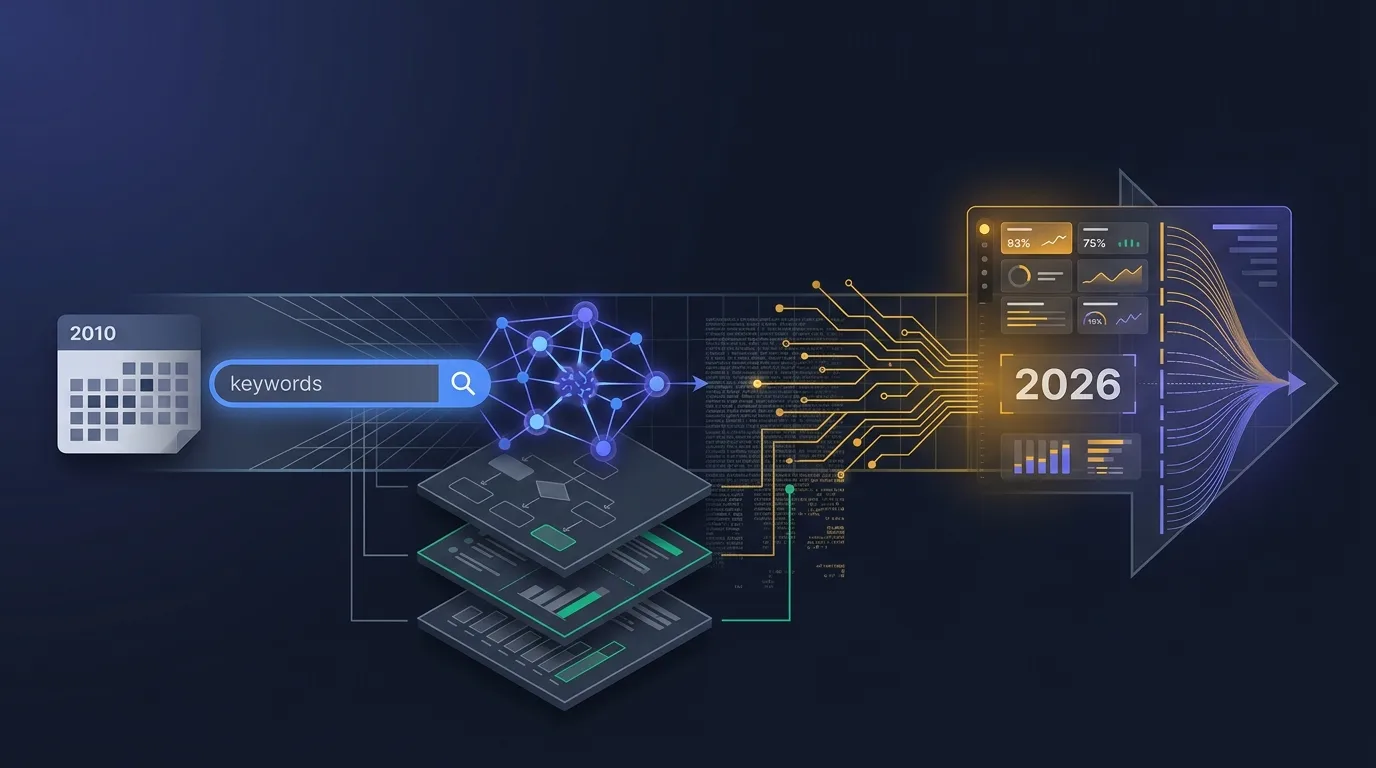
Content Marketing Evolution Framework Maps Three Disruption Phases from 2010 Keyword Tactics to 2026 AI Flood
Payel Mukherjee, founder and CEO of Justwords, published a three-phase framework July 4 documenting how content marketing shifted from keyword-driven SEO tactics in 2010 to AI-generated content saturation in 2026, according to analysis on Adgully. The framework identifies 2010-2020 as the "Era of Mo
Content Marketing Evolution Framework Maps Three Disruption Phases from 2010 Keyword Tactics to 2026 AI Flood
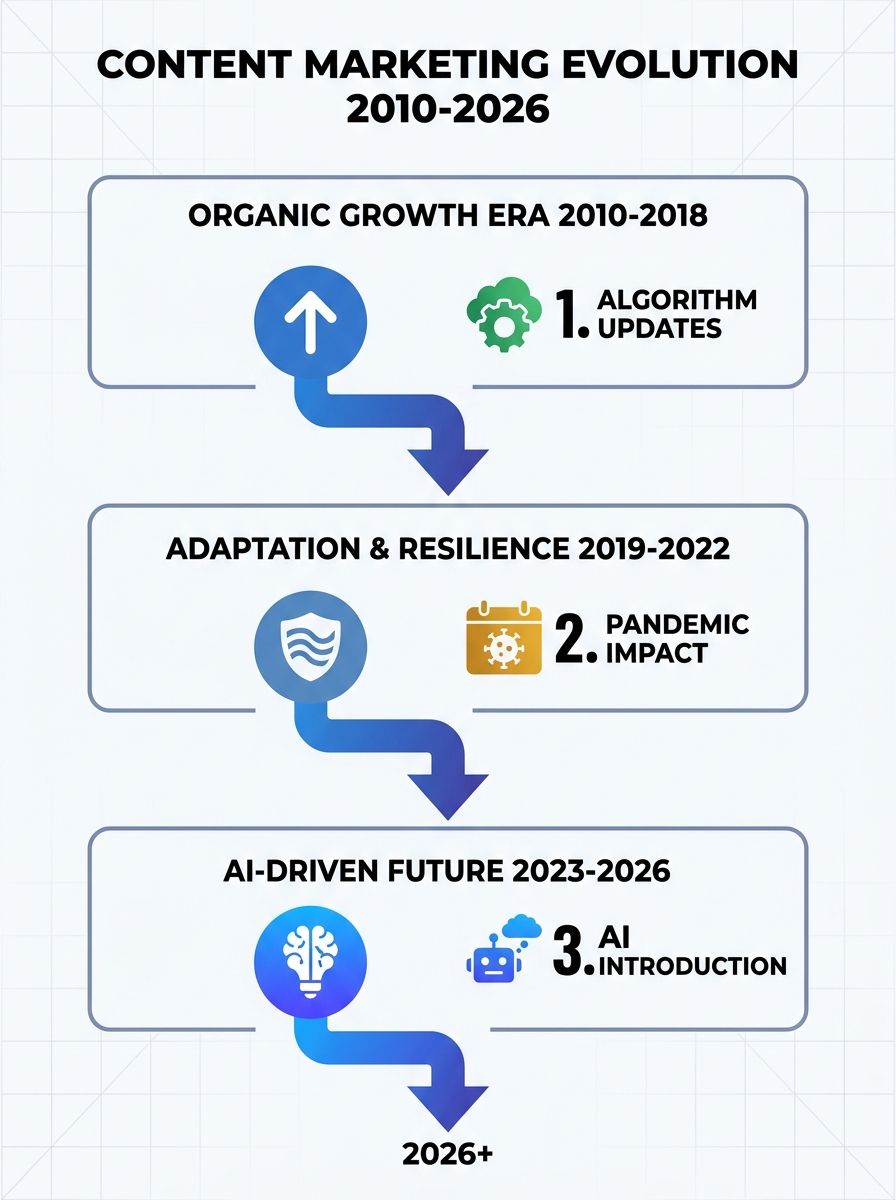
Payel Mukherjee, founder and CEO of Justwords, published a three-phase framework July 4 documenting how content marketing shifted from keyword-driven SEO tactics in 2010 to AI-generated content saturation in 2026, according to analysis on Adgully. The framework identifies 2010-2020 as the "Era of More," 2020-2022 as the "Great Acceleration," and 2023-2026 as the period when AI fundamentally altered content economics.
The framework draws from Justwords' operations since 2010, when Mukherjee launched the agency as content marketing remained largely unknown in India's business market. The analysis tracks how Google algorithm updates, mobile adoption, social platform changes, pandemic acceleration, and generative AI each reshaped what constitutes effective content strategy.
Phase One: SEO Dominance and Algorithm Corrections
From 2010 through 2020, content marketing operated primarily as an SEO execution discipline, the analysis states. Early tactics centered on keyword density, thin content publication, and link acquisition regardless of quality. Google's Panda and Penguin updates penalized manipulative practices, forcing a shift toward user intent.
Google formalized the expertise, experience, authoritativeness, and trustworthiness (E-E-A-T) framework in 2018, signaling that algorithmic gaming strategies were ending. By 2020, 50% of Google searches concluded without a click, according to the framework—a trend that would accelerate in subsequent years.
Social platforms introduced passive content consumption during this phase. Facebook crossed one billion users by 2012, while LinkedIn became the default B2B platform. Video content and influencer marketing emerged as trust signals began shifting from corporate brands to individual creators. Mobile traffic surpassed 50% of web traffic by decade's end, requiring content optimized for short-burst consumption.
Pandemic Acceleration Compressed Digital Transformation Timeline
The 2020-2022 period forced businesses into digital-first operations within days. McKinsey research cited in the framework characterized the shift as "a decade in days"—the pace at which organizations adopted digital transformation strategies they had previously resisted.
In-person events, trade shows, and cold-call outreach vanished overnight. B2B sales cycles moved entirely online. Brands with established content foundations—blogs, email lists, audience relationships—maintained continuity while competitors started from zero, the analysis notes.
Audience expectations shifted toward trust signals and transparent communication. Brands that prioritized customer needs over sales messaging emerged stronger from the period. Organic reach declined across social platforms as paid distribution became necessary for visibility.
AI Content Flood Drives Zero-Click Search Rate to 26%
Generative AI tools introduced in 2023 flooded the internet with content that "looked right, read smoothly, and said nothing new," according to Mukherjee's framework. Marketing teams published AI-generated copy and statistics without verification, including fabricated data. Brand differentiation collapsed as automated content production homogenized messaging across industries.
Zero-click search rates reached 26% of modern searches by 2026, the analysis states. Google's AI Overview feature answers informational queries directly on results pages before users reach websites. The shift mirrors earlier trends—featured snippets and answer boxes already captured half of search traffic by 2020—but AI acceleration compressed the timeline.
The framework positions this third disruption as fundamentally different from prior algorithm updates or platform changes. Where Panda and Penguin penalized specific tactics, and pandemic shifts altered distribution channels, AI tools changed content production economics entirely. Volume became trivial to generate while value became harder to demonstrate.
Organizations that invested in distinctive expertise, original research, and trust-building content during earlier phases maintained differentiation, the analysis concludes. Those relying on volume-based tactics face commoditization as AI tools eliminate production barriers. The framework aligns with broader industry shifts toward AI visibility strategies that prioritize citation and extraction over traditional ranking metrics.
The Takeaway
Mukherjee's framework documents a sixteen-year trajectory from keyword manipulation to AI saturation, with each disruption forcing content marketers to rebuild strategies around new constraints. The zero-click search rate climbing to 26% represents more than a metric shift—it signals that traditional content distribution models built on website traffic no longer align with how search engines deliver information.
The pattern across all three phases shows that brands treating content as a volume game consistently lose ground to those building authority through expertise and trust. Google's E-E-A-T formalization in 2018, pandemic-era communication demands in 2020, and AI content flooding in 2023 each punished shortcuts while rewarding substantive strategy. Marketing teams facing AI-driven content automation workflows must reconcile production efficiency with differentiation requirements—a tension the framework suggests will define the next evolution phase.
Organizations evaluating 2026 content strategies should note the framework's central pattern: each disruption accelerated the timeline from tactic deployment to commoditization. What took a decade in the keyword era took two years during the pandemic and months once AI tools launched. The velocity of change itself has become the strategic variable.

Alex Chen
Alex Chen is a digital marketing strategist with over 8 years of experience helping enterprise brands and agencies scale their online presence through data-driven campaigns. He has led marketing teams at two successful SaaS startups and specializes in conversion optimization and multi-channel attribution modeling. Alex combines technical expertise with strategic thinking to deliver actionable insights for marketing professionals looking to improve their ROI.
Related Articles
Content Frameworks Built for 2019 Featured Snippets Now Reduce AI Overview Click-Through
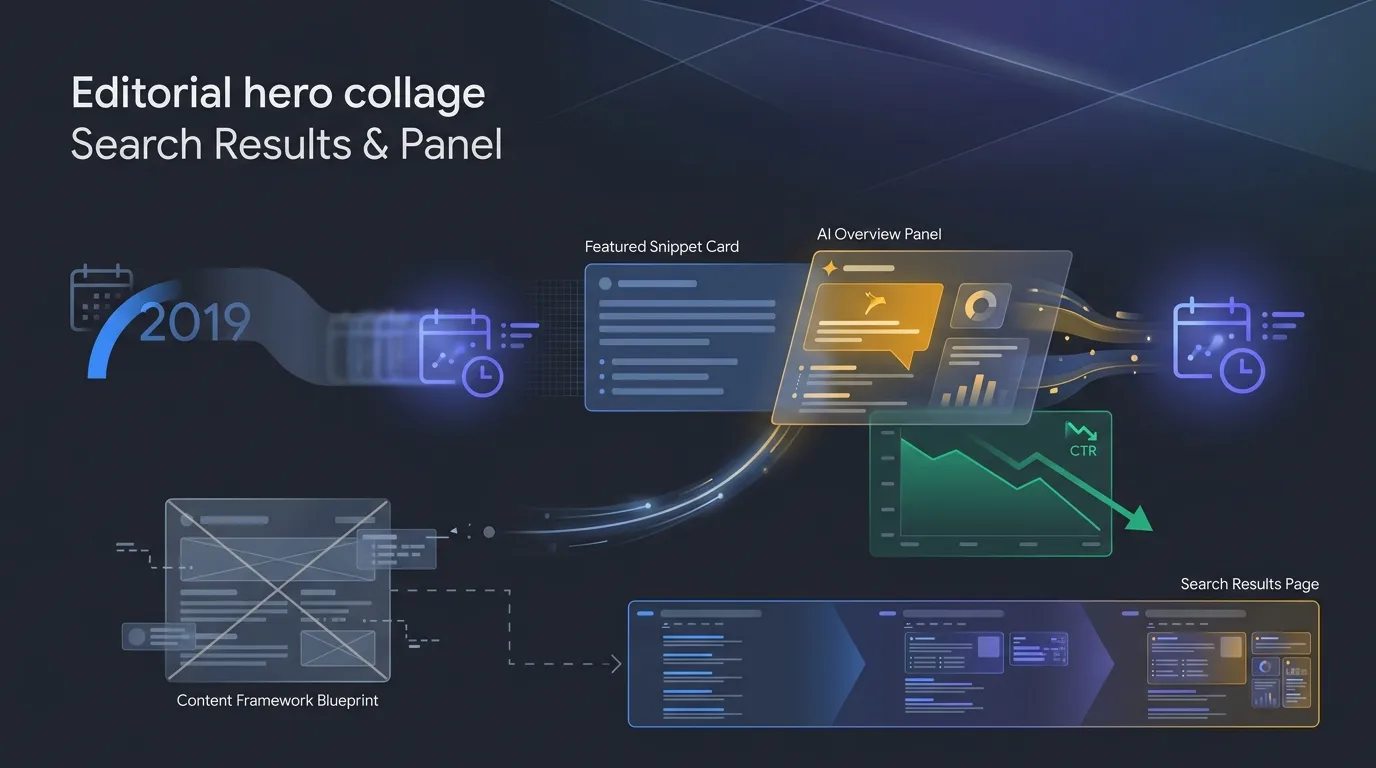
Content frameworks optimized for featured-snippet extraction in 2019 now undermine click-through from AI Overviews appearing in 2.5 billion users' search results, according to a June 20 analysis published on Search Engine Journal examining how "answer the query in 40 words at the top" strategies lea

Brands Ranking #1 on Google Appear in Only 31% of AI Search Responses, NP Digital Study Finds
Brands holding the top position in Google search results appear in AI-powered search responses just 31% of the time, according to a March 2026 experiment conducted by digital marketing agency NP Digital that tested 500 commercial keywords across five industries against 4,308 long-tail AI prompts. Th
Seventy-Three Percent of Marketers Now Prioritize AI-Generated Answer Optimization as Google Query Volume Reaches Record High
Seventy-three percent of marketers now prioritize content designed to appear in AI-generated search answers, according to a July 21 analysis by SEO Essex citing 2026 Interactive Advertising Bureau data, as Google search query volume reaches an all-time high despite declining click-through rates on t
Explore more topics