
Content Frameworks Built for 2019 Featured Snippets Now Reduce AI Overview Click-Through
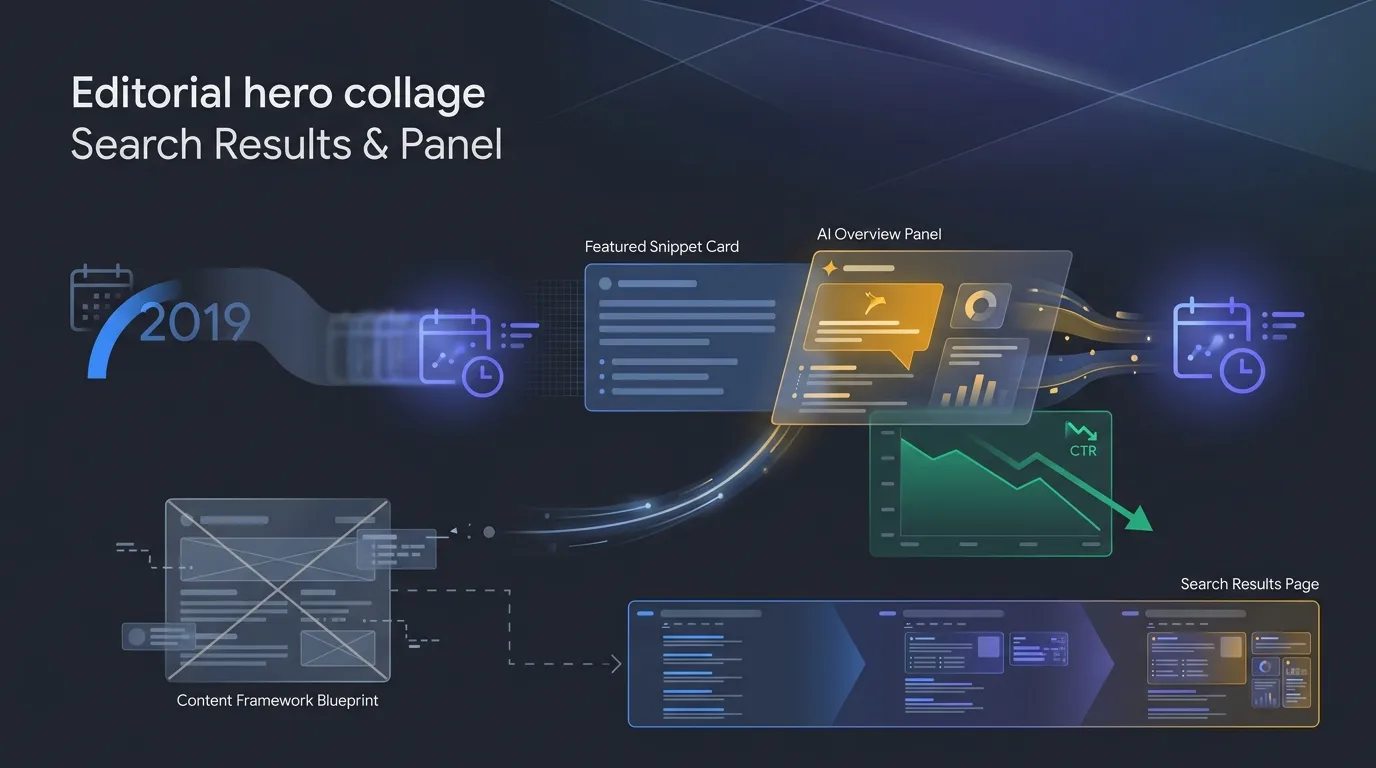
Content frameworks optimized for featured-snippet extraction in 2019 now undermine click-through from AI Overviews appearing in 2.5 billion users' search results, according to a June 20 analysis published on Search Engine Journal examining how "answer the query in 40 words at the top" strategies lea
Content Frameworks Built for 2019 Featured Snippets Now Reduce AI Overview Click-Through
Content frameworks optimized for featured-snippet extraction in 2019 now undermine click-through from AI Overviews appearing in 2.5 billion users' search results, according to a June 20 analysis published on Search Engine Journal examining how "answer the query in 40 words at the top" strategies leave pages with nothing to offer users after the summary.
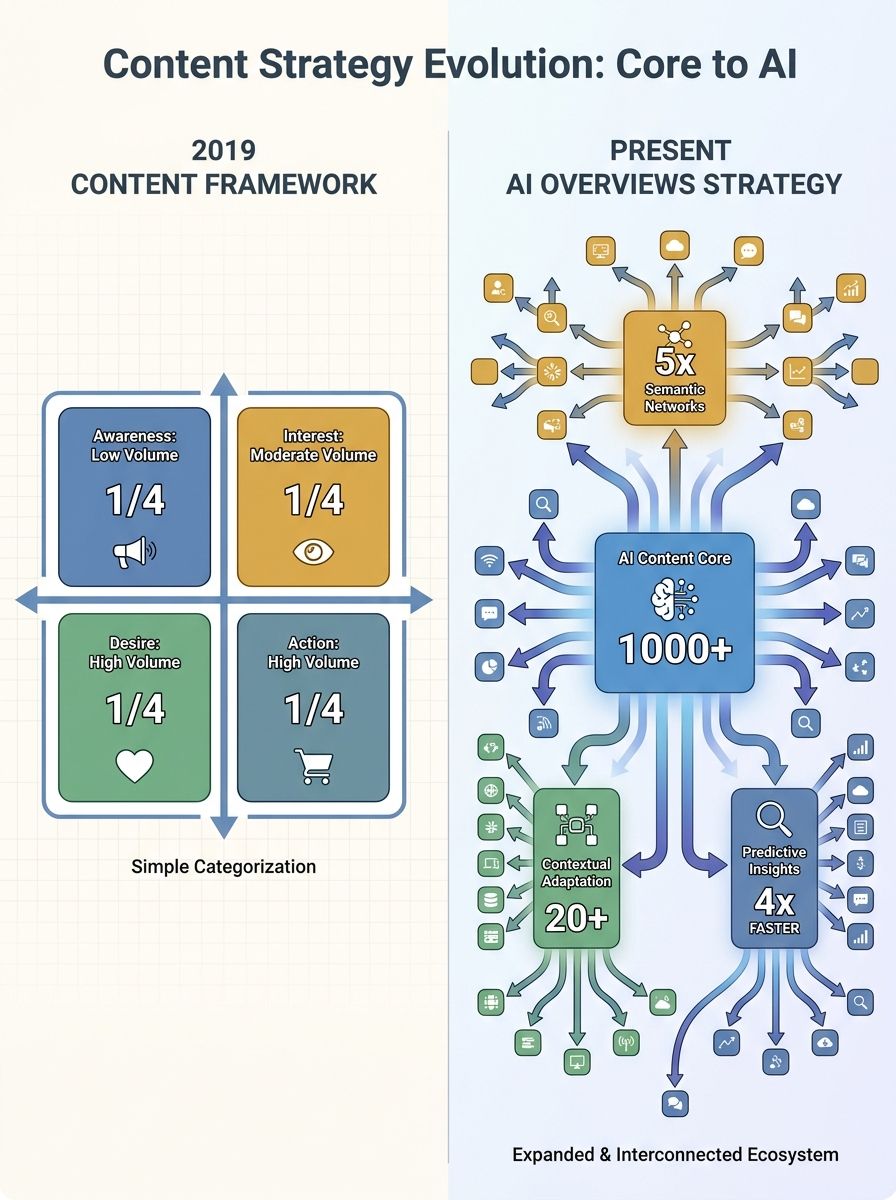
The analysis traces a 14-year evolution from simplified categorical frameworks to data-expanded models, illustrating how static content structures fail when underlying datasets and extraction mechanisms change. LinkedIn entrepreneurship content grew 70% year-over-year while weekly posters saw 4× more profile views, according to LinkedIn editor Taylor Borden's data cited in the piece, yet practitioners applying outdated frameworks to the shifted landscape systematically miss emerging patterns.
From Four Categories to 39 Emotions
A 2009 contribution to Guy Kawasaki's book "Enchantment: The Art of Changing Hearts, Minds, and Actions" outlined four video content categories—inspire, educate, enlighten, entertain—that felt complete at publication. By 2023, the same practitioner had expanded emotional content taxonomy to 39 distinct categories based on accumulated evidence, the analysis shows.
The 35-category gap across 14 years demonstrates how frameworks reflect dataset size at creation rather than comprehensive classification. "The four-category framework wasn't wrong when I wrote it. It was just the size of the dataset I had access to at the time," the Search Engine Journal piece states. The error lies in treating initial frameworks as finished products rather than provisional snapshots.
Featured Snippet Optimization Now Works Against AI Overview Performance
The "answer in 40 words at the top of the page" framework succeeded in the featured-snippet era by frontloading complete query responses. AI Overviews extract that summary content directly, then reward pages users click through to after reading the Overview—specifically rewarding depth beyond the extracted summary, according to the analysis.
Pages engineered to deliver complete answers in opening paragraphs become, by design, pages with nothing remaining to offer users who already consumed that answer in the Overview itself. "A page built to win the old framework is, by design, the page with nothing left to offer that user," the piece states. The framework optimized for one extraction mechanism actively undermines performance in the successor mechanism.
The Dual-Engine Visibility Strategy examined parallel optimization paths for both traditional search results and AI Overview extraction, finding that post-summary value determines click-through in the latter environment. The distinction matters as AI Overviews now appear for 2.5 billion users, according to the Search Engine Journal analysis.
Updating Frameworks With New Evidence
The analysis recommends two immediate actions for content strategists. First, audit the oldest published framework pieces—particularly those from 2019-2021—against research published in the past 12 months, explicitly documenting what changed and why rather than defending original versions. Second, frame all categorical content as provisional snapshots rather than complete conclusions.
"Find something you believe confidently. Then find the research that complicates it. Write about the gap, honestly, including the part where you were wrong or incomplete," the piece advises. That approach provides topic material (existing belief), hook (contradicting data), and credibility that polished frameworks lack because readers distinguish position defense from genuine updating.
Organizations with documented content strategies report nearly double the effectiveness rate compared to those without formal frameworks, according to Content Marketing Institute research, but the June 20 analysis suggests effectiveness depends on framework refresh cadence matching data accumulation rate. Static frameworks applied to evolved datasets produce the documented-but-ineffective category.
Reading Between the Lines
The timing of this framework-obsolescence analysis coincides with the first full quarter of widespread AI Overview deployment across Google Search, creating the first substantial dataset on what content patterns survive the pre-summary → post-summary user journey. Practitioners who spent 2023-2024 optimizing for featured-snippet extraction now face the ironic outcome that success at the old objective directly undermines performance at the new one.
The deeper pattern extends beyond SEO-specific frameworks to any structured content methodology built for a particular platform state. Email open-rate optimization frameworks collapsed when privacy updates made that metric unreliable; last-click attribution models systematically undervalue outbound channels in B2B environments; comparison content strategies built around obvious head-term matchups miss long-tail opportunities. Each case follows the same arc: initial framework fits available data, data expands or platform shifts, framework application without update produces actively counterproductive results.
The operational challenge is distinguishing frameworks that need expansion (four categories to 39) from those that need complete replacement (featured-snippet optimization to post-summary depth). Expansion works when the underlying mechanism stays constant but measurement improves; replacement becomes necessary when the mechanism itself changes. AI Overviews represent a mechanism change—the content that gets extracted versus the content that gets clicked shifted roles—making this a replacement scenario rather than an expansion one.

Sarah Chen
SEO strategist and web analytics expert with over 10 years of experience helping businesses improve their organic search visibility. Sarah covers keyword tracking, site audits, and data-driven growth strategies.
Related Articles

Content Marketing Evolution Framework Maps Three Disruption Phases from 2010 Keyword Tactics to 2026 AI Flood
Payel Mukherjee, founder and CEO of Justwords, published a three-phase framework July 4 documenting how content marketing shifted from keyword-driven SEO tactics in 2010 to AI-generated content saturation in 2026, according to analysis on Adgully. The framework identifies 2010-2020 as the "Era of Mo

MarTech Publishes Four-Part Diagnostic Framework Separating Traffic Decline Root Causes
MarTech published a four-part diagnostic framework on July 20 that separates organic traffic decline into distinct root causes requiring different remediation strategies, according to content strategist Ashish Jacob's analysis, adding zero-click SERP features as a fourth category alongside the tradi

AI Content Refresh Framework Published for Funding Industry SEO Maintenance
A five-part AI content refresh framework published June 25 by DistilledFunding targets funding-industry articles losing search rankings through outdated claims, weak meta descriptions, and broken conversion paths, according to the methodology post. The framework automates identification of stale fin
Explore more topics