
The Search Intent Mismatch Audit: Finding Hidden Revenue Loss in Your Top-Ranking Pages
Ranking #1 on Google for a keyword tells you nothing about whether that page will convert your email subscribers. Email marketers instinctively link to their highest-performing organic pages in campaigns, treating search visibility as a proxy for conversion readiness.

The Search Intent Mismatch Audit: Finding Hidden Revenue Loss in Your Top-Ranking Pages
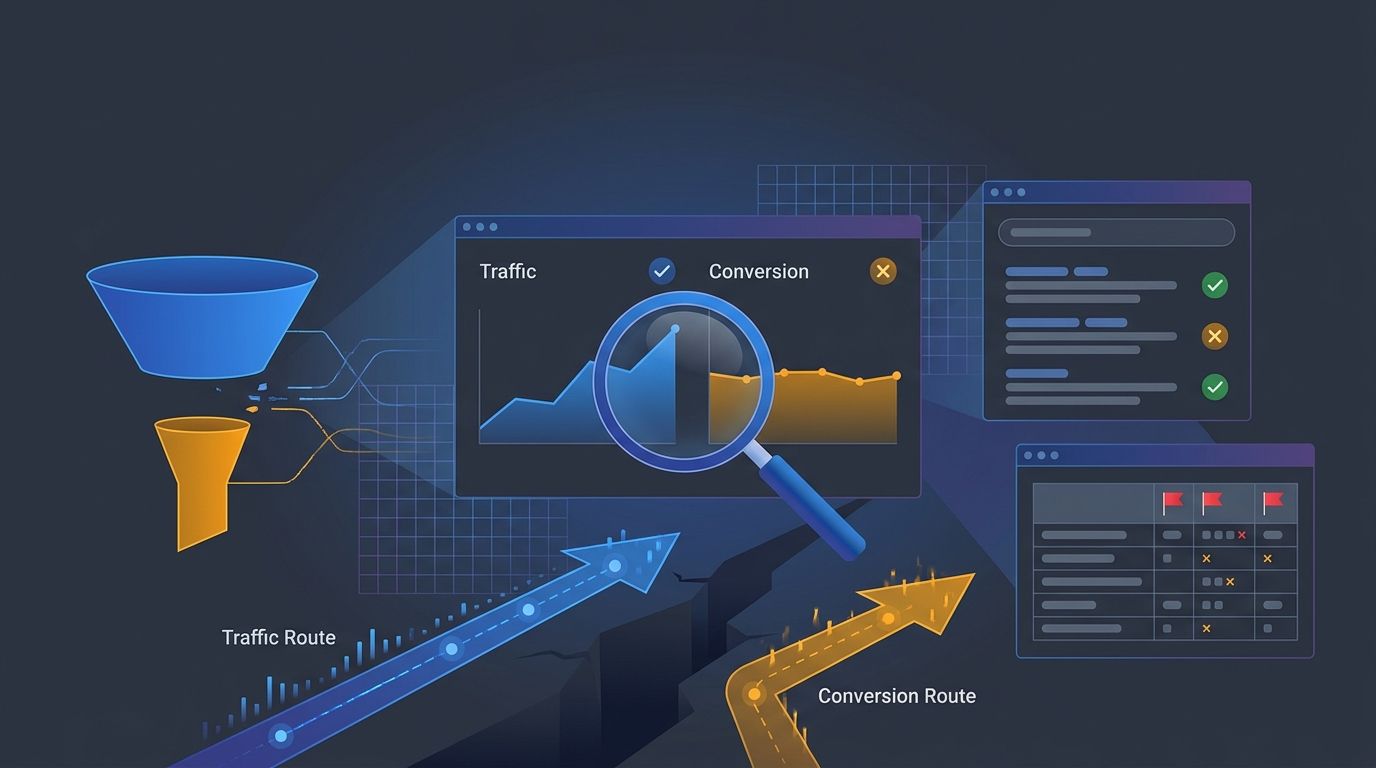
Ranking #1 on Google for a keyword tells you nothing about whether that page will convert your email subscribers. Email marketers instinctively link to their highest-performing organic pages in campaigns, treating search visibility as a proxy for conversion readiness. The logic feels airtight: Google validated this content, so it must be good. But the intent a page was built to satisfy for organic searchers and the intent your email subscribers carry when they click through are often completely different things, and that mismatch is a silent, compounding source of SEO revenue leakage that most teams never diagnose.
A subscriber who opens your promotional email about running shoes and clicks a link arrives ready to compare models, check prices, maybe buy. They land on your page ranking #1 for "best running shoes"—a page Google rewards because it answers an informational browsing question with a thorough guide. The subscriber scans the 2,400-word educational overview, doesn't find a clear path to purchase, and bounces. Your email dashboard shows a healthy click-through rate. Your revenue dashboard shows nothing happened. The ranking vs conversion gap widens a little more, and nobody flags it because both the SEO team and the email team are hitting their own isolated metrics.
A structured search intent audit of the pages your email campaigns actually link to will expose exactly where this revenue disappears.
The 25x Conversion Difference Your Email Campaigns Inherit
The data on intent-matched versus intent-mismatched content is stark. Grow and Convert documented results across 64 articles produced for a single client: bottom-of-funnel content converted at 4.78% compared to 0.19% for top-of-funnel content. That's a 25x difference in conversion rate. And here's the detail that matters for email marketers specifically: the bottom-of-funnel pages received 7x less organic traffic yet generated more than 3x the total conversions.
Now apply this to your email program. Your subscribers aren't cold organic visitors discovering your brand through a search query. They've already opted in. They've already signaled buying intent by engaging with your emails. When you route these high-intent readers to a page optimized for informational search queries, you're actively downgrading their experience. You're sending a buyer to a classroom.
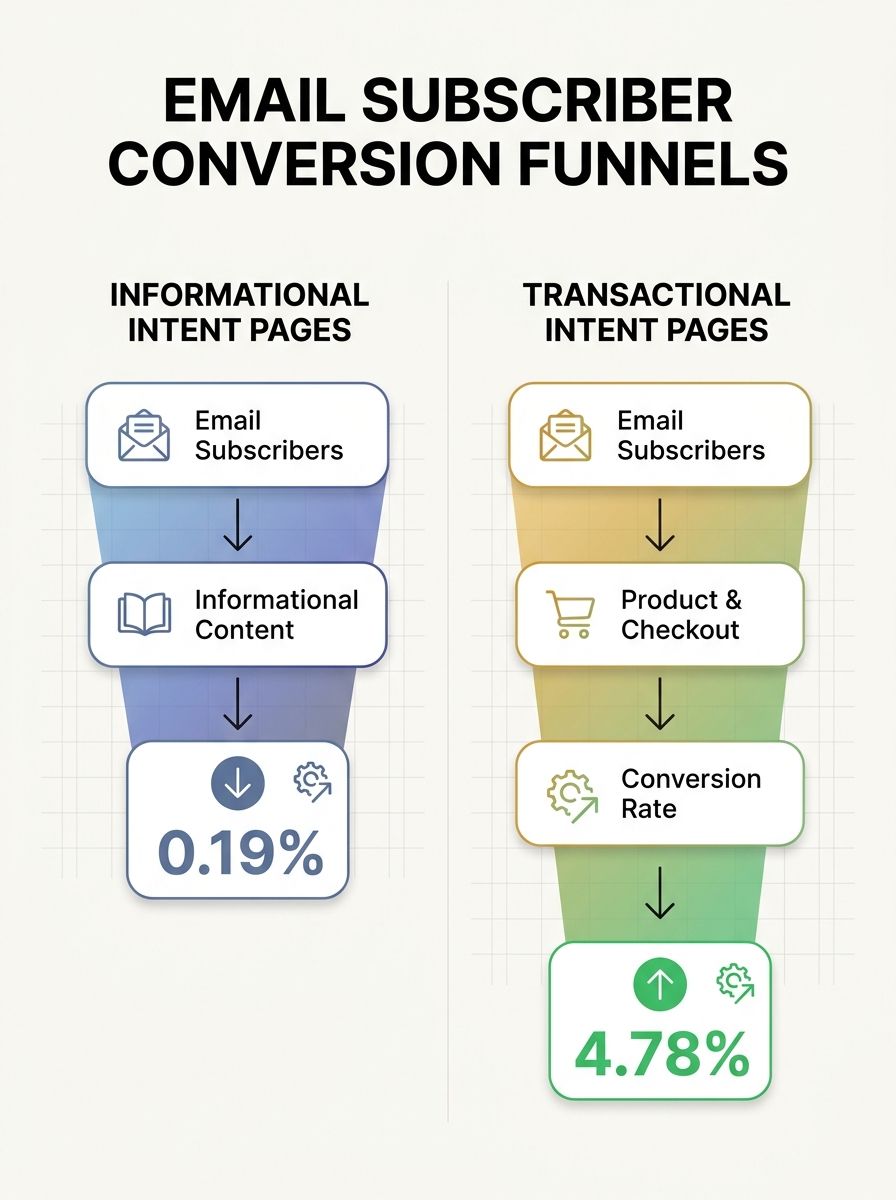
An online shoe retailer provides a textbook example of this failure mode. The company targeted "best running shoes" with product pages but structured the content to rank for what is fundamentally an informational query. The result, as documented by Perfect Search Media, was poor conversion and high bounce rates despite strong search volume. The page ranked well. It failed at everything else. And every email campaign that linked to that page imported the same conversion failure into a channel that should have performed far better.
This pattern is especially destructive because email marketers typically measure campaign success at the click level. If your email drove 2,000 clicks to a landing page, that feels like a win. But if the page those clicks landed on was architected for a different intent, you've essentially built a funnel with a hole in the middle. When you're prioritizing keywords based on search intent and business impact, the intent classification needs to carry through to how those pages get used in email campaigns too.
How to Run the Audit on Your Email Landing Pages
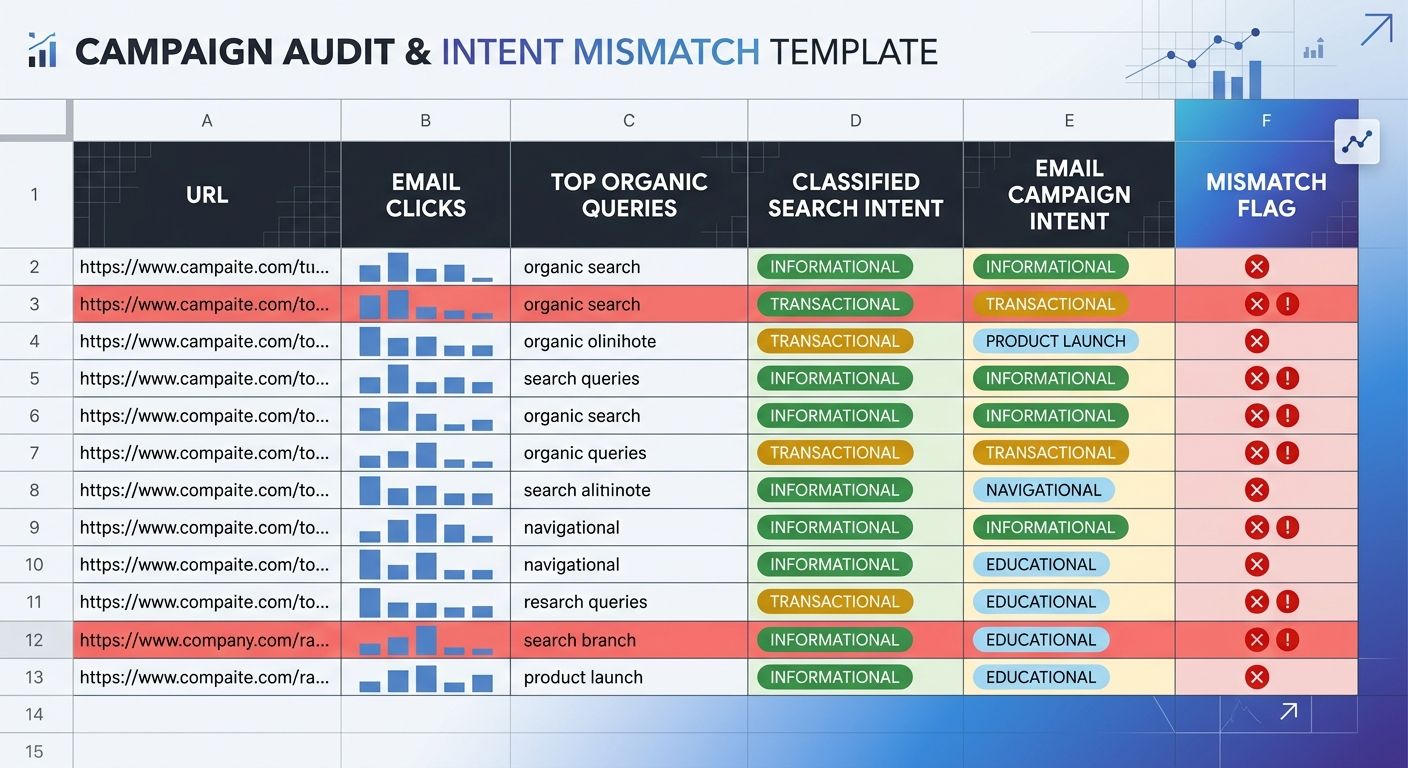
The audit itself isn't complicated, but it requires pulling data from two systems that rarely talk to each other: your email platform and Google Search Console. Here's the process I use with clients.
Step 1: Extract Your Most-Linked Email Pages
Pull every unique URL you've linked to in email campaigns over the past 90 days. Sort by total clicks received from email. Your top 20 pages by email click volume are where you start, because these carry the most revenue exposure. If you're working with a platform like HubSpot or Klaviyo, this export takes about five minutes.
Step 2: Classify the Search Intent Each Page Was Built For
For each of those 20 URLs, open Google Search Console's "Search results" report and filter by page. Look at which queries are driving impressions and clicks to that page organically. The query language tells you the intent Google has matched the page against. If the top queries are "what is," "how to," "best," or "guide," the page is being treated as informational content by Google. If the queries include "buy," "pricing," "vs," "review," or brand + product terms, Google sees it as transactional or commercial investigation content.
Write down the dominant intent classification for each page. Then compare it to the intent of the email that linked to it. A promotional email about a sale driving traffic to an informational guide is a clear mismatch.
Step 3: Check Behavioral Signals for Confirmation
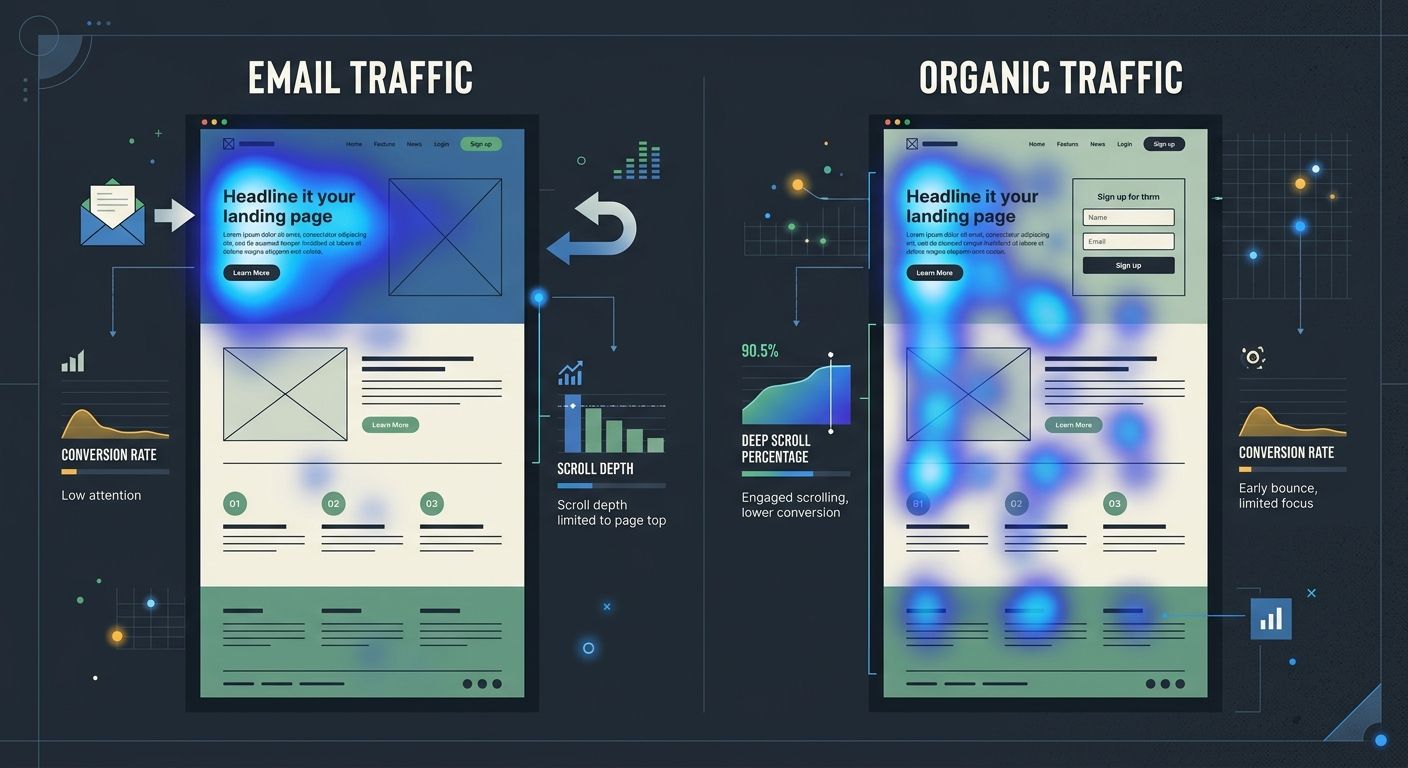
The behavioral data confirms what your intent classification suggests. Pages with intent mismatch tend to show high bounce rates and short dwell times, which Google interprets as a signal that the page didn't meet user expectations. For email traffic specifically, you'll want to look at these metrics segmented by source. In GA4, create a segment for email traffic and compare on-page behavior against organic traffic for the same URLs.
If your email segment shows higher bounce rates than organic on the same page, the mismatch is likely worse for your subscribers than it is for search visitors—because your subscribers arrived with stronger intent and got even less of what they needed. If you've been dealing with silent data loss in your GA4 implementation, fix that first, or the behavioral data you pull will be unreliable.
Step 4: Audit CTA Alignment
This is the step most teams skip. As Astute.co's research on user intent emphasizes, the CTAs on a page need to align with the intent of the ranking keywords. A page ranking for informational queries should have "Learn more" or "Read the guide" CTAs. A page receiving email traffic from a promotional campaign needs "Request a demo," "Start free trial," or "Buy now" CTAs. When a single page tries to serve both audiences, one audience always loses. And it's almost always the email audience, because the page was built for SEO first.
Three Patterns That Confirm Revenue Leakage
After running this audit across dozens of email programs, three patterns show up consistently. If any of these match your data, you've found your leak.
Pattern 1: Strong Email CTR, Weak On-Page Conversion
Your email metrics look healthy. Open rates are solid, click-through rates are above benchmark. But the pages receiving those clicks aren't generating form fills, purchases, or demo requests at the rate they should. The email did its job. The landing page fumbled the handoff. This pattern almost always traces back to a query intent analysis problem: the page was optimized for informational search intent, and your email sent buyers there.
Pattern 2: Organic Impressions Are High, But Organic Clicks Are Low on the Same Pages
JCT Growth's analysis identifies this pattern clearly: pages with high impressions and low clicks or strong rankings but weak engagement frequently reflect intent mismatches. If Google is showing your page to thousands of searchers but few are clicking, the SERP snippet isn't matching what searchers want. When you then link that same page in email campaigns, you're compounding a pre-existing conversion problem with a new audience that has even less patience for misaligned content.
This ties into a broader issue with how your analytics can tell a different story than your case studies suggest. The ranking looks like success. The engagement data tells a different story entirely.
Pattern 3: Mixed On-Page Signals Confuse Both Audiences
Some pages try to rank for informational queries while also closing transactional visitors. They open with educational content, then pivot to a sales pitch midway through. As Marketomon's analysis documents, the main causes of pages ranking for wrong keywords include mixed on-page signals, keyword overload, and weak content focus. These hybrid pages often rank decently because they're long enough to satisfy Google's content depth preferences, but they convert poorly because neither audience gets a clean experience. The informational searcher hits the sales pitch and bounces. The email subscriber who came ready to buy gets stuck reading background information they already know.
The fixes here connect to how you structure your content architecture so Google understands your topic clusters. When each page has a clear, singular intent, both search engines and email subscribers get a coherent experience.
Where This Leaves Your Email-to-Landing-Page Strategy
The thesis holds under pressure: your highest-ranking pages and your best email landing pages should rarely be the same URL. Rankings reward content that satisfies search intent for a broad, often informational audience. Email campaigns target people who've already moved past the awareness stage. Treating these as interchangeable destroys conversion potential in the email channel while creating engagement signals in organic that can eventually erode your search visibility too.
The practical outcome of running this audit is usually a short list of 5-10 high-traffic email landing pages that need dedicated conversion-focused variants. You don't have to rebuild your entire content library. You need to stop routing your highest-intent audience to your lowest-intent pages.
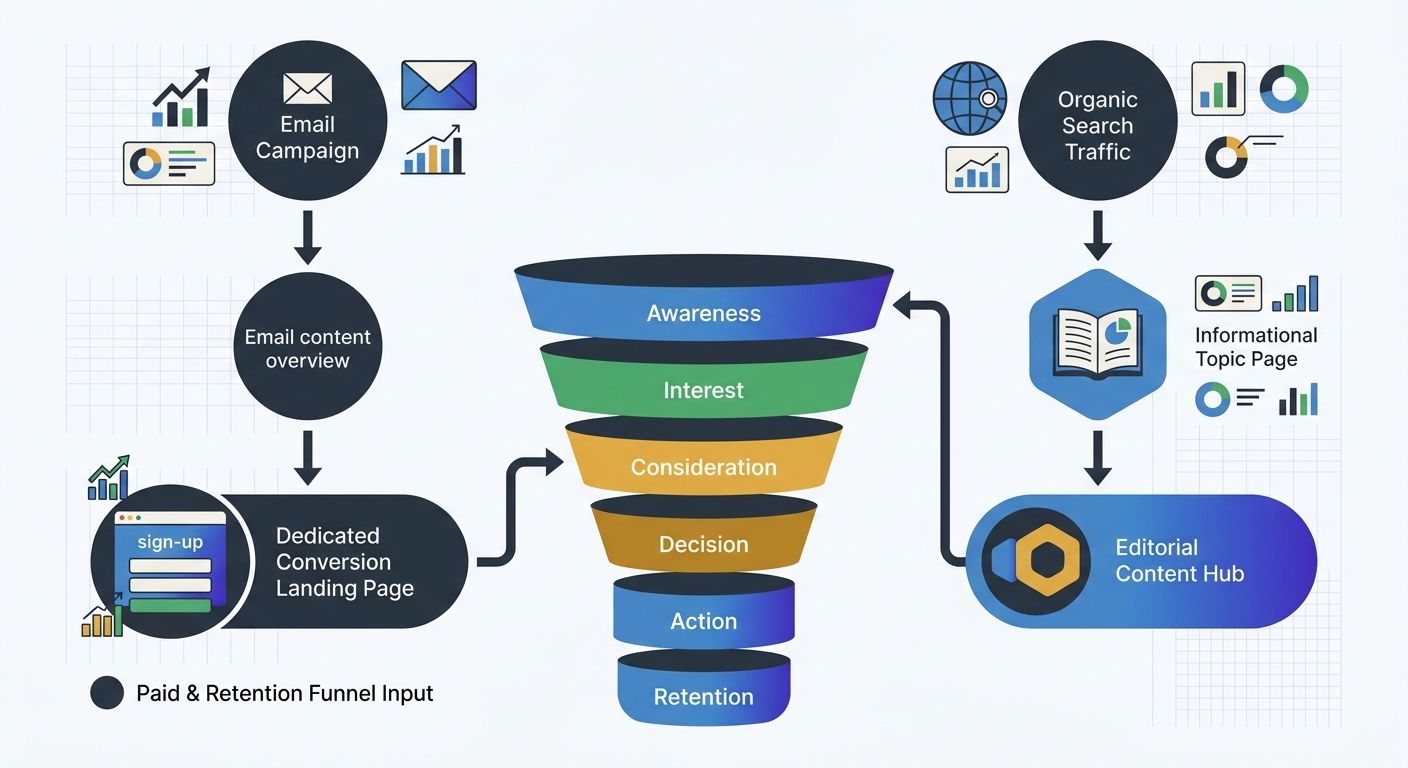
Every quarter, re-run the audit. Pull your top email-linked URLs, classify the search intent they were built for, compare it against the campaign intent, and check the behavioral data. Pages drift over time as SEO teams update content for new queries, and what was once a clean transactional page can slowly accumulate informational signals. When you're adapting your content strategy as search behavior shifts, make sure those shifts don't quietly break your email program's landing page performance in the process.
The teams I've seen recover the most revenue from this audit are the ones that stop treating search rankings as a universal quality signal and start treating intent alignment as a per-channel requirement. A page can be excellent for Google and terrible for your email list at the same time. Recognizing that tension is where the revenue recovery begins.

Alex Chen
Alex Chen is a digital marketing strategist with over 8 years of experience helping enterprise brands and agencies scale their online presence through data-driven campaigns. He has led marketing teams at two successful SaaS startups and specializes in conversion optimization and multi-channel attribution modeling. Alex combines technical expertise with strategic thinking to deliver actionable insights for marketing professionals looking to improve their ROI.
Related Articles

The Search Intent Audit Framework: Recovering Revenue From Pages That Rank But Don't Convert
Backlinko's keyword research guide sat in Google's top three results for months, pulling thousands of impressions per week, while its conversion rate stayed pinned below 1%.

The Content Architecture Data Trap: How Poor Site Structure Silently Kills Your Internal Linking Strategy
Link equity flows top-down through a site hierarchy, with the homepage holding the most authority and each subsequent level receiving progressively less. ClickRank.
The Search Intent Mismatch Audit: Why Your Content Ranks but Doesn't Convert
Pages that rank on page one but convert below 1% don't have a CRO problem. They have a content classification problem, where the page answers the wrong type of question for the person searching.
Explore more topics