
The Dual-Engine Visibility Strategy: Getting Your Content Into Both Google Search and AI Overviews in 2026
Google's own AI optimization guide, published May 15, 2026, explicitly advises site owners against creating separate AI-specific content. That guidance contradicts the central premise of every "AEO specialist" selling parallel content strategies for traditional search and generative AI surfaces.
The Dual-Engine Visibility Strategy: Getting Your Content Into Both Google Search and AI Overviews in 2026
Google's own AI optimization guide, published May 15, 2026, explicitly advises site owners against creating separate AI-specific content. That guidance contradicts the central premise of every "AEO specialist" selling parallel content strategies for traditional search and generative AI surfaces.
The framing is everywhere in 2026 SEO circles: you need a "dual-engine strategy" to survive. One engine for traditional organic rankings. Another for AI Overviews, AI Mode, ChatGPT citations, and Perplexity answers. The implication is that these require different content, different keyword research, different optimization workflows.
The data tells a different story. What actually drives generative AI search visibility across both surfaces is a single content architecture with specific structural properties. The industry's instinct to bifurcate the problem is creating more work without proportionally better results. Three pieces of evidence from the past month make the case.
Google's Guide Explicitly Warns Against Parallel Content
On May 15, Google Search Central published its first official guide to AI search optimization. The document is unusually direct for Google. It states that AEO and GEO are foundational SEO applied to an AI surface, advises against creating llms.txt files specifically for AI crawlers, and discourages "chunked content" designed to be machine-readable at the expense of human readability.
This guidance arrived six days before the May 2026 core update began rolling out on May 21, and three days before Google I/O 2026 on May 19, where the company announced that Search is now AI Search by default. AI Mode serves over 1 billion monthly users. AI Overviews reach 2.5 billion. Gemini 3.5 Flash became the default model in AI Mode globally.
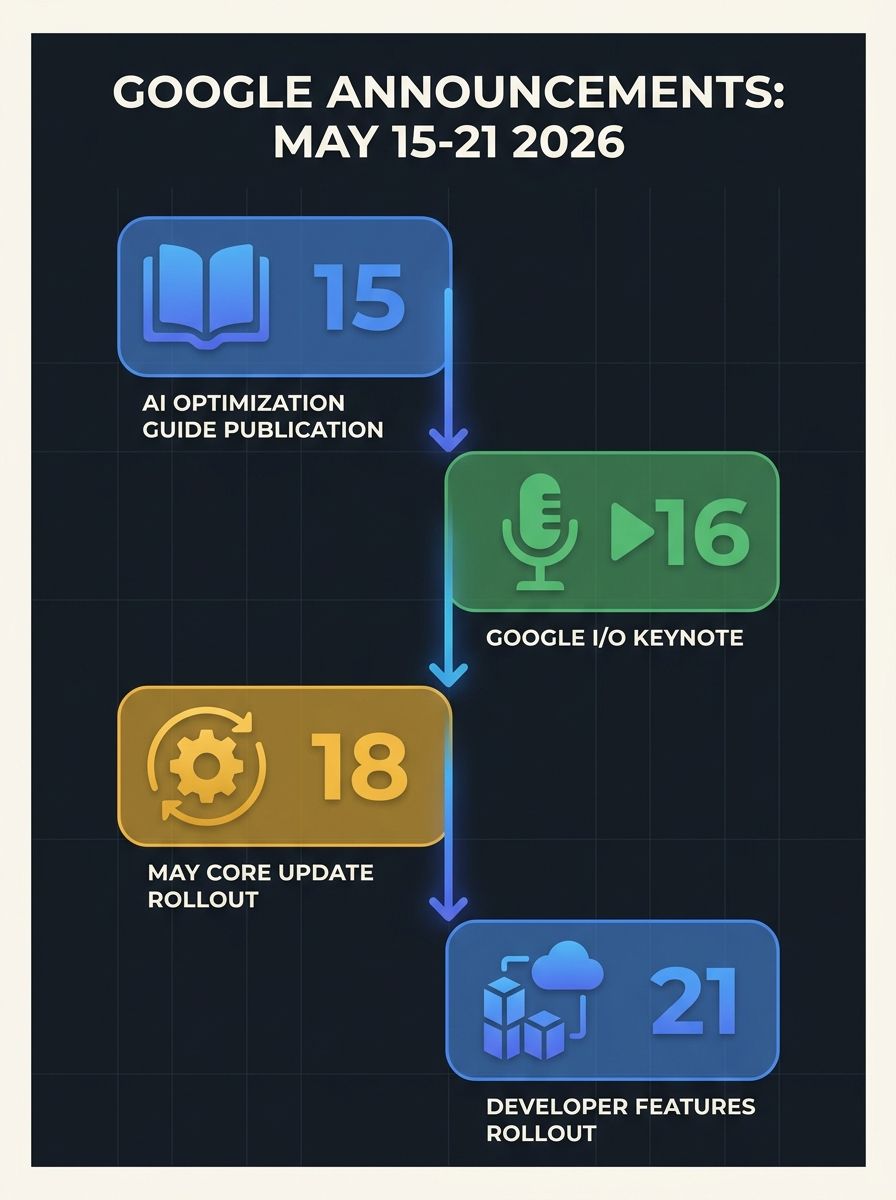
The timing was deliberate. Google wanted the guide in publishers' hands before the update landed. And the guide's central message runs counter to how the AEO consulting market has positioned itself: you don't need a second content strategy. You need your existing content strategy to meet a higher structural bar.
What does that bar look like? The guide emphasizes unique, expert-led content and genuine third-party signals. It rewards content that contains original data, named-expert analysis, and proprietary insight. As Search Engine Land's coverage noted, the new goal in SEO is recognition, not rankings alone. AI systems cite sources they recognize as authoritative on a topic, and that authority is built through the same E-E-A-T signals Google has been refining for years.
For anyone doing AEO keyword research strategy work, this means your keyword targets should identify queries where AI systems seek authoritative sources to cite, as Stackmatix's AEO research framework describes it. But the content you create to answer those queries follows the same structural principles as strong traditional SEO content. The research methodology shifts slightly toward question-phrased queries and definitional topics. The content production itself does not split into two tracks.
The 31% Citation Gap Reveals What AI Systems Actually Extract
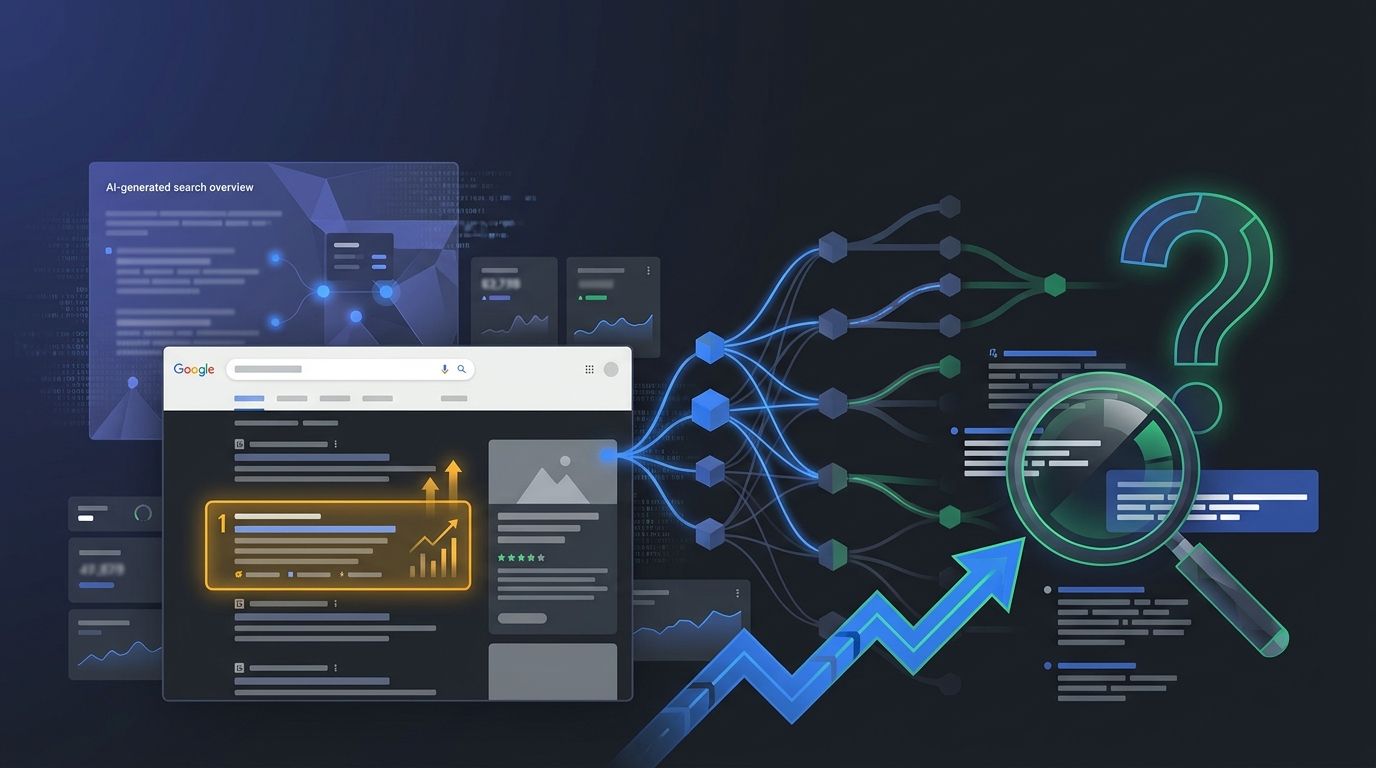
Why does ranking #1 on Google fail to guarantee AI citation? Because AI systems don't extract content the way traditional crawlers index it. The NP Digital study finding that brands ranking #1 appear in only 31% of AI search responses proves ranking alone is insufficient. But the inverse is more revealing: 69% of top-ranking content fails the AI citation test despite already meeting Google's traditional quality bar.
The gap doesn't stem from a missing "AI optimization layer." It stems from structural deficiencies in how content presents its claims. According to industry analyses tracking AI Overview trigger rates, AI Overviews now appear for approximately 47% to 64% of all search queries across desktop and mobile, up from roughly 25% to 30% when the feature rolled out widely in 2024. That's an enormous surface area, and the content getting cited on it shares identifiable traits.
Search Engine Land's analysis of content traits that LLMs quote most found that pages with original data, first-party survey results, branded tips, or proprietary analysis see meaningfully higher citation rates. Generic summary content adds no citation value because AI systems can generate their own summaries. What they can't generate is primary research, named-expert perspectives, and specific quantitative claims tied to identified sources.
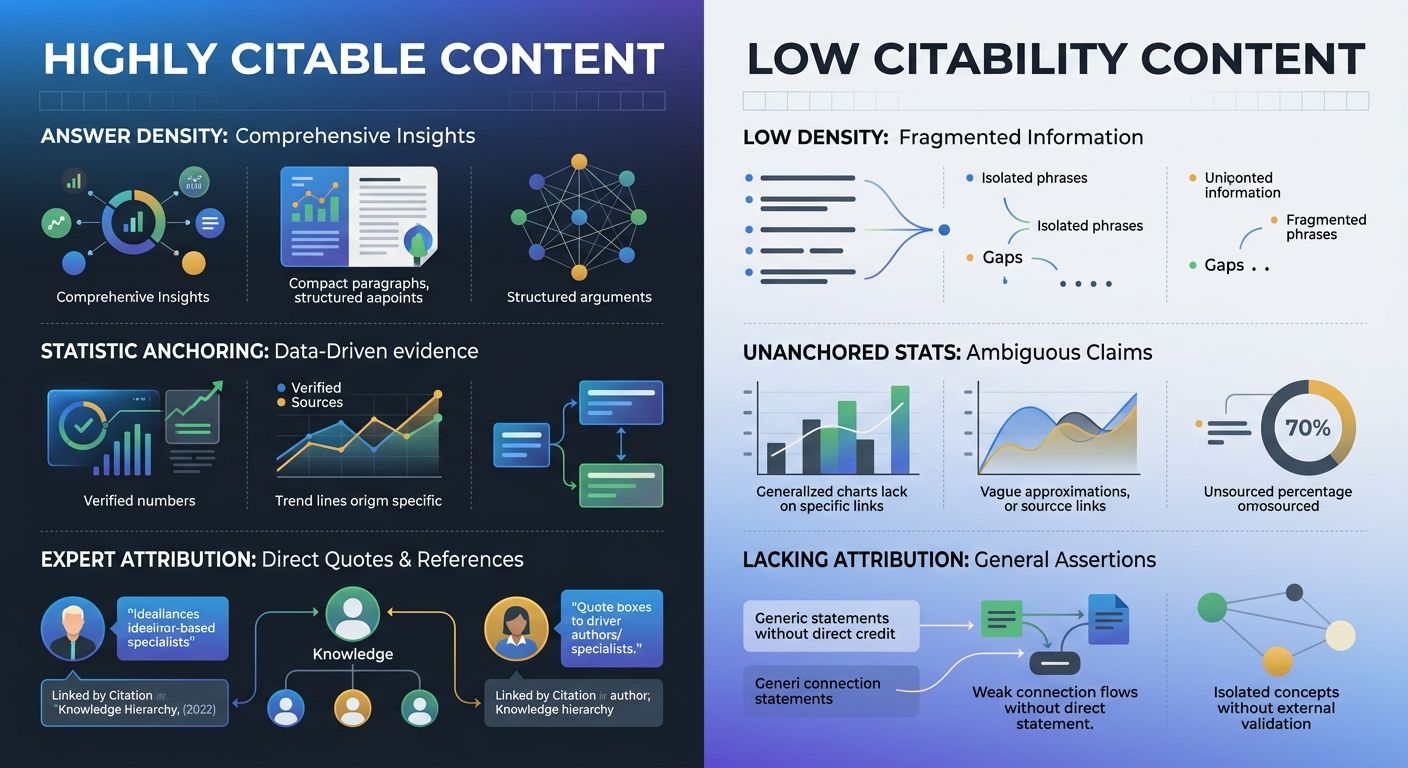
I've been tracking this across client portfolios for the past eight months, and the pages performing well in both traditional search and AI citations share what I've started calling the Citation Readiness Score across three dimensions:
Answer density: Does each H2 section open with a 40-75 word self-contained answer to the question implied by the heading? AI systems extract section-level chunks, and 44.2% of citations come from the first 30% of each section.
Statistic anchoring: Does the page contain at least one named statistic with attribution per 100 words of body content? Pages hitting this threshold see measurably higher extraction rates across ChatGPT, Perplexity, and Gemini.
Expert attribution: Does the page include at least one named-expert direct quote per 600 words? The Princeton/Georgia Tech GEO paper measured this as the single highest-impact optimization for dual-engine SEO 2026, delivering a 42.6% lift in citation rates.
Pages scoring well on all three dimensions don't need a separate AI content track. They're already built to be extracted. The 76% of brands disappearing from ChatGPT and Gemini recommendations are failing on these structural fundamentals, and no amount of AI-specific overlay work fixes that without addressing the underlying content architecture. That's where the real ChatGPT citation tactics conversation should focus: on content structure, not platform-specific tricks.
Measurement Infrastructure Arrived on June 3, With Critical Gaps
Google introduced Search Generative AI Performance Reports in Search Console on June 3, giving site owners their first direct window into AI surface performance. The reports show impressions in AI Overviews and AI Mode. A new opt-out toggle was released simultaneously, allowing publishers to remove content from AI features without affecting organic rankings. That toggle becomes enforceable on June 17, and explicitly excludes the Gemini app.
The reports are useful but incomplete. They provide impressions data without click-through data for AI surfaces. As Search Engine Journal reported, Google is giving sites an AI search opt-out but withholding the data needed to make that decision intelligently. You can see how often your content appears in AI answers. You can't see whether those appearances drive traffic.
GA4 added an AI Assistant channel on May 13 to track traffic from ChatGPT, Gemini, and Claude. But that channel doesn't capture AI Overviews or AI Mode traffic, which remains bucketed under Organic Search. So you're measuring two halves of AI visibility with two different tools, and neither gives you the complete picture.
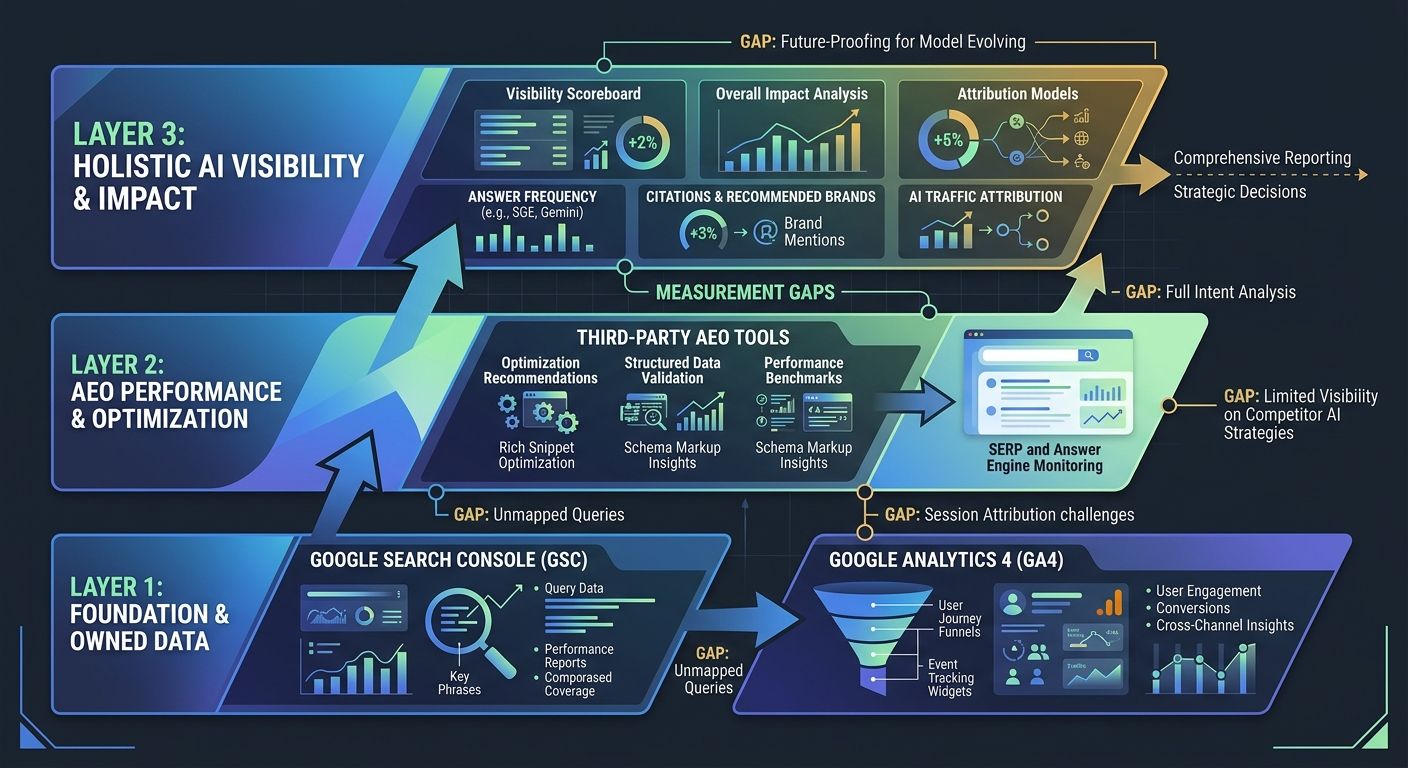
For teams building their measurement stack around this, the practical approach requires three data sources working together:
Data Source | What It Measures | What It Misses |
|---|---|---|
Search Console AI Reports | Impressions in AI Overviews and AI Mode | Click-through rates, traffic value |
GA4 AI Assistant Channel | Referral traffic from ChatGPT, Claude, Gemini apps | AI Overviews traffic (bucketed as Organic) |
Third-party AEO Tools (e.g., HubSpot) | Brand mention frequency across AI platforms | Direct traffic attribution, conversion data |
The March 2026 core update shifted 79.5% of top-three search results, and the May 2026 core update completed its rollout with significant volatility. Two major algorithm reshuffles in three months, plus the launch of AI performance reporting, means most sites are working with baseline data that's less than 30 days old. Any "dual-engine strategy" built on pre-March data is already obsolete.
Teams struggling to coordinate across departments for AI search visibility should note that these measurement tools give different teams different slices of the same picture. SEO teams watch Search Console. Content teams watch GA4. Brand teams watch third-party citation monitors. Without a unified reporting layer, each team optimizes for its own partial view, and that fragmentation produces exactly the kind of disconnected "dual-engine" thinking that wastes resources.
The Dual-Engine Thesis, Reconsidered
The "dual-engine" metaphor implies two separate machines requiring separate fuel. Google's May 15 guide, the 31% citation gap data, and the new measurement infrastructure all point to a different mechanical reality: one engine, two exhaust pipes. The content that earns organic rankings and the content that earns AI citations share the same combustion chamber. What differs is the output format, not the input requirements.
The practical consequence is that teams should stop splitting their content calendars into "traditional SEO content" and "AI-optimized content." Instead, every piece of content should meet the higher structural bar that AI systems require for citation: original data, named-expert quotes, section-level answer architecture, and sufficient statistic density. Content that hits those marks will perform across both surfaces. Content that misses them will struggle in traditional search too, because the same E-E-A-T signals driving AI citation are the signals Google's core updates have been progressively weighting since 2022.
The sites I've watched recover strongest after the May 2026 core update stopped treating AI visibility as a separate project and started treating it as the quality standard their entire content operation needed to reach. The publisher traffic losses of 70% to 89% from Google's May 2026 redesign hit hardest on thin content that couldn't survive extraction. Content built to the higher structural bar retained value across both surfaces because it contained something the AI couldn't replace on its own: primary evidence, attributed expertise, and claims worth citing.

Sarah Chen
SEO strategist and web analytics expert with over 10 years of experience helping businesses improve their organic search visibility. Sarah covers keyword tracking, site audits, and data-driven growth strategies.
Related Articles

The AI Visibility Blind Spot: Why Your SEO Rankings Don't Matter If ChatGPT Doesn't Know You Exist
Ahrefs data shows Google AI Overviews reduce position-1 click-through rates by 58%, while a SimilarWeb study found that visitors arriving through ChatGPT recommendations view 12 pages per session and spend 11.8 minutes on site, compared to 6.5 pages and 5.6 minutes for other traffic sources.
Brands Ranking #1 on Google Missing 62% of AI Overview Citations, Adweek Analysis Shows
Brands holding first-page Google rankings are absent from 62% of citations in AI-generated search answers, according to a July 22 analysis by Adweek examining generative engine optimization adoption patterns, as only 38% of pages cited in Google's AI Overviews come from URLs in the top ten tradition

AI Search Tools Supplement Rather Than Replace Google, Similarweb Traffic Data Shows
Ninety-five percent of ChatGPT's 494 million users also actively use Google, according to Similarweb data tracking audience overlap between March and May 2026, showing AI search tools have not replaced traditional search engines but instead added a supplementary layer to existing search behavior, ac
Explore more topics