
Google Rolls Out June 2026 Spam Update Targeting Low-Quality Content and Manipulative SEO Tactics
Google launched its June 2026 Spam Update on June 24, 2026, deploying automated systems designed to reduce search rankings for websites that violate the company's spam policies, according to Advait Technology Labs. The global update affects all languages and regions and is expected to take several d

Google Rolls Out June 2026 Spam Update Targeting Low-Quality Content and Manipulative SEO Tactics
Google launched its June 2026 Spam Update on June 24, 2026, deploying automated systems designed to reduce search rankings for websites that violate the company's spam policies, according to Advait Technology Labs. The global update affects all languages and regions and is expected to take several days to complete its rollout.
The update differs from Google's core algorithm updates by specifically targeting spam signals rather than evaluating overall content quality and relevance. Sites following Google's Search Essentials guidelines face minimal risk, while those employing manipulative tactics may see ranking declines during and after the rollout period.
Spam Practices Under Enforcement
The update strengthens detection systems for seven categories of manipulative behavior. Websites publishing thin or automatically generated content face visibility reductions, as do sites using keyword stuffing to artificially inflate rankings, Advait Technology Labs reported.
Unnatural link-building practices remain enforcement priorities. Sites participating in link schemes, purchasing backlinks, or exchanging links solely for ranking manipulation may lose authority signals. Hidden content tactics—showing different material to search engines than to users—violate transparency requirements.
Doorway pages designed to funnel users through intermediary pages, deceptive redirects sending visitors to unexpected destinations, and hacked or compromised pages all trigger spam filters. The systems operate automatically across Google's search infrastructure without manual review in most cases.
AI-Generated Content Evaluation
Google confirmed the update does not automatically penalize AI-generated content based on production method. The search engine evaluates quality, originality, accuracy, and usefulness regardless of whether artificial intelligence assisted in content creation.
AI content becomes problematic when it exhibits specific characteristics: thin informational value, repetitive phrasing, factual inaccuracies, mass production without human oversight, or creation solely to manipulate search rankings. This aligns with broader optimization strategies for both traditional search and AI answer engines that prioritize genuine user value over production shortcuts.
Businesses using AI writing tools responsibly—with human review, fact-checking, and genuine value addition—operate within Google's content guidelines. The distinction centers on output quality rather than creation process.
Impact Detection Signals
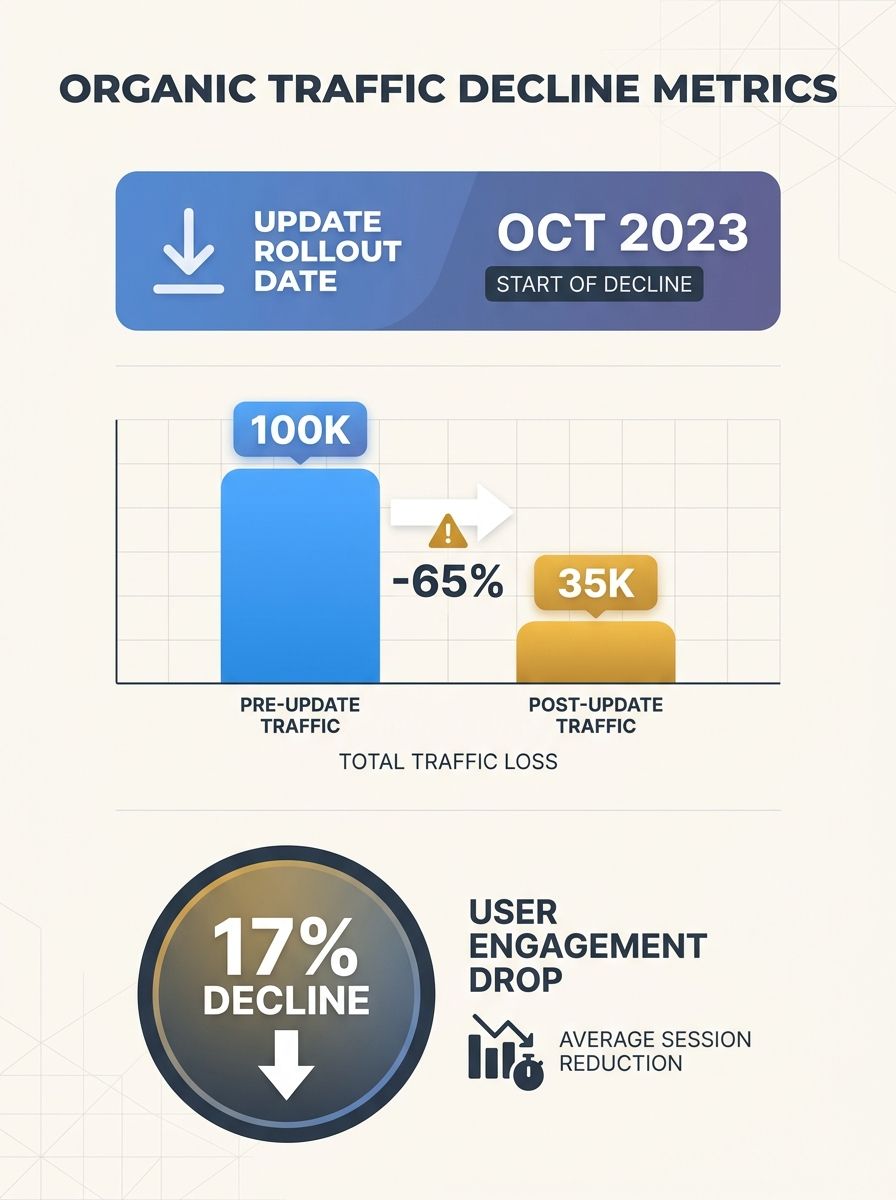
Websites affected by the spam update typically display four measurable indicators. Sudden organic traffic declines during or immediately after the June 24 rollout date suggest potential impact. Ranking drops across multiple pages simultaneously, rather than isolated keyword fluctuations, indicate algorithmic action rather than competitive displacement.
Reduced keyword visibility for previously high-ranking terms provides a third signal. Businesses may observe formerly first-page keywords dropping to page two or beyond. Lower conversion metrics—fewer inquiries, calls, or transactions—often accompany visibility losses as high-intent traffic decreases.
Advait Technology Labs cautioned against immediate reactive changes. Rankings fluctuate throughout multi-day rollout periods, and premature modifications may address phantom problems or worsen actual issues.
Recovery Response Framework
Sites experiencing ranking declines should initiate comprehensive SEO audits after the rollout completes. Content quality review forms the first evaluation layer. Pages must demonstrate originality, accuracy, depth, readability, and user experience optimization rather than simply covering topics at surface level.
Backlink profile audits identify spam directories, link schemes, irrelevant domains, and low-quality sources contributing negative signals. Technical SEO triage frameworks help prioritize fixes when multiple issues exist simultaneously—addressing highest-impact problems before lower-priority concerns.
Technical infrastructure review covers page speed, mobile usability, internal linking architecture, crawlability, indexing status, and Core Web Vitals performance. Search engines evaluate sites more effectively when technical foundations support content delivery without friction.
Experience, Expertise, Authoritativeness, and Trustworthiness (E-E-A-T) signals require strengthening through author information, customer testimonials, case studies, and documented industry expertise. These transparency signals help Google distinguish legitimate businesses from spam operations.
What Happens Next
SEO specialists and marketing managers should complete baseline performance audits within two weeks of the rollout finishing. Document current traffic levels, ranking positions, and conversion metrics before implementing changes, creating comparison benchmarks for measuring recovery progress.
The multi-day rollout period makes early June 26 too soon for definitive impact assessment. Wait until July 1, 2026, before finalizing response strategies. Sites unaffected by this update should still audit for latent spam signals that future updates may target—proactive cleanup prevents reactive damage control.
Organizations running AI-assisted content programs face no inherent penalty risk but should verify human oversight processes catch thin output, factual errors, and repetitive phrasing before publication. Quality control gates matter more than production tools in algorithmic evaluation.

Alex Chen
Alex Chen is a digital marketing strategist with over 8 years of experience helping enterprise brands and agencies scale their online presence through data-driven campaigns. He has led marketing teams at two successful SaaS startups and specializes in conversion optimization and multi-channel attribution modeling. Alex combines technical expertise with strategic thinking to deliver actionable insights for marketing professionals looking to improve their ROI.
Related Articles

Google March 2026 Core Update Shifted 79.5% of Top-Three Search Results, SE Ranking Data Shows
Nearly four in five URLs ranking in Google's top-three positions changed during the March 2026 Core Update, according to volatility data published by SE Ranking on June 7, 2026. The 79.5% shift rate marks the highest positional volatility Google has produced in years, exceeding the 66.8% movement re

Google's August 2026 Algorithm Update Triggers Ranking Volatility Across 45% of Tracked Websites
Google's August 2026 algorithm update triggered ranking volatility across 45% of tracked websites beginning August 8, 2026, according to SEO Vendor's analysis published the same day, with sites demonstrating weak originality and thin evidence reporting steeper traffic declines than pages offering cl

Google Assigns Two-Week Rollout to September 2026 Spam Update, Adds Image Search Filter to Search Console
Google began rolling out its September 2026 spam update on September 24 with a two-week completion window, the longest rollout timeframe the company has assigned to any spam update this year, according to Search Engine Journal. The update applies globally across all languages.
Explore more topics