
Internal Linking Architecture for AI Search: Building Topic Authority When ChatGPT Replaces Google
Internal linking strategies built for Google's PageRank model damage your visibility inside ChatGPT, Perplexity, and AI Overviews.
Internal Linking Architecture for AI Search: Building Topic Authority When ChatGPT Replaces Google
Internal linking strategies built for Google's PageRank model damage your visibility inside ChatGPT, Perplexity, and AI Overviews. The sidebar widgets, footer link blocks, and "related posts" carousels that distributed link equity for fifteen years are functionally invisible to generative engines, which extract meaning from in-prose contextual links within HTML body content, where an estimated 88% of AI Overview text originates.
Generative Engines Read Your Site as a Connected Graph
Traditional search ranking evaluated pages individually. Google crawled a page, assessed its backlinks, measured on-page relevance, and assigned a position. Internal links served primarily as pathways for Googlebot to discover content and distribute PageRank. The location of those links mattered less than their existence.
ChatGPT, Perplexity, and Google's AI Overviews work on a different model. These systems interpret your site as a connected knowledge graph, reading internal links as semantic relationships between topics. DefiniteSEO's research describes how generative engines treat navigational and contextual links as "categorical clusters that organize meaning across your domain." AI systems use the anchor text, surrounding prose context, and link placement to determine which entity or concept a page represents and how it connects to adjacent content on the same domain.
This shifts the entire internal linking strategy for AI search. A link in your footer that says "Marketing Resources" tells Google something about site hierarchy. It tells ChatGPT nothing about topical relationships. A link embedded in a paragraph that reads "the attribution challenges facing multi-location brands in AI search" communicates a specific semantic connection that an AI model can extract and cite.
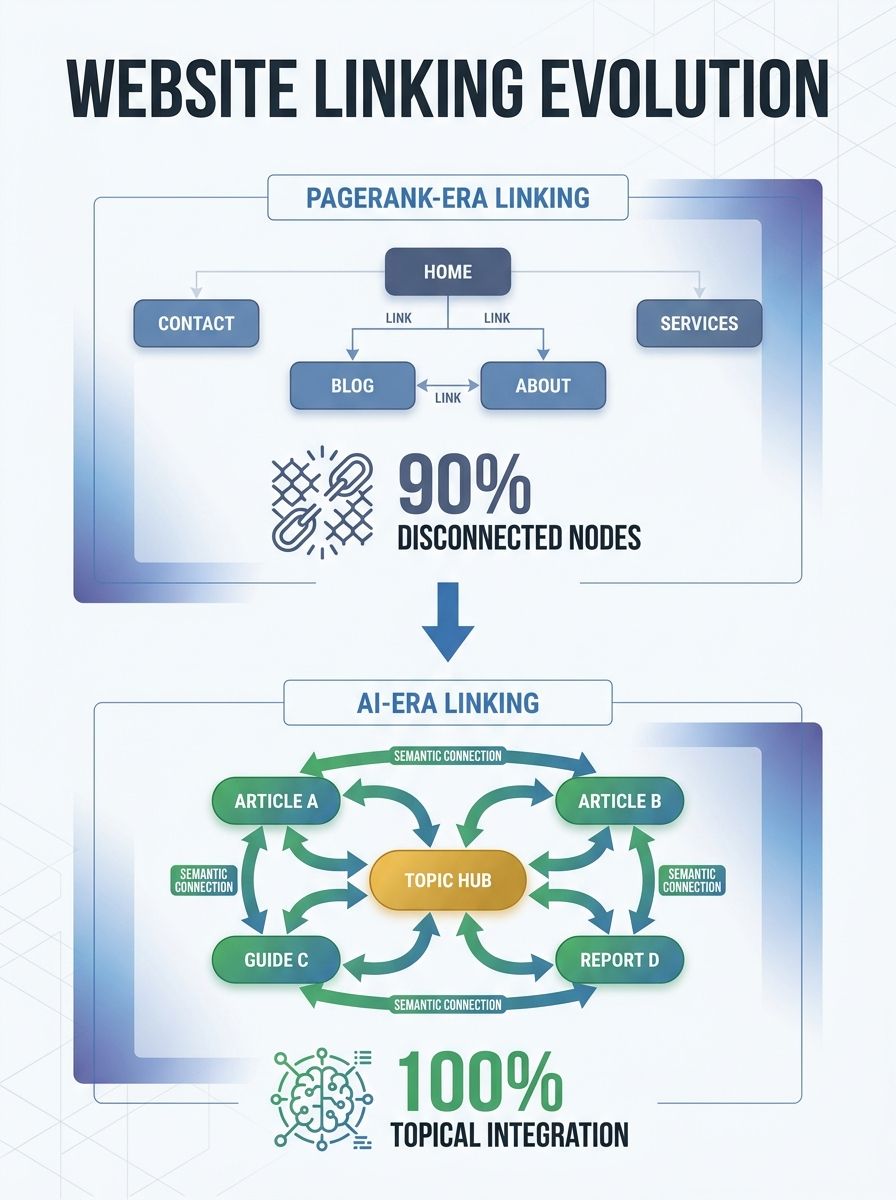
The Digital Applied playbook on topical authority puts it directly: internal linking "signals topical depth and subject-matter authority to systems that read your site holistically, not page by page." That phrase captures the fundamental shift. Google evaluated individual pages. AI evaluates your domain's complete treatment of a topic.
Research data reinforces this architectural argument. An estimated 82.5% of ChatGPT citations link to nested pages within established content hierarchies, while standalone articles floating outside a topical cluster get passed over. Only 31% of brands ranking #1 on Google appear in AI search responses at all, according to NP Digital's analysis. If your internal linking doesn't create visible topic clusters that AI can trace, your individual pages are competing without the authority multiplier that clustered architecture provides.
Entity Linking for ChatGPT Depends on Anchor Text Precision
Why do some sites with fewer backlinks outperform heavily linked competitors in AI citations? ClickRank's 2026 topical authority analysis found that topical authority matters more than backlinks when search intent is informational, educational, or AI-driven. The mechanism behind this connects directly to how internal links reinforce entity signals for generative models.
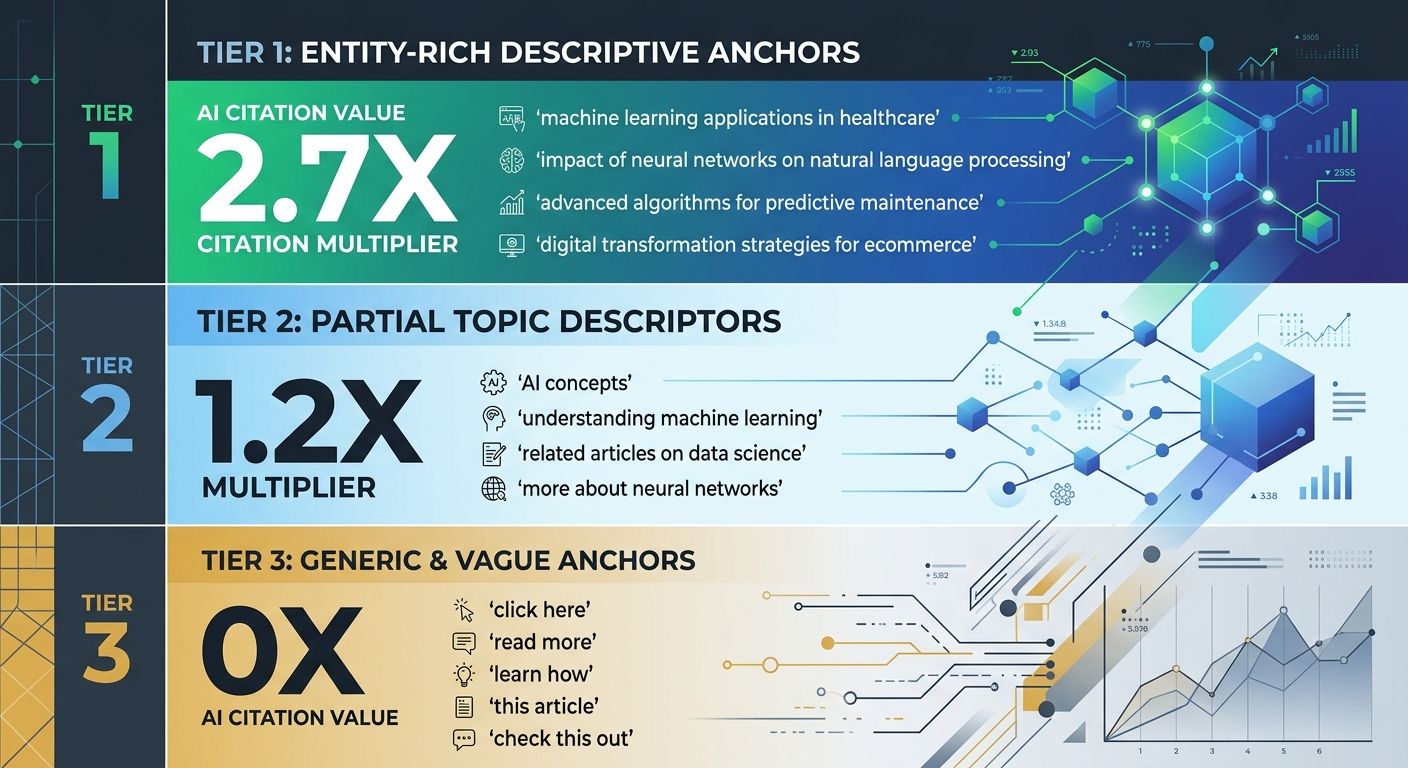
When ChatGPT processes your content, it performs something functionally similar to what researchers documented in the EntGPT framework: the model generates entity candidates for mentions in a document, then uses surrounding context to select the correct entity from that candidate set. Your internal link anchor text forms part of that surrounding context. Vague anchors like "click here" or "read more" provide zero entity signal. Descriptive anchors like "crawl budget optimization for large enterprise sites" tell the model exactly what entity the linked page represents.
Building a topical authority structure that works for entity linking for ChatGPT requires three components working in coordination. I've been calling this the Passage-Level Authority Triad when working with clients:
Anchor precision. Every internal link uses anchor text that names the entity or concept the target page covers. "How we think about website structure" becomes "site architecture for SEO performance." The anchor text itself is the entity signal. ClickRank's data shows this precision is what allows smaller domains with 40-60 articles to outrank domains with 500+ pages in AI citations, because the smaller sites maintain tighter entity consistency across their clusters.
Bi-directional linking within clusters. Pages within a topic cluster link to each other, not only up to the pillar page. Data on bi-directional internal linking within topical clusters shows a 2.7× multiplication in citation potential. A page about content audits should link to your analysis of gaps between Google rankings and ChatGPT citations, and that page should link back with equally precise anchor text pointing to the audit methodology.
Entity consistency across pages. If your pillar page calls a concept "conversion attribution" but your supporting pages alternate between "marketing measurement" and "channel tracking," you're splitting your entity signal across three labels. AI models may parse these as different concepts entirely, fragmenting your topical authority across 3 separate entity entries instead of concentrating it on 1.
LLMVisibility's research, referenced in LinkBuilder.io's analysis, confirmed that internal links reinforce topical authority on AI search platforms through the same mechanisms that traditional search engines use, but with substantially greater weight on contextual placement and anchor descriptiveness. The gap between a link Google notices and a link ChatGPT actually uses for citation comes down to where the link sits in your content and what words surround it.
Crawl Optimization for Generative Engines Breaks Old Assumptions
Google's crawl budget has been a known constraint for years, and the principles of preventing wasted crawling resources still apply to traditional search. But generative AI crawlers introduce variables that traditional crawl optimization never addressed. GPTBot, ClaudeBot, and PerplexityBot each have their own crawl behaviors, rate limits, and content parsing preferences. And only an estimated 17% of sources cited in AI Overviews rank in the organic top 10 for traditional search queries, which means the crawl-and-citation pipeline for AI engines operates partially independently from Google's index.
Crawl optimization for generative engines demands attention to three areas:
Raw HTML accessibility outweighs rendered JavaScript for AI parsers. With roughly 88% of AI Overview text sourced from HTML bodies, internal links rendered client-side through React, Vue, or Angular frameworks may never register with GPTBot or ClaudeBot. Every internal link contributing to your topical authority structure needs to exist in the initial server-rendered HTML response. Sites running single-page application frameworks with client-side routing should audit their link visibility by viewing page source rather than the rendered DOM.
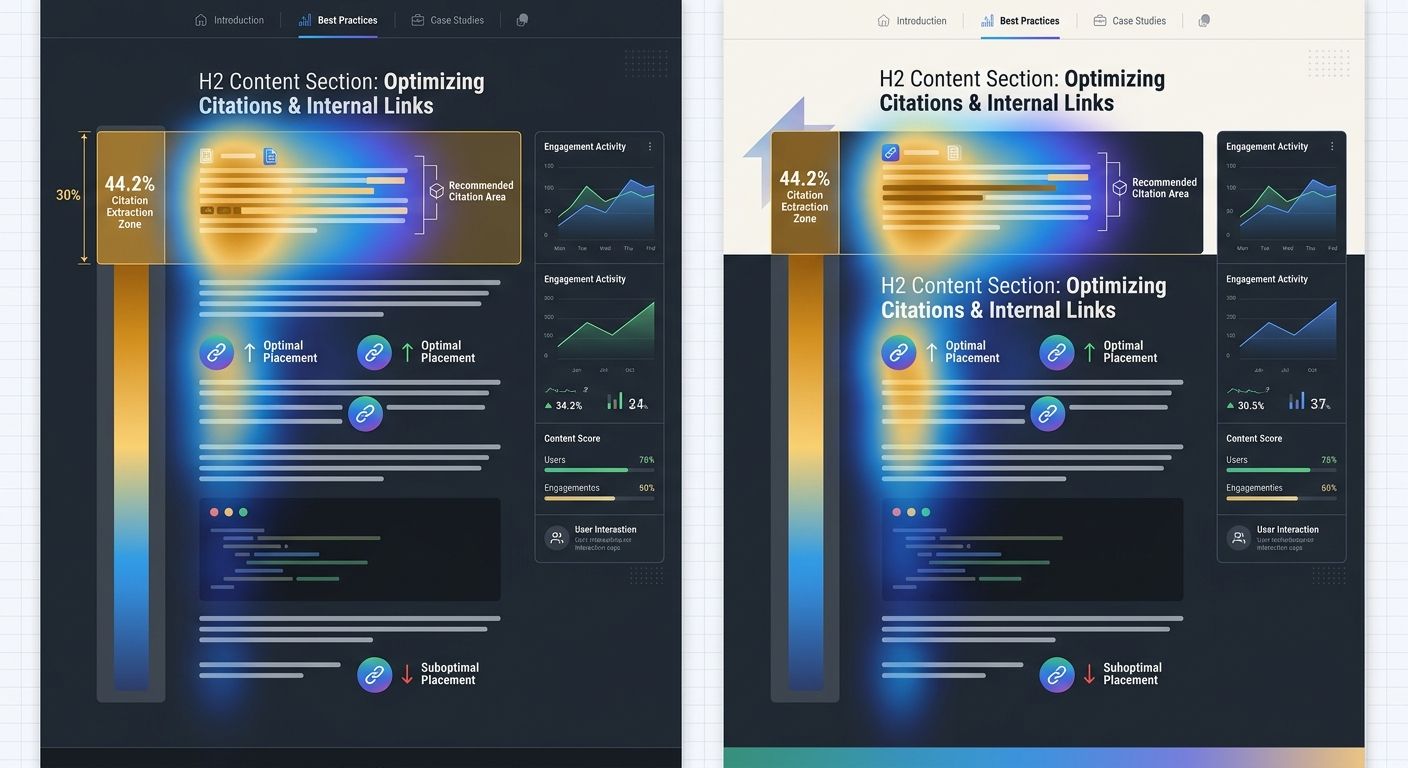
Section-level link placement determines extraction probability. AI systems extract individual passages rather than whole pages. Data indicates 44.2% of citations come from the first 30% of each content section. Internal links placed in the opening 2-3 sentences of each H2 section carry more weight for AI citation than links buried 800 words into a long section. When you're linking to content about how AI visibility audits reveal brand disappearance patterns, place that link where the concept first appears, not in a "further reading" list at the section's end.
Freshness signals in link context affect citation priority. AI models weight recency when selecting citation sources. Internal links that include temporal context in their surrounding prose help the model assess content currency. Writing "our 2026 analysis of site architecture signals" rather than "our analysis of site architecture" provides a timestamp that the model factors into citation decisions. This matters especially when your pages compete against newer but thinner content. Pages with current-year references and visible update timestamps consistently outperform older pages with identical topical coverage in AI citation selection.
The practical result: your internal linking strategy for AI search needs to be embedded in your content management workflow as an editorial task, not bolted on through automated widget plugins or "related posts" modules that render client-side after page load.
The Claim, Pressure-Tested
The argument that PageRank-era internal linking hurts AI visibility holds up under scrutiny, but a qualification matters. Google still rewards traditional internal linking for its core search results, and organic blue links still drive meaningful traffic for many sites. Ripping out your existing link architecture entirely would be counterproductive. The challenge of maintaining visibility across both traditional and AI search engines requires supporting both systems simultaneously.
The practical reconciliation: keep your navigational links, footer links, and sidebar widgets for Google's crawl distribution and PageRank flow. But add a layer of in-prose, entity-precise, bi-directionally linked content within your topic clusters specifically for AI extraction. These two approaches aren't mutually exclusive. They're additive, and the in-prose links benefit Google too.
Conductor's topical authority framework describes how a robust internal linking strategy creates connections between related content pieces, forming topic clusters that signal expertise to both traditional and AI search engines. The cluster structure benefits both systems, but the link placement within that structure needs to serve each system's parsing method. Google reads your whole page template, including sidebar and footer. ChatGPT reads your prose body and extracts passages with their embedded links.
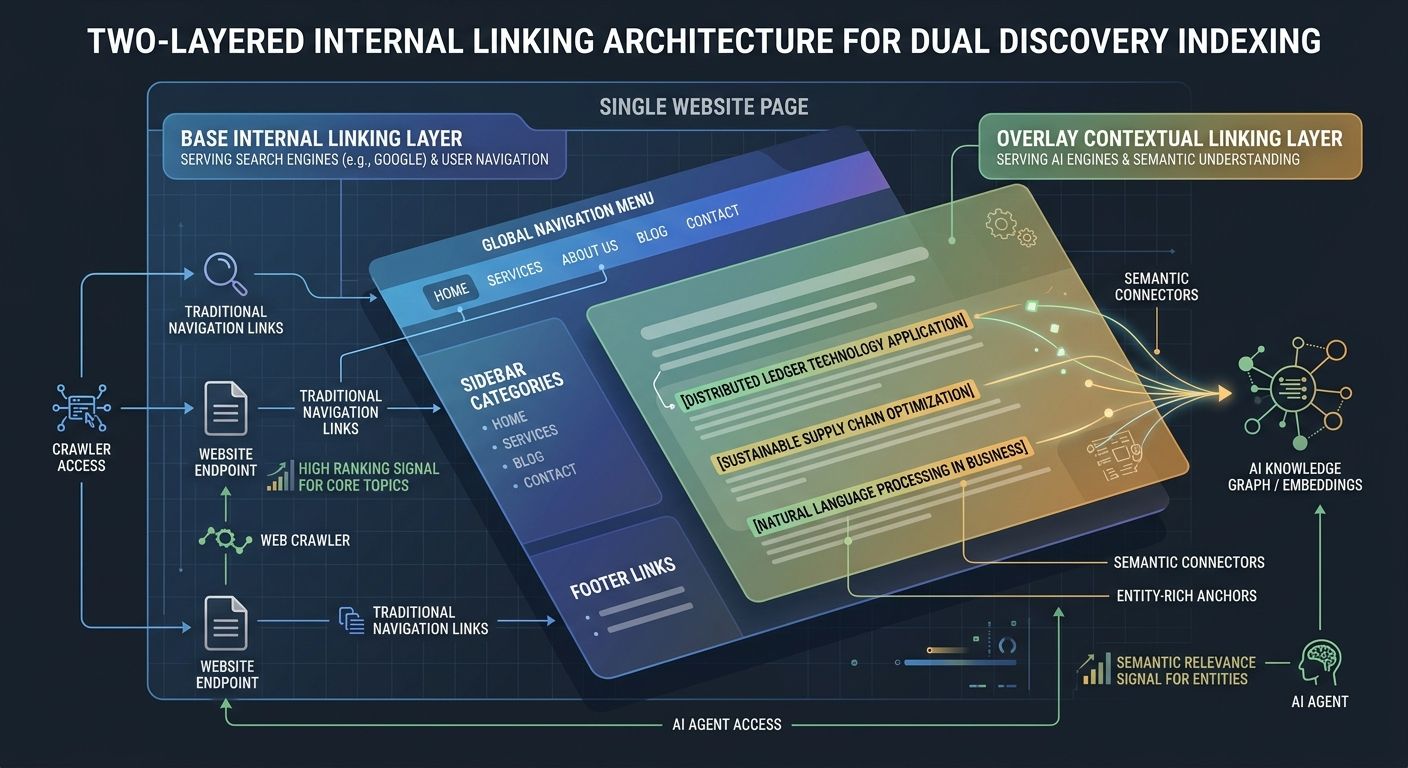
If you've been treating internal linking as a technical SEO checkbox managed through automated plugins and post-publish "related articles" blocks, the shift to AI search demands a reclassification. Internal linking is now a content strategy task that belongs in your editorial planning process alongside keyword targeting and topic selection. Every piece of content should arrive at publication with its internal links pre-mapped, anchored to specific entities with consistent terminology, and placed within the prose body where generative engines actually extract and cite content. The compounding effect of this discipline is what separates domains that AI models treat as authoritative from those that rank on Google but remain invisible when someone asks ChatGPT the same question.

Alex Chen
Alex Chen is a digital marketing strategist with over 8 years of experience helping enterprise brands and agencies scale their online presence through data-driven campaigns. He has led marketing teams at two successful SaaS startups and specializes in conversion optimization and multi-channel attribution modeling. Alex combines technical expertise with strategic thinking to deliver actionable insights for marketing professionals looking to improve their ROI.
Related Articles
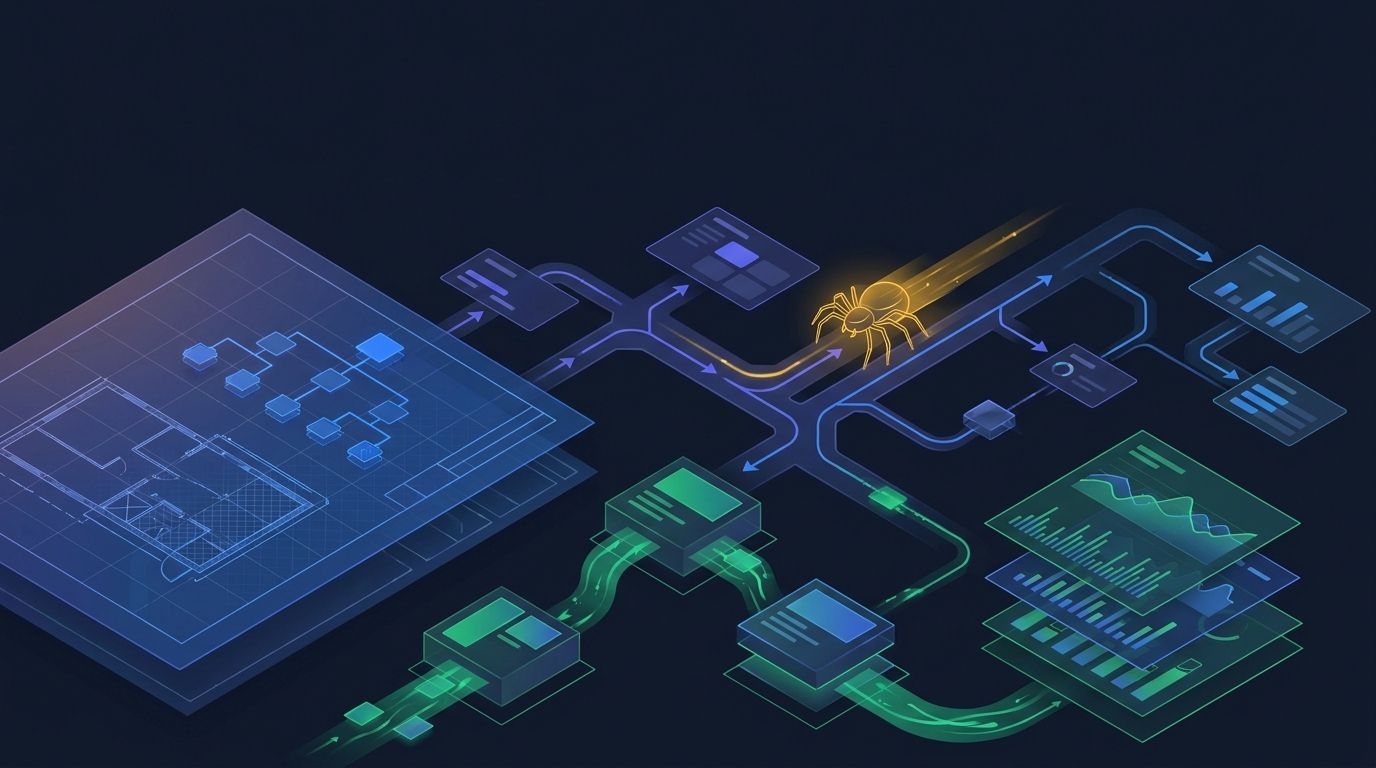
SEO Guide: Site Architecture & Search Engine Success Factors
Every URL on your site carries three architectural signals that determine its search visibility: click depth from the homepage, subfolder grouping within a topic cluster, and internal link connectivity to related pages.
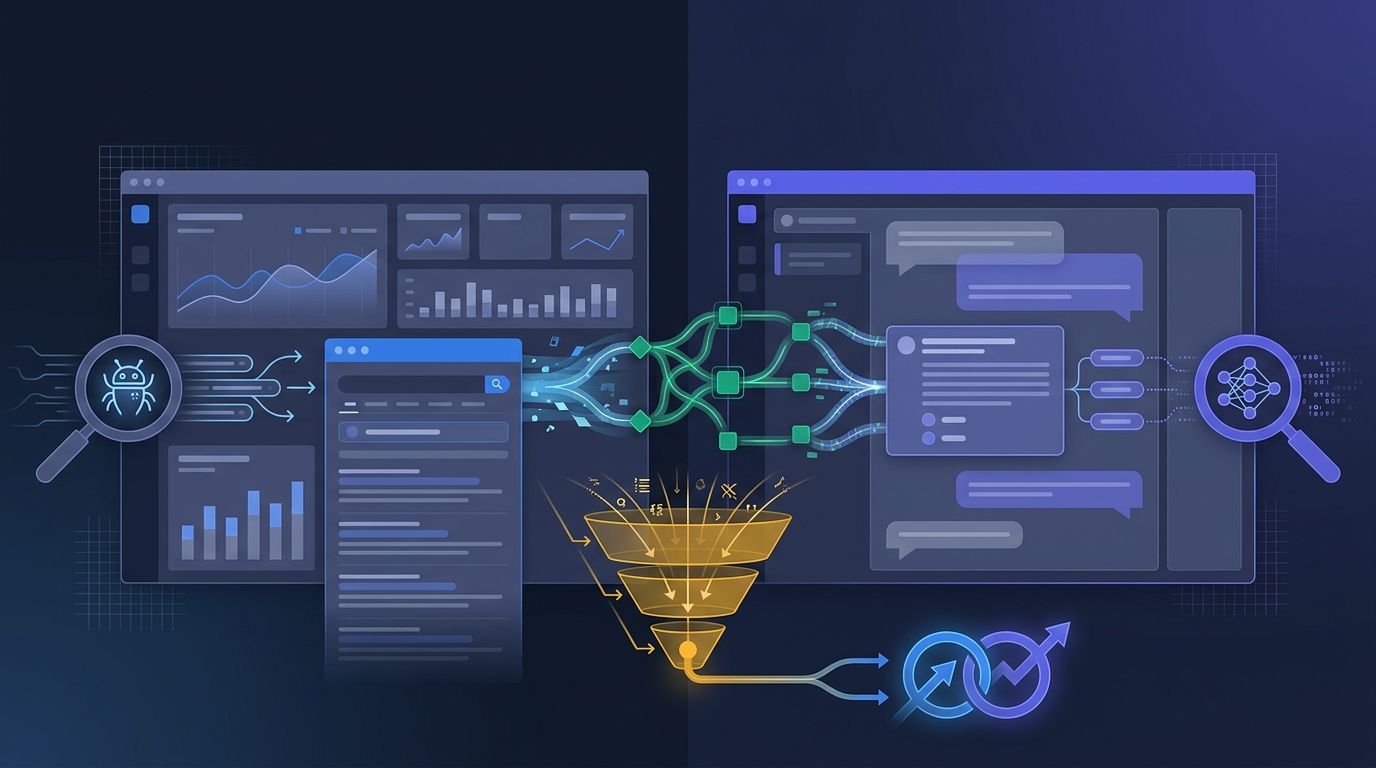
Beyond Traditional Rankings: How to Optimize for Both Google Search and AI Answer Engines in 2026
Google AI Overviews now appear in over 60% of searches, but only 17% of sources cited in those AI-generated answers also rank in the traditional organic top 10.
The AI Visibility Audit: Why 76% of Brands Disappear From ChatGPT and Gemini Recommendations
The SearchScore AI Visibility Study, released June 1, 2026, analyzed 254 websites across ChatGPT, Gemini, and other generative AI search platforms and found that 76.4% of brands scored below 40% in AI visibility. Only 7.
Explore more topics