
The Search Intent Mismatch: Why Your Content Ranks but Doesn't Convert (And How to Fix It)
A client came to me with 47 pages ranking in the top 10 for their target keywords, over 120,000 organic visits per month, and a conversion rate of 0.3%. Not 3%. Zero-point-three. They'd spent 18 months building what they called a "content machine," and the machine was running beautifully.
The Search Intent Mismatch: Why Your Content Ranks but Doesn't Convert (And How to Fix It)
A client came to me with 47 pages ranking in the top 10 for their target keywords, over 120,000 organic visits per month, and a conversion rate of 0.3%. Not 3%. Zero-point-three. They'd spent 18 months building what they called a "content machine," and the machine was running beautifully. It just wasn't producing anything useful. The culprit wasn't thin content, bad design, or slow load times. Every single one of those 47 pages was answering a question their visitors weren't actually asking. That's the content-keyword mismatch problem, and it's far more common than most teams realize.
What Search Intent Mismatch Actually Looks Like
The symptoms are deceptive. You see traffic going up. You see keywords climbing. Your rank tracking dashboard is full of green arrows. Everything looks healthy until you open your conversion reports.
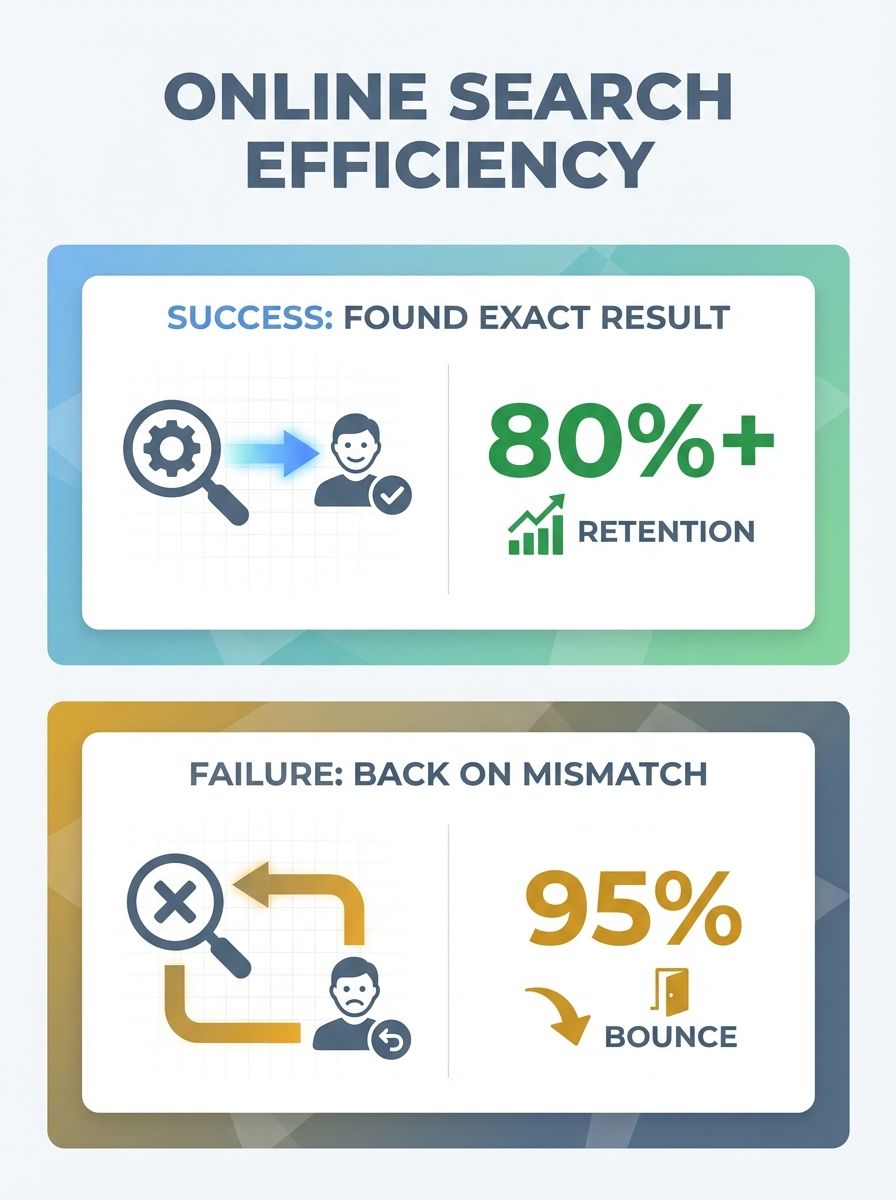
Here's the pattern: a page ranks well, pulls in visitors, and those visitors leave almost immediately. They don't click your CTA. They don't sign up. They don't buy. They bounce. And when you dig into your GA4 data, you find sessions averaging 10 to 15 seconds on pages that take 4 minutes to read.
As Stackmatix describes it, the classic symptom is high traffic paired with high bounce rates and low time-on-page. You've targeted an informational keyword with a surface-level page when users want depth, or you've built a 3,000-word guide for someone who just needs a login link.
The real damage isn't just wasted traffic. Google treats those behavioral signals as feedback. Quick returns to the search results tell the algorithm your page didn't satisfy the query. Over time, your rankings slip too. So you end up losing both conversions and the rankings you worked so hard to earn. If you've noticed unexplained ranking drops, intent mismatch is one of the first things to investigate.
The Four User Intent Types (And Why Getting Them Wrong Kills Revenue)
Understanding user intent types SEO professionals categorize isn't academic. It's the difference between content that converts and content that just occupies server space. There are four core types, and each one demands a completely different page structure, tone, and call to action.
Informational intent is someone learning. They're typing "what is conversion rate optimization" or "how does schema markup work." They want education, not a sales pitch. If you serve them a product page, they're gone.
Navigational intent is someone looking for a specific destination. "Mailchimp login" or "Ahrefs pricing page." These people know where they want to go. A blog post won't help them.
Commercial investigation intent is where it gets interesting. These are the "best project management tools" or "Notion vs. Asana" searchers. They're comparing, evaluating, and moving toward a decision. They need comparison tables, pros and cons, honest assessments. As The Ad Firm points out, a comparison page without pros and cons feels incomplete and misses what the searcher actually needs.
Transactional intent is the money moment. "Buy standing desk," "sign up for Semrush," "book SEO audit." These users have their credit card metaphorically in hand. They need pricing, a clear CTA, and zero friction. As Respona explains, turning search intent optimization into a repeatable system starts with recognizing when someone is genuinely ready to act.
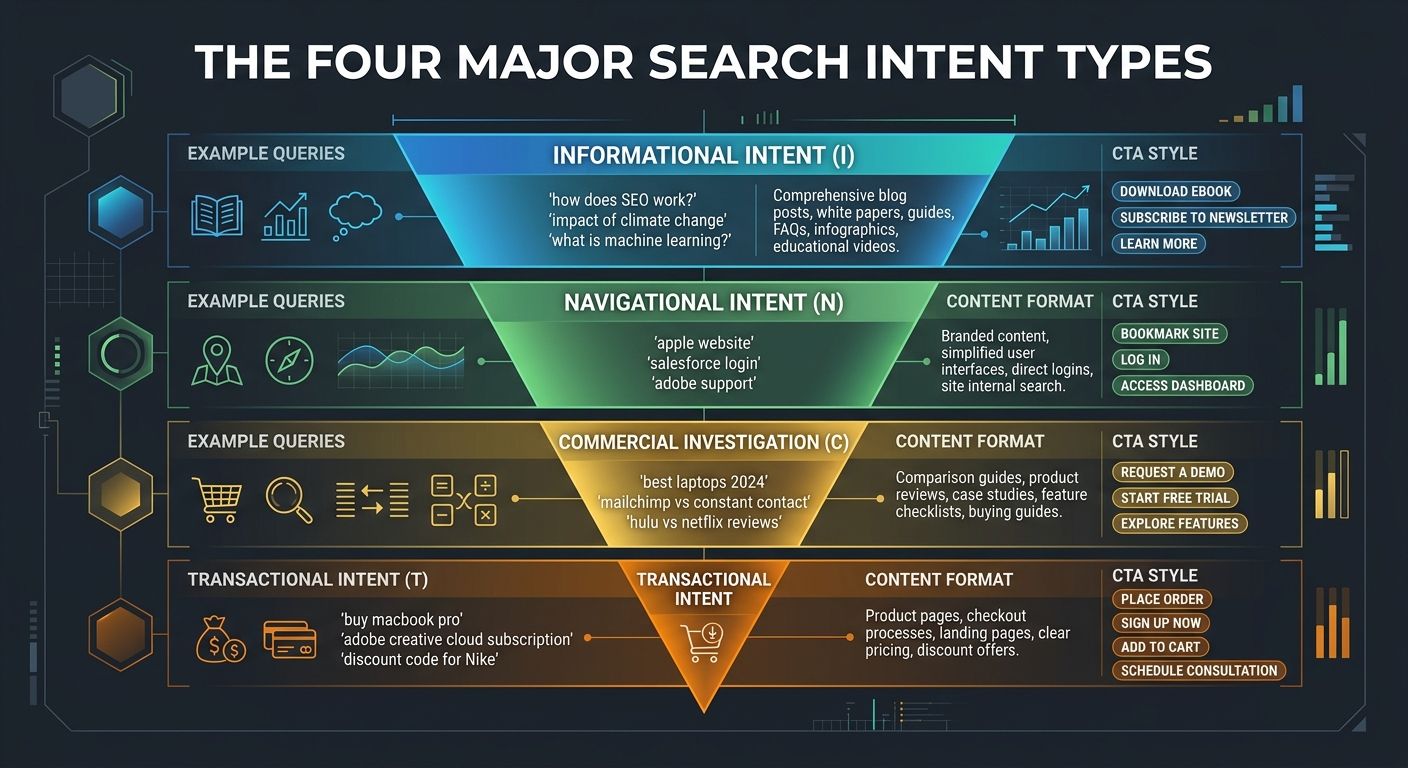
The problem is that most content teams create pages based on keyword volume, not intent. They see a keyword pulling 12,000 searches per month and build content for it without ever checking why people are searching for it. This is how you end up ranking without conversions.
How to Diagnose Intent Mismatch in Your Own Content
You don't need expensive tools for this. You need 30 minutes and a willingness to be honest about what you find.
Step 1: Pull Your Top Traffic Pages That Don't Convert
Open your analytics platform and sort pages by organic sessions. Now add a secondary metric: conversion rate (or whatever your primary goal metric is). You're looking for pages with high traffic and near-zero conversions. If your analytics data feels unreliable, clean that up first or you'll be making decisions based on noise.
Step 2: Search Your Own Keywords Incognito
For each underperforming page, take the primary keyword and search it in an incognito window. Look at what's actually ranking in positions 1 through 5. Are they product pages? Comparison articles? Long-form guides? Tutorial videos?
This is your intent signal. If every top result is a "best X tools" comparison and your page is a product landing page, you've got a mismatch. If every result is a how-to guide and your page is a 200-word blurb with a "Contact Us" button, same problem.
Step 3: Check Behavioral Metrics
For each suspect page, look at three numbers:
Bounce rate compared to your site average. A page-level bounce rate 20+ points higher than average is a red flag. Understanding what qualifies as a good bounce rate for your specific content type matters here.
Average engagement time. If your 2,000-word article averages 12 seconds, nobody's reading it.
Scroll depth. If users aren't making it past the first screen, your opening likely signals the wrong intent.
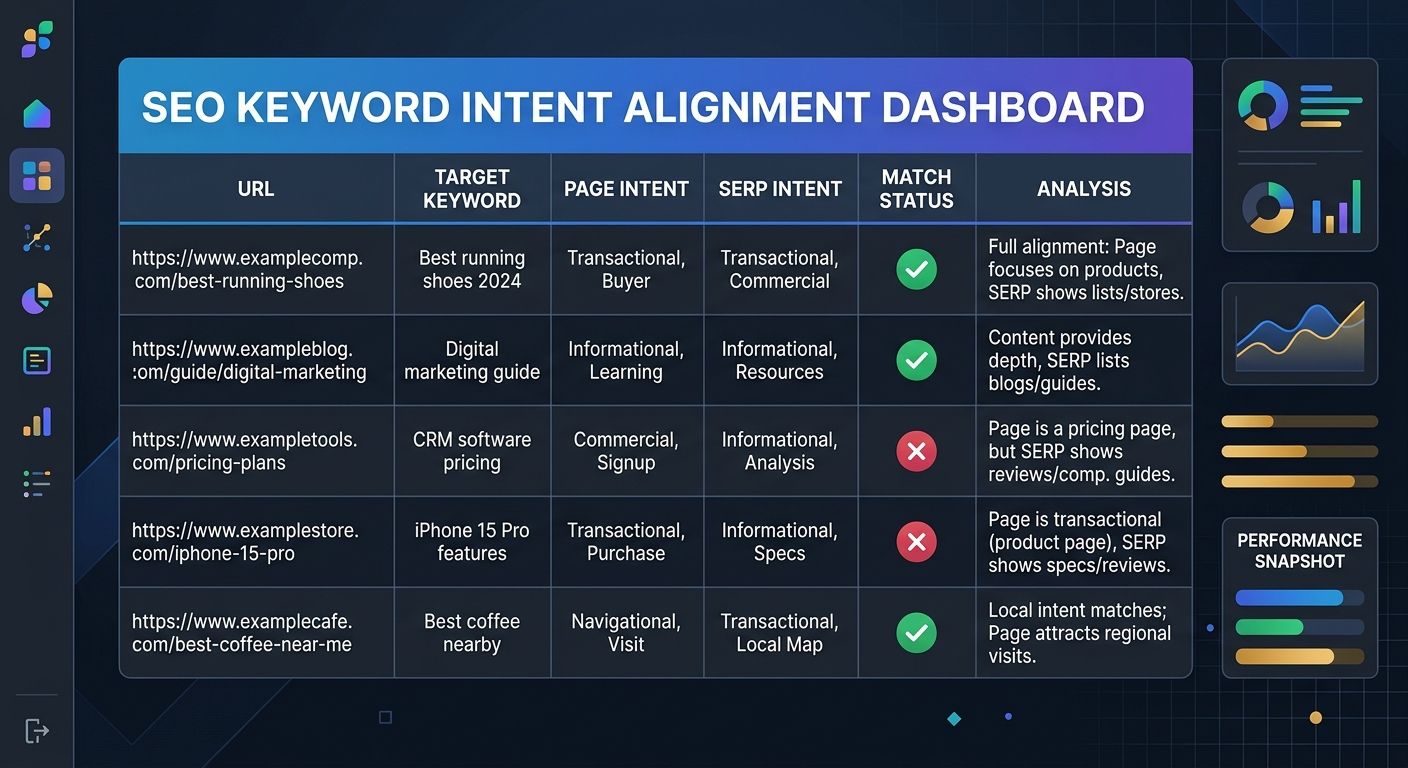
Step 4: Map Each Page to an Intent Type
Create a simple spreadsheet with four columns: URL, target keyword, the intent your page serves, and the intent the SERP actually demands. When those last two columns don't match, you've found your problem.
How to Fix the Mismatch: A Practical Framework
Diagnosing the problem is the easy part. Fixing it requires making some tough calls about your content.
Rebuild or Redirect
For pages where the mismatch is severe, you have two options. You can rebuild the page to match the actual intent behind the keyword. Or you can retarget the page for a different keyword that matches what the page actually delivers.
Here's my rule of thumb: if the keyword has real business value and the intent is something you can serve well, rebuild. If the keyword's intent doesn't align with what your business offers, retarget or let it go.
A luxury furniture brand ranking for "cheap furniture near me" should retarget. That traffic will never convert because the price expectation is fundamentally incompatible with the product. No amount of CTA optimization fixes that.
Match Your CTA to the Intent Stage
This is where I see teams make the biggest tactical error. They put "Buy Now" or "Request a Demo" on every page regardless of where the visitor is in their decision process. It creates friction at exactly the wrong moment.
For informational pages, offer a related guide download, a newsletter signup, or a link to deeper content. For commercial investigation pages, invite comparison with "See how we stack up" or "Compare plans." Save the hard transactional CTAs for pages where the intent actually supports it.
When you start building content that converts traffic into leads, the CTA-to-intent match is the single biggest variable.
Create Intent-Specific Content Clusters
One generic page for a broad keyword rarely works. Take a term like "email marketing software." Someone searching that might want:
An explanation of what email marketing software does (informational)
A list of the best options available (commercial investigation)
A specific product's pricing page (transactional)
A direct login to their existing platform (navigational)
You need separate pages for each intent, internally linked to guide users through their actual decision process. This is where building out content hubs with pillar pages becomes a structural advantage rather than just an SEO tactic.
Optimize Format, Not Just Words
Google's AI systems now decompose queries into specific intent components. A blog post formatted as a wall of text won't satisfy a query that demands a comparison table, no matter how good the writing is. Look at the format of top-ranking pages and match it.
If the SERP shows:
Tables and charts, build tables and charts
Step-by-step instructions, use numbered processes
Video results, consider adding video to your page
Quick answer boxes, put the direct answer in your first paragraph
Running an Intent-Driven Content Audit
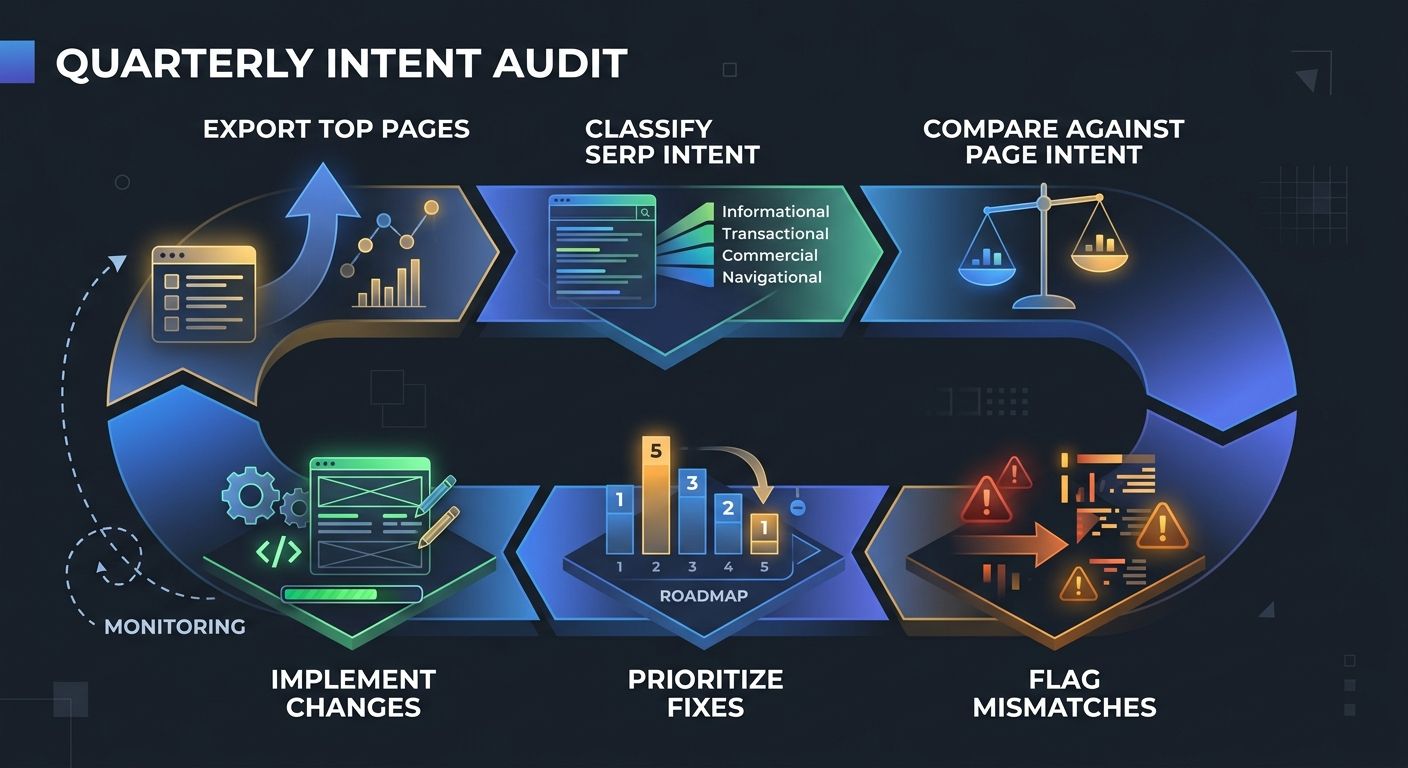
Search intent optimization isn't a one-time fix. It's a recurring practice. I run what I call an intent-driven content audit every quarter on my highest-traffic pages, and I recommend you do the same.
The process is straightforward:
Export your top 50 organic landing pages by session volume
For each page, verify the primary keyword and current ranking position. A solid rank tracking tool makes this step painless.
Search each keyword and classify the SERP intent
Compare SERP intent against your page's actual content and CTA
Flag mismatches and prioritize by traffic volume multiplied by conversion potential
Rebuild, retarget, or merge flagged pages
This sounds like a lot of work, and it is. But consider the alternative. You keep publishing content that ranks, pats yourself on the back for traffic numbers, and wonder why revenue isn't growing. An honest audit of your content strategy prevents you from scaling a broken system.
The MarketMuse team makes a point that resonates with my experience: home pages, category pages, and high-ranking pages are the most common sources of intent mismatch. Authoritative domains sometimes rank for high-volume terms they have no real content for. Google gives established sites the benefit of the doubt, but that borrowed ranking comes with borrowed time.
The Uncomfortable Truth About Ranking Without Conversions
Here's what nobody wants to hear: some of your best-ranking content might be actively hurting your business. Not because it's bad content, but because it's attracting the wrong audience with the wrong expectations. Every mismatched visitor who bounces sends a negative signal to Google. Every mismatched session wastes your server resources and muddies your analytics data. And every time your team celebrates traffic growth while conversions stay flat, you're reinforcing a strategy that doesn't work.
The fix isn't complicated. It's just uncomfortable. It means admitting that keyword volume isn't the same as keyword value. It means sometimes publishing less content that converts more. And it means building every page around what the searcher actually needs, not what you wish they needed.
Start with your top 10 traffic pages that have below-average conversion rates. Run them through the four-step diagnosis above. I'd bet real money that at least half of them have an intent mismatch you can fix within a week. That's not a content overhaul. That's a Tuesday afternoon with a measurable impact on revenue by the end of the month.

Sarah Chen
SEO strategist and web analytics expert with over 10 years of experience helping businesses improve their organic search visibility. Sarah covers keyword tracking, site audits, and data-driven growth strategies.
Explore more topics