
Beyond Rankings: Why Trust Signals Matter More Than Search Visibility in 2026
Google's April 2026 core update dropped sites with six-figure backlink profiles while promoting smaller brands with verified authorship and consistent cross-platform presence.
Beyond Rankings: Why Trust Signals Matter More Than Search Visibility in 2026
Google's April 2026 core update dropped sites with six-figure backlink profiles while promoting smaller brands with verified authorship and consistent cross-platform presence. The pattern was unmistakable: pages ranking below position five in traditional SERPs were getting cited in AI Overviews at rates that made their higher-ranked competitors irrelevant. Content cited in AI Overviews now drives 91% more paid clicks and 35% more organic clicks than non-cited pages, according to analysis from Mike Khorev. If your SEO strategy still optimizes primarily for position, you're optimizing for a scoreboard that fewer people are reading.
These seven rules govern how I think about trust signals SEO 2026 and the AI-driven systems that now evaluate them. Each one reflects a shift I've seen play out across client accounts and in cross-industry data. Some will feel obvious. Others will challenge assumptions you've held for years.
Always audit trust signals before touching your keyword strategy
The instinct for most teams is to start with keyword research, build a content calendar, then worry about authority later. That sequence made sense when Google's algorithm weighted relevance and links above all else. It produces diminishing returns now.
As Search Engine Journal reported, first-party signals determine whether you are credible, and structure determines whether you are usable. If your content can't be selected, extracted, and trusted quickly, ranking position becomes irrelevant.
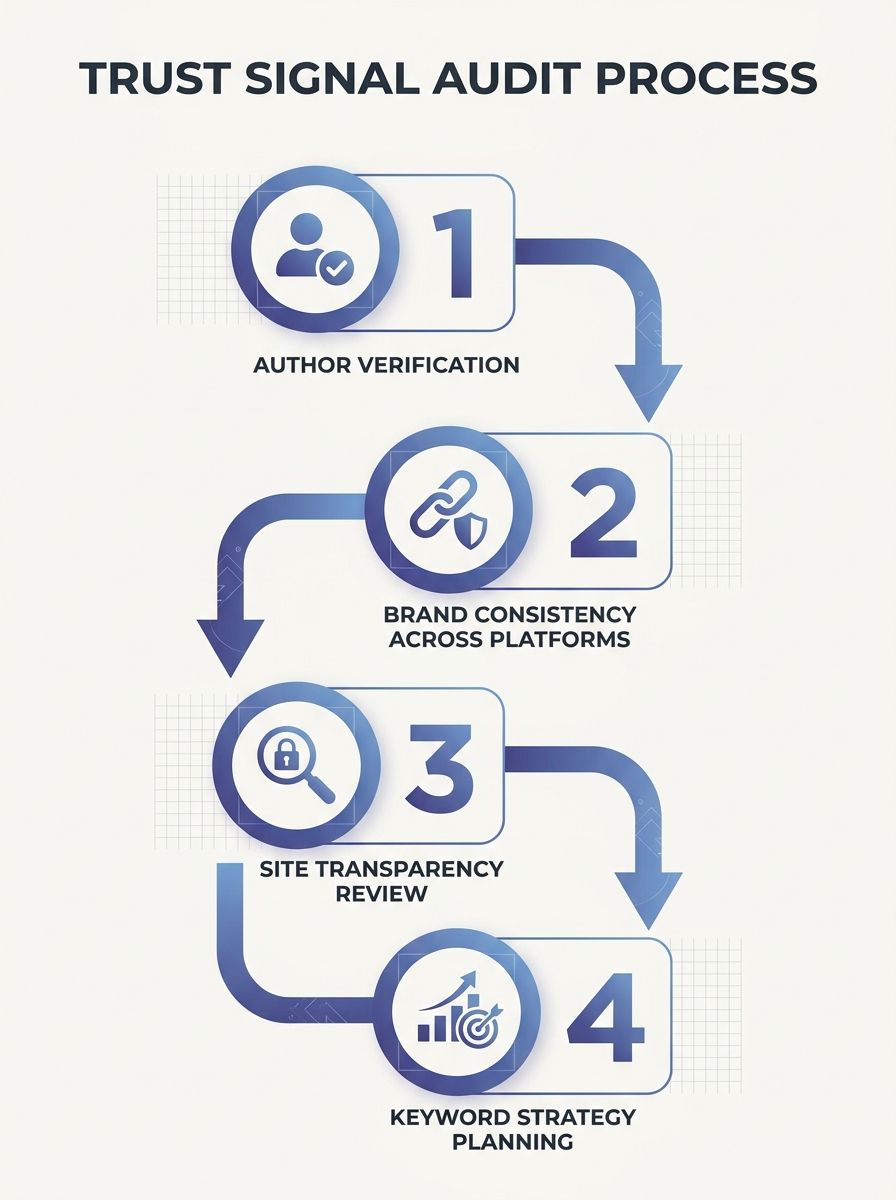
Before you plan Q3 content, run a trust audit. Check whether your site has named authors with verifiable credentials. Look at whether your brand appears consistently across Google's Knowledge Graph, LinkedIn, Crunchbase, and industry directories. Examine whether your contact information, privacy policies, and content update dates are visible and accurate. A B2B software company that implemented a brand mention monitoring and engagement strategy saw a 40% increase in branded search traffic within eight months, according to data from Jasmine Directory's trust metrics analysis. That lift came before they changed a single keyword target.
This rule breaks when you're launching a brand-new product category where no one is searching yet. In that case, you need to create demand through content before trust signals have anything to attach to. But for every other scenario, trust comes first.
Kill zombie content before it publishes another day
Every site accumulates pages that no longer serve anyone. Thin product pages for discontinued items. Blog posts from 2019 with outdated statistics. Landing pages for campaigns that ended years ago. These are zombie pages, and their damage is measurable.
Zombie pages send negative signals to Google that slowly affect the entire website, even when that site carries meaningful domain authority. The mechanism is straightforward: Google crawls your site, encounters dozens or hundreds of low-value pages with poor internal linking and duplicate content, and downgrades its assessment of your site's overall quality. The zombie content authority loss compounds over time because each crawl cycle reinforces the negative signal.
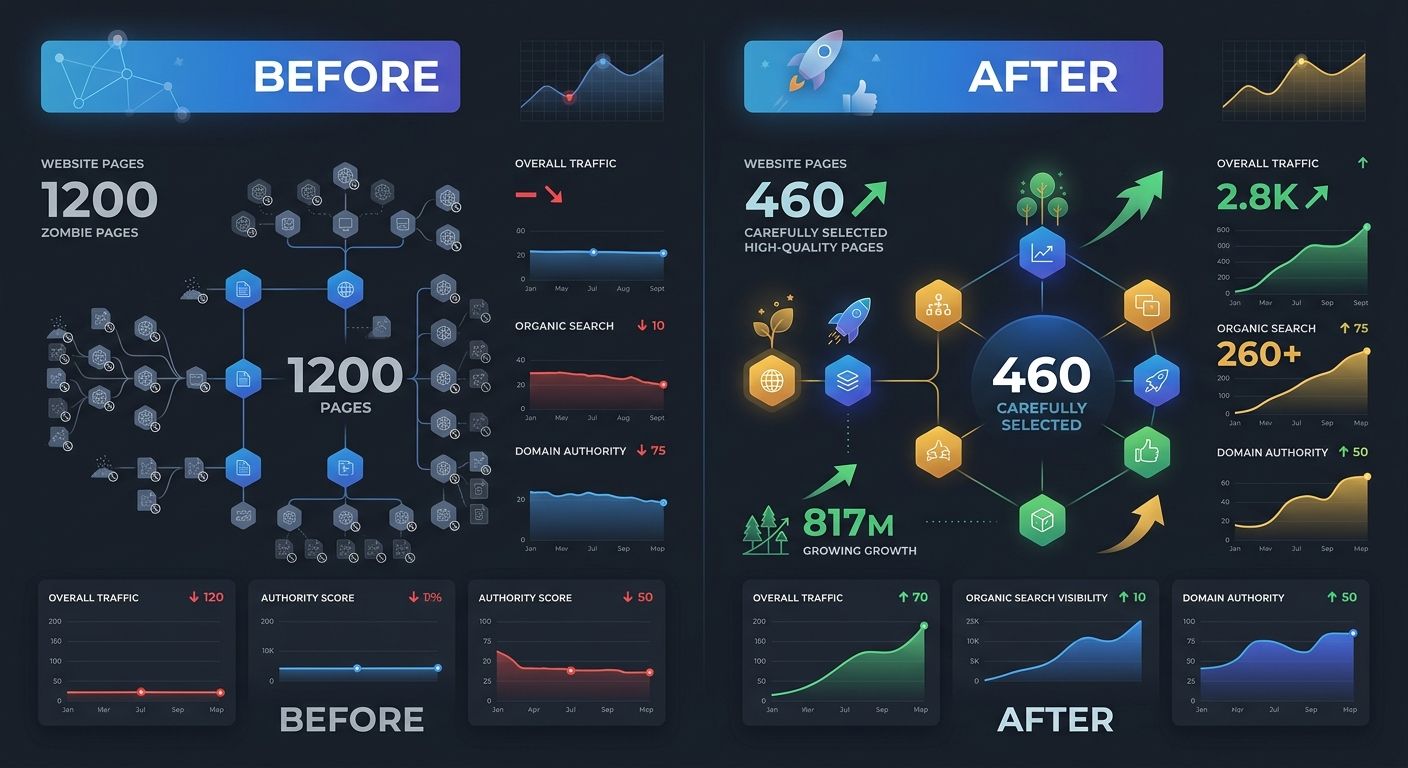
I worked with a SaaS client who had 1,200 indexed pages. After auditing, we identified 740 that generated zero organic traffic over twelve months. We removed 400, consolidated 200 into stronger pillar pages, and refreshed the remaining 140 with current data. Organic traffic to the surviving pages increased 28% within four months, and their AI Overview citations doubled.
The analysis behind the March 2026 core update winners showed this pattern at scale: sites that prioritized content authenticity over volume gained ground while bloated content farms lost it.
This rule breaks when a zombie page still drives conversions through paid traffic or direct links, or when it contains historically significant content that other sites reference. Check referral data before you delete anything.
Make every author a verifiable entity, not a byline
Google's AI systems now cross-reference author profiles across platforms. A name on a blog post means nothing if that name can't be traced to a LinkedIn profile, conference appearances, published research, or professional credentials. Author schema markup helps, but the signal goes deeper than structured data.
The April 2026 update specifically penalized what the industry calls "faceless niche sites." These are content operations where no identifiable human stands behind the work. Google's quality raters and automated systems evaluate what researchers call the three core dimensions: Expertise, Officialness, and Public Interest. A recent paper on authority-aware generative retrieval confirmed that visual cues like layout quality and ad intrusiveness help AI systems distinguish genuine credibility from sophisticated mimicry.
For practical implementation: every author on your site needs a bio page with verifiable credentials, links to their professional profiles, and a publishing history that Google can crawl. If your content team includes freelancers, give them proper attribution. If your CEO contributes thought leadership, make sure their author entity connects to their public professional presence. Google's systems look for consistency in titles and roles across platforms, so "CMO at Company X" on your blog bio should match what appears on LinkedIn and conference speaker pages.
This connects directly to AI-driven ranking validation, where algorithms verify claims of expertise against external evidence before granting authority.
Treat unlinked brand mentions as ranking currency
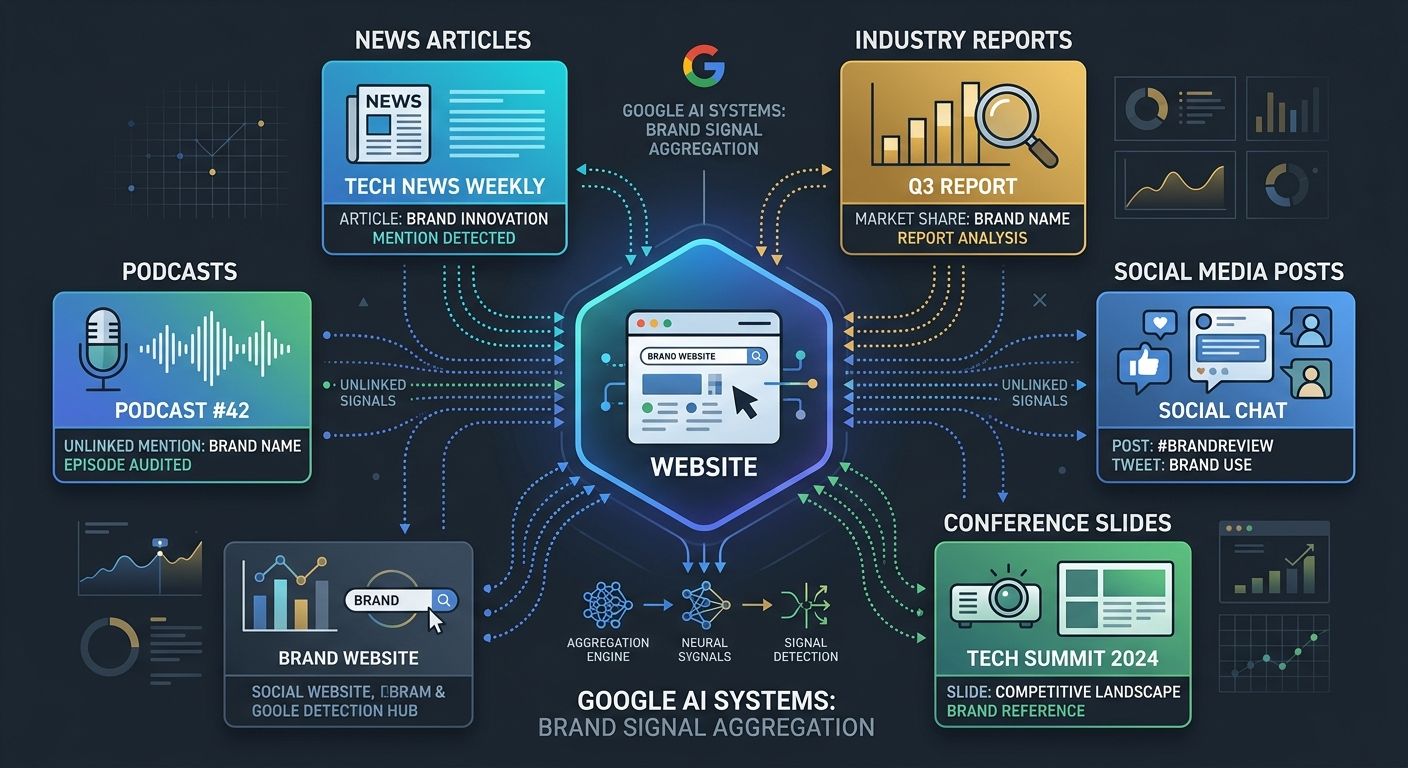
The traditional link-building playbook treated backlinks as the primary unit of authority. That model isn't wrong, but it's incomplete. Google's AI systems, including Gemini, now detect unlinked brand mentions on authoritative sites and weight them as trust signals.
As Juicify's analysis of authority signals explains, each appearance confirms that trust extends beyond a single channel. Taken together, these signals form a pattern that search systems can observe and verify. The most authoritative brands don't look aggressively optimized. They look established because recognition precedes ranking.
This means podcast appearances, expert roundups, industry report citations, and news mentions all contribute to your authority profile even when they don't include a hyperlink. I've started tracking unlinked mentions as a KPI alongside traditional backlink acquisition for every client engagement. The correlation between unlinked mention velocity and AI Overview citations has been stronger than the correlation between new referring domains and traditional ranking movement for the past two quarters.
If you're building your AI answer engine tracking stack, add brand mention monitoring to the toolkit. Tools like Brand24 or Mention capture these signals in near real-time.
This rule breaks when your brand name is too generic to track reliably, or when you're in a space where mentions rarely happen organically. In those cases, traditional link acquisition still carries more weight.
Build first-party data signals into every page you publish
Third-party data has always been the backbone of most marketing content. "According to a report by X, 73% of marketers say Y." That pattern still works for context, but Google's systems now reward first-party signals with disproportionate authority.
Original surveys, proprietary datasets, A/B test results documented with methodology, and case studies with specific metrics create a self-reinforcing authority loop. When you're the source of a statistic, other publications cite you, which generates both links and unlinked mentions, which reinforces your authority, which makes your future content more likely to be cited in AI-generated answers.
This is where SEO conversion authority gets built. A page that presents original data converts better because visitors perceive it as a primary source, and it ranks better because AI systems recognize the same distinction.
Google's own guidance on AI-generated content makes the priority explicit: creators should prioritize original, people-first content demonstrating expertise, experience, authoritativeness, and trustworthiness. Content that recycles third-party statistics without adding original perspective falls short of that standard.
The teams dealing with why strong traditional rankings don't guarantee AI search visibility are often the ones whose content relies entirely on secondary sources. Producing even one original data point per quarter gives AI systems a reason to cite you over competitors who are repackaging the same information.
This rule breaks when speed matters more than depth, such as breaking news coverage or rapid-response content where first-party data isn't available yet.
Structure content for extraction, not consumption
Traditional content optimization focused on readability: scannable headers, short paragraphs, clear CTAs. Those elements still matter for human visitors, but AI systems consume content differently. They extract discrete claims, verify them against other sources, and select the most trustworthy version to cite.
This means your content structure needs to serve two audiences simultaneously. For humans, maintain clear narrative flow and visual hierarchy. For AI systems, ensure that key claims are stated in self-contained sentences that can be extracted without losing meaning. Use structured data markup to label the type of content on each page. Make sure factual claims include their supporting evidence within the same paragraph rather than relying on a reader scrolling to a footnote.
The research on E-E-A-T for AI search confirms that this framework determines whether content gets cited in AI-generated answers or excluded entirely. Content with authoritative citations sees a 132% visibility increase in AI Overviews, which means the way you present evidence affects whether algorithms select your content as a trusted source.
If you've been optimizing content for AI-driven brand discovery, this structural layer is the missing piece for many teams. And if your analytics are still focused on traditional traffic patterns, understanding what your 2026 analytics should actually track becomes essential to measuring whether these structural changes are working.
Measure trust across channels, not positions on a single SERP
Branded search volume, social media sentiment, review quality on third-party platforms, mention frequency in industry publications, Knowledge Graph presence, and author entity recognition all feed into how AI systems assess your trustworthiness. Tracking your position for twenty keywords gives you a narrow view of a much wider evaluation.
I've shifted my client reporting to include a trust signal dashboard alongside traditional rank tracking. That dashboard monitors branded search volume trends, unlinked mention velocity, author entity appearances across platforms, and citation rates in AI Overviews. The brands that perform best in this framework tend to maintain consistent presence across owned, earned, and shared channels, which is exactly what Yoast's experts identified as an essential input into visibility.
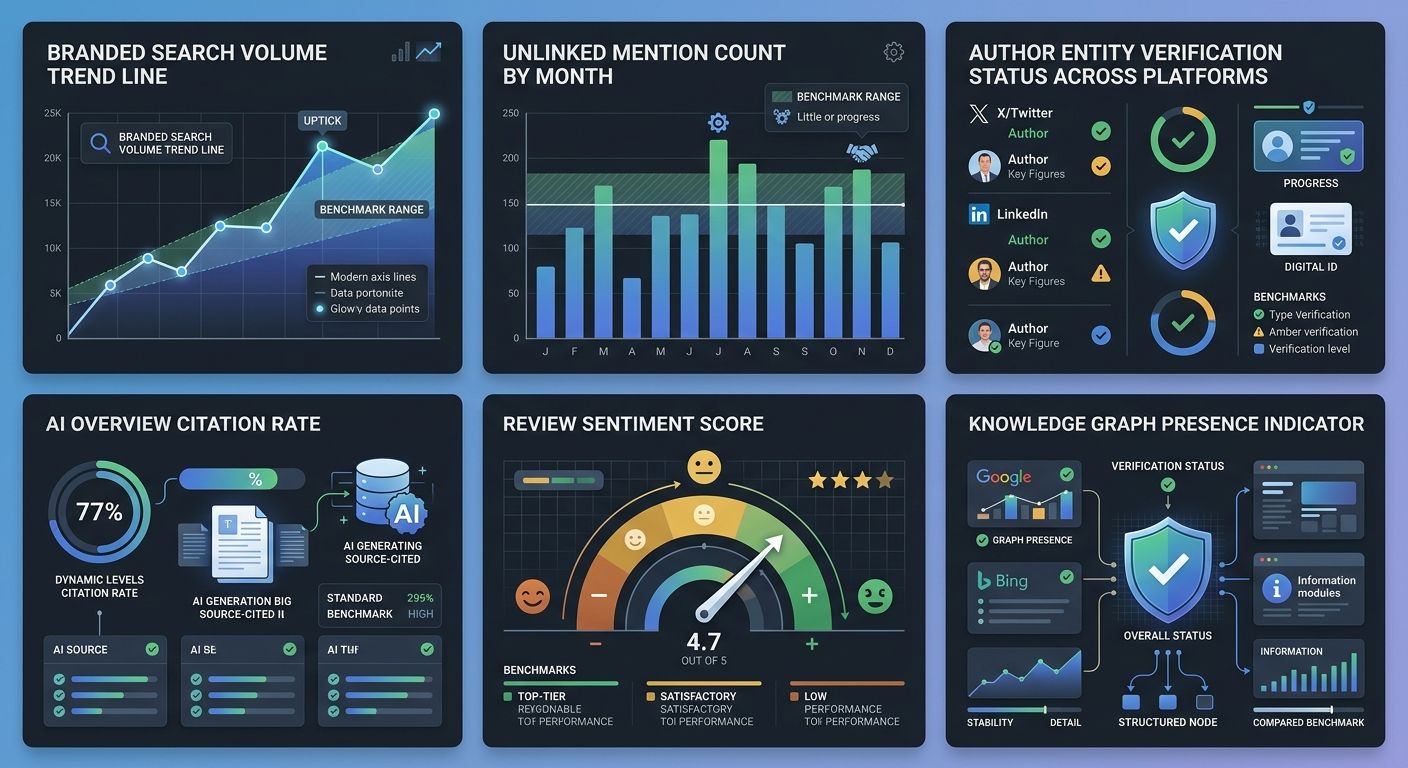
A practical starting point: export your branded search volume from Google Search Console for the past twelve months and overlay it against your organic traffic trend. If branded searches are flat or declining while organic traffic holds steady, your visibility is resting on a foundation that could erode with the next core update. The brands with growing branded search volume weathered both the March and April 2026 updates with minimal disruption.
When These Rules Conflict With Each Other
Real marketing teams operate with finite budgets and competing priorities. You can't simultaneously run a zombie content audit, build first-party research, restructure every page for AI extraction, and launch a brand mention monitoring program. So which rules take priority?
Start with the trust audit (rule one) because it tells you where you're weakest. If the audit reveals hundreds of zombie pages dragging down your domain quality, prioritize the content purge (rule two) because it removes active harm. If your author profiles are thin or nonexistent, fix those next (rule three) because author entity verification compounds over time and AI systems reward early movers.
The remaining rules, including unlinked mentions, first-party data, extraction-ready structure, and multi-channel measurement, layer on top of that foundation. They matter most once the basics are solid.
There's also tension between producing original research (rule five) and killing zombie content (rule two). Publishing one deeply researched piece per month while simultaneously removing three outdated pieces per week creates a natural quality curve that AI systems recognize. The ratio matters more than the absolute numbers. A site with fifty pages of genuine expertise outperforms a site with five hundred pages of recycled information in every trust metric I've tracked across client accounts this year. The teams that accept this tradeoff tend to be the ones seeing their content appear in AI-generated answers with increasing frequency, and that frequency is where the next era of organic growth actually lives.

Alex Chen
Alex Chen is a digital marketing strategist with over 8 years of experience helping enterprise brands and agencies scale their online presence through data-driven campaigns. He has led marketing teams at two successful SaaS startups and specializes in conversion optimization and multi-channel attribution modeling. Alex combines technical expertise with strategic thinking to deliver actionable insights for marketing professionals looking to improve their ROI.
Explore more topics