
Marketing Data Integration Framework Prioritizes Exit Flexibility Over Dashboard Convenience
A martech procurement framework published by ContentGrip on September 20 argues buyers should evaluate marketing data integration by exportability and vendor independence rather than connector count, using the U.S.

Marketing Data Integration Framework Prioritizes Exit Flexibility Over Dashboard Convenience
A martech procurement framework published by ContentGrip on September 20 argues buyers should evaluate marketing data integration by exportability and vendor independence rather than connector count, using the U.S. Department of Justice's six-year data portability requirement against Google as evidence that exit flexibility carries strategic value beyond workflow efficiency.
DOJ Remedy Establishes Data Portability as Competitive Mechanism
The September 2026 remedy against Google in the Department of Justice antitrust case requires publishers to access and export their own data from Google's publisher ad server and exchange, according to the framework published by ContentGrip. The ruling imposes a six-year enforcement period under a final judgment monitor and technical committee, alongside interoperability and data-sharing requirements intended to lower switching costs in ad tech.
The framework applies the remedy's operating principle to broader martech procurement: data portability changes the cost of declining contract renewals or challenging vendor recommendations. Marketing teams that can carry campaign history, audience definitions, decision logs, and outcome records into alternative environments retain more negotiating use than those whose evidence exists only in a vendor's interface, the analysis states.
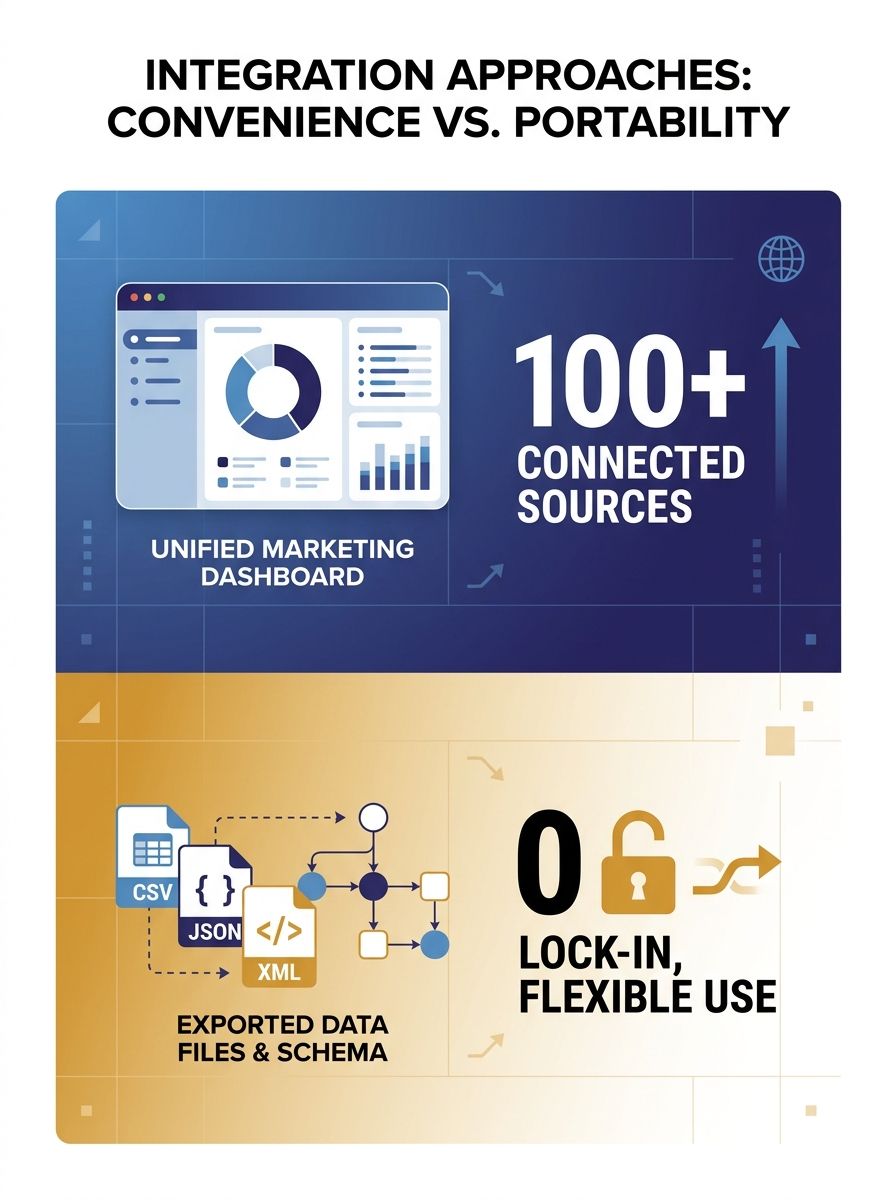
The distinction matters as platforms increasingly combine planning, execution, data ownership, and measurement in single environments. Infillion's planned acquisition of Foursquare—combining media execution with Foursquare visitation data and Catalina purchase intelligence—illustrates the trend toward closed-loop systems that reduce handoffs while consolidating control, according to the piece.
Exportability Test Exposes Integration Gaps
Procurement teams commonly evaluate martech integration by connector count, data refresh speed, and dashboard design, the framework notes. Those criteria measure convenience during healthy vendor relationships but fail to test whether integration preserves value when buyers need to compare alternatives, dispute recommendations, or migrate platforms.
A genuinely integrated data layer should lower switching costs by keeping definitions and history in forms buyers can understand and reuse outside the original platform, the analysis argues. When campaigns become easier to execute but harder to reconstruct elsewhere, integration improves workflow while weakening optionality—a tradeoff worth pricing before contracts are signed.
Data portability also changes day-to-day decision quality before migration becomes necessary, according to the framework. Teams that can move evidence into independent warehouses, models, or partner analysis environments gain a practical method to verify high-stakes conclusions without asking the system that produced them to grade itself. The goal is preserving the option to audit, not duplicating every dashboard.
Contract terms can promise export functionality while delivering opaque schemas, missing historical fields, or definitions that only function inside the product, the piece warns. Useful portability requires exported records to preserve enough context for operational use elsewhere. Otherwise, teams own files but not evidence.
Closed-Loop Measurement Requires Methodological Visibility
Marketing platforms connecting exposure with business outcomes create value by reducing fragmented measurement, where advertisers otherwise maintain separate systems for media delivery, location signals, purchase data, and reconciliation analytics, the framework states. Integration shortens the path from campaign to answer.
Risk emerges when integration is treated as proof rather than efficiency, according to the analysis. When the same commercial environment executes campaigns, joins data, defines outcomes, and reports results, buyers still need visibility into how each stage was constructed. Integration reduces handoffs but does not remove the need for methodological inspection.
The framework recommends evaluating integration through three lenses: exportability of raw and processed data, visibility into measurement logic and model construction, and continuity of historical data across platform versions. These criteria shift focus from connector proliferation to commercial durability—whether the integration survives vendor pressure, product pivots, or competitive evaluation.
Why This Matters Now
Marketing teams face mounting pressure to consolidate platforms as vendors bundle execution, data, and measurement into unified environments that promise efficiency gains. The DOJ's Google remedy establishes regulatory precedent that data portability carries competitive value distinct from operational convenience, giving procurement teams a framework for negotiating contracts that preserve exit options alongside workflow improvements.
The distinction between integration for convenience and integration for independence becomes critical as AI systems reshape campaign infrastructure and platforms deepen vertical integration. Teams that lock campaign history, audience definitions, and outcome data into proprietary formats face escalating costs when evaluating alternatives or challenging vendor recommendations. Contracts signed today determine whether marketing evidence remains auditable and portable five years into deployment.
The framework's publication arrives as antitrust enforcement reshapes expectations around data access, vendor lock-in, and competitive switching costs. Marketing leaders evaluating platform consolidation now have a precedent-backed case for treating exportability as a commercial requirement rather than a technical footnote in procurement reviews.

Sarah Chen
SEO strategist and web analytics expert with over 10 years of experience helping businesses improve their organic search visibility. Sarah covers keyword tracking, site audits, and data-driven growth strategies.
Related Articles

Marketing Automation Speed Race Masks Emerging Battle Over Proprietary Intelligence Layer
Ninety percent of marketing organizations now use AI agents operationally in their tech stack, not as pilot programs, according to Scott Brinker's Martech for 2026 research cited by EMARKETER, marking the first half of 2026 as the period when marketing automation platforms compressed campaign launch

HubSpot Data Shows 80% of Marketers Now Use AI for Content Creation as Automation Platforms Replace Manual Workflows
HubSpot's 2026 State of Marketing Report reveals that 80% of marketers now deploy AI tools for content and media creation, marking a fundamental shift from manual production to automated operational systems, according to a guide published June 29 by the marketing software company. The data underscor

Email Marketing Teams Abandon Open Rates as Primary KPI Following Privacy-Driven Metric Collapse
B2B email marketing teams are replacing open rate tracking with conversion-focused metrics including click-to-open rate, revenue attribution, and deliverability health indicators, according to a June 17 analysis published by MarketBoats. Open rates jumped from 28% to 55% following Apple's Mail Priva
Explore more topics