
More Than Half of Websites Fail Core Web Vitals, Manufacturing Sector Shows Disproportionate Performance Gaps
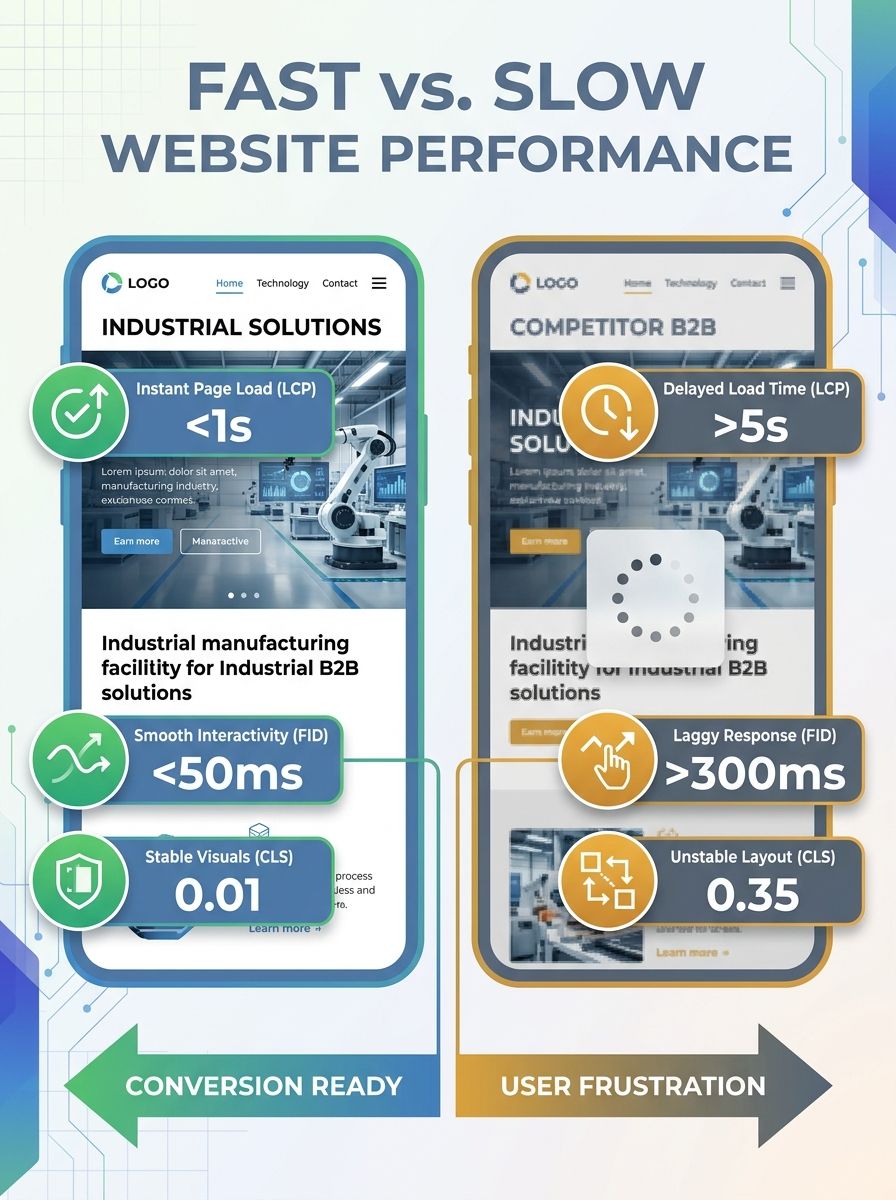
Only 48 percent of websites pass Google's Core Web Vitals benchmarks on mobile, according to data compiled by Lform Design from the HTTP Archive Web Almanac, with manufacturing websites showing disproportionate exposure due to below-standard load times averaging over six seconds.

More Than Half of Websites Fail Core Web Vitals, Manufacturing Sector Shows Disproportionate Performance Gaps
Only 48 percent of websites pass Google's Core Web Vitals benchmarks on mobile, according to data compiled by Lform Design from the HTTP Archive Web Almanac, with manufacturing websites showing disproportionate exposure due to below-standard load times averaging over six seconds. The New Jersey-based agency published the analysis on September 15, 2026, synthesizing publicly available industry data from Google, SEO Sherpa, and a 5,000-site structured data audit conducted by Digital Applied.
Performance Failures Concentrate in B2B Manufacturing Sector
The average manufacturer website loads in over six seconds, more than double the three-second threshold at which 53 percent of mobile users abandon a page, according to Google data cited in the analysis. With 42 percent of B2B researchers now using mobile devices during the purchasing process, the load time gap creates a direct conversion barrier at scale.
Organic search generates 53 percent of B2B inbound leads, yet 40 percent of B2B companies report lacking internal expertise to manage technical SEO effectively, according to SEO Sherpa data included in the compilation. The expertise gap compounds the performance problem across a sector where 74 percent of the more than 239,000 U.S. manufacturers employ fewer than 20 people and lack in-house digital resources.
"The data confirms what we see in our own client audits. Across the industry, manufacturer websites are operating well below the technical baseline Google now expects," said Ian Loew, founder of Lform Design, in the statement. "When a site takes six seconds to load, buyers will return to search before the page even finishes loading. That behavior signals poor experience to Google, while slow load times also prevent AI search engines from crawling the page at all."
Structured Data Implementations Fail Validation at High Rates
Nearly one in three websites deploys no schema markup at all, according to the analysis. Of sites that do implement structured data, only 22 percent pass Google's Rich Results Test without errors, meaning the vast majority of implementations fail to deliver measurable SEO value, according to a 2026 audit of 5,000 sites conducted by Digital Applied.
The structured data failure rate creates a secondary visibility problem beyond page load speed conversion impact. Sites that fail validation lose eligibility for enhanced search result displays and miss opportunities for AI engine citation, particularly as generative search systems increasingly rely on structured data to extract and validate factual claims.
The compiled data shows technical debt accumulating across a sector where websites were often built for a different era and have not kept pace with current buyer research patterns. Lform Design has served manufacturers and industrial companies exclusively since 2005, positioning the agency to observe performance patterns across the sector over two decades.
Mobile Abandonment Thresholds Create Lead Generation Gap
The three-second mobile abandonment threshold documented by Google intersects with the six-second average load time for manufacturer websites to create a measurable lead loss scenario. At the point where 53 percent of mobile users have already abandoned the page, the average manufacturer site has not yet finished loading.
The mobile abandonment behavior feeds back into search ranking algorithms as a negative user-experience signal. Sites that consistently trigger early exits from mobile users face ranking penalties that compound the initial performance problem, creating a cycle where technical underperformance leads to reduced visibility, which in turn reduces the traffic available to support revenue.
Manufacturers face sector-specific exposure to this dynamic because industrial B2B purchase cycles are longer and involve more stakeholders than consumer transactions, making early-stage research abandonment particularly costly. When a potential buyer exits during initial research, the manufacturer loses an opportunity to enter the consideration set for a purchase that may not occur for six to twelve months.
What Happens Next
The September 2026 data compilation arrives as Google continues tightening Core Web Vitals enforcement and as AI search engines establish crawl and citation patterns that disadvantage slow-loading sites. Manufacturers that have deferred WordPress performance optimization or technical SEO modernization face compounding visibility loss across both traditional and AI-powered search channels.
Lform Design's focus on manufacturers and industrial B2B companies since 2005 positions the agency to address sector-specific performance gaps through custom web design, WordPress and Statamic development, technical SEO, and generative engine optimization services. The firm's September 2026 analysis provides a baseline against which individual manufacturers can benchmark their own site performance.
The broader implication extends beyond manufacturing to any B2B sector where websites carry similar technical debt. The 52 percent failure rate on Core Web Vitals suggests that performance optimization has moved from competitive advantage to baseline requirement for search visibility and lead generation in 2026.

Alex Chen
Alex Chen is a digital marketing strategist with over 8 years of experience helping enterprise brands and agencies scale their online presence through data-driven campaigns. He has led marketing teams at two successful SaaS startups and specializes in conversion optimization and multi-channel attribution modeling. Alex combines technical expertise with strategic thinking to deliver actionable insights for marketing professionals looking to improve their ROI.
Related Articles

Google Tightens Core Web Vitals LCP Threshold to 2.0 Seconds, Only 33% of Mobile Sites Pass
Google tightened its Largest Contentful Paint threshold from 2.5 seconds to 2.0 seconds in a March 2026 Core Web Vitals update, forcing website operators to reevaluate optimization strategies that previously passed the performance benchmark, according to a June 5, 2026 analysis published by The Visu

Website Performance Analysis Shows 7x Conversion Gap Between One-Second and Five-Second Page Loads
A statistical compilation published August 24, 2026 quantifies the revenue cost of slow-loading websites, showing pages that load in one second convert at 3.05% while five-second pages convert at just 0.41%, according to data published by Mean CEO.

Google's August 2026 Algorithm Update Triggers Ranking Volatility Across 45% of Tracked Websites
Google's August 2026 algorithm update triggered ranking volatility across 45% of tracked websites beginning August 8, 2026, according to SEO Vendor's analysis published the same day, with sites demonstrating weak originality and thin evidence reporting steeper traffic declines than pages offering cl
Explore more topics