
Backlinko Publishes Seven-Step Marketing Strategy Framework Anchored in Business Goals Over Channel Tactics
Backlinko released a seven-step marketing strategy framework on April 26 designed to help teams build documented plans anchored in measurable business goals rather than platform-specific tactics, according to the published guide. The framework addresses what the source identifies as a common pain po
Backlinko Publishes Seven-Step Marketing Strategy Framework Anchored in Business Goals Over Channel Tactics
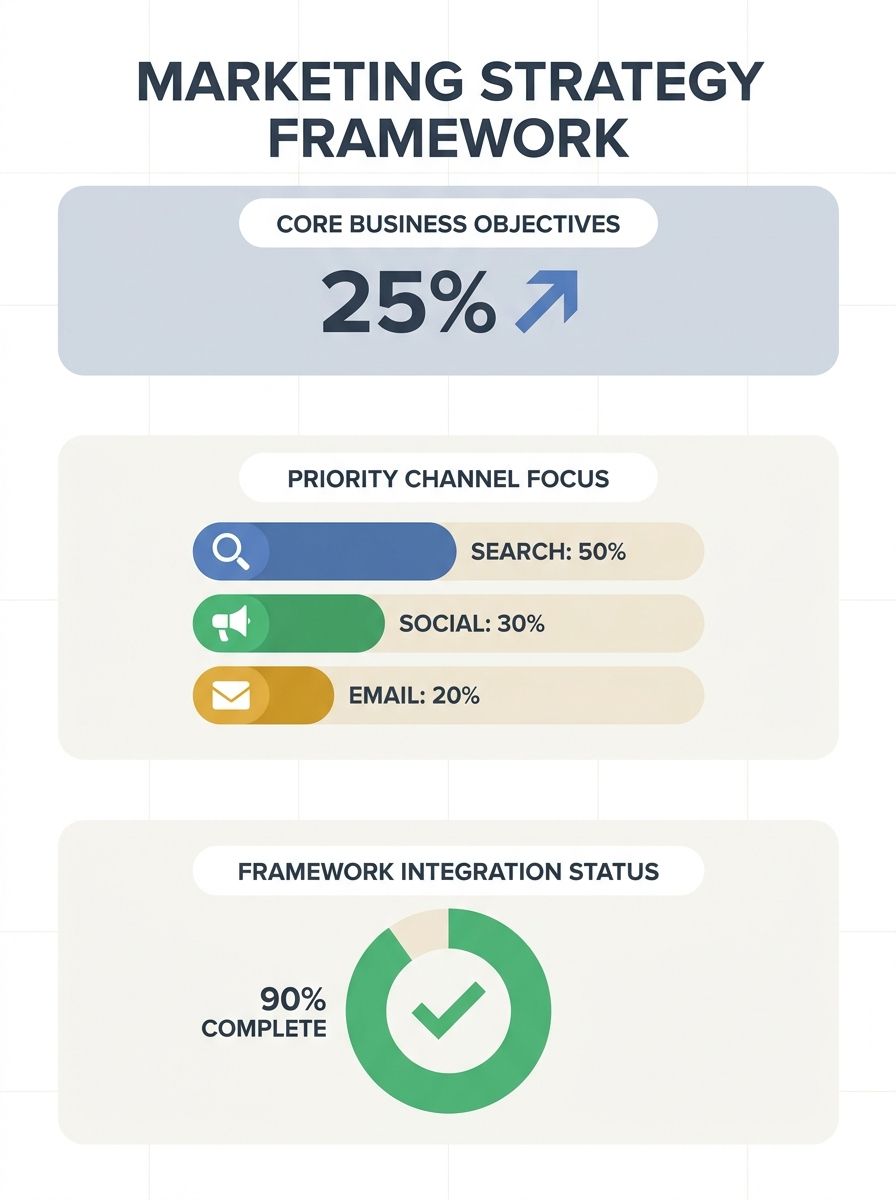
Backlinko released a seven-step marketing strategy framework on April 26 designed to help teams build documented plans anchored in measurable business goals rather than platform-specific tactics, according to the published guide. The framework addresses what the source identifies as a common pain point: marketing teams chasing emerging channels and AI tools without structural clarity on which outcomes they're actually trying to drive.
The framework walks teams from business goal definition through audience research, channel selection, and performance tracking. Backlinko structures the approach around establishing primary objectives first—demand generation, brand awareness, retention, or expansion—before selecting channels or tactics. The guide includes a companion workbook that prompts teams to document decisions at each stage.
Framework Prioritizes Goal Clarity Before Channel Selection
The first two steps require teams to define one primary business goal and articulate a unique value proposition before evaluating tactics. Backlinko's framework asks marketers to identify the specific problem marketing needs to solve—whether volume, lead quality, customer acquisition cost, or retention—and translate that into a SMART goal with defined metrics and timelines.
The guide cites Fireflies.ai's 2020 launch strategy as an example. The company chose product-led growth focused on referrals and organic adoption rather than paid acquisition or brand campaigns. Co-founder Krish Ramineni measured success through product usage, meeting invitations for the AI notetaker, and organic web mentions. The strategy drove growth to over 10 million users without paid advertising, according to the framework documentation.
The unique value proposition step directs teams to analyze their best customers—including subscription renewals and brand evangelists—to identify consistent outcomes those customers achieve. The framework instructs teams to move beyond surface benefits like "easy to use" and anchor positioning to measurable results such as fewer errors, faster workflows, or stronger performance metrics. DoorDash's "Everything you crave, delivered" tagline serves as the guide's example of a UVP that defines audience state, product breadth, and core outcome in a single statement.
Audience Research and Channel Mapping Form Strategy Core
Step three through five cover audience segmentation, channel selection, and messaging alignment. The framework instructs teams to map audience pain points, preferred content formats, and decision triggers rather than relying on demographic data alone. Channel selection follows goal and audience clarity—the guide warns against choosing platforms based on trend cycles or competitor activity without tying channel investments to specific customer acquisition or retention metrics.
Teams building keyword prioritization frameworks or working through cross-team SEO planning may find overlap between Backlinko's goal-driven approach and content strategy workflows that start with business impact rather than search volume alone.
The final two steps address measurement frameworks and execution planning. The guide directs teams to establish baseline metrics before launching campaigns and to define leading indicators that signal whether tactics are working before lagging revenue metrics confirm outcomes. The execution phase breaks annual goals into quarterly milestones with assigned ownership and review cadences.
Context and Outlook
The framework arrives as marketing teams navigate attribution challenges from AI-driven discovery patterns and zero-click search behaviors. Backlinko positions goal clarity and documented strategy as stabilizing forces when platform changes and new tool categories create pressure to adopt tactics before understanding their strategic fit.
The workbook approach converts the framework from reference content into an operational tool teams can use during planning cycles. By requiring written answers to goal definition and value proposition questions before addressing channel mix, the structure mirrors planning frameworks common in product management and sales operations.
Marketing teams measuring performance against industry benchmarks or adapting strategies as AI reshapes traffic patterns may apply the framework's goal-first logic to evaluate whether emerging tactics support existing objectives or require strategy revision. The documented approach creates audit trails showing how channel investments connect to business outcomes—documentation that becomes critical when teams need to communicate performance shifts to executives.

Alex Chen
Alex Chen is a digital marketing strategist with over 8 years of experience helping enterprise brands and agencies scale their online presence through data-driven campaigns. He has led marketing teams at two successful SaaS startups and specializes in conversion optimization and multi-channel attribution modeling. Alex combines technical expertise with strategic thinking to deliver actionable insights for marketing professionals looking to improve their ROI.
Explore more topics