
Outsourcing SEO to the Philippines - Good or bad
The best SEO hire I ever made wasn't in New York, London, or even Austin. It was a technical SEO specialist in Cebu who found a crawl budget issue our in-house team had missed for eight months. That single fix recovered 23% of our indexed pages within six weeks.
Outsourcing SEO to the Philippines: An Honest Breakdown of What Works and What Doesn't
The best SEO hire I ever made wasn't in New York, London, or even Austin. It was a technical SEO specialist in Cebu who found a crawl budget issue our in-house team had missed for eight months. That single fix recovered 23% of our indexed pages within six weeks. But I've also burned money on offshore SEO providers who delivered nothing but spun content and garbage backlinks. Both experiences taught me something important: outsourcing SEO to the Philippines isn't inherently good or bad. It's a systems problem. And like any systems problem, the outcome depends entirely on how you architect it.
Why the Philippines Dominates SEO Outsourcing
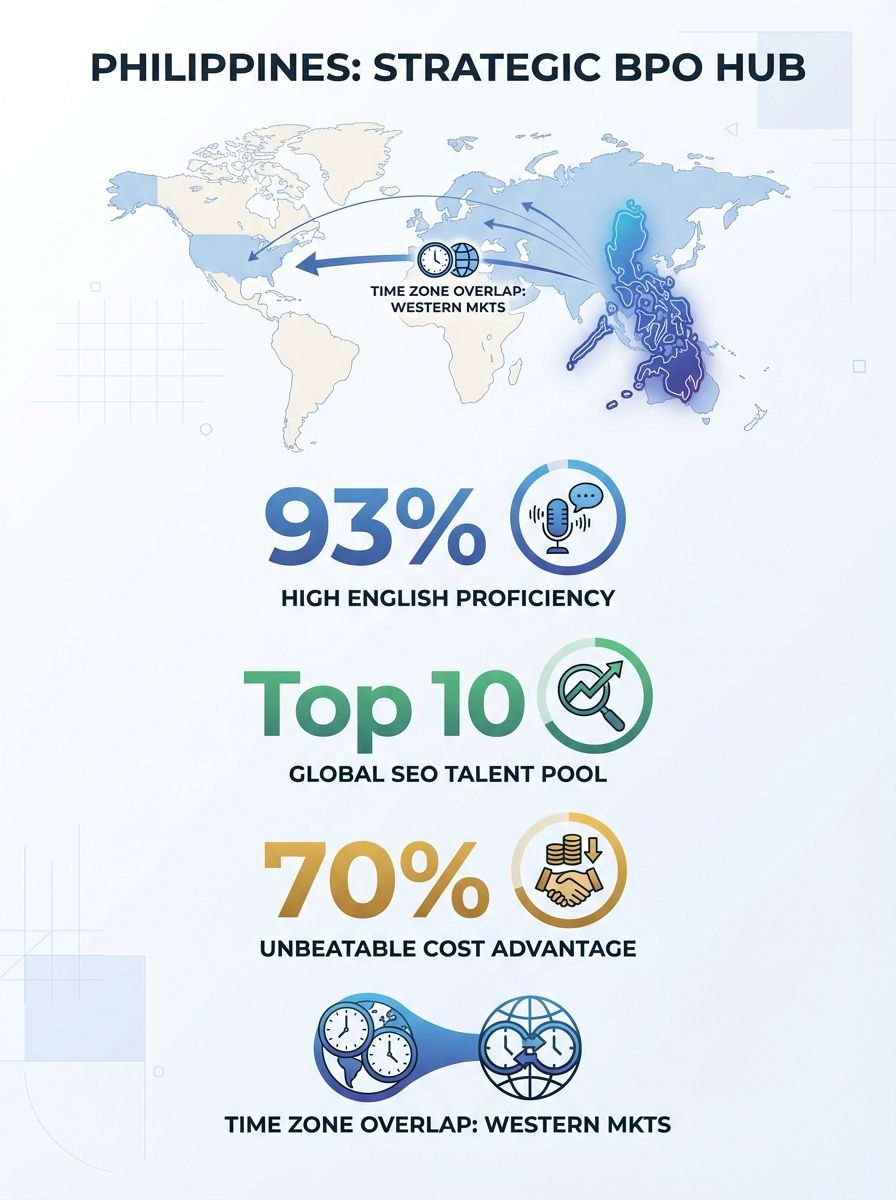
The Philippines has become the default destination for offshore SEO work, and there are real structural reasons beyond just cost. English proficiency is the obvious one: roughly 47% of Filipinos are highly fluent in English, ranking the country second in Asia. That matters enormously for content-heavy SEO work where nuance, tone, and readability directly affect rankings.
But the deeper advantage is workforce maturity. Filipino SEO professionals aren't new to this. The BPO industry has been operating there for over two decades, and digital marketing specialization has grown steadily alongside it. You're not dealing with a nascent talent pool. According to Truelogic's analysis of Philippine SEO outsourcing, building a full SEO team from scratch internally is expensive when you factor in salaries, tools, training, and turnover. Outsourcing lets you skip that ramp-up entirely.
The cost differential is substantial. Depending on experience level, you can expect to pay 30-70% less than equivalent talent in the US, UK, or Australia. A senior SEO strategist in Manila might cost you $1,500-2,500 per month. The same role in a US metro area runs $6,000-10,000. That's not a rounding error. It's the difference between being able to afford a three-person SEO team versus a single generalist.
And the talent has specialized. The days of hiring a single "SEO guy" who does everything from keyword research to link outreach are fading. Philippine agencies now structure teams around distinct roles: technical SEO auditors, content strategists, link builders, and data analysts. This mirrors how mature in-house teams operate, which makes integration far smoother.
The Real Risks Nobody Wants to Talk About
Here's where I stop sounding like an outsourcing brochure.
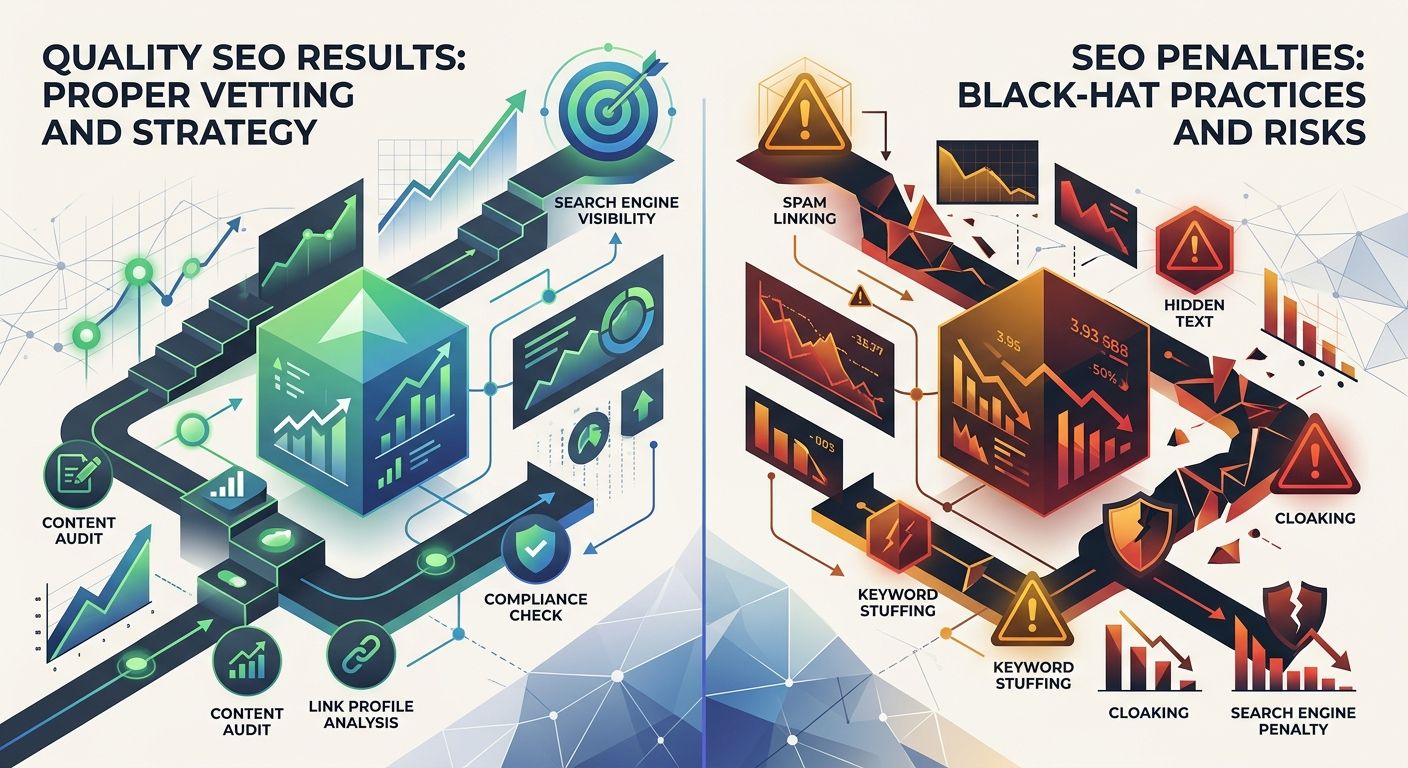
The biggest risk isn't cost or communication. It's quality variance. The Philippine SEO market is enormous, and that means the gap between the best and worst providers is staggering. I've reviewed deliverables from offshore teams that were genuinely world-class, complete with detailed technical audits, strategic content roadmaps, and clean data reporting. I've also received "SEO audits" that were clearly auto-generated reports with zero actionable insight.
Some providers still rely on tactics that should have died a decade ago. Content spinning. Private blog networks. Bulk directory submissions. These aren't just ineffective; they're actively dangerous to your domain authority. If you're not tracking your keyword rankings carefully, you might not notice the damage until it's too late.
The second risk is the accountability gap. When your SEO team sits three seats away from you, problems get surfaced quickly. When they're 8,000 miles away and 12 hours offset, issues can fester for weeks. I once discovered that an offshore team had been building links to the wrong landing pages for an entire quarter because nobody had established a clear review cadence. That was my failure as much as theirs.
The third risk is strategic depth. Many offshore providers excel at execution but struggle with strategy. They can optimize title tags, build links, and fix technical issues all day long. But can they connect SEO to your broader business goals? Can they decide which keywords matter for revenue, not just traffic? This is the gap that catches most companies off guard.
How to Structure It So It Actually Works
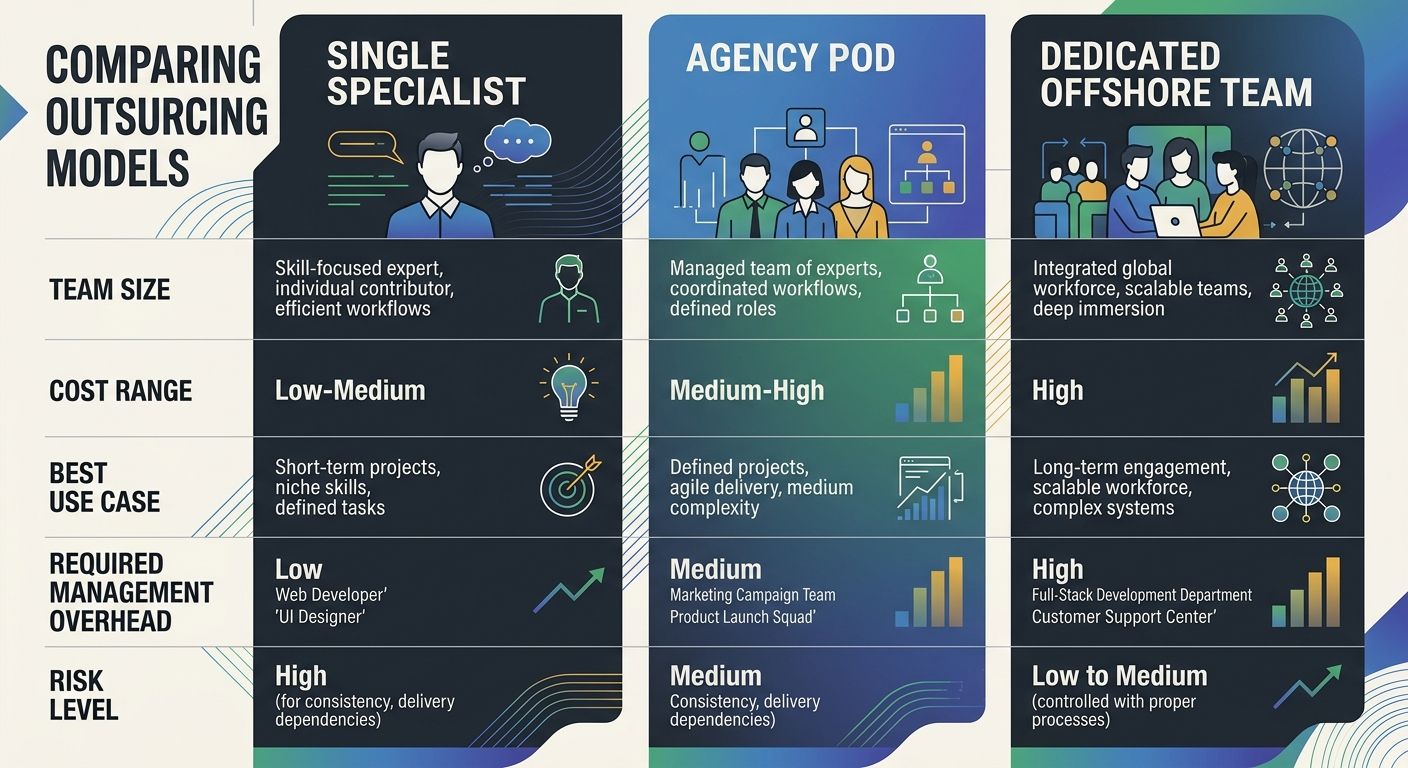
I've settled on a framework after years of trial and error. It boils down to three models, and picking the right one depends on your scale and complexity.
Model A: The Single Specialist. Best for small sites with straightforward needs. You hire one experienced freelancer or dedicated resource. They handle ongoing on-page optimization, basic technical monitoring, and content briefs. Cost: $800-1,500/month. This works when your SEO needs are consistent and predictable.
Model B: The Agency Pod. A small team of 2-4 specialists bundled through an agency. You get built-in quality assurance, multiple skill sets, and someone managing the workflow for you. Cost: $2,000-5,000/month. This is the sweet spot for mid-size businesses that need real results but can't justify a full in-house team.
Model C: The Dedicated Offshore Team. A fully embedded team of 4-8 people who function as an extension of your internal marketing department. They attend your standups, use your project management tools, and report to your head of marketing. Cost: $5,000-15,000/month. This is for companies running large-scale SEO operations across multiple properties.
Regardless of which model you pick, these five operational practices are non-negotiable:
Weekly sync calls with a standing agenda: wins from the prior week, blockers, priorities for the coming week, and one strategic discussion topic
Shared project management through tools like Asana or ClickUp where every task has an owner, deadline, and acceptance criteria
Standard Operating Procedures documented for every recurring process, from publishing a blog post to submitting a disavow file
Monthly reporting tied to business KPIs, not vanity metrics, and make sure your analytics setup actually reflects reality before you start evaluating anyone's performance
Quarterly strategy reviews where you step back from execution and ask whether the overall direction still makes sense
Picking the Right Partner
This is where most people get lazy, and it costs them.
Start by looking at portfolios. Not testimonials on their website, which are curated. Actual case studies with measurable outcomes. If they can't show you specific traffic growth, ranking improvements, or revenue impact for past clients, that's a red flag.
Ask about their approach to link building specifically. This is the area with the highest risk of shady practices. A good provider will talk about digital PR, guest posting on relevant publications, and relationship-based outreach. A bad one will mumble about "link packages" and "tiered link structures."
When evaluating seo companies in the Philippines, look for firms that ask you hard questions during the sales process. The best providers want to understand your business model, competitive landscape, and revenue goals before proposing a strategy. If they jump straight to a generic package with a fixed number of backlinks per month, they're selling you a commodity, not a service.
The guide from Outsourced on Philippine SEO outsourcing makes a fair point: the country's lower labor costs have attracted everyone from multinational corporations to solo entrepreneurs. But cheap labor cuts both ways. You can find incredible value, or you can find people telling you what you want to hear while delivering nothing of substance.
And here's something people overlook: test before you commit. Run a paid trial of 30-60 days with clearly defined deliverables. Have them audit one section of your site. Ask for a content strategy for one product line. Judge the quality of that output before signing a long-term contract.
Where Outsourced SEO Fits in a Modern Strategy
SEO itself is getting more complex. The rise of AI answer engines is reshaping how organic traffic flows, and staying competitive requires adapting your strategy beyond traditional blue-link optimization. If you're still thinking about SEO as just "rank for keywords and get clicks," you're already behind.
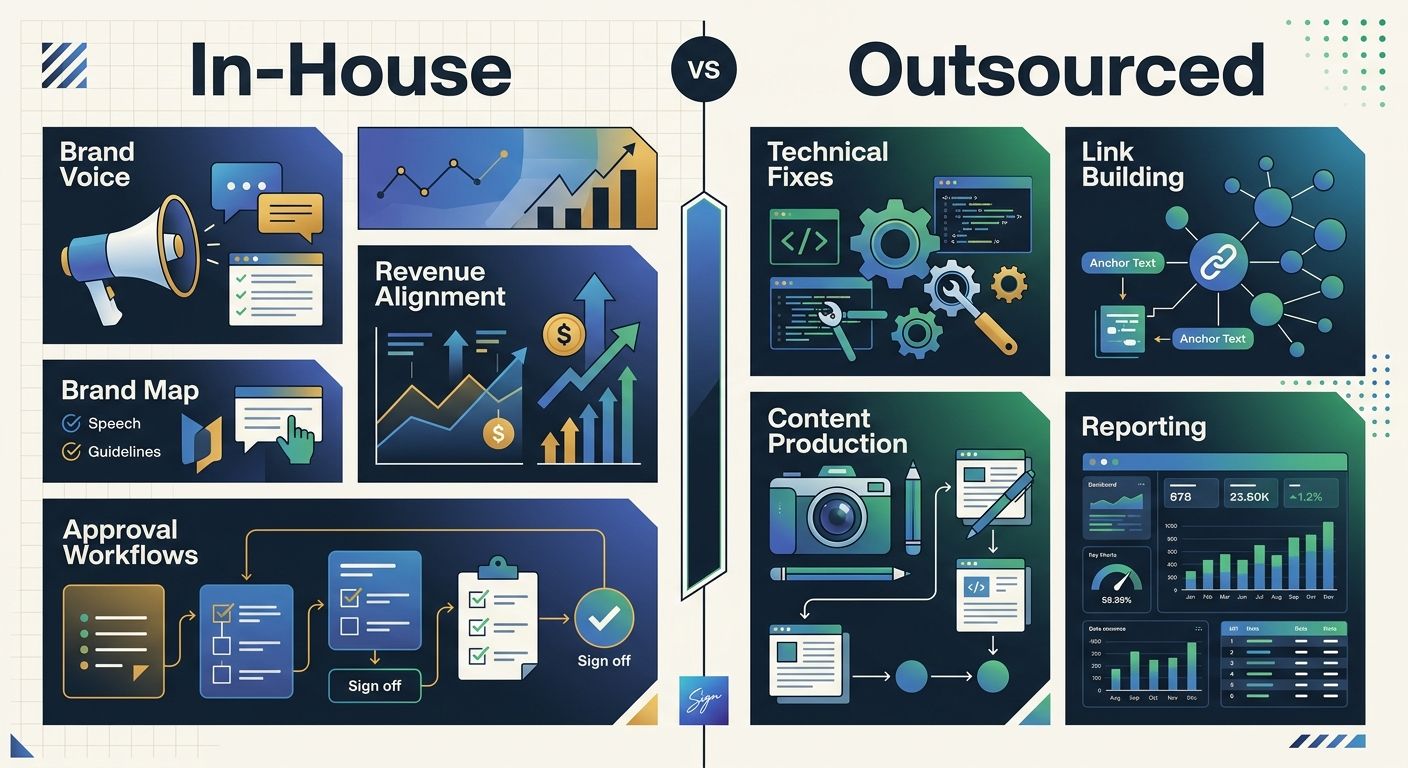
This complexity actually strengthens the case for outsourcing, but only for execution-layer work. Here's how I think about the split:
Keep in-house: Brand strategy, content voice and tone guidelines, keyword prioritization tied to revenue data, final approval on anything published under your brand name.
Outsource: Technical audits and implementation, link prospecting and outreach, content production from approved briefs, rank tracking and reporting, competitor monitoring.
This division works because it puts strategic decisions where institutional knowledge lives (your team) and puts scalable execution where cost-efficiency lives (your offshore partner). If you're trying to build a content strategy from the ground up, you need someone who understands your market deeply. But once that strategy exists, the execution can absolutely be handled by a skilled offshore team working from detailed briefs.
The same logic applies to your SEO tool stack. Offshore teams often have access to enterprise-level tools like SEMrush and Ahrefs through their agency licenses, which means you don't need to pay for those subscriptions separately. That's a real cost saving that often goes unmentioned.
The Verdict
Outsourcing SEO to the Philippines is a good decision for most businesses, but only when you treat it as a management challenge, not a procurement one. You can't just hand over your domain credentials and check back in six months. That will end badly regardless of where your team sits.
The companies I've seen get the best results share three traits: they invest time in onboarding their offshore partners properly, they maintain clear documentation and communication rhythms, and they retain strategic ownership in-house while delegating execution. The companies that get burned almost always skipped one of those steps.
If you're spending more than $3,000 per month on SEO and you don't have a team of at least three people working on it, you're probably underresourced. An offshore team in the Philippines can fill that gap at a fraction of the cost of domestic hires. But vet ruthlessly, start small, and build trust before you scale. The talent is there. Your job is to build the system that lets it perform.

Sarah Chen
SEO strategist and web analytics expert with over 10 years of experience helping businesses improve their organic search visibility. Sarah covers keyword tracking, site audits, and data-driven growth strategies.
Frequently Asked Questions
- How much does it cost to hire an SEO specialist in the Philippines?
- A senior SEO strategist in Manila typically costs $1,500-2,500 per month, which is 30-70% less than equivalent talent in the US, UK, or Australia where the same role runs $6,000-10,000 monthly.
- Why is the Philippines good for outsourcing SEO?
- The Philippines has high English proficiency with roughly 47% of the population fluent in English, a mature BPO industry with over two decades of experience, and specialized SEO talent structured into distinct roles like technical auditors, content strategists, and link builders.
- What are red flags when hiring offshore SEO providers?
- Red flags include promises of page one rankings in 30 days, vague references to 'link packages' and 'tiered link structures,' auto-generated audit reports with no actionable insights, and providers who jump to generic packages without asking about your business model or goals.
- What should I outsource to a Philippines SEO team and what should I keep in-house?
- Keep in-house: brand strategy, content voice guidelines, keyword prioritization tied to revenue, and final approval on published content. Outsource: technical audits, link outreach, content production from briefs, rank tracking, and competitor monitoring.
- How long does it take to see results from SEO?
- Legitimate SEO results take a minimum of 3-6 months, so any provider promising faster results is likely using black-hat practices.
- What are the three outsourcing models for Philippines SEO teams?
- Model A is a single specialist ($800-1,500/month) for straightforward needs, Model B is an agency pod of 2-4 specialists ($2,000-5,000/month) for mid-size businesses, and Model C is a dedicated team of 4-8 people ($5,000-15,000/month) for large-scale operations.
- What management practices are essential when outsourcing SEO?
- Non-negotiable practices include weekly sync calls with standing agendas, shared project management tools with clear ownership and deadlines, documented standard operating procedures, monthly reporting tied to business KPIs, and quarterly strategy reviews.
- How should I test an offshore SEO provider before committing?
- Run a 30-60 day paid trial with clearly defined deliverables such as auditing one section of your site or creating a content strategy for one product line, then judge the quality of that output before signing a long-term contract.
Explore more topics