
Self-Promotional Listicles Feed Competitor Recommendations in Google AI Overviews, June 2026 Research Shows
Self-promotional comparison pages that rank brands in a category are now feeding competitor recommendations inside Google's AI Overviews, according to research published in June 2026 by Lily Ray analyzing 100 B2B software queries across three months. Cited brands lose the recommendation 69% of the t
Self-Promotional Listicles Feed Competitor Recommendations in Google AI Overviews, June 2026 Research Shows
Self-promotional comparison pages that rank brands in a category are now feeding competitor recommendations inside Google's AI Overviews, according to research published in June 2026 by Lily Ray analyzing 100 B2B software queries across three months. Cited brands lose the recommendation 69% of the time.
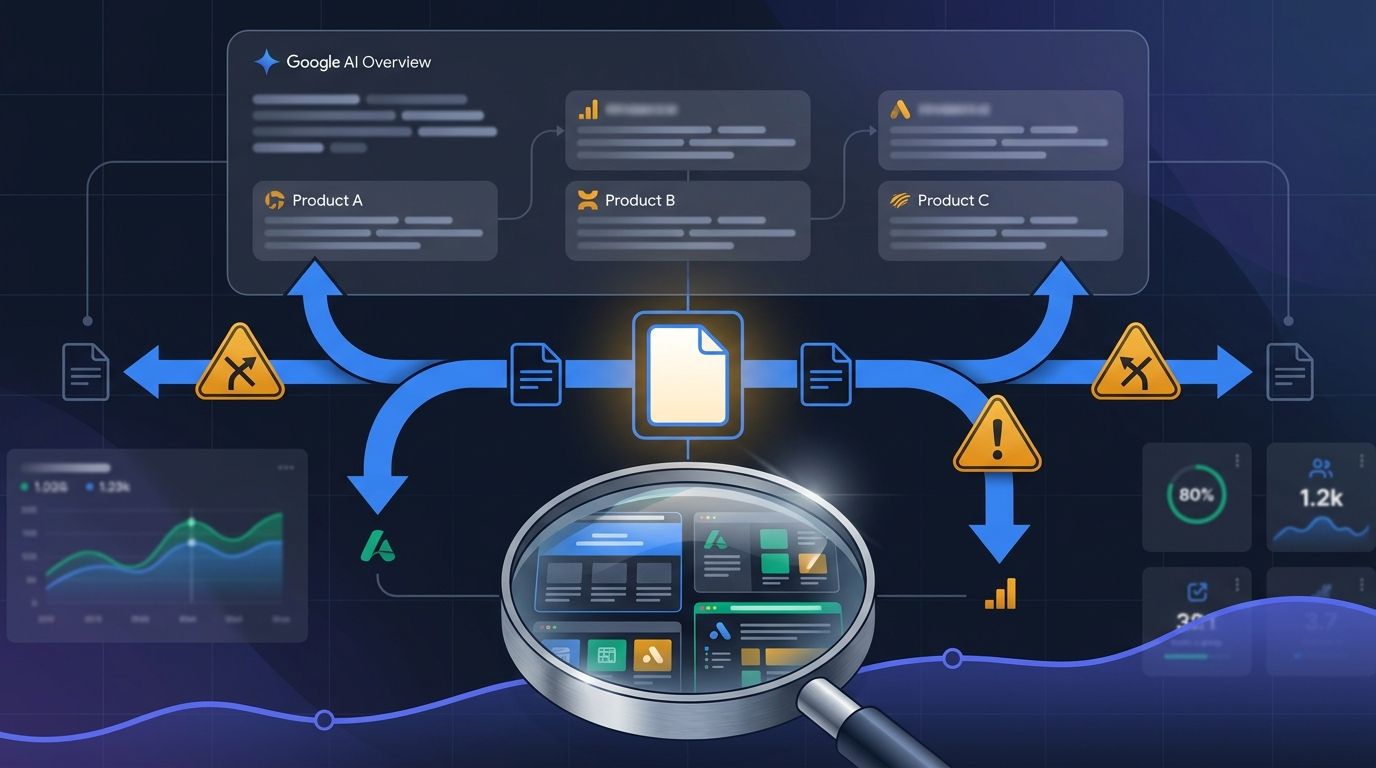
Ray tracked 100 "best [category] software" queries through Google's AI Overviews between April and June 2026, checking each query three times. Across the 80 queries that triggered an AI Overview, self-ranked listicles appeared as cited sources 323 times. In 224 instances—69% of citations—Google named the brand's page as a source, then recommended a competitor ranked inside that same listicle.
The data quantifies a split that has reshaped content strategy for B2B software companies: earning a citation no longer translates to earning a customer recommendation. For years, brands published comparison pages ranking themselves at the top of category lists, a tactic that influenced buyer perception through organic search rankings. That approach now produces an outcome where the brand provides the citation authority while competitors capture the transactional intent.
The Citation-Recommendation Split
A citation identifies the page Google used as a source for its AI-generated answer. A recommendation tells the reader which product to choose. Only recommendations drive purchase decisions. Citations signal informational trust; recommendations signal transactional preference. The two outcomes appear on the same screen but carry different conversion value.
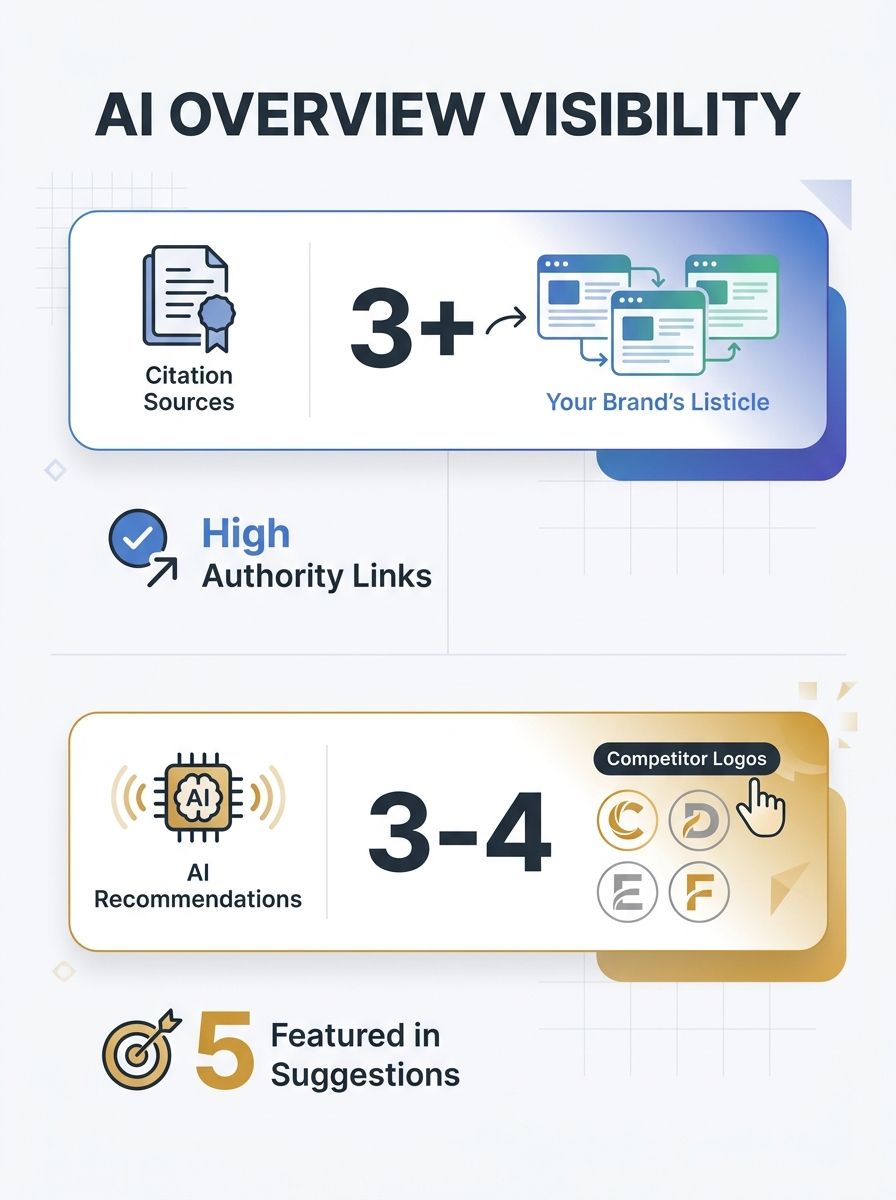
Ray's research documented the gap across B2B software categories. For "best LMS for selling courses," Google cited Oasis LMS multiple times—in the answer body and sidebar—while recommending Kajabi, Thinkific, LearnWorlds, and Teachable, each of which Oasis had ranked inside its own comparison page. The pattern repeated across CRM, help desk, and SEO software queries.
What an AI engine cites depends on page content. What it recommends depends on how the broader web covers a brand: independent mentions, reviews, referring domains, and third-party comparisons. On-page optimization cannot close a gap that exists off the page.
What the Data Shows About Recommended Brands
Brands that won recommendations carried substantially more referring domains and appeared more frequently in AI answers across both Google's AI Overviews and ChatGPT than brands that were cited but not recommended, Ray found. The volume of independent web coverage separated recommended brands from cited-only brands.
Google drew recommendation content heavily from third-party and user-generated platforms. Reddit, Forbes, and YouTube ranked among the most-cited domains for product recommendations. Reviews, comparison posts, and product walkthroughs published by sources other than the vendor drove recommendation inclusions far more than branded content.
The research showed that established category leaders maintained recommendation dominance because the web already covered them independently. Newer or smaller brands publishing self-promotional listicles fed Google the citation but lacked the external mention density to earn the recommendation slot.
Why Self-Promotional Content Fails in AI Search
Google now treats self-ranked pages differently inside AI-generated answers. The engine assigns citation value to comprehensive category pages but assigns recommendation weight to brands with external validation. Self-promotional pages function as informational sources—Google uses them to understand the category—while recommendation logic pulls from independent assessments.
This creates a mechanism where a brand's own content educates the AI about competitors. The listicle establishes that Brand A, Brand B, and Brand C exist in a category. The AI then checks which of those three brands has the most independent mentions, reviews, and third-party comparisons, and recommends based on that external signal rather than the on-page ranking the listicle asserts.
Brands cannot optimize their way past the gap through content alone. The 69% citation-to-lost-recommendation rate reflects an authority model that weighs external coverage more heavily than self-published claims. The GEO Visibility Gap: Why Your Google Rankings Don't Matter If AI Chatbots Can't Find You examined this authority shift in detail when tracking how traditional SEO metrics diverged from AI recommendation rates in early 2026.
How to Audit Your Brand's AI Recommendation Rate
Ray's methodology separates citation tracking from recommendation tracking, a split that standard SEO tools do not yet measure. Marketing teams can run a manual audit by building a query list of category searches buyers would type—"best [category] software," "[competitor] alternatives," "top [category] tools"—then recording citations and recommendations separately for each query.
Run each query multiple times, since AI answers shift between sessions. Record which pages Google cites as sources and which products it recommends in the answer text. Score share of recommendations won rather than number of citations earned. Extend the audit beyond Google by running the same queries through ChatGPT and Perplexity to map which publishers those engines surface for the category.
The exercise produces two metrics: citation frequency and recommendation frequency. A brand earning high citation frequency but low recommendation frequency faces the same gap Ray documented—its content educates the AI while competitors capture the transactional moment. Beyond Traditional Rankings: How to Optimize for Both Google Search and AI Answer Engines in 2026 outlined parallel tracking frameworks for multi-engine visibility.
Context and Outlook
The citation-recommendation split represents a structural change in how content authority translates to customer acquisition. For software companies that scaled comparison content as an SEO tactic, the return on that investment now flows to competitors who rank inside those pages. The 69% lost-recommendation rate suggests most brands currently optimizing for citations are inadvertently funding competitor visibility.
Ray's research points toward affiliate programs and third-party creator partnerships as the mechanism to generate independent mentions at scale. Paying creators per conversion rather than per placement produces ongoing coverage—reviews, walkthroughs, updated comparisons—without commissioning each piece individually. The shift moves content production from owned channels to distributed creator networks, a model more aligned with how AI engines weigh external validation.
Brands that continue publishing self-promotional listicles without building parallel third-party coverage will likely see the gap widen as Google and other AI engines refine recommendation algorithms. The data suggests that winning in AI search requires producing less branded content and generating more independent mentions, a reversal of the content-volume strategies that dominated SEO from 2015 through 2024.

Sarah Chen
SEO strategist and web analytics expert with over 10 years of experience helping businesses improve their organic search visibility. Sarah covers keyword tracking, site audits, and data-driven growth strategies.
Related Articles

AI Systems Recommend Brands Based on Third-Party Mentions, Not Direct SEO Signals, Agency Founder Says
Kris Jones, founder of LSEO and former CEO of Pepper Jam, stated that AI search systems recommend brands based on third-party mentions and brand signals rather than direct optimization efforts, according to a Search Engine Journal podcast published August 3, 2026.
B2B Software Buyers Shift from Google to AI Chatbots as Primary Research Starting Point, G2 Data Shows
More than half of B2B software buyers now begin their research using AI chatbots rather than Google, according to data released June 26 by G2. The company's 2026 AI Search Insight Report found that 51% of buyers start with AI tools, up from 36% seven months earlier, marking a fundamental shift in ho
Brands Ranking #1 on Google Missing 62% of AI Overview Citations, Adweek Analysis Shows
Brands holding first-page Google rankings are absent from 62% of citations in AI-generated search answers, according to a July 22 analysis by Adweek examining generative engine optimization adoption patterns, as only 38% of pages cited in Google's AI Overviews come from URLs in the top ten tradition
Explore more topics