
Digital Ad Attribution Windows Overlap Rather Than Count Separate Conversions, Foxwell Digital Analysis Shows
Attribution windows in digital advertising platforms overlap rather than track separate conversion pools, according to a technical breakdown published by Foxwell Digital on June 8, 2026. The analysis clarifies a persistent confusion among paid media buyers: a single conversion can appear in both 7-D

Digital Ad Attribution Windows Overlap Rather Than Count Separate Conversions, Foxwell Digital Analysis Shows
Attribution windows in digital advertising platforms overlap rather than track separate conversion pools, according to a technical breakdown published by Foxwell Digital on June 8, 2026. The analysis clarifies a persistent confusion among paid media buyers: a single conversion can appear in both 7-Day Click and 1-Day Click columns because the shorter window is a subset of the longer one.
The clarification emerged from discussions within the Foxwell Founders community, where marketers questioned whether adding column breakdowns would inflate total conversion counts. Andrew Foxwell, co-founder of Foxwell Digital, documented the findings after members debated whether each attribution column represented a separate conversion value or if the numbers contained duplicates.
Click Windows Nest; Engagement Windows Separate
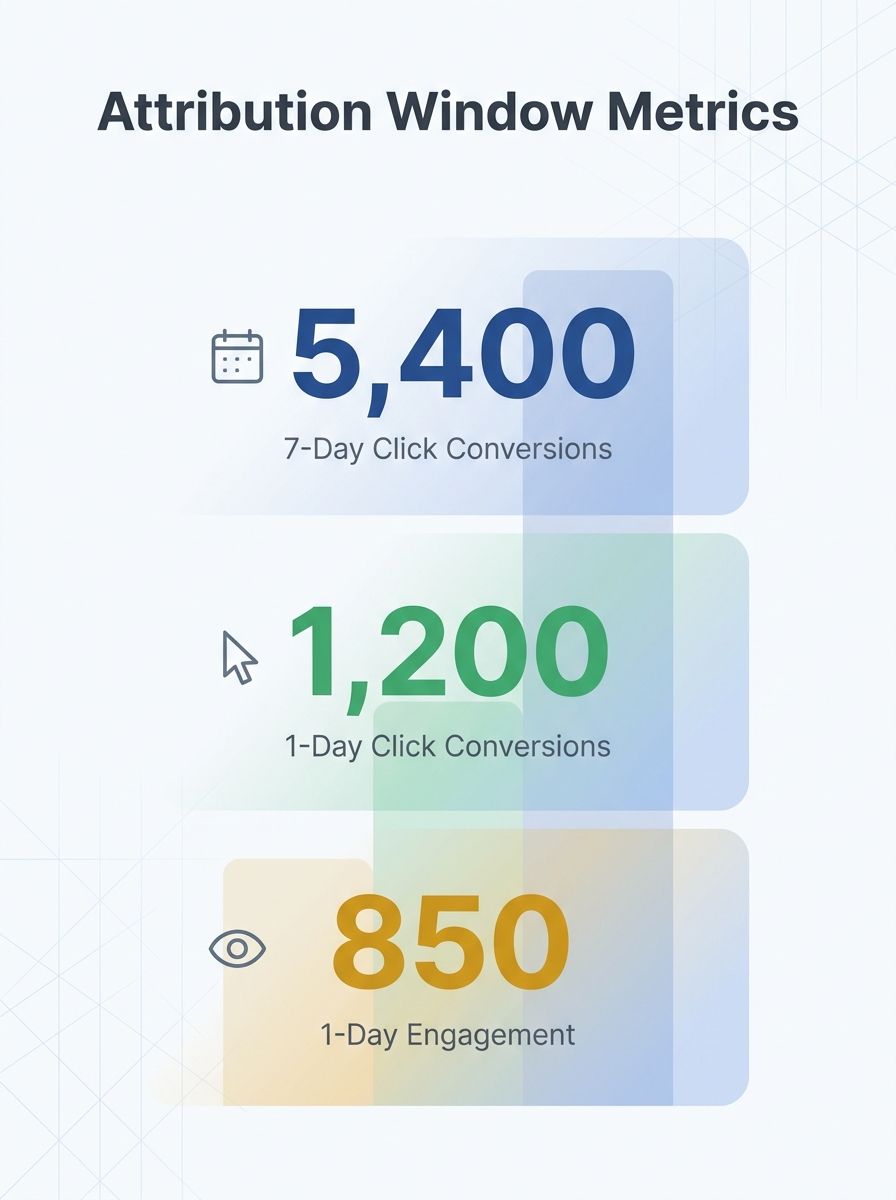
Platform attribution logic treats click windows as nested time periods, according to the Foxwell Digital analysis. Every conversion appearing in a 1-Day Click column also appears in the 7-Day Click column because any action within one day necessarily falls within seven days. Media buyers who sum these columns risk counting the same conversion twice.
Engagement-through attribution operates on separate tracks. A conversion attributed to a 1-Day Engagement window cannot simultaneously appear in click-attribution columns. Platform documentation reviewed in the analysis specifies that engage-through attribution counts interactions excluding link clicks—reactions, video views, or carousel swipes that lead to conversion within one day.
The distinction matters for budget allocation decisions. A campaign showing 150 conversions in 7-Day Click and 50 in 1-Day Engagement delivered 200 total conversions, not 200 plus the overlap.
Attribution Hierarchy Resolves Multi-Touch Claims
When a user both views and engages with an ad before converting, platform attribution defaults to the higher-value window, the analysis noted. If view-through and engage-through both qualify, the system assigns credit to whichever attribution model the advertiser configured as primary.
Phil Kiel, credited as the inspiration for the published breakdown, raised the initial question about whether engagement and click windows could claim the same conversion. Platform definitions reviewed in the analysis specify that click-through attribution takes precedence over engagement-through when both interaction types occur.
The nesting principle extends to view-through windows, though the Foxwell analysis focused on click and engagement attribution. A 1-Day View window would similarly nest inside a 7-Day View window, creating the same risk of double-counting if columns are summed without understanding their relationship.
Misreading Attribution Columns Distorts ROAS Calculations
Campaign managers who misinterpret attribution overlap report inflated conversion volumes to stakeholders, skewing return-on-ad-spend calculations. A media buyer adding all visible attribution columns could report 400% higher conversion counts than actually occurred, according to scenarios outlined in the analysis.
The error compounds when teams optimize toward specific attribution windows without recognizing that shorter windows already contribute to longer-window totals. Shifting budget to improve 1-Day Click performance automatically affects 7-Day Click metrics because the populations overlap completely.
Foxwell Digital's documentation recommends reviewing platform-specific attribution definitions before building reports, noting that different ad systems handle overlap and precedence rules differently. The analysis drew from advertising platform documentation but did not name specific platforms in the published breakdown.
Why This Matters Now
Attribution measurement confusion directly undermines the data governance practices that separate effective marketing operations from guesswork. As advertising platforms add more granular attribution breakdowns—hourly windows, cross-device tracking, probabilistic modeling—the number of columns media buyers can misinterpret multiplies. The Foxwell Digital clarification arrives as Q2 2026 budget reviews force marketing teams to defend spend efficiency with cleaner conversion data.
Marketers who understand window overlap can build accurate attribution frameworks that tie ad spend to actual pipeline contribution rather than inflated conversion counts. The distinction between click-through and engagement-through windows also informs creative strategy: engagement-attributed conversions signal that non-click interactions (video completions, carousel browsing) drive results even when users don't immediately click through.
Platform attribution logic won't simplify in 2026; privacy regulations and cookie deprecation push measurement toward more complex probabilistic models. Media buyers who master window interpretation now position themselves to navigate the next wave of attribution changes without losing visibility into what actually drives conversions.

Alex Chen
Alex Chen is a digital marketing strategist with over 8 years of experience helping enterprise brands and agencies scale their online presence through data-driven campaigns. He has led marketing teams at two successful SaaS startups and specializes in conversion optimization and multi-channel attribution modeling. Alex combines technical expertise with strategic thinking to deliver actionable insights for marketing professionals looking to improve their ROI.
Related Articles
B2B Marketing Programs Systematically Undervalue Outbound Channels in Last-Click Attribution Models, Analysis Finds
Marketing analysis published June 13, 2026, by Fypion Marketing identifies a structural reporting failure in B2B demand generation: last-click attribution assigns conversion credit to bottom-of-funnel branded searches and direct visits while erasing the cold emails, content interactions, and retarge

AI-Referred Traffic Converts at 11x the Rate of Traditional Search, Yet Remains Invisible to Most Analytics Platforms
Visitors referred by large language models convert to sign-ups at 1.66%, more than eleven times the 0.15% rate recorded for traditional search traffic, yet most analytics platforms classify this traffic as "direct" or "unknown," according to an analysis published July 13 by Rankability, a St.

Three Conversion Tracking Configuration Errors Systematically Degrade Google Smart Bidding Performance, Technical Analysis Shows
Improperly normalized personally identifiable information, misconfigured Consent Mode signals, and mismatched conversion values degrade Google Smart Bidding algorithms by feeding them incomplete or inaccurate data, according to a technical analysis published by Search Engine Journal on August 20, 20
Explore more topics