
The SEO Tool Stack Audit: Why You're Paying for Overlapping Features and How to Consolidate
Every SEO team subscribing to both Ahrefs and SEMrush pays for rank tracking, backlink analysis, and site auditing twice. The duplicate data adds no analytical edge.
The SEO Tool Stack Audit: Why You're Paying for Overlapping Features and How to Consolidate
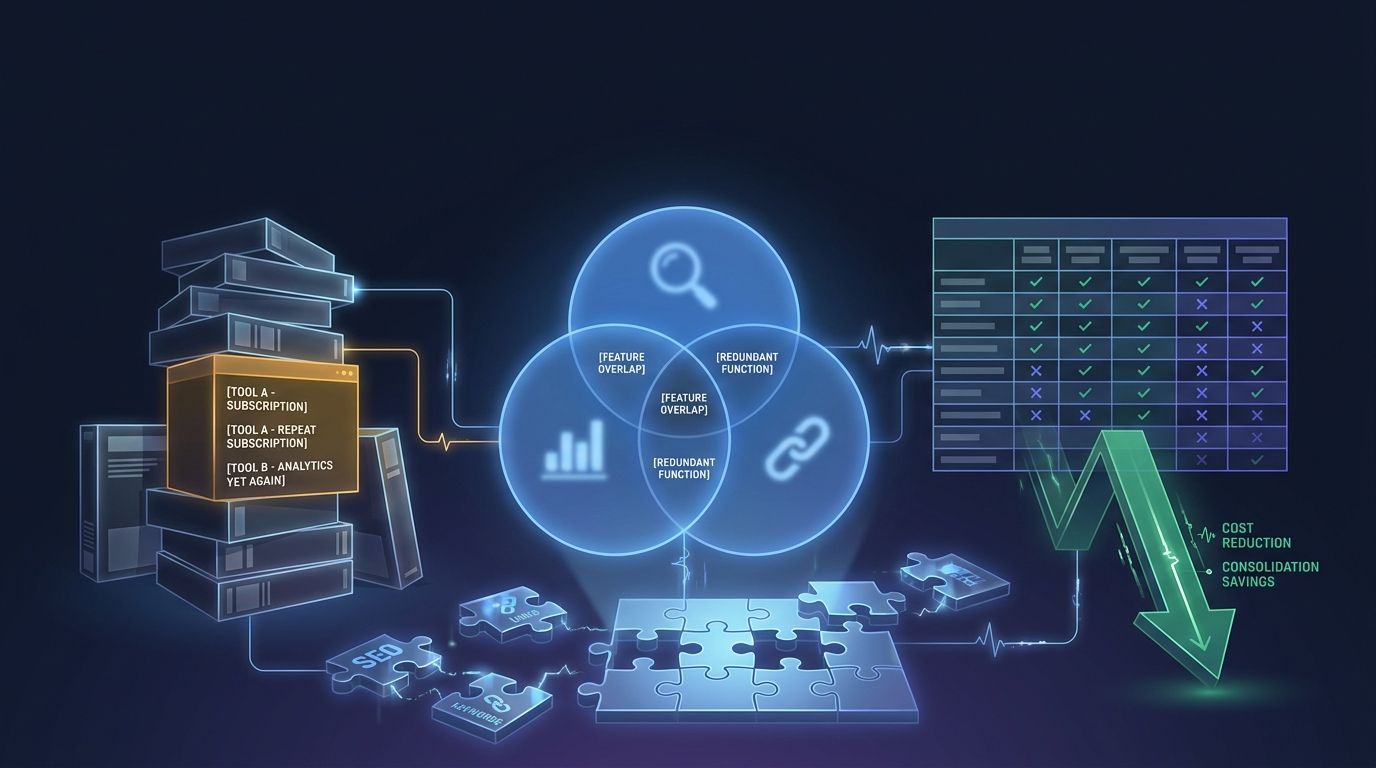
Every SEO team subscribing to both Ahrefs and SEMrush pays for rank tracking, backlink analysis, and site auditing twice. The duplicate data adds no analytical edge. A structured feature overlap audit exposes 30-40% of total tool spend going toward capabilities already purchased under a different brand name, and the savings from SEO tool consolidation land squarely on the bottom line.
Rank Tracking Gets Billed Three Ways
The feature overlap audit starts with the most duplicated function in any SEO stack: keyword position tracking. Ahrefs tracks rankings. SEMrush tracks rankings. Moz Pro tracks rankings. Google Search Console tracks actual rankings with verified click data, and it's free. Any team subscribing to two of these commercial tools alongside GSC is paying for position monitoring at least three times, and the marginal insight from the third data source rarely shifts a single strategic decision.
The financial arithmetic is straightforward. Ahrefs' Lite Plan runs $99/month. SEMrush Pro sits at $139.95/month. Moz Pro starts at $49/month. If you're carrying two of these platforms, rank tracking alone accounts for a combined $1,800-$2,900 in annual subscription costs before you touch any of their differentiated features. Meanwhile, GSC provides the only rank data that reflects actual Google behavior, verified against real impressions and clicks rather than estimated via third-party scraping.
Infinite Media Resources' SEO strategy guide advises teams to "think in tool categories rather than products" when designing their stack. That framing is the key to untangling the overlap problem. Rank tracking is one category. If three products all serve it, two of them are redundant for that specific function. The same logic applies to backlink databases, where Ahrefs and SEMrush index largely the same link graph with 85-90% overlap on domains found.
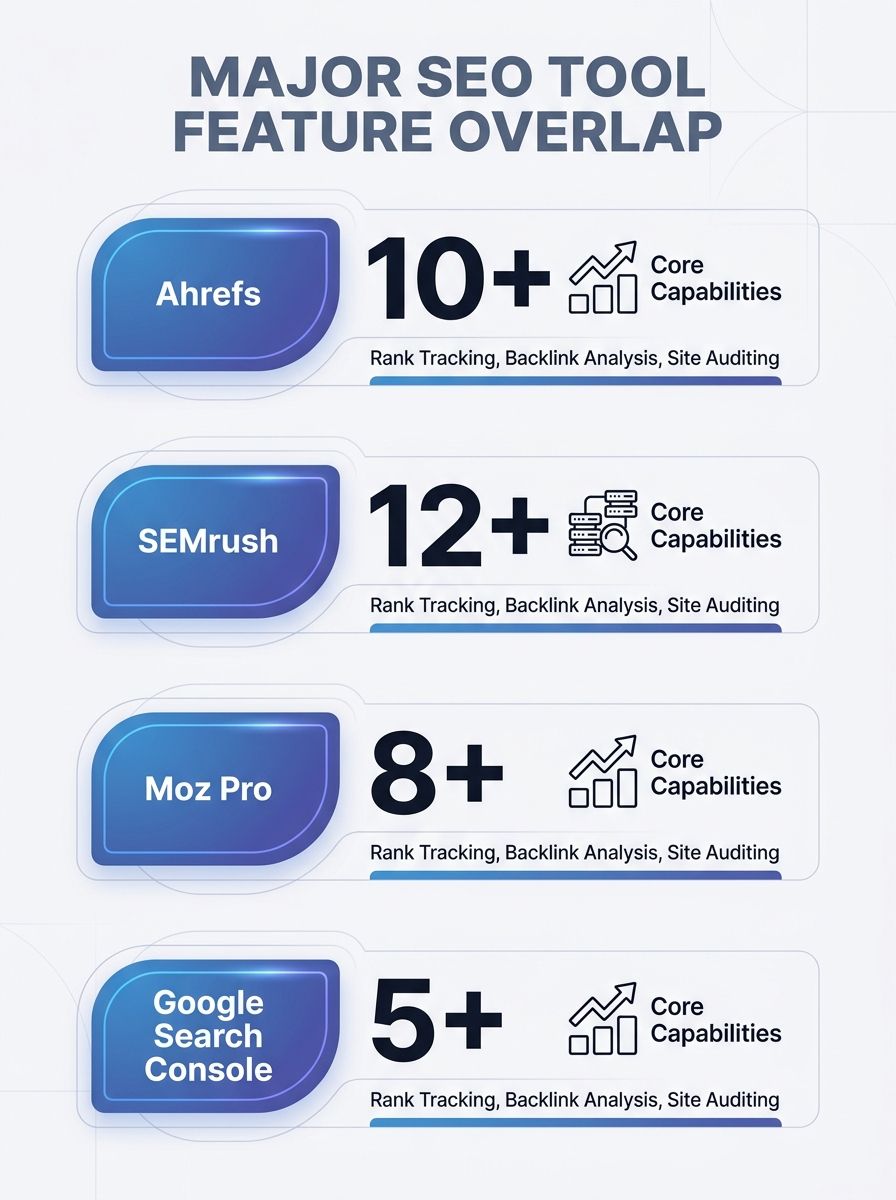
The duplication extends into site auditing, too. Ahrefs' site audit tool crawls for broken links, redirect chains, and thin content. SEMrush's site audit does the same. And both tools' audit findings overlap significantly with what Screaming Frog or Google Search Console's index coverage report already surfaces. When enterprise teams adopt two platforms "just in case," the overlap is structural. It's built into how these products evolved. Every major SEO platform expanded from a single-purpose tool into a suite, and the suites all converged on the same core capabilities.
If your organization is already working through the process of prioritizing technical SEO fixes, you've likely noticed the same issues appearing across multiple tools' dashboards. That redundancy isn't adding confidence. It's adding cost.
The Three-Layer Stack Eliminates Structural Duplication
A consolidation model gaining traction among B2B marketing teams in 2026 organizes the entire SEO stack into three functional layers, each served by one primary tool. This approach, which I'm calling the Three-Layer SEO Stack Model, forces every subscription to justify its existence against a single layer rather than earning its keep by being "kind of useful" across several.
Layer | Function | Recommended Primary Tool | Cadence | Annual Cost |
|---|---|---|---|---|
Continuous Monitoring | Real search data, index coverage, Core Web Vitals | Google Search Console + SEOPress PRO (WordPress) | Daily/Weekly | $0-$49/month |
Periodic Deep Crawls | Technical sweep for redirect chains, orphaned pages, JS rendering | Screaming Frog or Sitebulb | Monthly/Quarterly | $259/year (Screaming Frog license) |
Competitive Intelligence | Content gaps, backlink opportunities, keyword discovery | Ahrefs Lite (rented quarterly) | Quarterly | $297-$396/year (3-4 months active) |
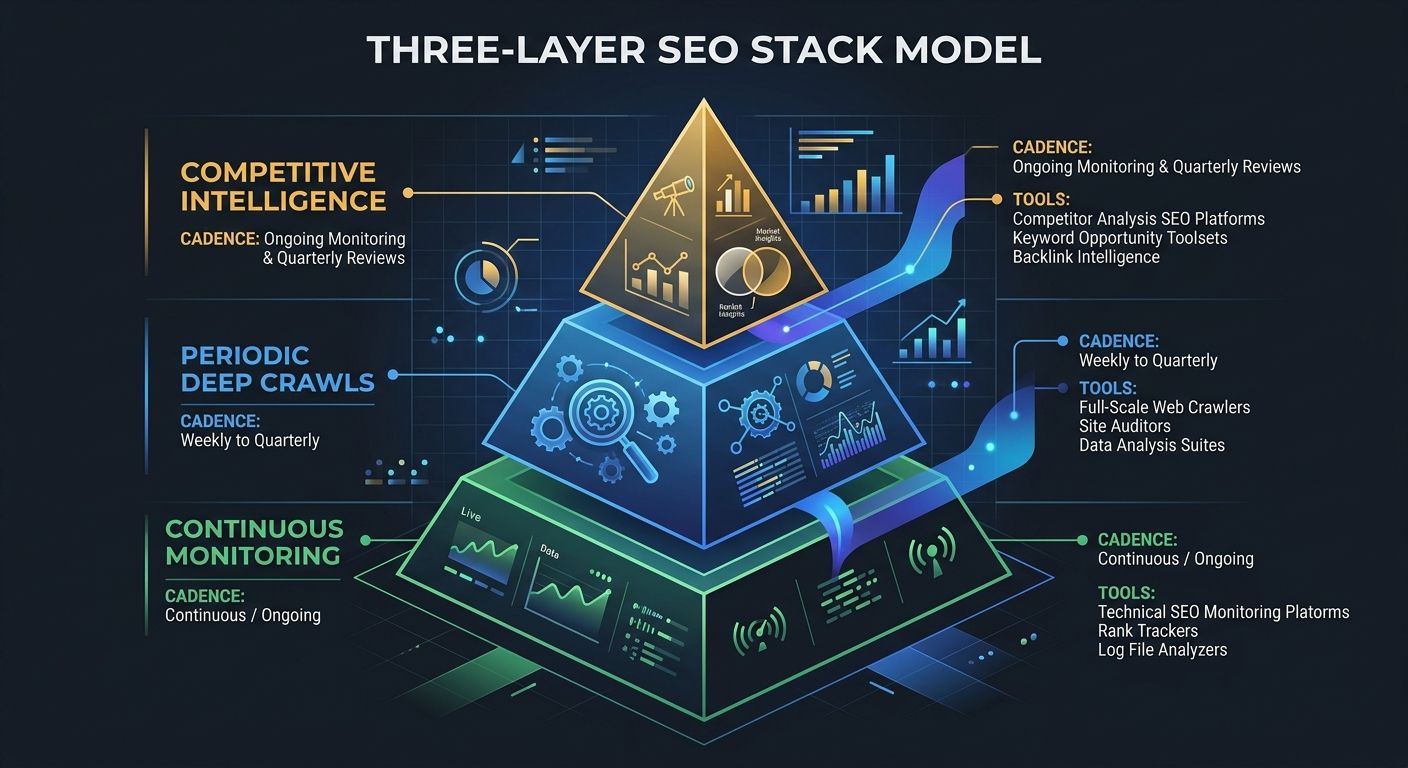
Layer 1 handles continuous monitoring through GSC's verified search data. For WordPress sites, SEOPress PRO bridges the gap GSC leaves around on-page issues by integrating traffic data directly with its 52-point site audit, prioritizing fixes by actual impact rather than generic severity scores. This layer runs daily or weekly and costs between $0 and $49/month depending on configuration.
Layer 2 reserves deeper technical crawling for monthly or quarterly sweeps. Screaming Frog at $259/year or Sitebulb for visual reporting handles redirect chains, orphaned pages, and rendering gaps that lightweight monitoring misses. For sites exceeding 500,000 URLs, cloud-based crawlers like JetOctopus scale without taxing local hardware. The point is that deep crawls don't need to happen daily, which means the tool serving this layer doesn't need a perpetual subscription at enterprise tier pricing.
Layer 3 treats competitive intelligence as a rental rather than a permanent fixture. Ahrefs' Lite Plan at $99/month serves quarterly content gap analysis and backlink opportunity identification. Subscribing for three to four months per year (during strategic planning cycles) costs $297-$396 annually instead of $1,188 for a full-year subscription. This approach acknowledges that competitive data is most valuable when it informs quarterly planning, not when it generates daily notifications nobody acts on.
The Tenon framework for martech consolidation recommends starting any consolidation project by listing every tool across every department, including free ones. That step alone tends to surface 4-7 tools performing variations of the same task.
This mirrors the broader consolidation trend happening across marketing technology. As Knecht Strategies' analysis of martech consolidation puts it, the hidden cost of fragmentation is "compounding integration debt that slows every new initiative and blocks AI orchestration projected to add $2.3 trillion to marketing value by 2030." Tool sprawl doesn't just cost subscription fees. It generates a drag coefficient on every workflow those tools touch.
Teams that have already audited their SEO planning processes at scale recognize this pattern immediately. The planning breakdown isn't usually about missing data. It's about the same data living in five places with nobody sure which version is canonical.
Measuring Marketing Software ROI After Consolidation
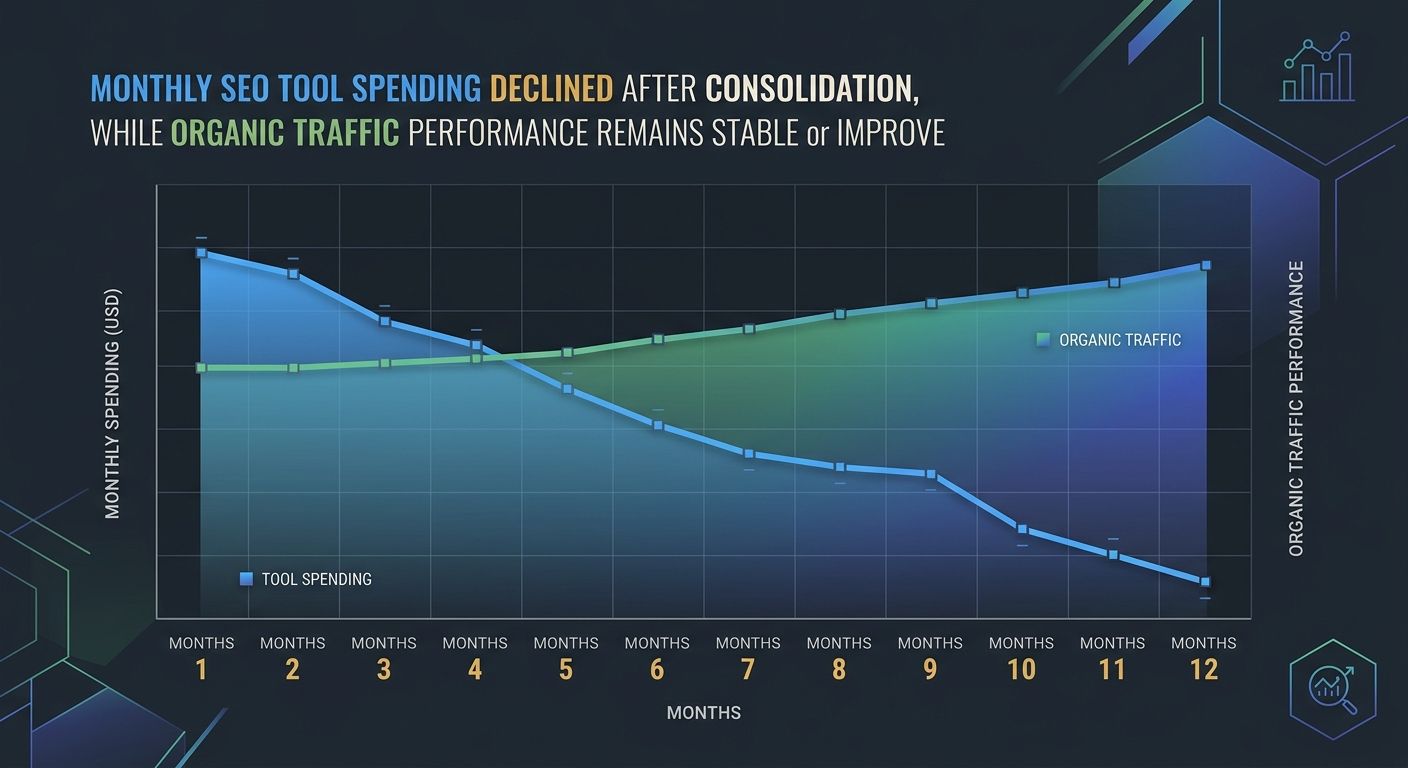
SEO stack optimization produces savings that are easy to count (canceled subscriptions) and benefits that are harder to quantify (faster workflows, cleaner data, fewer conflicting reports). Measuring marketing software ROI after consolidation requires tracking both.
Percepture's enterprise SEO ROI framework calculates return using NPV of lifetime value relative to customer acquisition cost, factoring in rank feasibility through domain authority benchmarks and content coverage through topical cluster completion. Applying this framework before and after consolidation isolates the ROI impact of the stack change itself, separate from broader SEO performance improvements.
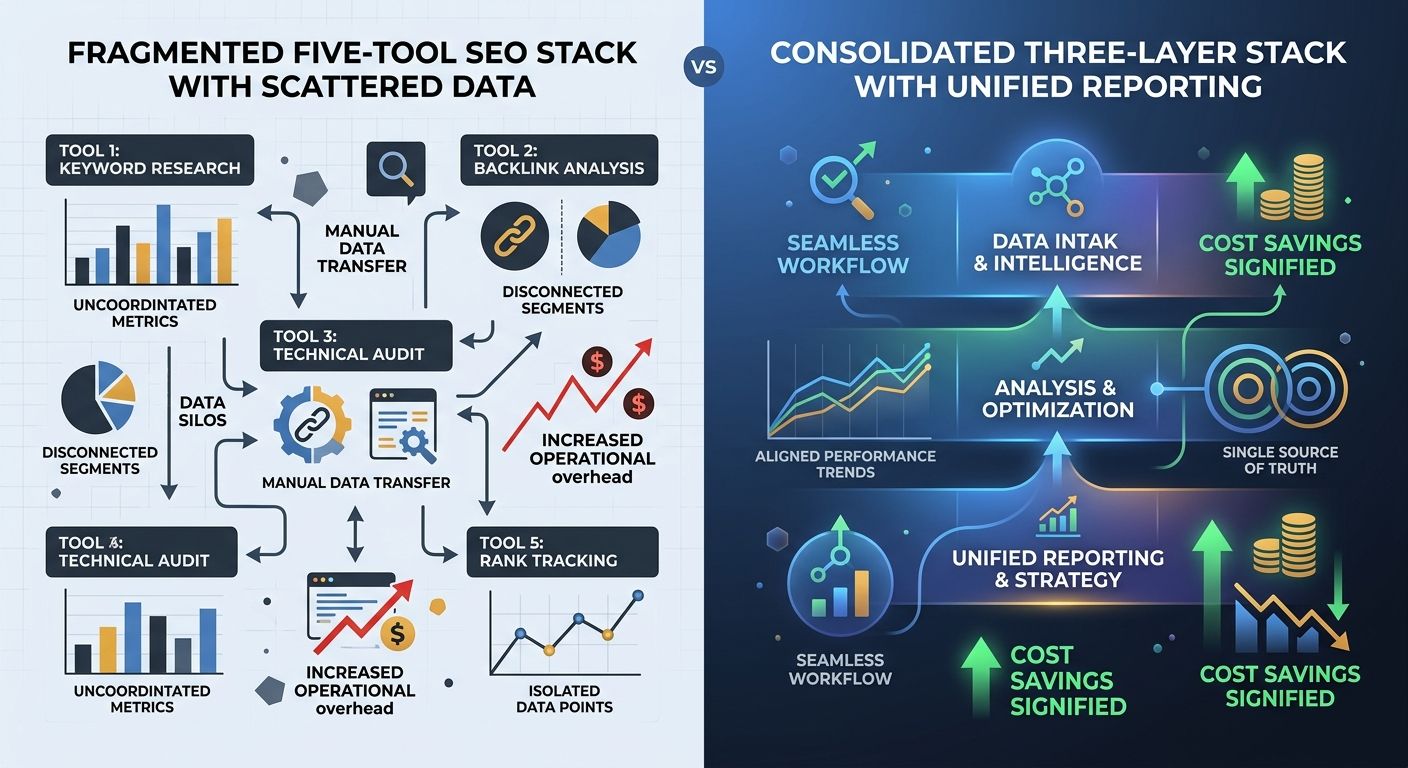
The direct cost savings from moving to a three-layer model are concrete. A team previously paying for SEMrush Pro ($139.95/month), Ahrefs Standard ($199/month), and Moz Pro ($99/month) spends $5,255.40 annually on platform subscriptions alone. Consolidating to GSC (free), Screaming Frog ($259/year), and quarterly Ahrefs Lite ($396/year maximum) brings that total to approximately $655/year. That's an 87.5% reduction in tool costs.
But the indirect benefits matter more for long-term ROI. Bloomreach's analysis of martech consolidation found that "consolidating marketing tools into one platform ensures accurate data for informed decision-making and the ability to develop targeted, data-driven strategies efficiently." When rank tracking data comes from one source instead of three, reports don't contradict each other. When site audit findings route through one crawler, engineering teams receive one prioritized fix list instead of three competing ones.
SEO Sherpa's ROI measurement guide reinforces that "attribution and timing challenges mean ROI often lags, but the compounding nature of SEO rewards consistency." Tools like GA4, Looker Studio, and CRM integrations connect SEO activity to actual business results, and those connections become cleaner when the upstream data isn't fragmented across redundant platforms.
The teams I've worked with that successfully consolidated their stacks reported two consistent secondary benefits. First, onboarding new team members dropped from 2-3 weeks of tool training to under a week. Second, weekly reporting cycles shortened by 3-5 hours because analysts stopped reconciling conflicting numbers across platforms. If you've encountered gaps in attribution configuration during your own audits, fragmented tool stacks are a frequent root cause.
For organizations tracking SEO performance through regular benchmarking cadences, consolidation simplifies the data pipeline feeding those reviews. One source of truth for rankings, one source for technical health, one source for competitive positioning. Three layers, three tools, zero reconciliation overhead.
The Redundancy Problem Won't Self-Correct
The SEO tool market has no structural incentive to solve feature overlap. Every platform wants to be the all-in-one solution. Every product roadmap trends toward the same destination: a full-suite platform that tracks rankings, crawls sites, monitors backlinks, researches keywords, audits content, and generates reports. That convergence means the overlap between competing products will widen, not narrow, with every annual release cycle.
Your feature overlap audit has to be a deliberate, recurring exercise. The three-layer model works because it forces a binary decision for each capability: which single tool owns this function? Everything else is redundant. And redundancy, in a subscription-based software market charging per-seat and per-project, compounds costs the same way integration debt compounds workflow friction.
The $2.3 trillion in projected AI orchestration value by 2030 depends on clean, consolidated data pipelines feeding those AI systems. Fragmented tool stacks don't just waste budget today. They create the kind of data architecture that makes future automation harder to implement, slower to validate, and more expensive to maintain. Running a disciplined SEO tool consolidation process now saves money immediately and positions your data infrastructure for what's coming next.

Alex Chen
Alex Chen is a digital marketing strategist with over 8 years of experience helping enterprise brands and agencies scale their online presence through data-driven campaigns. He has led marketing teams at two successful SaaS startups and specializes in conversion optimization and multi-channel attribution modeling. Alex combines technical expertise with strategic thinking to deliver actionable insights for marketing professionals looking to improve their ROI.
Related Articles
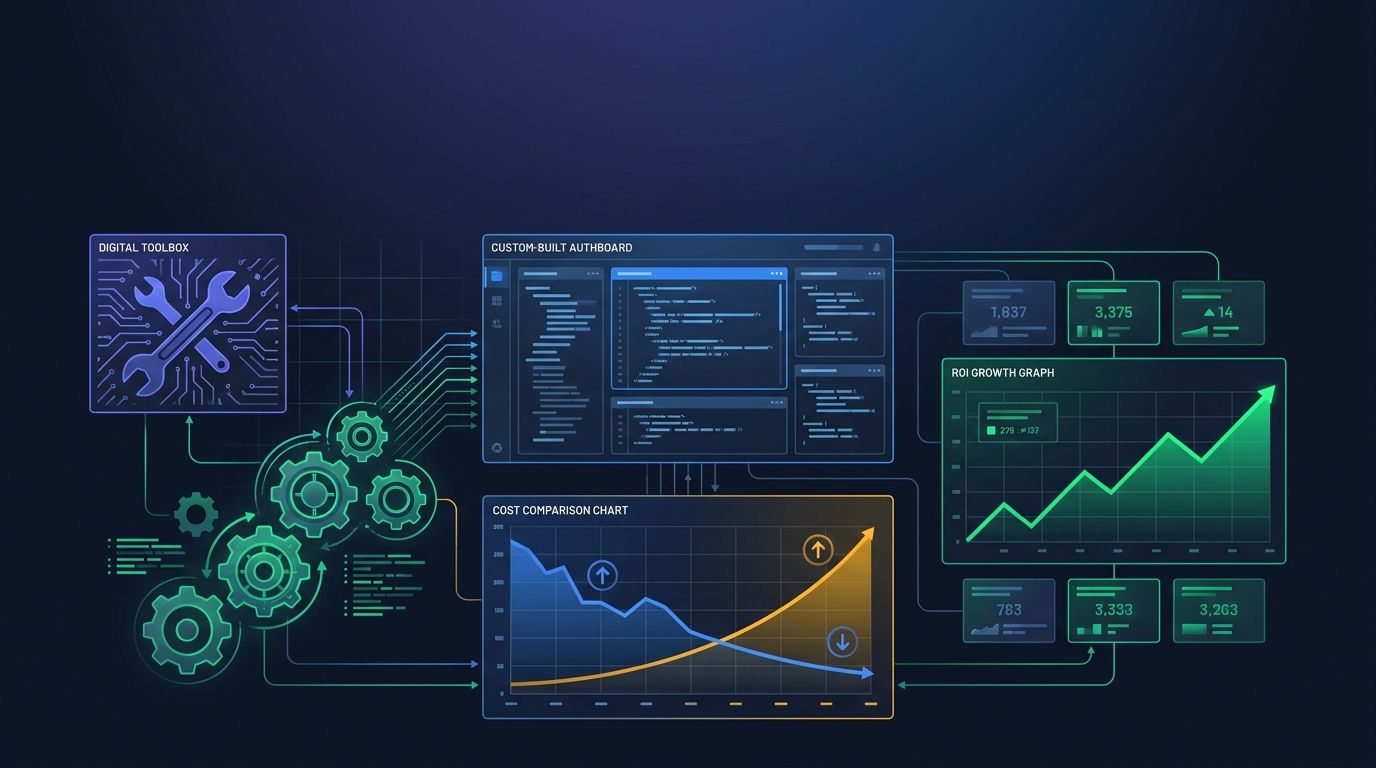
The Internal Tools Advantage: Why Building Custom SEO Automation Beats Paying for Platform Subscriptions
Three Python scripts, a DataforSEO API key, and a Google Sheets integration replaced $24,000 in annual SEO platform subscriptions for one agency founder who documented his workflow publicly this year.
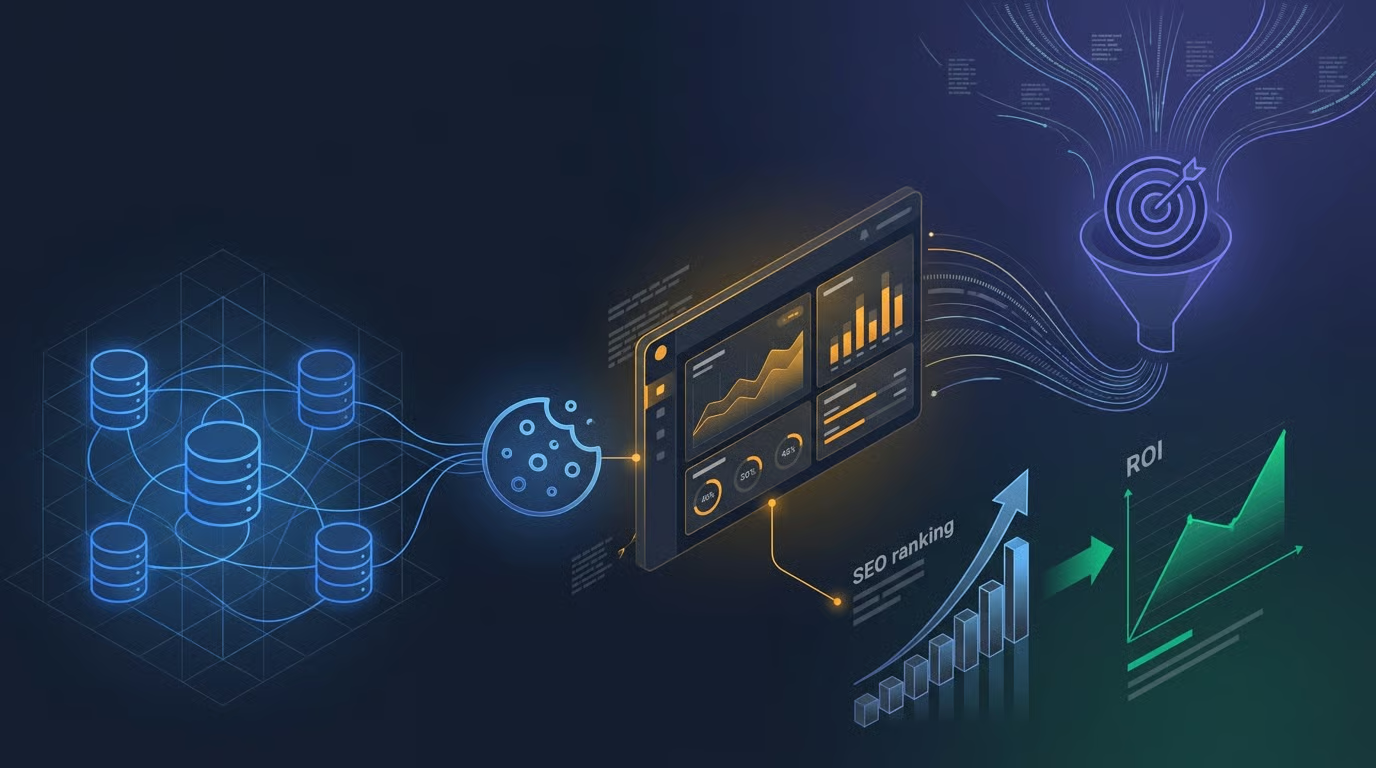
From Blue Links to Business Outcomes: Rebuilding Your SEO Strategy Around First-Party Data in 2026
Businesses using first-party data for marketing measurement saw a 2.9x increase in revenue lift compared to those relying on third-party tracking, per Google's aggregate advertiser data. That gap keeps widening as cookie deprecation accelerates.
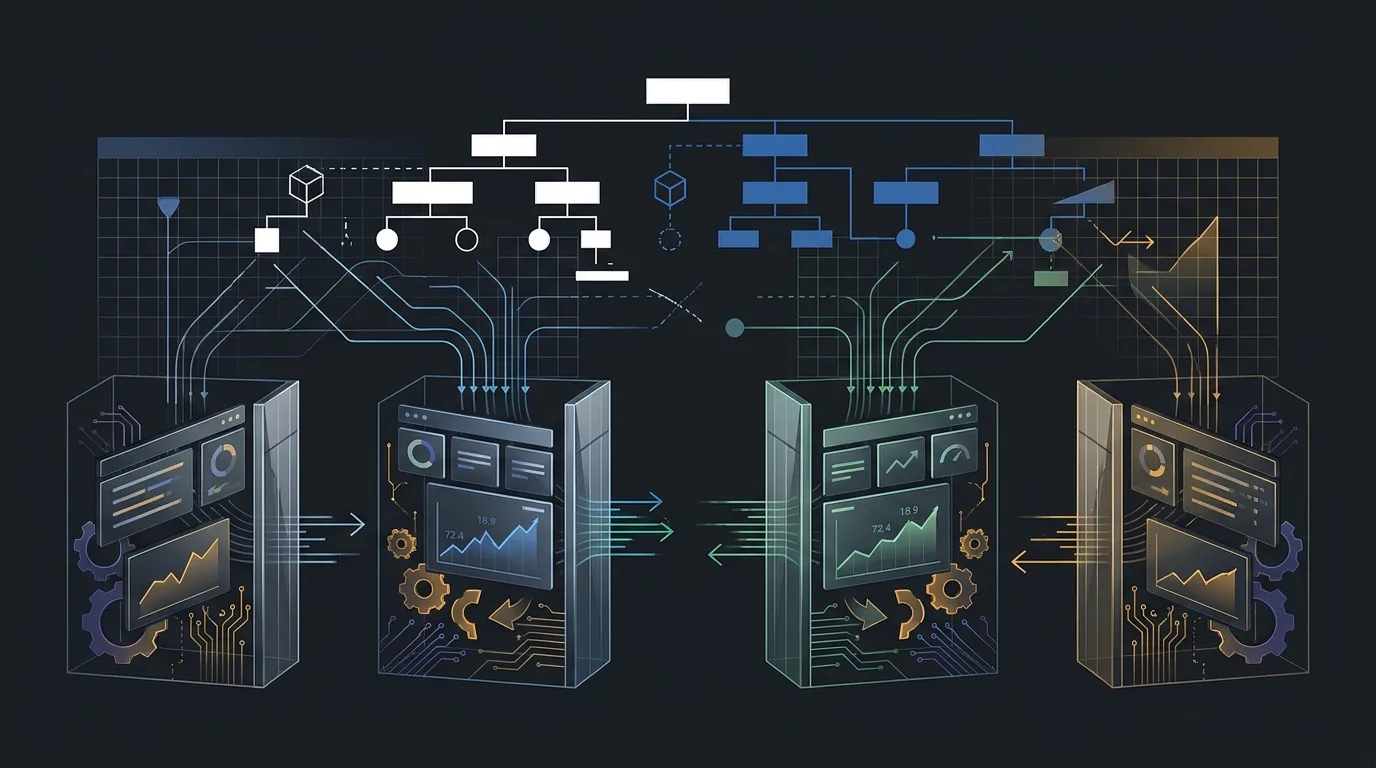
The Organizational SEO Siloing Problem: Why Your Best Technical Work Gets Lost Between Teams
Technical SEO execution fails at the org chart, not at the codebase. Industry analysis shows 67% of organizations cite non-SEO development tasks as the primary barrier to implementing technical SEO changes, a bottleneck costing an estimated $35.9 million in unrealized annual revenue per enterprise.
Explore more topics