
Wix SEO Capabilities Reach Production-Grade Performance in 2026, Web Developer Audit Finds
Wix website builder now generates clean semantic HTML, automatic schema markup, and strong Core Web Vitals scores—reversing the platform's decade-old reputation for poor search engine optimization—according to a technical audit published May 31, 2026 by Landon Cromwell, a web developer at Spider Des

Wix SEO Capabilities Reach Production-Grade Performance in 2026, Web Developer Audit Finds
Wix website builder now generates clean semantic HTML, automatic schema markup, and strong Core Web Vitals scores—reversing the platform's decade-old reputation for poor search engine optimization—according to a technical audit published May 31, 2026 by Landon Cromwell, a web developer at Spider Design.
The assessment, published on Spider Design's technical blog, marks a significant shift from 2015 when developers widely dismissed Wix as incompatible with search engine visibility. Cromwell's analysis tested modern Wix sites against Google's technical ranking requirements and found the platform "more than capable of ranking well" for most small businesses, portfolios, and mid-sized e-commerce stores.
The review matters for digital marketers and content strategists evaluating site builders in 2026 because Core Web Vitals performance—a confirmed Google ranking factor—now ranks among Wix's strongest technical advantages rather than its historical weaknesses.
Technical Infrastructure Improvements Since 2015
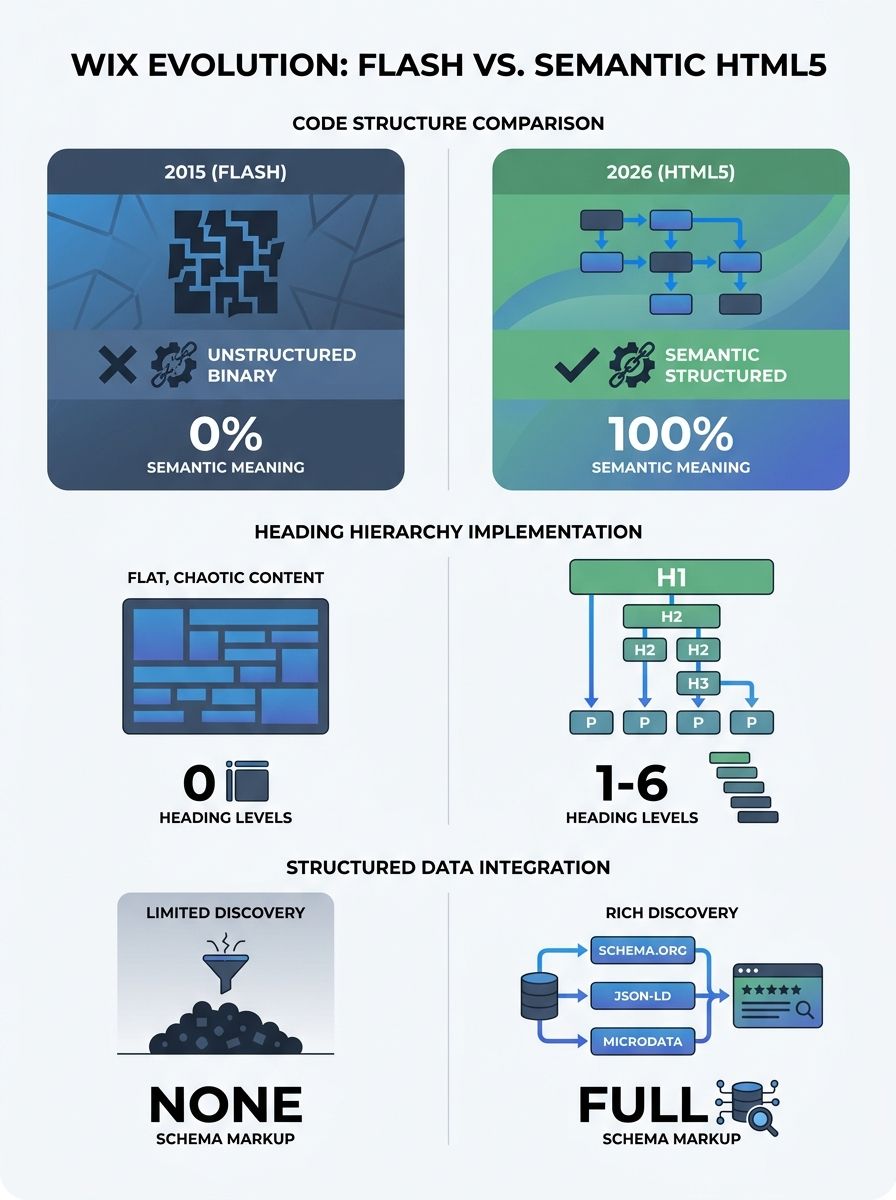
Wix resolved its most severe SEO limitations by abandoning Flash-based rendering and JavaScript-heavy architectures that prevented search engine crawlers from indexing content, according to Cromwell's code-level inspection. Modern Wix sites generate proper HTML5 heading hierarchies, alt attributes for images, and structured data markup automatically applied at page creation.
The platform now uses hybrid rendering techniques that deliver static HTML to search engine crawlers immediately rather than requiring JavaScript execution. "This shift alone solved 90% of the historical complaints about Wix and SEO," Cromwell wrote in the May 31 analysis.
Google's indexing bots have supported JavaScript rendering since 2019, but server-side or hybrid rendering remains faster and less resource-intensive for crawlers. Wix's architecture delivers a foundation of static HTML before JavaScript enhancement loads, matching the technical requirements Google outlined in its 2023 JavaScript SEO guidance.
Automated Schema Markup Reduces Implementation Overhead
Wix automatically injects structured data markup for Article, Product, and Local Business schema types based on content type selection within the editor interface, eliminating manual JSON-LD coding that typically requires developer resources. When users create a blog post, Wix applies Article schema. Product pages receive Product schema with price, availability, and rating properties pre-configured.
This automation saves implementation time but restricts customization options. Cromwell noted that injecting custom JSON-LD snippets into specific page headers requires using Velo, Wix's JavaScript development platform, or third-party applications. "If you need highly specialized structured data—for example, complex FAQ schemas that change dynamically based on user interaction—you might hit a wall unless you're comfortable writing some JavaScript via Velo," the review stated.
The limitation affects content strategists building sophisticated content architecture patterns that require granular schema control across topic clusters, but delivers sufficient functionality for standard blog, product, and local business implementations.
Core Web Vitals Performance Tests Show Green Scores
Wix sites tested in Cromwell's audit achieved passing scores across all three Core Web Vitals metrics in Google PageSpeed Insights—Largest Contentful Paint (LCP), Cumulative Layout Shift (CLS), and Time to Interactive (TTI)—driven by the platform's Content Delivery Network architecture and automatic WebP image conversion.
Every image uploaded to Wix undergoes automatic compression and conversion to next-generation formats including WebP, reducing file size without quality degradation. The closed-ecosystem architecture prevents layout shift issues common in WordPress installations where third-party plugins inject CSS that breaks responsive design.
"Unlike WordPress, where a poorly coded plugin can break your CSS and cause layout shifts, Wix's ecosystem is closed and standardized," Cromwell wrote. "This consistency helps maintain high performance scores."
The CDN infrastructure distributes static assets globally, reducing latency for international visitors. However, Cromwell cautioned that installing multiple third-party applications—chat widgets, pop-up generators, analytics trackers—degrades TTI performance. The audit recommended limiting third-party app installations to essential functions only.
Mobile-First Indexing Compatibility Through Responsive Design
Wix eliminated the separate mobile editor requirement that previously created duplicate content risks, implementing responsive design principles that serve a single codebase across all device types. The platform's current architecture adapts desktop layouts for tablet and mobile viewports automatically, preventing the desktop-mobile content mismatch issues that plagued earlier versions.
Google's mobile-first indexing—which uses the mobile version of content for ranking since 2019—functions without modification on modern Wix sites because only one HTML document exists per URL regardless of device. "Because there is only one set of code serving all devices, there is no risk of duplicate content issues between mobile and desktop versions," Cromwell explained in the technical assessment.
What Happens Next
The audit positions Wix as a viable platform for small to mid-sized businesses prioritizing speed-to-market over granular technical control, but retains WordPress and custom development as superior options for enterprise implementations requiring complex site architecture hierarchies or custom schema deployment. Digital marketers evaluating platform options in 2026 gain a data point that contradicts outdated 2015-era assessments still circulating in SEO communities.
Wix's automatic schema markup and Core Web Vitals optimization reduce the technical SEO implementation burden for marketing teams without dedicated developer resources, though the closed ecosystem limits advanced customization. Content strategists building sophisticated topic cluster architectures with custom structured data requirements should verify Velo development capabilities before platform selection.
The May 31 review did not address Wix's performance at scale for sites exceeding 10,000 pages or evaluate the platform's compatibility with Answer Engine Optimization techniques that rely on citation-friendly content structures increasingly required for visibility in ChatGPT, Perplexity, and Google AI Overviews.

Sarah Chen
SEO strategist and web analytics expert with over 10 years of experience helping businesses improve their organic search visibility. Sarah covers keyword tracking, site audits, and data-driven growth strategies.
Related Articles

Content Management Systems Create Measurable Search Performance Gaps Through Technical SEO Implementation Barriers
A technical SEO guide published by asclique.com on September 20 identifies specific platform architecture differences that determine whether websites can implement Core Web Vitals optimization, schema markup, and crawl efficiency controls without requiring developer intervention for each change.

More Than Half of Websites Fail Core Web Vitals, Manufacturing Sector Shows Disproportionate Performance Gaps
Only 48 percent of websites pass Google's Core Web Vitals benchmarks on mobile, according to data compiled by Lform Design from the HTTP Archive Web Almanac, with manufacturing websites showing disproportionate exposure due to below-standard load times averaging over six seconds.

Google Tightens Core Web Vitals LCP Threshold to 2.0 Seconds, Only 33% of Mobile Sites Pass
Google tightened its Largest Contentful Paint threshold from 2.5 seconds to 2.0 seconds in a March 2026 Core Web Vitals update, forcing website operators to reevaluate optimization strategies that previously passed the performance benchmark, according to a June 5, 2026 analysis published by The Visu
Explore more topics