
Google Responds to "SEO Is Dead" Panic After I/O, Points Industry to Real Economic Risk
Google issued an official statement on May 21 clarifying that AI Mode is not the default Search experience, one day after the Google I/O 2026 keynote triggered widespread claims that traditional SEO had become obsolete. The @NewsFromGoogle account stated users "will continue to get a range of result

Google Responds to "SEO Is Dead" Panic After I/O, Points Industry to Real Economic Risk
Google issued an official statement on May 21 clarifying that AI Mode is not the default Search experience, one day after the Google I/O 2026 keynote triggered widespread claims that traditional SEO had become obsolete. The @NewsFromGoogle account stated users "will continue to get a range of results on Search," directly countering TechCrunch's assertion that "the era of the 'ten blue links' is officially over" and similar declarations across LinkedIn and industry newsletters.
The panic missed the substantive risk. Field data presented at the keynote showed AI Overviews reduced organic clicks by 38% on queries where the feature appeared, with no decline in user satisfaction ratings. Industry analysts including Glenn Gabe of G-Squared Interactive and independent researcher Matthew Scott Goldstein shifted focus to the economic impact on publishers whose content feeds Google's new information agents without generating site visits or ad revenue.
What Google Announced at I/O 2026
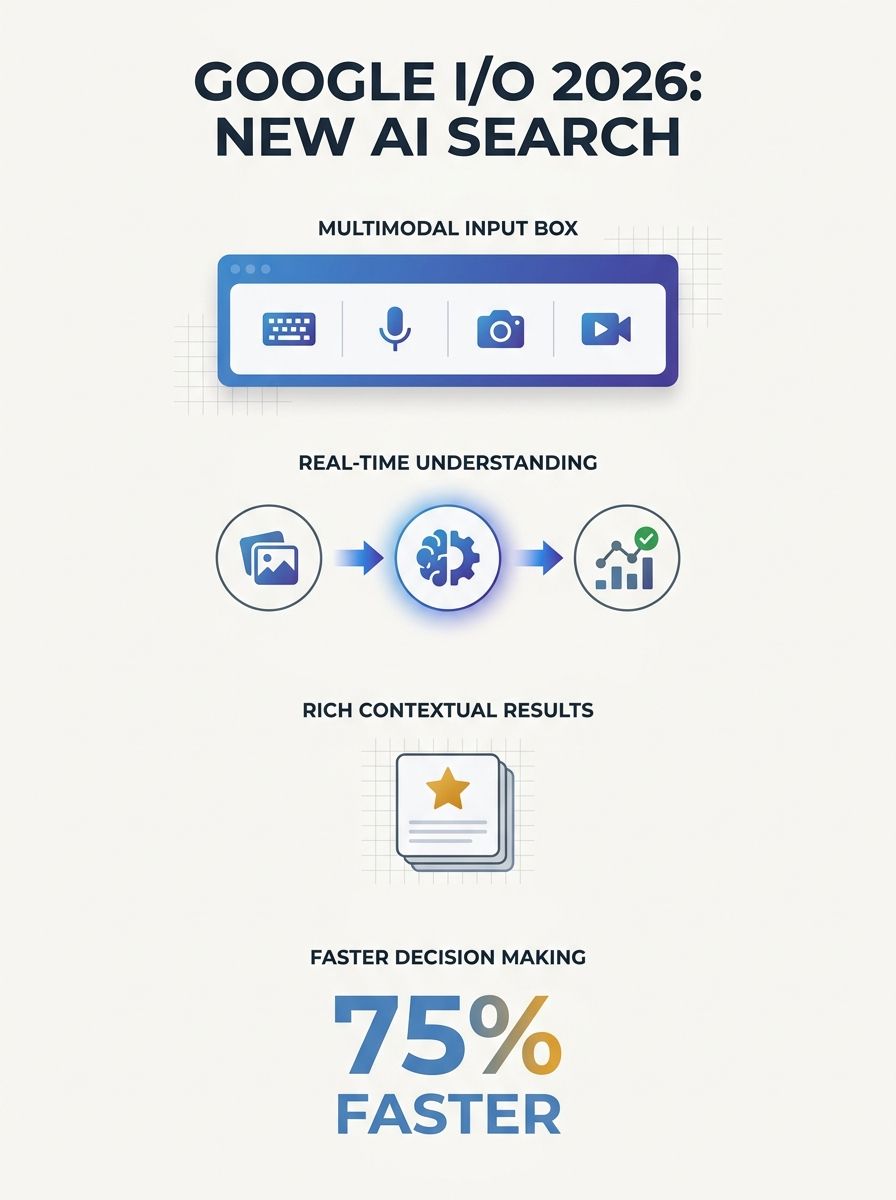
Google introduced a redesigned Search box on May 20 that accepts images, files, videos, and Chrome tabs alongside text queries, according to Search Engine Journal. The company launched information agents that monitor the web for users, alerting subscribers when apartment listings or product updates match saved interests. Gemini 3.5 Flash became the default AI model globally, with AI Mode surpassing one billion monthly users.
Information agents will be available to Google AI Pro and Ultra subscribers starting this summer, initially in the U.S. The agents include generative UI features, mini apps, and dashboards. Google stated that AI Mode queries are three times longer than traditional searches on average, with follow-up queries up 40% month over month and planning queries growing 80% faster than other categories.
Where the Panic Overreached
TechCrunch declared "Google Search as you know it is over" in its I/O coverage, while Time warned of potential industry disruptions and multiple newsletters pronounced the search bar dead. The interpretation assumed Google's UI emphasis on AI features meant the end of web indexing and traditional rankings. Google's optimization guide released four days before I/O contradicted that reading, stating that generative AI features "depend on ranking systems and the Search index" and emphasizing clickable links to supporting pages.
Jess Joyce, an SEO consultant, posted on LinkedIn: "Tomorrow your feed will be full of search is dead takes. It isn't." Joyce listed three specific changes from I/O worth monitoring but rejected the premise that the keynote nullified indexing overnight. The official Google response confirmed AI Mode is opt-in rather than default, preserving access to traditional results including through the Web tab.
Andrew Holland, Director of SEO at JBH, argued Google's messaging that this is "just SEO" underestimates the user interface differences. The disconnect between Google's documentation, Search Central advises skipping llms.txt while Chrome suggests considering it, illustrates messaging inconsistencies that fuel confusion among site owners implementing traditional SEO strategies.
The Real Risk Is Reduced Click-Through
Glenn Gabe wrote on LinkedIn that "for publishers, information agents can hit ad revenue big-time as less people will be visiting websites." The 38% organic click reduction on queries triggering AI Overviews represents a year-old pattern, not a new announcement. Google's Robby Stein stated in Q1 that if users don't engage with an AI Overview, Google might remove it for that query.
The most vulnerable content types are simple answer pages covering store hours, return policies, and product specifications, queries AI can satisfy without a clickthrough. Information agents extend that dynamic by monitoring the web, packaging updates, and delivering synthesized content inside Google's interface. The publisher's content is consumed; the site visit may not occur.
Matthew Scott Goldstein posted that Google's keynote included "not one mention of the publishers and creators whose work feeds every product they announced." That absence reflects the structural shift. Users delegate more research tasks to Google, longer queries, more follow-ups, expanded planning sessions, while Google's economic model captures value from content without consistent attribution or traffic back to sources.
Information Agents Bypass Publisher Sites
Information agents synthesize updates from multiple sources and deliver personalized notifications without requiring users to visit individual sites. A user monitoring apartment availability receives alerts when new listings match saved criteria; Google's agent crawls listings continuously, packages the data, and surfaces it in a dashboard. The apartment site's content is indexed and extracted, but the visit and potential ad impression never materialize.
The summer rollout targets paying subscribers first, Pro and Ultra tiers, limiting initial scale but signaling Google's direction. The agent model solves user problems while creating a publisher revenue gap that Google's May 21 statement did not address. Traditional SEO fundamentals remain relevant for indexing and eligibility, as covered in AEO integration strategies, but the economic value of that eligibility shrinks when answers surface without clicks.
Google updated its spam policy concurrently to address manipulation of AI responses, expanding enforcement scope as AI integration deepens. The policy addition confirms Google views AI features as durable rather than experimental, tightening quality filters for content feeding those systems.
Reading Between the Lines
The "SEO is dead" narrative recurs after every major Google announcement, and this cycle is no exception. The May 21 clarification that AI Mode is not default matters procedurally, traditional results remain accessible, but the 38% click reduction and agent architecture matter economically. Site owners face a strategic decision: optimize for discoverability in systems that may never send traffic, or shift content architecture toward high-engagement formats that AI summaries can't fully replace.
The field experiment data Google presented show user satisfaction held steady as clicks dropped, meaning users got value without visiting sites. That tradeoff works for Google and for users conducting research; it breaks the ad-supported publisher model. The optimization guides Google released emphasize non-commodity, self-created content as key for eligibility in AI features. Generic answer pages lose traffic first; differentiated analysis, data, and proprietary research hold positioning longer but face the same extractive pressure as agents improve.
The risk is not that SEO becomes obsolete. The risk is that being indexed, cited, and summarized generates less economic return than it did eighteen months ago, with no floor in sight. Diversifying traffic sources and building direct audience relationships, email lists, subscriptions, communities, insulates against platform dependency more than doubling down on crawlability audits or schema markup alone.
Alex Chen
Alex Chen is a digital marketing strategist with over 8 years of experience helping enterprise brands and agencies scale their online presence through data-driven campaigns. He has led marketing teams at two successful SaaS startups and specializes in conversion optimization and multi-channel attribution modeling. Alex combines technical expertise with strategic thinking to deliver actionable insights for marketing professionals looking to improve their ROI.
Related Articles
AI Overviews Now Trigger on 48% of Google Searches, Slashing Organic CTR Up to 61%
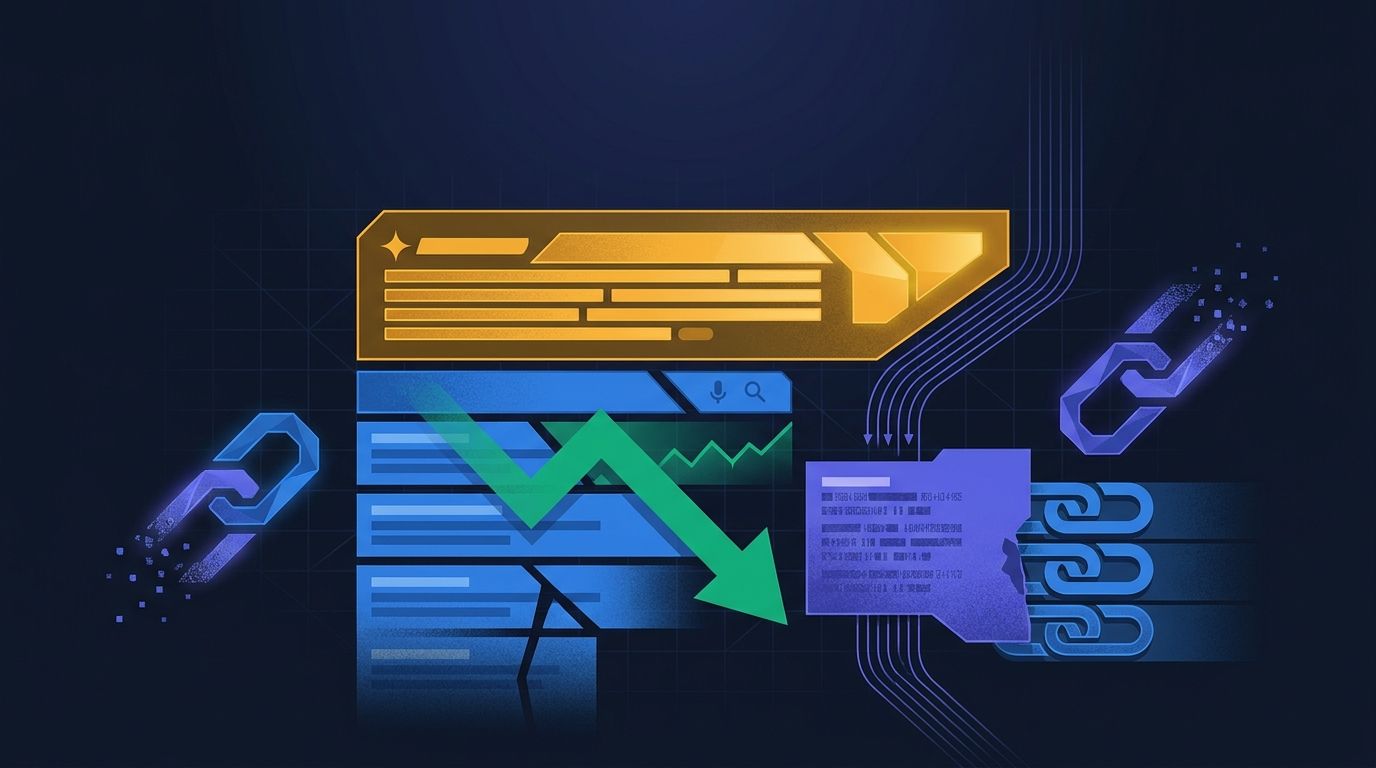
AI Overviews now appear on 48 percent of all Google search queries—a 58 percent increase over the past three months—and zero-click searches have climbed to 83 percent on queries that trigger the feature, according to data published by Quasa on May 24. The shift has driven organic click-through rate

Google's May 2026 Search Redesign Cuts Publisher Traffic by 70% to 89% as AI Answers Replace Click-Through Results
Google announced the largest redesign of its search interface in 25 years at its May 2026 developer conference, introducing a conversational search box that accepts text, images, video, and file uploads while deploying automated information agents that monitor topics and push updates without user qu
Ranking #1 on Google Now Delivers 58% Fewer Clicks Than It Used To, Gravitate Analysis Finds
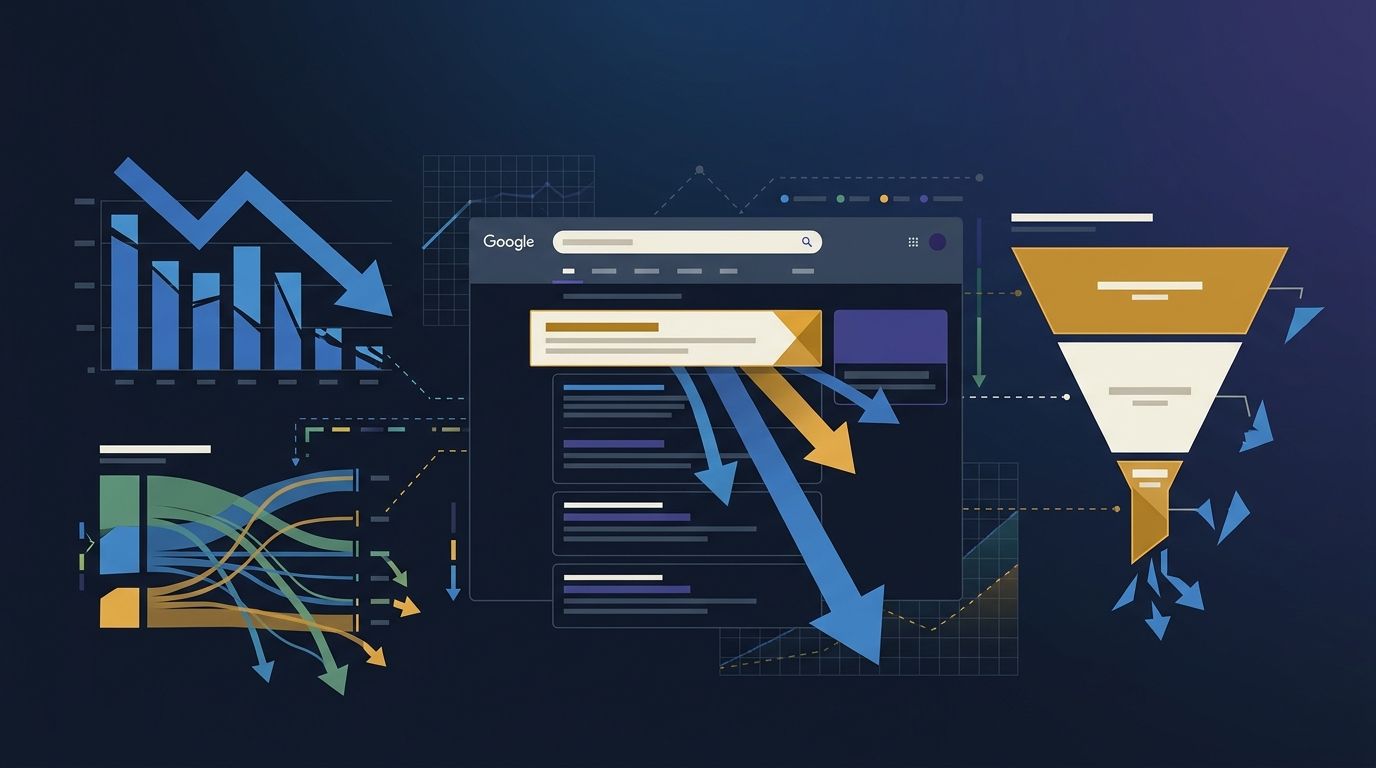
First-position organic search results on Google now generate 58% fewer clicks when AI Overviews appear on the page compared to traditional search results, according to an analysis released July 9 by Gravitate, a Vancouver-based digital marketing agency.
Explore more topics