
The Internal Tools Advantage: Why Building Custom SEO Automation Beats Paying for Platform Subscriptions
Three Python scripts, a DataforSEO API key, and a Google Sheets integration replaced $24,000 in annual SEO platform subscriptions for one agency founder who documented his workflow publicly this year.

The Internal Tools Advantage: Why Building Custom SEO Automation Beats Paying for Platform Subscriptions
Three Python scripts, a DataforSEO API key, and a Google Sheets integration replaced $24,000 in annual SEO platform subscriptions for one agency founder who documented his workflow publicly this year. He's part of a growing cohort of SEO practitioners dismantling the assumption that enterprise-grade SEO requires enterprise-grade platform fees. The mechanism behind this shift is straightforward: the APIs that power the platforms you're paying for are available directly, and the cost of stitching them together into custom SEO tools has dropped by an order of magnitude thanks to AI-assisted coding and no-code orchestration layers.
This article breaks down how that mechanism actually works, component by component, so you can evaluate whether internal tool development makes sense for your team's specific situation.
How Platform Pricing Constrains Your SEO Workflow
Every major SEO platform ties its value to tiered access. Semrush, Ahrefs, Moz, and their enterprise counterparts like seoClarity and Conductor all impose data and usage limits at each subscription level. These limits typically gate the number of keyword queries per day, the number of projects you can run simultaneously, the depth of historical data available, and the frequency of crawl refreshes.
The pricing model means your workflow bends to fit the tool's boundaries. If you're on a $229/month Semrush plan, you get 5,000 keywords to track. Need 8,000? You're upgrading to $449/month. Need API access to build internal dashboards? That's an add-on. Want to feed SEO data into your product team's sprint planning tool? Another integration cost, if it's even supported.
Budget tools show current rankings and basic metrics. Mid-tier platforms provide 12 to 24 months of historical data plus trend analysis. Premium tiers unlock predictive analytics and custom reporting. Each tier exists because the platform needs to extract proportional revenue from your growing dependency on its data.
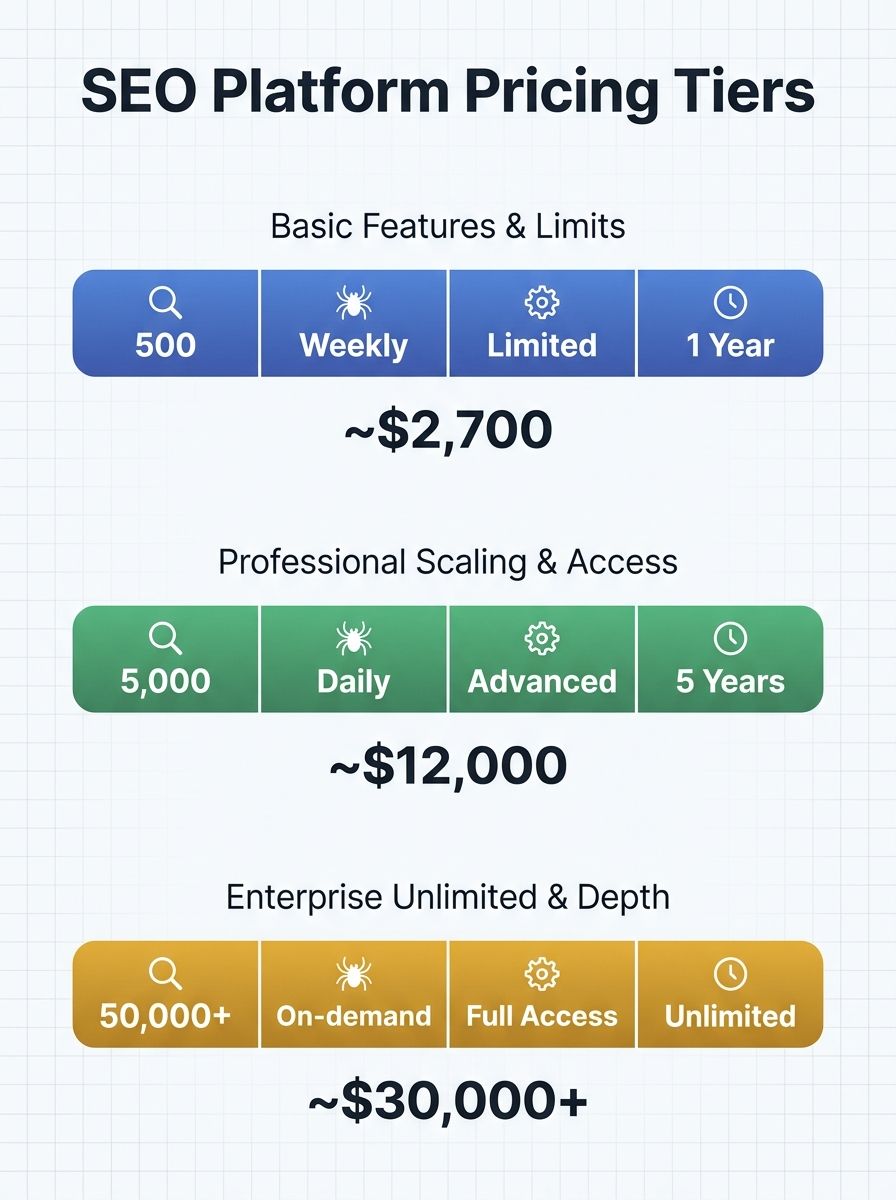
The structural problem here is that SEO platform costs scale with your ambition, not your actual data consumption. The APIs these platforms use to gather SERP data, backlink profiles, and crawl information are available from providers like DataforSEO, Google Search Console, and Screaming Frog at a fraction of the cost. The platforms are selling you convenience, visualization, and workflow glue. When you build your own tools, you're buying raw ingredients instead of a meal subscription.
The Data Pipeline You Actually Own
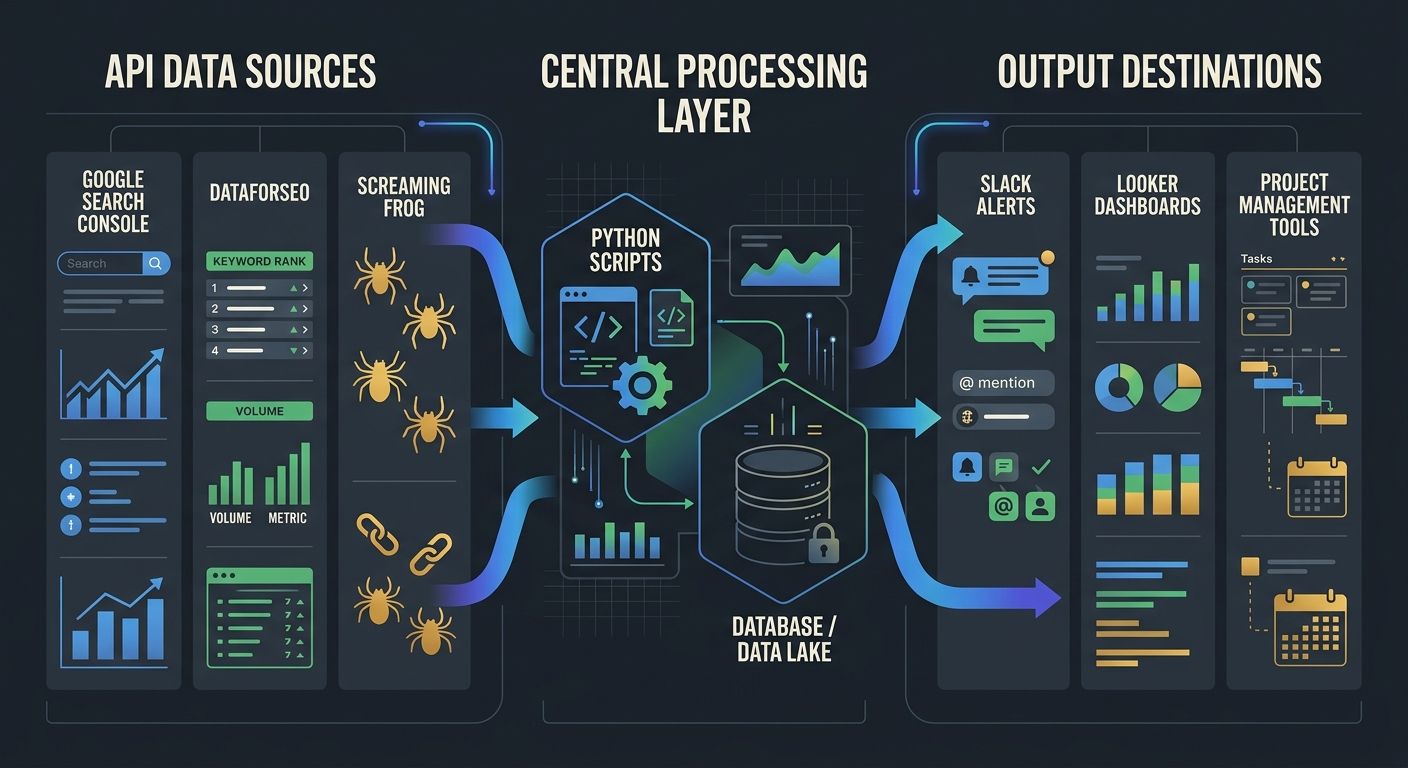
The core mechanism behind custom SEO automation is a direct API data pipeline. Instead of logging into Semrush to pull keyword rankings, your internal tool queries DataforSEO's SERP API, stores the results in a database you control, and pushes formatted outputs to wherever your team already works: Slack, Google Sheets, Looker Studio, or a custom dashboard.
Here's what that looks like in practice across the most common SEO tasks:
Rank tracking: A scheduled script queries target keywords daily via SERP API, stores position data in a PostgreSQL database, and surfaces changes through a Looker Studio dashboard. Cost per 1,000 queries through DataforSEO runs roughly $2 to $5, depending on the endpoint.
Technical auditing: A Python script using libraries like Requests and BeautifulSoup (or Scrapy for larger sites) crawls your domain on a schedule, checks status codes, identifies broken links, validates schema markup, and flags pages with thin content. The output feeds directly into Jira tickets or Asana tasks.
Content brief generation: An AI model analyzes the top 10 ranking pages for a target keyword, extracts common headings, word count ranges, and entity coverage, then generates a structured brief. This replaces tools like Clearscope or MarketMuse at a fraction of the per-query cost.
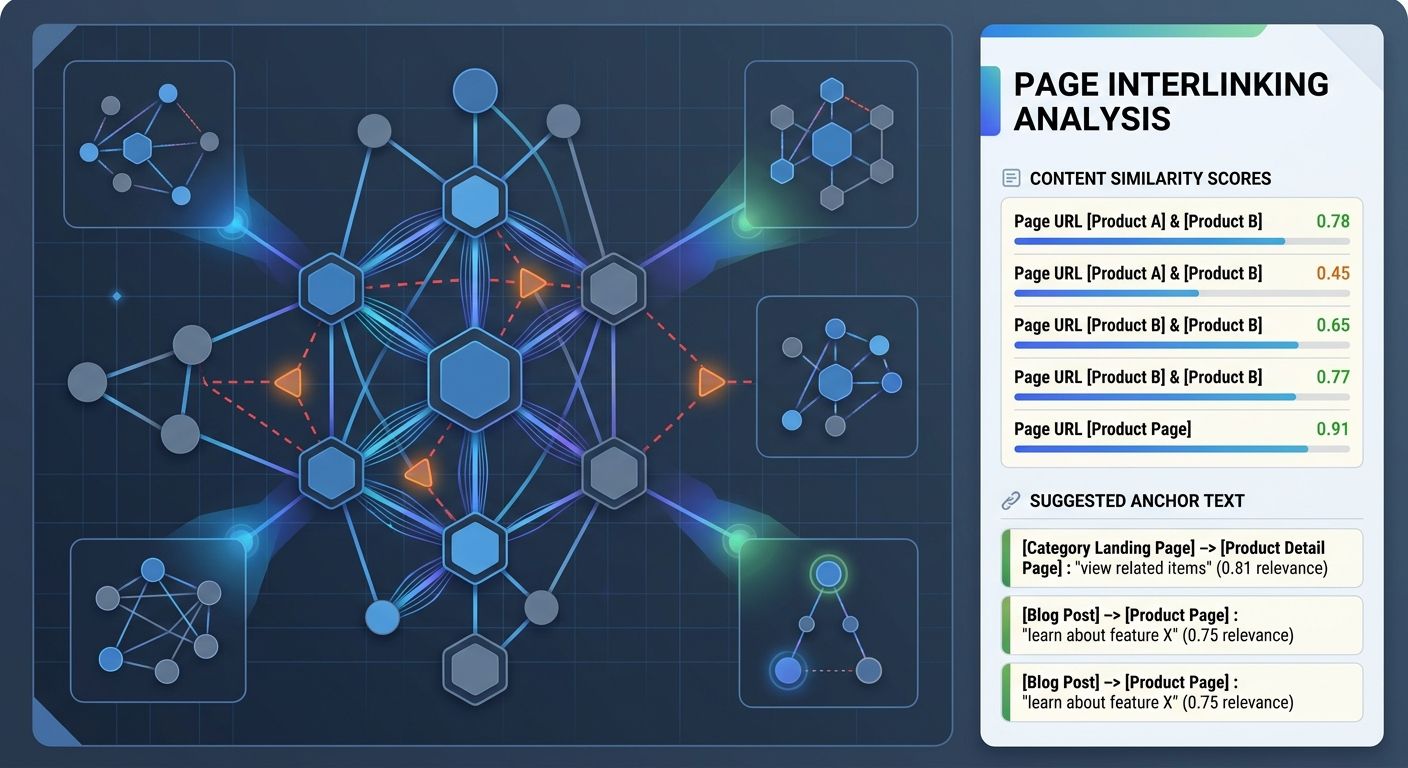
Internal linking optimization: Scripts analyze content similarity using embeddings, map the existing link graph, and identify orphaned pages or missed contextual linking opportunities.
The important distinction: you're not building a platform. You're building a collection of purpose-specific scripts and automations that do exactly what your team needs, nothing more. Each component is cheap to build, cheap to maintain, and cheap to modify when requirements shift.
If you've been thinking about which tasks are ripe for this kind of automation, the framework we outlined for automating high-volume SEO tasks with AI workflows provides a useful starting checklist.
API Economics That Shift the Math
The financial case for custom tools gets clearer when you compare unit economics. A Semrush Business plan costs roughly $499/month ($5,988/year). An Ahrefs Advanced plan runs about $449/month ($5,388/year). Enterprise-grade platforms like seoClarity and Conductor typically start at $30,000 to $50,000 per year.
For those annual fees, you're paying for:
Raw data collection (SERP results, backlink indexes, crawl data)
Data storage and historical archiving
Visualization and reporting interfaces
Workflow features (alerts, task management, collaboration)
Customer support and onboarding
When you build internally, items 1 and 2 become direct API costs. Items 3 and 4 integrate into tools your team already pays for and knows how to use. Item 5 disappears because your team built the thing and understands it from the inside.
The raw data layer is where the savings concentrate. DataforSEO charges per-task pricing: roughly $0.002 per SERP query, $0.003 per backlink check. A team tracking 5,000 keywords daily for a year spends approximately $3,650 on API calls. Add server costs, storage, and maintenance time, and the total might reach $6,000 to $8,000 annually for capabilities that would require a $30,000+ enterprise platform subscription.
The marketing automation ROI math supports this broader principle. According to industry research on automation returns, companies realize an average return of $5.44 for every $1 invested in marketing automation. Custom tools tilt that ratio further because you eliminate the subscription layer that typically absorbs 40% to 60% of total automation spending.
How Internal Linking and Content Automation Scale
Two areas where custom tools dramatically outperform platform features are internal linking and content workflow automation.
Picsart, the image editing company, automated their internal linking strategy across a 17-language site using Semrush Enterprise and saw significant impression and click increases. That's a real result. But it required an enterprise subscription to achieve through the platform. The same logic, analyzing content similarity, mapping link opportunities, and inserting contextual links, can be replicated with open-source NLP models and a Python script that runs against your CMS database.
Custom internal linking tools work by generating vector embeddings for each page's content, then calculating cosine similarity scores between pages. Pages with high semantic similarity but no existing link between them become candidates. The script can output a spreadsheet for manual review or, if your CMS supports it, insert link suggestions directly into the editing interface.
Content brief automation follows a similar pattern. Rather than paying $500/month for a tool that analyzes SERPs and generates content recommendations, a custom pipeline queries the SERP API, scrapes the top-ranking pages (respecting robots.txt), extracts structural patterns, and feeds the analysis through an LLM to produce a formatted brief. The per-brief cost drops from $5 to $10 on a platform to pennies on a custom system.
This connects directly to how you structure your broader content architecture. If you're building topic clusters that signal topical authority to Google, having a custom tool that maps cluster gaps and recommends internal links based on your specific taxonomy is far more valuable than a generic platform recommendation engine.
The Integration Layer Most Teams Overlook
The hidden advantage of custom SEO tools is integration depth. Platform subscriptions exist in their own ecosystem. Getting data out requires exports, API calls (often rate-limited on lower tiers), or Zapier-style middleware. Internal tools, by contrast, sit inside your existing infrastructure from day one.
Consider how this plays out in practice. Your SEO monitoring tool detects a significant ranking drop for a cluster of pages. In a platform-based workflow, someone checks the dashboard, manually creates a ticket, assigns it, and waits. In a custom-tool workflow, the monitoring script detects the drop, automatically cross-references it with recent deployment logs from your CI/CD pipeline, checks Google Search Console for crawl errors, and opens a Jira ticket pre-populated with diagnostic data. The SEO team and engineering team see the same information simultaneously.
Enterprise platforms like Lumar offer automated quality assurance tests and customizable controls that prevent harmful code from reaching production. That's powerful. But building equivalent checks into your existing deployment pipeline costs a fraction of Lumar's enterprise pricing and integrates with your specific tech stack rather than requiring your stack to adapt to the platform's assumptions.
This integration advantage matters especially if you're already debugging data loss in your analytics setup, because custom tools can validate tag firing, check for script conflicts, and monitor data pipeline health as part of the same automated workflow.
The teams tracking performance in real-time analytics stacks have an even clearer advantage here. Custom SEO data feeds directly into whatever visualization layer you've already chosen, without paying for another platform's proprietary dashboarding.
Where The Model Breaks
Building custom SEO tools isn't universally the right call, and understanding the failure modes is critical to making a good decision.
The talent bottleneck is real. You need someone on the team who can write Python, manage APIs, handle database operations, and maintain scripts over time. If your marketing team has zero engineering capacity and no budget to hire it, the build-vs-buy equation flips. A $500/month platform subscription is cheaper than a developer's salary, even at part-time rates. AI coding assistants like Cursor and Codeium have lowered the technical bar significantly, but someone still needs to architect the workflow, debug edge cases, and handle API deprecations.
Backlink indexes are hard to replicate. Ahrefs and Semrush have spent years building proprietary web crawlers that index trillions of pages. DataforSEO provides backlink data, but the depth and freshness won't match Ahrefs' proprietary index for competitive analysis. If backlink research is central to your strategy, you may still need a platform subscription for that specific function while building custom tools for everything else.
Maintenance compounds. Every custom script requires ongoing attention: API endpoints change, data formats shift, upstream services add rate limits. A team of two marketers maintaining 15 custom scripts alongside their actual marketing work will eventually fall behind on updates. The platforms handle this maintenance invisibly, and that invisible labor has real value.
The cold-start problem stings. When you subscribe to Semrush on Monday, you have a working rank tracker on Tuesday. When you decide to build custom tools, you're looking at days or weeks of development before the first useful output appears. For teams with established SEO sprint cadences, this development time needs to be planned into the roadmap explicitly.
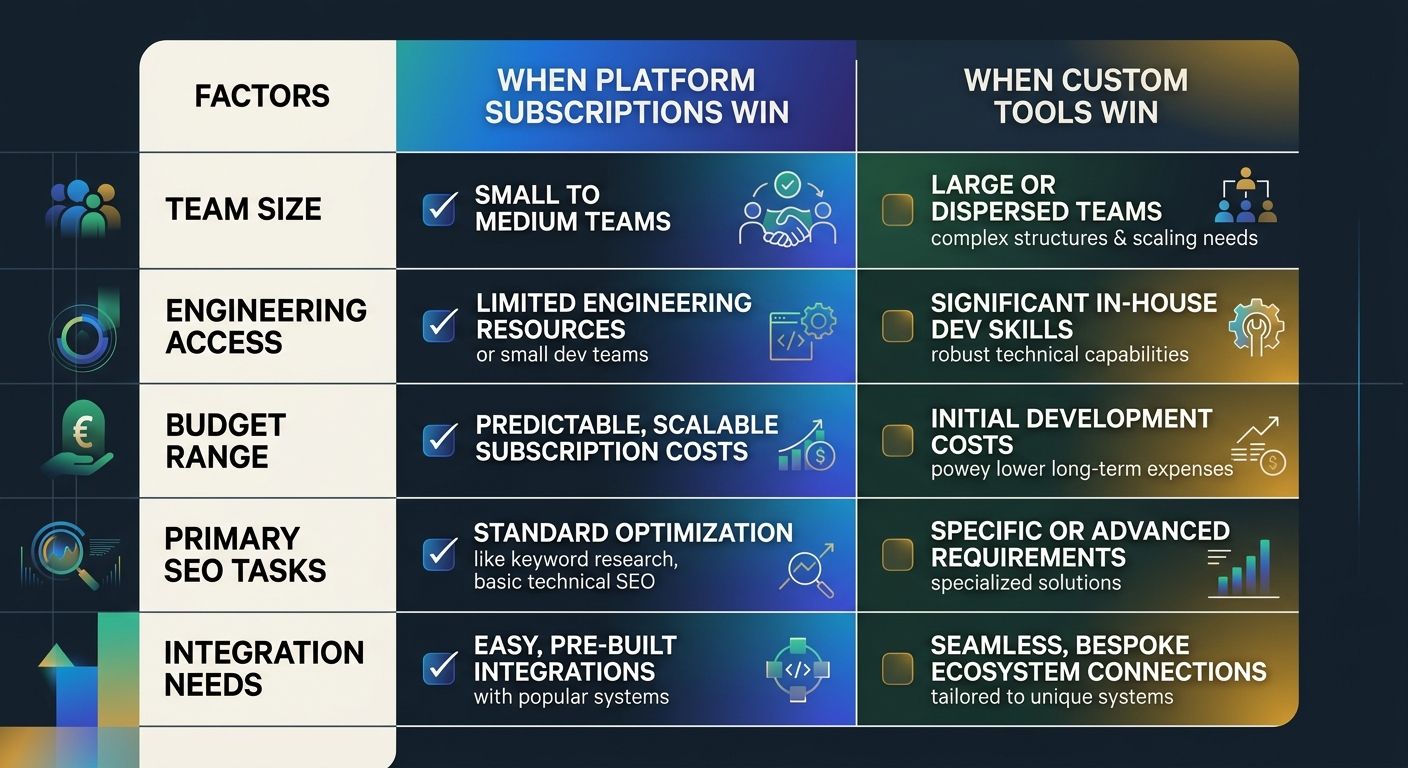
The practical sweet spot for most mid-market teams is a hybrid approach. Keep a single platform subscription for the capabilities that are genuinely expensive to replicate (primarily backlink data and competitive intelligence databases), and build custom automation around the tasks that are specific to your workflow: reporting, technical monitoring, content briefing, and internal linking. You capture most of the cost savings and integration benefits while avoiding the areas where platform scale advantages are hardest to match.
The teams getting the best marketing automation ROI from internal tool development are the ones that started by automating their most repetitive, highest-frequency task first, proved the value, and expanded from there. They didn't try to replace Semrush in a quarter. They replaced one $200/month feature, then another, then another, until the remaining subscription tier could be downgraded or eliminated entirely.
That incremental approach respects the real constraints of engineering time, team capacity, and organizational patience. It also produces something no platform can sell you: a set of tools shaped exactly to the way your team actually works.

Alex Chen
Alex Chen is a digital marketing strategist with over 8 years of experience helping enterprise brands and agencies scale their online presence through data-driven campaigns. He has led marketing teams at two successful SaaS startups and specializes in conversion optimization and multi-channel attribution modeling. Alex combines technical expertise with strategic thinking to deliver actionable insights for marketing professionals looking to improve their ROI.
Related Articles
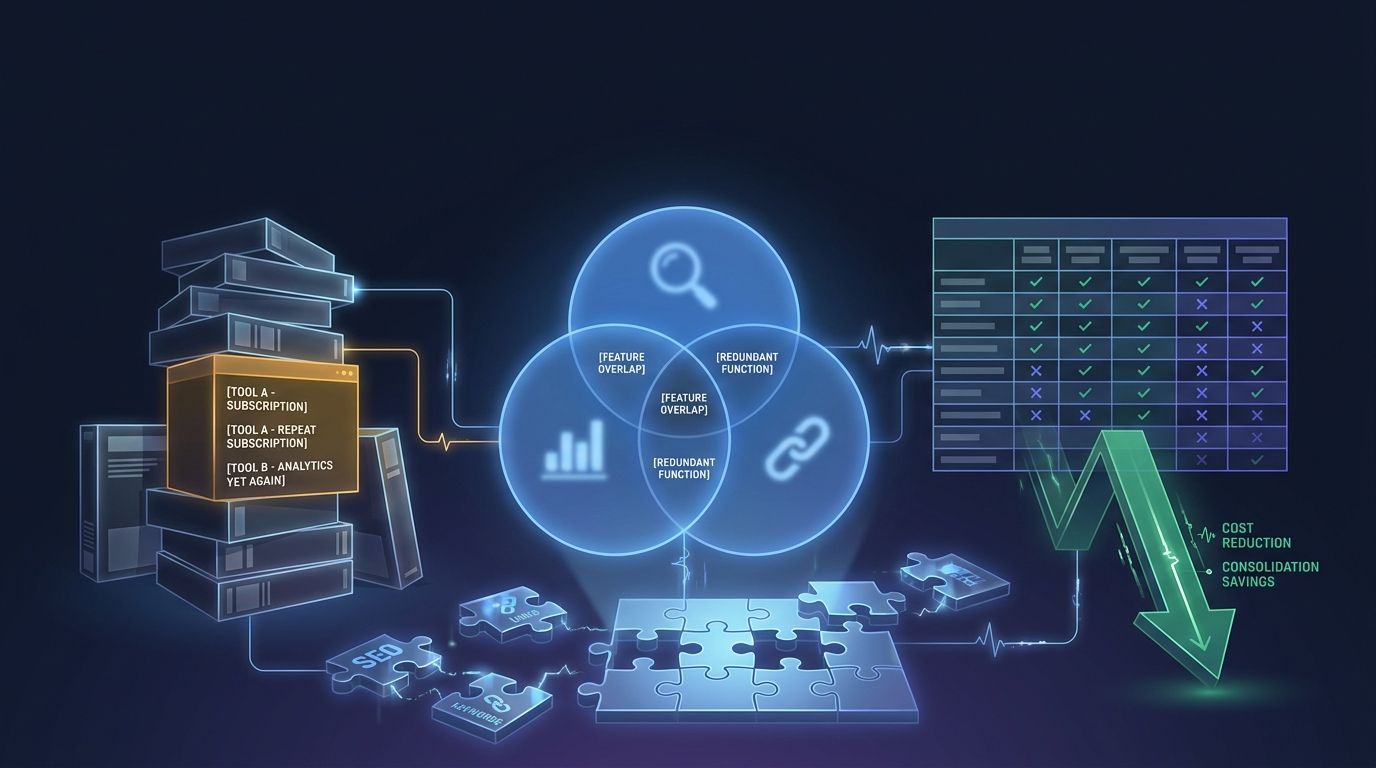
The SEO Tool Stack Audit: Why You're Paying for Overlapping Features and How to Consolidate
Every SEO team subscribing to both Ahrefs and SEMrush pays for rank tracking, backlink analysis, and site auditing twice. The duplicate data adds no analytical edge.
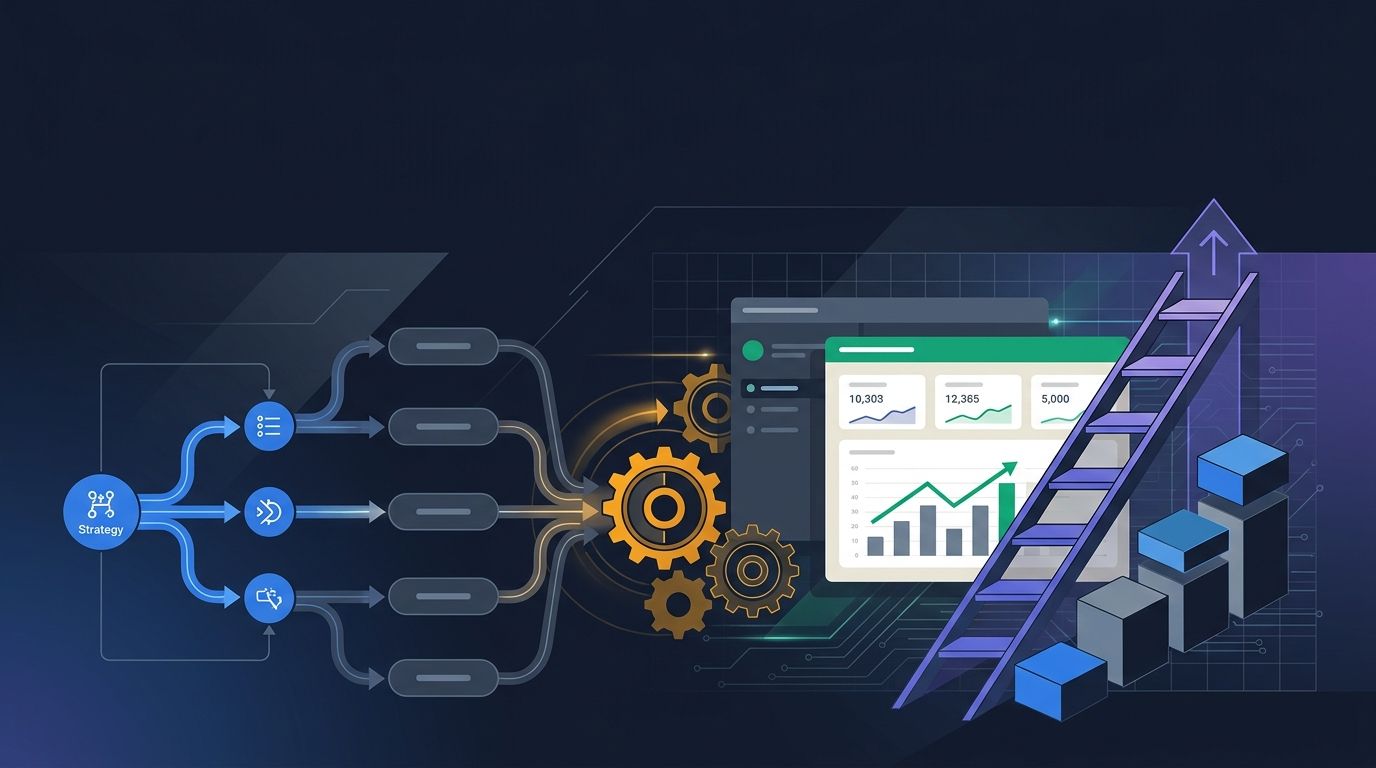
The SEO Workflow Breakdown: Building a Repeatable System That Scales With Your Team
Switching from ad-hoc SEO execution to a structured workflow system reduced time-to-publish from over two weeks to three to five days per content asset, while cutting brief creation time from two to three hours down to 30 minutes. These gains compound across every piece of content a team produces.

The Content Production Bottleneck: Why Your Marketing Team Can't Keep Up With AI Content Demand
Paid media campaigns running across Google, Meta, TikTok, and LinkedIn collectively demand somewhere between 50 and 200 unique creative assets per month from a typical mid-market marketing team.
Explore more topics