
The PR-to-Citation Pipeline: How to Structure Brand Mentions for AI Search Visibility in 2026
The backlinks your PR team earns from media placements have become the least valuable part of those placements for search visibility. What matters now is whether the mention itself is structured in a way that AI systems can parse, attribute, and cite.
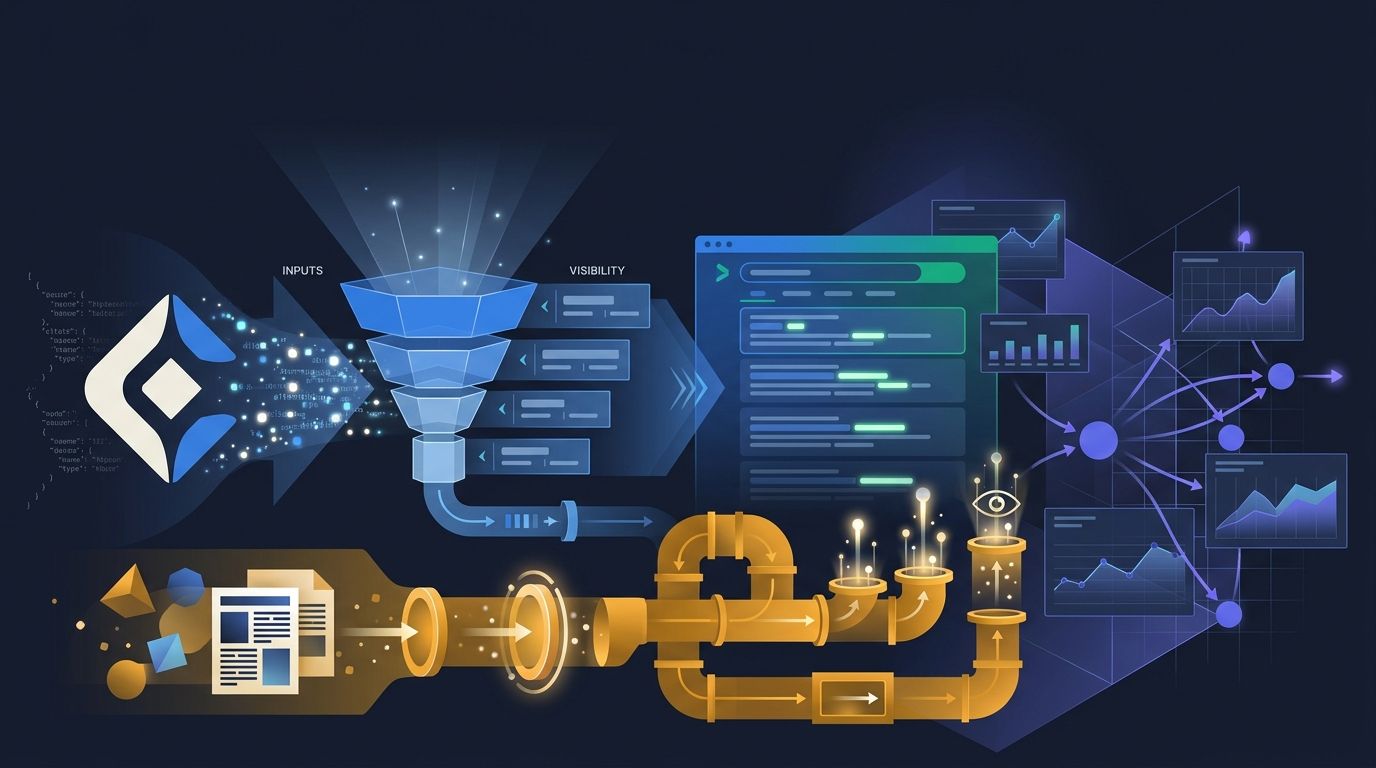
The PR-to-Citation Pipeline: How to Structure Brand Mentions for AI Search Visibility in 2026
The backlinks your PR team earns from media placements have become the least valuable part of those placements for search visibility. What matters now is whether the mention itself is structured in a way that AI systems can parse, attribute, and cite. The entire PR-to-link pipeline that marketers have optimized for the past decade needs to be rebuilt as a PR-to-citation pipeline, and data published in the past two weeks confirms this shift is accelerating faster than most marketing teams have anticipated.
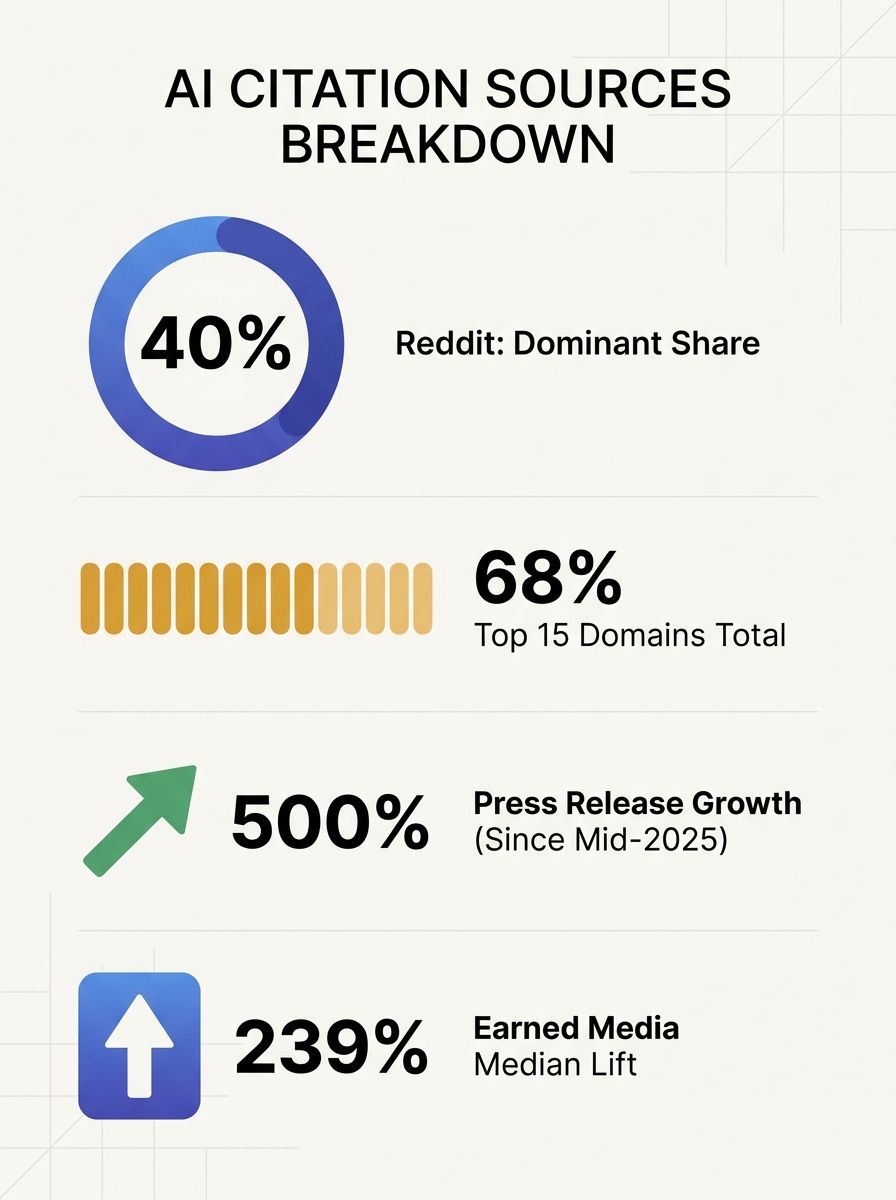
Earned media distribution can increase AI search citations by a median lift of 239%, according to Stacker research published by Search Engine Journal. Press releases saw a 500% growth in AI citation volume between mid-2025 and early 2026. And 85% of the citations that AI engines surface come from third-party sources, making the brand mention architecture of those sources the real ranking signal.
The old model was: pitch, place, earn a link, pass authority. The new model is: pitch, place, structure the mention for machine readability, and get cited in the AI-generated answer that your prospect actually sees. Here are three evidence-backed reasons this distinction matters and how to act on it.
Earned Media Lifts AI Citations by 239%, but Only When Structured Correctly
The 239% median lift from earned media is a headline number, and it's real. But the research from Stacker and 5WPR's AI Platform Citation Source Index (released May 1, 2026) reveals that the lift is unevenly distributed. Brands with review profiles on platforms like Trustpilot, G2, and Capterra are three times more likely to be cited by ChatGPT than those without them. The top 15 domains capture 68% of the entire AI answer pipeline. Reddit alone accounts for roughly 40% of all citations across major AI engines.
These aren't vanity metrics. When 73% of B2B buyers now find companies through AI-cited editorial rankings, and AI referral traffic converts at 14.2% (a 5.1x advantage over organic Google traffic), the citation is where deal flow begins.
This means PR and SEO integration can no longer be a quarterly alignment meeting between two separate teams. The press release, the trade publication placement, the G2 review profile, and the Reddit AMA all feed the same citation engine. Each one contributes a signal that AI models use to determine consensus around your brand for a given topic.
If you're still tracking answer engine results without measuring citation rates across individual AI platforms, you're optimizing for the wrong output metric. The backlink report tells you about traditional authority. The citation report tells you about AI discovery.
Each AI Platform Cites From Different Source Pools
The second reason the old PR model fails: each major AI engine has distinct sourcing preferences, and a one-size-fits-all media strategy will underperform a targeted one. The platform-specific behavior documented over the past several months paints a clear picture.
ChatGPT favors press releases from major wire services (Reuters, AP) and prioritizes content with clear data hierarchies and numbered lists. If your press release buries the quantitative claim in paragraph six behind three paragraphs of corporate messaging, ChatGPT is less likely to surface it.
Perplexity is the most recency-dependent platform. Fifty percent of its citations come from content published within the last 11 months, with peak citation rates occurring within 7 days of publication. For PR teams, this means trade press optimization for Perplexity is essentially a speed game. Get the placement live quickly, and ensure it contains structured, extractable data.
Gemini rewards evidence-backed claims that include statistics, case studies, and methodological transparency. Think research reports and data-driven thought leadership, not vague brand announcements. This platform elevated its press release citation rates in late 2025 and has maintained that trajectory.
Claude is the outlier and deserves special attention. It cites journalistic sources at a rate 50x lower than ChatGPT, instead favoring academic journals, government sources, and publications like The Atlantic and Harvard Business Review. If your brand operates in regulated industries (healthcare, finance, legal), Claude's sourcing bias can work in your favor if you invest in institutional and peer-reviewed placements.
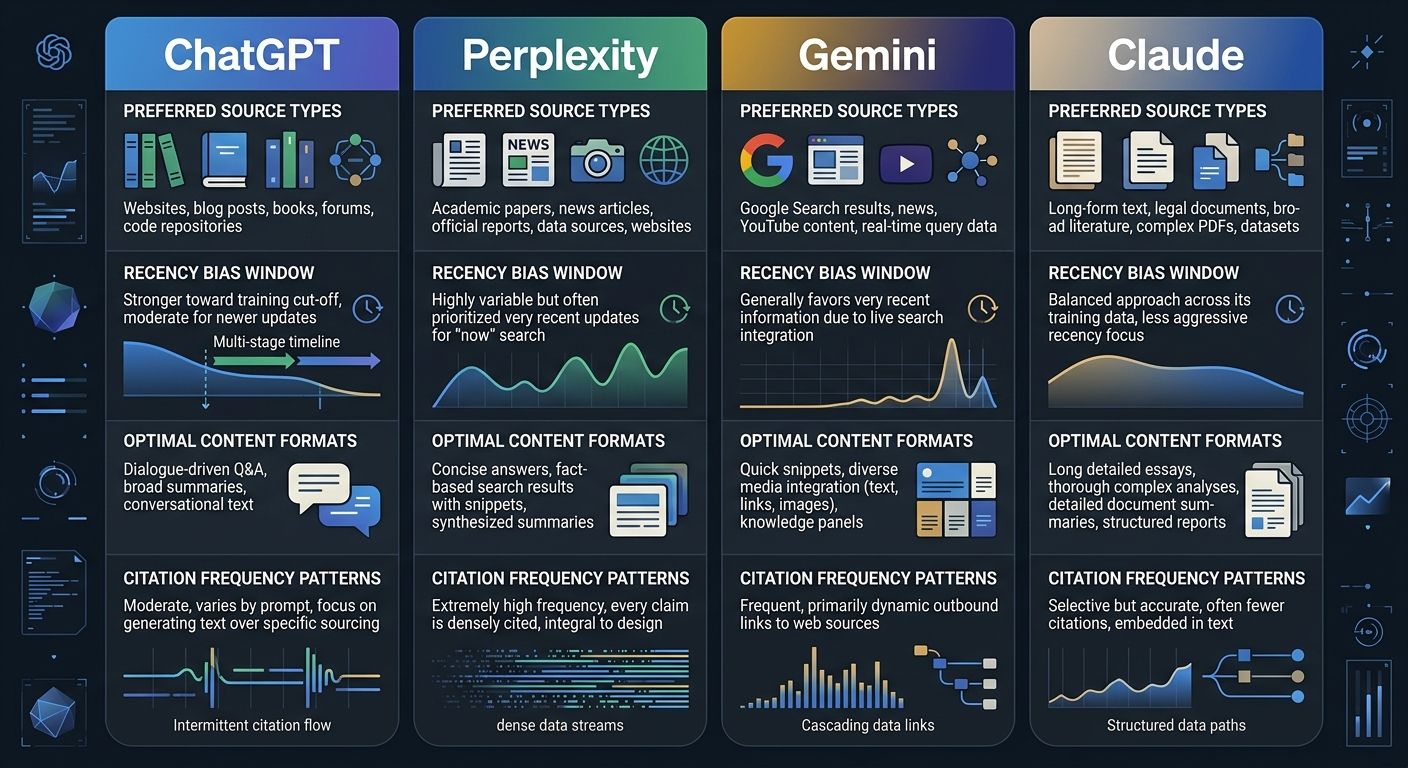
These differences mean that trade press optimization requires content formatted differently for different citation targets. A single press release can be adapted into multiple distribution versions: a data-rich version with methodology notes for Gemini, a recency-optimized version with prominent timestamps for Perplexity, and a wire-service-formatted version with numbered data points for ChatGPT. For teams already working on their GEO content optimization, mapping these platform preferences to your PR calendar is the obvious next step.
Brand Mention Architecture Determines Whether Citations Stick
Getting cited once is nearly meaningless, and the data proves it. The AirOps 2026 State of AI Search report found that only 30% of brands maintain visibility from one AI answer to the next, and a mere 20% remain present across five consecutive query runs. AI overview rankings are volatile by default.
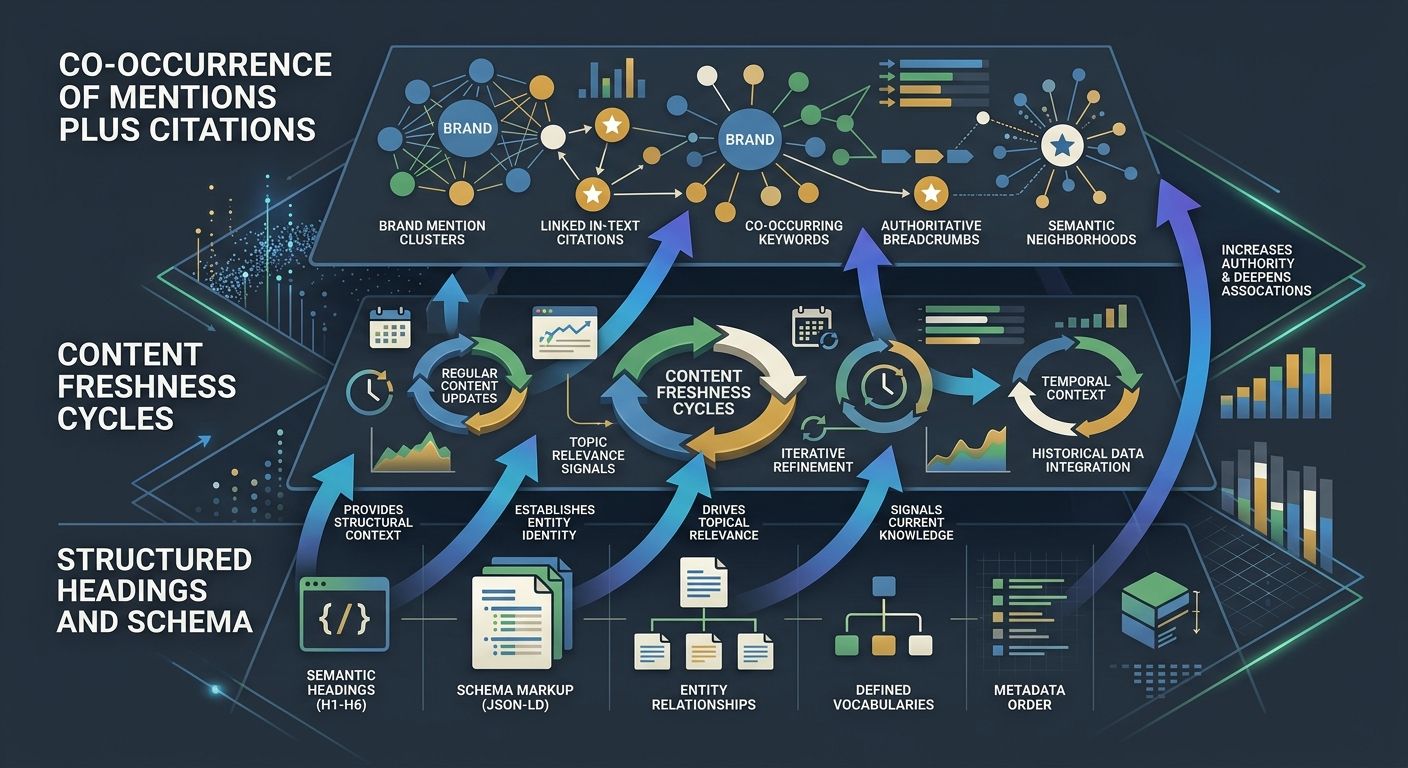
Citation stability requires what I call brand mention architecture: the deliberate structuring of how, where, and in what format your brand appears across the sources that AI models draw from. Three structural factors correlate with durable visibility:
Sequential headings and rich schema correlate with 2.8x higher citation rates. When third-party content mentioning your brand uses proper H2/H3 hierarchy and implements structured data markup, AI systems parse the relationship between your brand and the topic more reliably. This matters for the content on your site and for the editorial content that mentions you.
Content freshness is a decay factor, not a bonus. Pages not updated quarterly are 3x more likely to lose citations. This applies to your own content and to the third-party pages that mention you. If your best trade press hit was published 8 months ago and hasn't been supplemented with new coverage, its citation value is eroding right now.
Co-occurrence of mentions and citations creates a compounding signal. When your brand is both mentioned in the body text and cited as a source (with a link), the combined signal produces more durable AI visibility than either element alone. This echoes what we've covered about why trust signals carry more weight than raw search visibility in the current search environment.
The practical implication: your PR team should be negotiating the structure of each placement, not simply the fact that a placement exists. Ask the trade publication to include your brand in a properly formatted comparison section with headings. Request that data points from your press release be presented in structured formats (tables, numbered findings) rather than buried in narrative paragraphs. These editorial decisions directly affect whether AI systems can extract and cite the information.
A PR Brief That Feeds the Citation Pipeline
A framework I've been using with clients structures every PR outreach around four elements designed to maximize AI extractability:
Headline with a quantifiable claim. "Company X Reduces Customer Support Costs by 47%" performs dramatically better in AI citation than "Company X Announces New AI-Powered Support Solution." The specific number gives the AI model something concrete to extract and attribute.
Data hierarchy in the body. Lead with your strongest statistic. Use sequential subheadings. Include a FAQ-style Q&A section that mirrors how users phrase prompts. AI models trained on conversational query patterns are more likely to pull from content structured to match.
Executive quotes with verifiable specifics. Generic leadership quotes ("We're excited to...") contribute nothing to AI citations. Quotes that include metrics, timelines, or comparisons give the AI model extractable factual content tied to a named source. This is where content architecture principles extend beyond your own site into the earned media ecosystem.
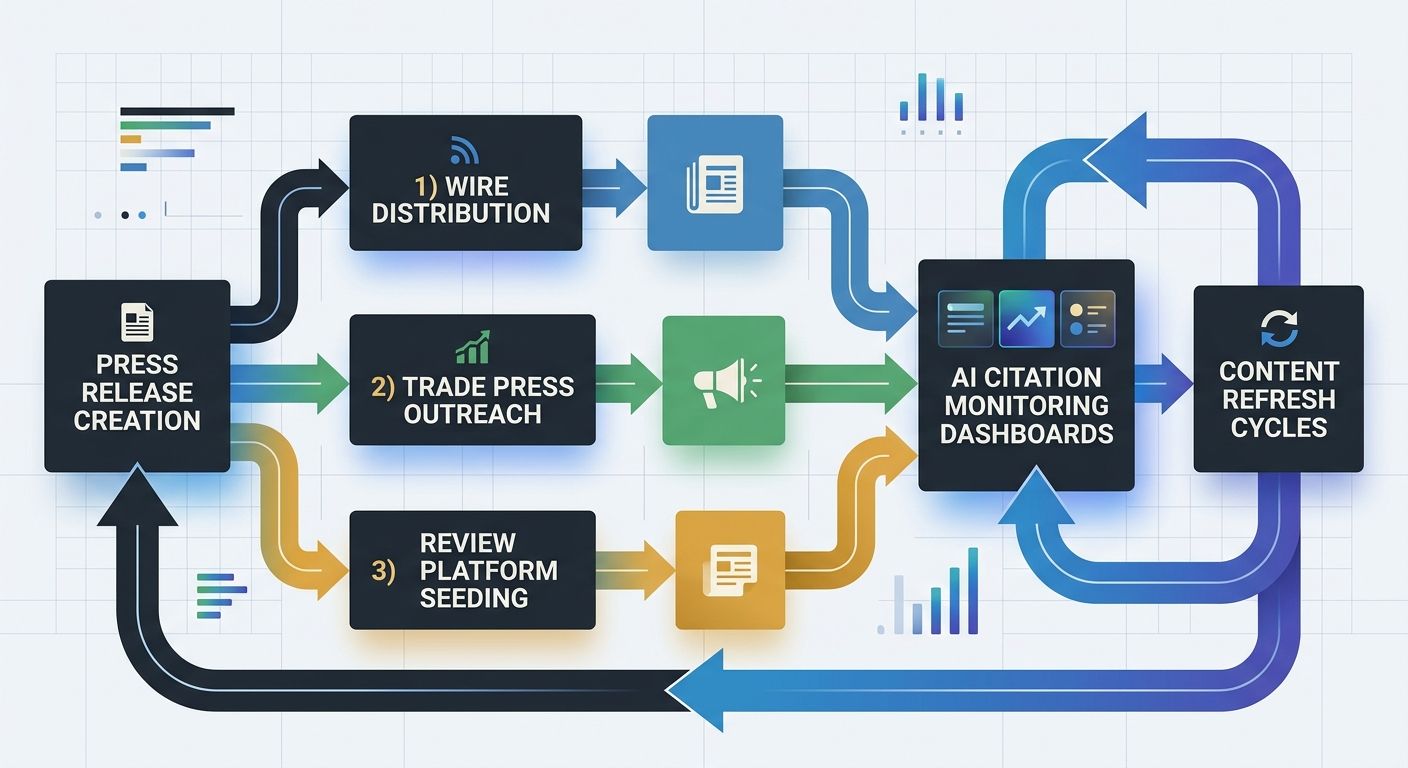
Multi-platform distribution for consensus building. A press release that only hits one wire service misses the consensus signal that AI models look for. As Forbes noted in their April analysis of AI search strategies, these models scan for agreement across independent sources. Distribute across wire services, pitch trade publications for editorial coverage, and ensure the brand mention appears on relevant review platforms simultaneously.
The Claim, Revisited
The conventional wisdom in link building has been straightforward for years: earn the link, pass the authority, climb the rankings. That model still functions for traditional search. But for AI-driven brand discovery, the link is a secondary artifact of a more important signal. The primary unit of value is the structured, attributable, frequently refreshed brand mention in a source that AI models already trust.
The data published this week reinforces this at every level. Listicle Liaison's May 5 network analysis showed that AI search engines favor structured editorial rankings because they directly answer buyer questions by comparing multiple options. The 5WPR Citation Source Index confirmed that the sources AI models pull from are concentrated in a small number of high-trust domains. And the AirOps volatility data demonstrates that earning a citation once means almost nothing without the structural and freshness signals required to hold it.
If you're running PR and SEO as parallel tracks with separate goals and separate reporting, the gap between those teams is where your AI citations are disappearing. The press release should be written with AI citation structure in mind from the first draft. The trade press pitch should specify editorial formatting requests. Review platform profiles should be maintained with the same rigor you apply to any other owned channel. And every placement should be measured through tools that track citation rates across ChatGPT, Perplexity, Gemini, and Google AI Overviews, not just the backlink profile it generates.
For teams building toward this model, the AI answer engine tracking stack is where measurement begins. The PR brief is where the pipeline actually starts producing durable visibility. Get both right, and you're building the kind of brand mention architecture that compounds across AI platforms instead of decaying between query runs.

Alex Chen
Alex Chen is a digital marketing strategist with over 8 years of experience helping enterprise brands and agencies scale their online presence through data-driven campaigns. He has led marketing teams at two successful SaaS startups and specializes in conversion optimization and multi-channel attribution modeling. Alex combines technical expertise with strategic thinking to deliver actionable insights for marketing professionals looking to improve their ROI.
Explore more topics